
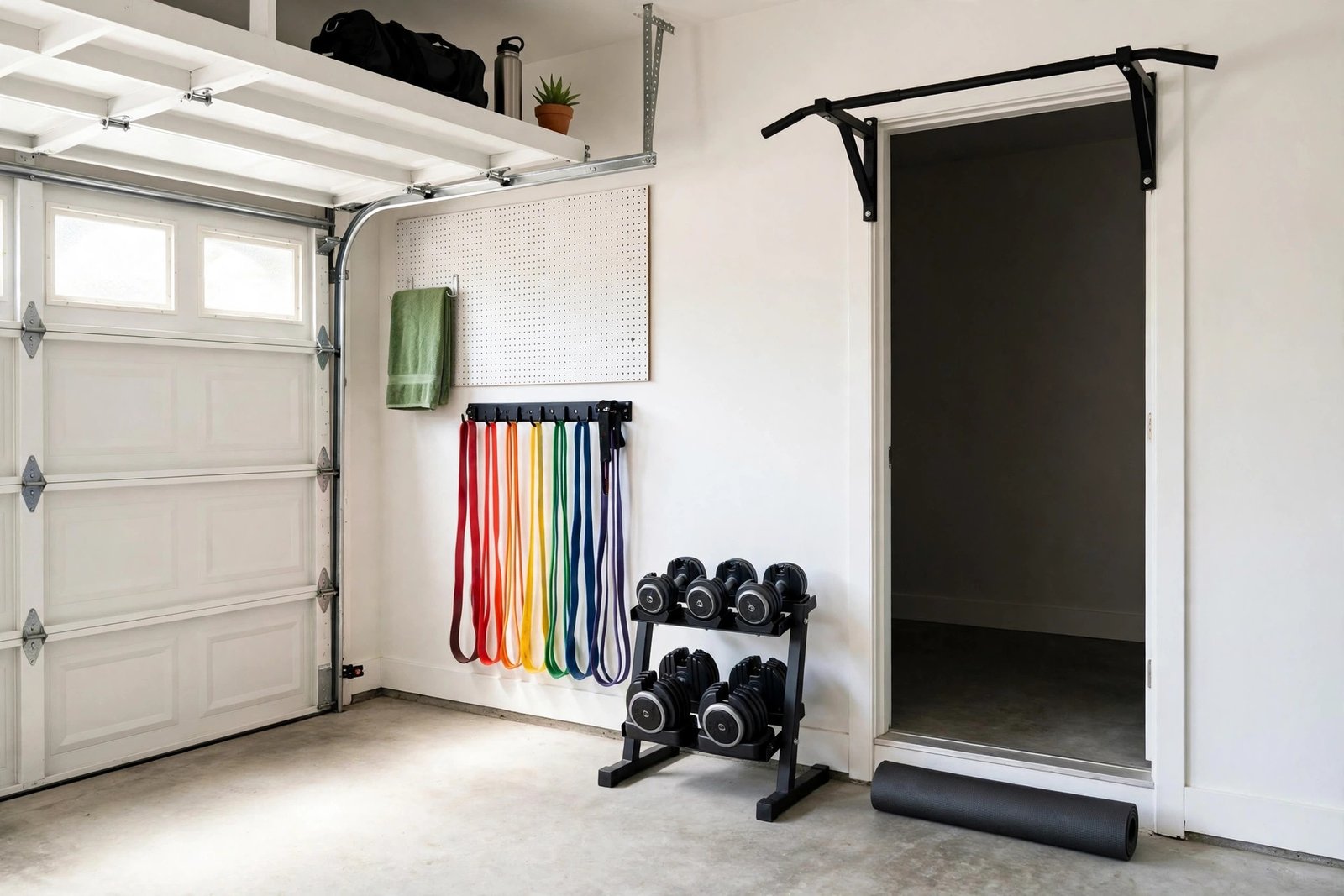
Gym memberships are the most optimistic purchase in American life: billions paid annually, a huge share of it by people who never go. A home gym flips the equation — no commute, no waiting for equipment, no monthly fee, and workouts that fit into the cracks of a real schedule. The myth is that it costs thousands. The reality: for under $300, you can assemble a setup that covers every major movement pattern and lasts for years.
This guide shows you how to build a home gym for under $300: the essential equipment list with real prices, where to buy it cheapest, how to arrange it in a tiny space, the workout programming that makes it effective, and the expensive mistakes to avoid.
The Philosophy: Movements, Not Machines
Effective training is about movement patterns — push, pull, hinge, squat, carry, and core — not about machines with brand names. A $3,000 all-in-one machine and $250 of free weights can train the exact same patterns; the machine just does it with more padding and less versatility. Your $300 budget buys free weights and simple tools that train everything, store in a closet, and never need a service contract.
Set your expectations correctly: this gym will not replicate a commercial facility’s leg press row or cable stations. It will do something better — remove every excuse between you and a workout. The best gym is the one you actually use, and “the one ten steps from your couch” wins that contest every time. Pair it with a workout plan tailored to your fitness level and you have a complete system, not just equipment.
The $300 Shopping List
Here is where every dollar goes, with realistic street prices (buy used where noted):
Adjustable dumbbells — ~$100–$150 used. The single highest-value purchase. A pair of adjustable dumbbells replaces an entire rack, handling everything from light shoulder work to heavy rows. Check Facebook Marketplace and Craigslist first — barely-used sets appear constantly from abandoned New Year’s resolutions. Test the locking mechanism in person before buying.
Resistance bands set — ~$25–$35 new. Loop bands and tube bands with handles add pulling movements, warm-ups, and travel workouts. They also make exercises joint-friendly when dumbbells feel too heavy. A set with a door anchor multiplies your options enormously.
Doorway pull-up bar — ~$30–$40 new. No screws, no damage — the leverage-mounted kind fits standard doorframes in seconds. Pull-ups and chin-ups are the kings of upper-body pulling, and most people cannot do many at first, which is exactly why the bar matters. Loop a resistance band over it for assisted reps while you build strength.
Jump rope — ~$10–$15. The most underrated cardio tool ever made: ten minutes of intervals torches calories, trains coordination, and stores in a drawer. A simple speed rope beats a fancy weighted one for beginners.
Exercise mat — ~$20–$30. Protects your floors and your knees for core work, stretching, and push-up variations. A 6mm+ thick mat is worth the small premium over the paper-thin kind.
Total: roughly $185–$270, leaving a cushion for a foam roller (~$15) or a suspension trainer (~$30) if budget remains. Every item here is proven, resellable, and useful for years.
Where to Buy: The Cheap-Without-Junky Guide
The used market is your best friend. Dumbbells, benches, and kettlebells are nearly indestructible, so buying them secondhand sacrifices nothing. Search Marketplace with alerts for “dumbbells,” “adjustable weights,” and “gym equipment” — good deals vanish within hours, so check mornings. For new items like bands, ropes, and mats, Amazon basics and big-box store brands perform identically to premium versions at a third of the price.
Timing matters: January (resolution abandonment) and late spring (moving season) flood the used market. Dick’s Sporting Goods and Target run deep fitness sales in January and around Black Friday. And inspect before you pay — wobbly adjustable dumbbells and frayed bands are not bargains at any price.
Setting Up in a Small Space
You need less room than you think: a 6-by-6-foot patch of floor handles nearly everything on the list. A spare bedroom corner, a garage bay, even a living room that converts in two minutes — the equipment stores in a closet or under a bed. If you are working with a genuinely tiny room, our guide to creating a home gym in a spare bedroom covers layout tricks like wall-mounted storage and fold-flat benches.
Three setup rules: put the mat down to define your workout zone (psychological trick — stepping onto it means training), keep the dumbbells visible rather than buried (friction kills workouts), and ensure ventilation and a little music. A fan and a Bluetooth speaker do more for workout consistency than any equipment upgrade.
Programming: The Workouts That Make It Work
Equipment without a plan becomes a drying rack. Keep programming dead simple with a three-day full-body rotation: Day A — goblet squats, push-ups, one-arm dumbbell rows, band pull-aparts, plank. Day B — Romanian deadlifts with dumbbells, overhead press, assisted pull-ups, lunges, dead bugs. Alternate A/B/A one week and B/A/B the next, resting a day between. Three sessions a week, 35–45 minutes each, progressing by adding reps or weight when you can complete all sets comfortably.
Track every workout in a notes app — exercises, weights, reps. Progression you can see is motivation you do not have to manufacture. And fuel the work sensibly: you do not need a supplement stack, though it is worth knowing whether protein shakes are actually necessary before spending money on them. The CDC’s physical activity guidelines — 150 minutes of moderate activity weekly plus muscle-strengthening twice a week — are fully achievable with this setup. The American Council on Exercise also maintains a free exercise library with video demonstrations for every movement in this plan.
What NOT to Buy
The $300 budget dies the moment you fall for the wrong things. Skip the treadmill — it costs ten times your budget, dominates the room, and becomes a clothes rack within months; the jump rope covers cardio for $12. Skip all-in-one home gym machines, which lock you into fixed movement paths at a huge markup. Skip the ab-specific gadgets, the vibrating platforms, and anything advertised on late-night TV. And skip buying everything at once: start with dumbbells and bands, train for a month, then let experience — not marketing — dictate your next purchase.
Conclusion
A $300 home gym is not a compromise — it is a strategy: adjustable dumbbells, bands, a pull-up bar, a jump rope, and a mat cover every movement pattern that matters, bought smart and arranged in a corner of your home. The equipment is the easy part. The plan, the visible setup, and the tracked progression are what turn $270 of metal and rubber into the fittest years of your life. Start with the dumbbells; the habit will handle the rest. The Move Your Way campaign at health.gov offers simple tools for setting weekly activity targets around your new setup.
Frequently Asked Questions
Can you really get fit with just $300 of equipment?
Absolutely. Strength and conditioning depend on progressive overload — gradually doing more — not on expensive machines. Dumbbells, bands, and bodyweight cover every major movement pattern, and countless people have built impressive fitness with less.
What is the first thing I should buy?
Adjustable dumbbells, bought used. They are the most versatile single purchase, replacing a full dumbbell rack and enabling dozens of exercises. Add resistance bands second for pulling movements and warm-ups.
How much space do I need for a home gym?
A 6-by-6-foot area of clear floor space is enough for nearly everything in this guide. The equipment stores in a closet or under a bed, so even a small apartment can host a complete setup.
Is a home gym better than a gym membership?
For consistency, usually yes — zero commute and zero waiting are powerful. For variety and heavy barbell training, commercial gyms win. Many people do both: home setup for the weekly routine, day passes elsewhere when they want variety.