
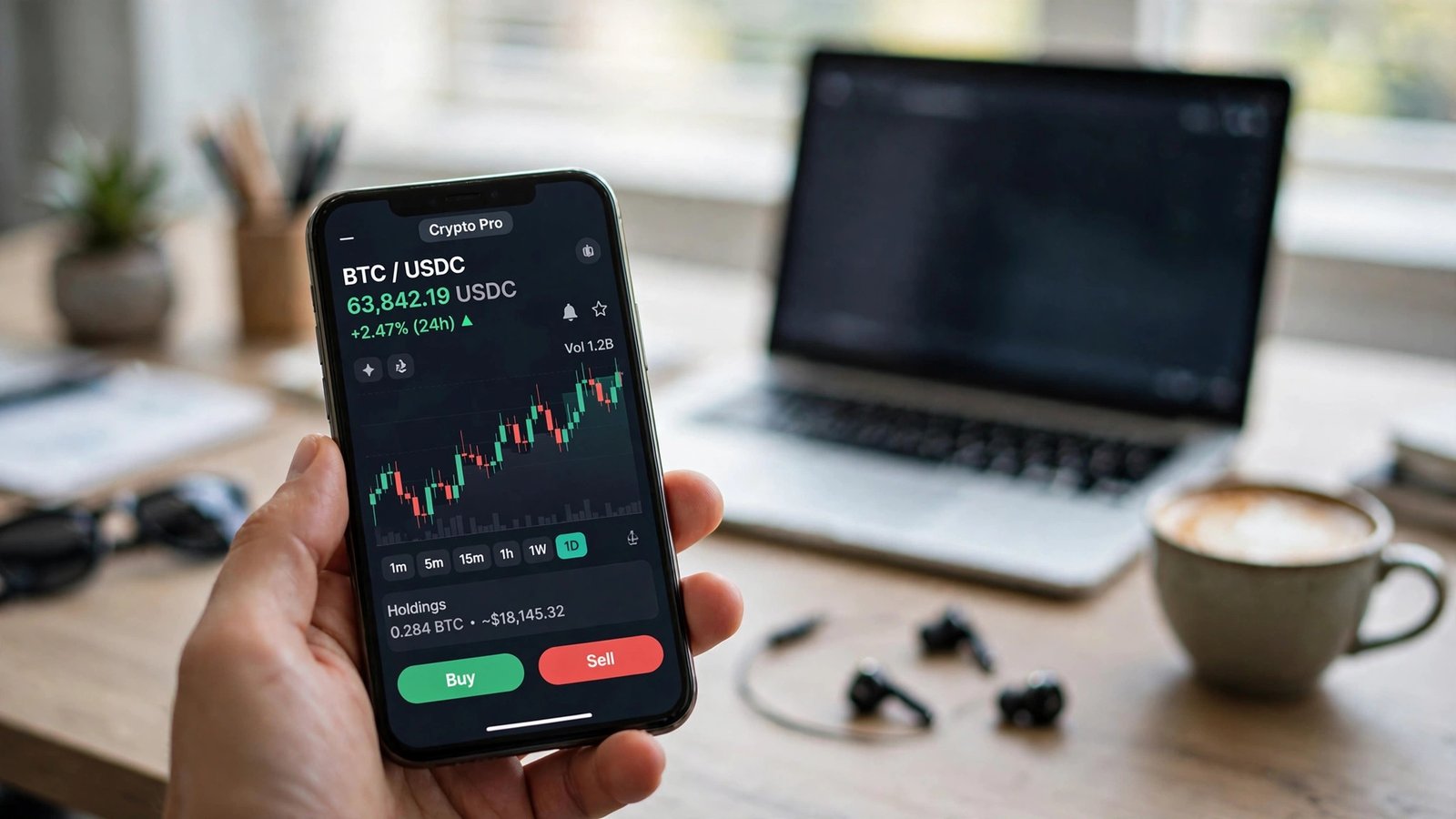
The hardest part of a first crypto purchase is not the buying — it is choosing an app that will not punish a beginner later. Almost any app can complete a first purchase. The differences appear afterwards, in confusing screens, in coins that cannot be moved, in support that never answers, and in costs that were never made plain. What actually matters for a beginner is quieter than marketing suggests. A regulated company behind the app matters, because rules and audits shape how customer money is handled. A painless first purchase matters, because early friction puts people off learning. A small shelf of well-known coins done well matters more than an enormous catalogue. A plain-language interface matters, and so does support that answers in words a newcomer can act on. Seen that way, an app is also a habit tool, much like how AI can help with managing personal finances by turning small, regular actions into a steadier routine: small regular buys, calmly made, teach more than one large, anxious purchase.
Three kinds of app are often confused, and separating them prevents most beginner mistakes. A broker-style app sells coins directly to the user at a displayed price, keeping the machinery hidden, which suits a first purchase. An exchange matches buyers and sellers with each other, offering order books, limit orders and lower costs for those willing to learn the screens. A self-custody wallet app holds no account at all: the user holds the keys and the responsibility, and purchases may happen elsewhere entirely. Understanding how a cryptocurrency exchange works clarifies why exchange screens look busier, since they show a live market rather than a shop shelf. The seven names that follow cover these kinds, with the trade-offs stated plainly.
Pick One: Coinbase is the gentlest on-ramp for most beginners. The standard view is deliberately simple: choose a coin, enter an amount, confirm. An advanced mode sits behind it for those who later want exchange-style orders and lower costs, so the app can grow with its user instead of being outgrown. The background helps explain the polish; reading about Coinbase and its place among US exchanges shows a long-established, publicly listed company that has made compliance and beginner onboarding its calling cards. The trade-off is convenience cost. The simple route charges for its simplicity in ways that are easy to miss, and a beginner who never graduates to the advanced screens pays a premium for every purchase. As a first home, though, it remains the easiest recommendation to defend.
Pick Two: Kraken suits the beginner who cares most about security and intends to learn properly. Its reputation rests on a long operating history and a security-first culture that is frequently cited by industry watchers, and its educational content is genuinely useful, explaining orders, markets and custody in plain terms rather than slogans. Accounts can move between a simple buy screen and a fuller trading view, much like the first pick, but the overall feel is slightly denser, with more terminology on show earlier. A patient beginner may see that as free training. A nervous one may find it a touch forbidding at first. Fees sit towards the competitive end for exchange-style trading, and the coin selection is broad without being a funfair.
Pick Three: Robinhood Crypto wins on already-have-the-app convenience. For someone who already invests through Robinhood, adding crypto takes moments, the interface is familiar, and small purchases feel as ordinary as buying a share. That framing is also its limitation. It is an investing app that includes crypto rather than a crypto-first service, so education, market detail and wallet features are thinner than at dedicated rivals. Transfers of coins to outside wallets have historically come with limits and conditions that changed over time, which matters to anyone planning an eventual move to self-custody. The experience is pleasant and the brand familiar, but a beginner whose interest deepens will likely end up opening a second account elsewhere, which is worth knowing before the first purchase rather than after.
Pick Four: Cash App offers bitcoin-only simplicity, and treats that narrowness as a virtue. There is exactly one coin to buy, which removes the entire problem of choosing among hundreds, and the app’s money features are already in daily use for many of its customers. Setting up regular purchases on a schedule is straightforward, so dollar-cost-averaging becomes a background habit rather than a weekly decision. Sending bitcoin to another wallet is supported, which keeps a path open towards self-custody later. The trade-offs are plain. Anyone who later wants a second coin needs a second service, spreads on purchases reward checking before confirming, and investment guidance inside the app is minimal. For a bitcoin-only saver who values calm over choice, that restraint is the appeal.
Pick Five: Gemini appeals to beginners who like clean design and visible regulation. Its interface is among the tidiest in the field, with uncluttered buying screens and clear statements of what a purchase costs. The company has long emphasised its United States regulation and compliance posture, and that tone runs through its product, which favours the well-known end of the market. The cost of that caution is a smaller coin shelf than larger rivals offer, and an experience that can feel a little formal and spare compared with friendlier competitors. Costs on the simplest buying route are not the keenest, with the exchange-style view again rewarding those who learn it. For a cautious beginner who ranks oversight and clarity above catalogue size, Gemini is a comfortable fit.
Pick Six: Coinbase Wallet is the self-custody step, and it belongs in a beginner’s awareness rather than necessarily in a beginner’s first week. Unlike the custodial apps above, it hands the keys to the user in the form of a recovery phrase, and with the keys comes full responsibility: lose the phrase and no help desk anywhere can restore access. In return, coins held there are genuinely the holder’s, movable to any service and usable across decentralised applications, and the wallet supports a wide range of networks and tokens. The sensible sequence is to make a first purchase on a custodial app, learn the basics, practise with a small transfer, and only then treat a wallet of this kind as home for larger amounts. Chosen at the right moment, it is a graduation rather than a gamble.
Pick Seven: Strike is the narrowest option here, a bitcoin-only service built around the Lightning network, which allows small bitcoin payments to move quickly and cheaply between compatible wallets. For users whose interest is bitcoin as money, sending value to another person or another wallet feels refreshingly direct, and the interface keeps the single purpose in view. Regular purchases are easy to set up, in keeping with the save-a-little pattern that suits beginners. The trade-offs are the mirror of the strengths. The feature set is narrow by design, there is no second coin and no ambition to be a general trading venue, and availability varies by country more than at the largest rivals. As a focused tool for one job, it is coherent. As a first and only crypto home, it will suit bitcoin purists and few others.
Whichever name is chosen, beginner fee traps deserve a clear-eyed minute, because the displayed price of a coin is rarely the whole cost. The first trap is the spread: the gap between the price quoted to buyers and the price paid to sellers, which quietly widens the cost of every simple purchase and never appears as a line item. The second is the instant-buy premium, where paying by card or demanding immediate execution costs noticeably more than a bank-funded or patient order. The third is the withdrawal charge, which appears when coins or cash leave the platform, and which can make small, frequent withdrawals disproportionately expensive. None of these is hidden exactly, but all reward the habit of reading the confirmation screen slowly before pressing the final button.
A few practical expectations apply across every name on the list. Identity checks are standard at regulated services, so a first account usually involves documents and a short wait rather than instant access, and that delay is a sign of a legitimate operation rather than a fault. Funding by bank transfer is generally slower and cheaper, while card funding is immediate and costs more, and the choice between them shapes the true price of a first purchase more than most headline comparisons admit. Withdrawal limits for new accounts are common and rise with time and verification. Starting with a genuinely small purchase, confirming that coins can be sold and money withdrawn again, teaches the full round trip while any lesson is still cheap, and it tests support, screens and settlement in the only way that counts.
The closing verdict depends on the reader. A total beginner who wants the calmest possible start is best served by the first pick’s simple screens, accepting the convenience cost as tuition while learning. A bitcoin-only saver who wants one coin, bought regularly with the least possible fuss, will find the fourth and seventh picks more honest fits than any giant catalogue. A beginner who has made a first purchase, practised a transfer and written a recovery phrase down with care is ready for the sixth pick and the responsibilities that come with it. Between those poles, the remaining names trade polish, caution and familiarity in different proportions, and any of them beats the worst beginner choice of all: an unknown app, chosen in a hurry, because an advert promised excitement.