
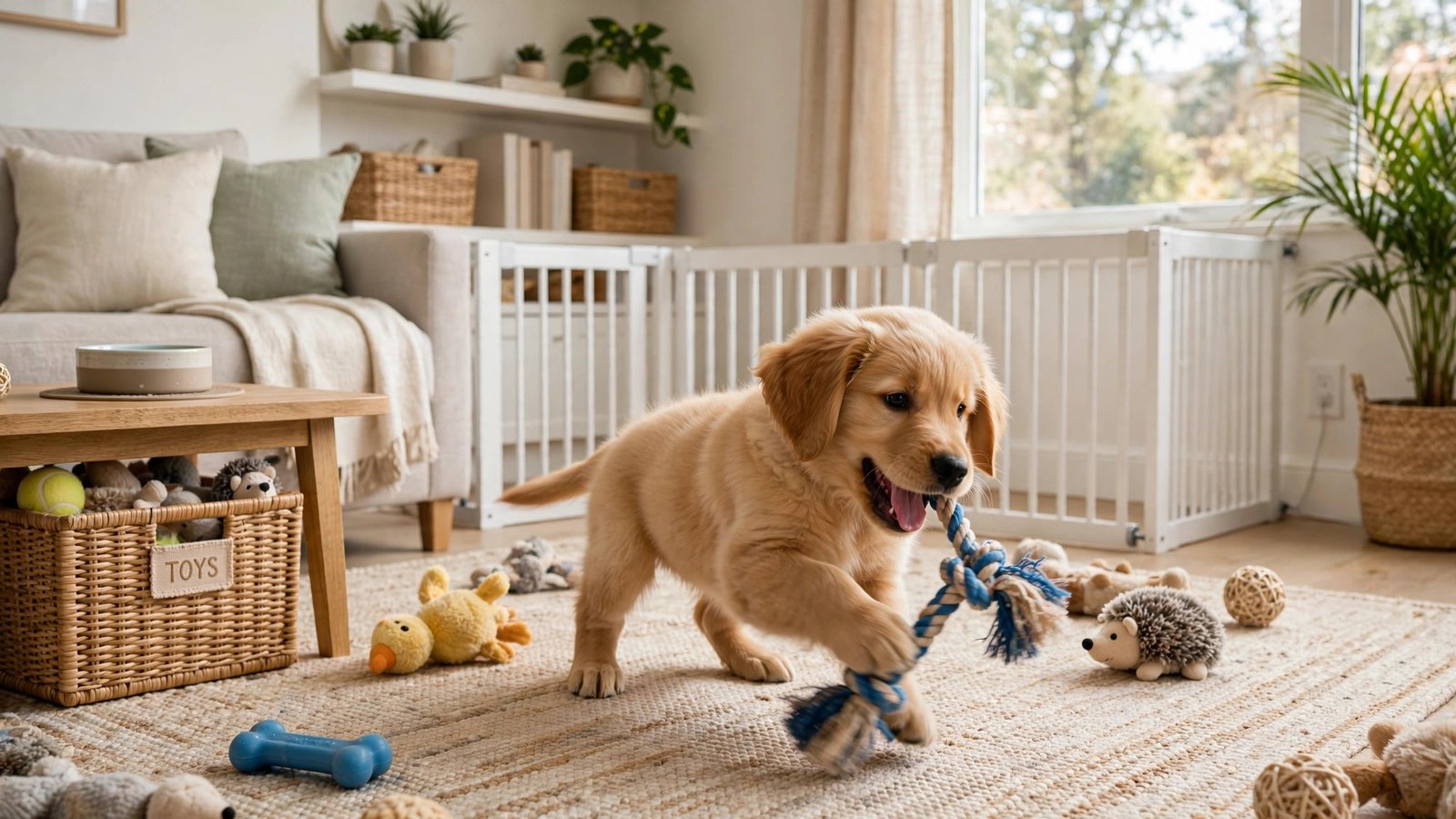
Bringing home a puppy is pure joy — until the newest family member eats your laptop charger, pees on the rug, and discovers that drywall is delicious. Puppies explore the world with their mouths, and your home is full of things that are toxic, breakable, or expensive when chewed. The good news: a thorough puppy-proofing pass takes one focused afternoon, and it prevents the vet emergencies and destroyed belongings that blindside new owners.
Think of it as baby-proofing with sharper teeth and better jumping ability. Room by room, here’s how to get it done before the puppy arrives.
Start With the Big Three Hazards
Before anything else, eliminate the things that can kill or seriously injure a puppy:
- Electrical cords: chewing a live cord can electrocute a puppy. Bundle cords with cord covers or spiral wrap, move them behind furniture, and unplug what isn’t in use. Phone chargers are puppy magnets — they dangle at exactly nose height.
- Toxic foods and chemicals: chocolate, xylitol (in sugar-free gum and some peanut butters), grapes, onions, and medications are the top pet-poison culprits. Move all food and meds to high cabinets, and put cleaning products behind latched doors.
- Small swallowable objects: socks are the number-one surgical removal item in veterinary ERs — puppies swallow them whole, causing intestinal blockages. Do a floor-level sweep for socks, hair ties, coins, and kids’ toys.
The ASPCA’s pet-care resources maintain a full list of household toxins — worth a skim, because the dangerous-items list is longer than most new owners expect.
The Kitchen: Ground Zero
Kitchens concentrate every puppy hazard in one room. Install childproof latches on lower cabinets (cleaning supplies, trash) — puppies learn to nose open simple cabinets within days. Get a trash can with a locking lid or move it inside a latched cabinet; chicken bones and food wrappers are irresistible and dangerous.
Clear the counters of food, and remember that puppies grow: the counter-surfing Lab puppy becomes a counter-surfing adult who can reach the back of the stove. Build the habit now of never leaving food unattended. Keep the dishwasher closed (detergent pods look like toys) and the oven door shut.
Living Room and Bedrooms: The Chew Zone
This is where your belongings live, so this is where management matters most:
- Shoes, remotes, and books: move them up or into closets. Every puppy owner learns this after the first casualty — learn it before.
- Houseplants: many common ones (lilies, sago palm, pothos, dieffenbachia) are toxic to dogs. Move them out of reach or rehome them; “out of reach” needs to account for a determined jumper and a plant knocked off a shelf.
- Rugs: consider rolling up expensive or light-colored rugs for the first few months. House-training accidents happen, and enzymatic cleaner works — but prevention is cheaper.
- Blind cords: loop them up high. They’re a strangulation hazard for both puppies and toddlers.
- Furniture: block access behind and under heavy furniture where a puppy could get stuck. Cover nice upholstery with washable throws.
If you’re also thinking about childproofing without ruining your decor, the same principles apply — most baby gates and cabinet latches work for both species.
Bathroom and Laundry: Lock Them Down
Bathrooms hold medications, razors, and cleaning chemicals — keep the door closed, always. Toilets should have lids down (cleaning-tablet water is toxic, and small puppies can fall in). In the laundry room, detergent pods are a top poisoning risk, and the dryer is a warm hiding spot — always check inside before starting it. Keep hampers lidded; dirty socks are, tragically, a delicacy.
Set Up the Puppy’s Home Base
Puppy-proofing isn’t just about removing dangers — it’s about giving the puppy a right-sized world. Set up one room or a penned area as home base with:
- A crate (properly sized — just enough room to stand, turn, and lie down) for naps and unsupervised time
- Water bowl (tip-proof or attached)
- Safe chew toys (Kong-style, rotated for novelty) — a puppy with legal chew options destroys less
- Easy-clean flooring or washable mats
- A baby gate to contain the area
Young puppies shouldn’t have unsupervised run of the house — freedom is earned gradually as house-training and chewing habits mature. The crate isn’t punishment; dogs are den animals, and most puppies learn to love theirs when it’s introduced positively. The American Kennel Club’s puppy resources have excellent crate-training protocols.
The Yard and Garage Check
Walk the fence line: puppies squeeze through gaps you’d swear were impossible — if a puppy’s head fits, the body follows. Fill gaps, check gate latches (puppies learn to nose them open), and remove toxic plants, cocoa mulch (contains theobromine like chocolate), and standing water with chemicals.
The garage holds antifreeze — which tastes sweet and is lethally toxic in tiny amounts — plus pesticides, fertilizers, and sharp tools. Keep the garage door closed or the puppy out, and clean any automotive fluid drips immediately. Also check: the best flooring for homes with dogs matters more than you’d think once house-training starts.
Stock Up Before Arrival Day
Have these ready so you’re not improvising at 9 p.m.: enzymatic stain cleaner, baby gates, crate, chew toys, the puppy’s current food (switch gradually), treats for training, collar with ID tag, and your vet’s number programmed in your phone. A tired puppy is a well-behaved puppy — plan for age-appropriate exercise and mental stimulation from day one.
The First 48 Hours: What to Expect
Even in a perfectly puppy-proofed home, the first two days are an adjustment — for everyone. Expect whining at night (the puppy misses littermates — a ticking clock wrapped in a towel mimics a heartbeat and helps), accidents despite your best schedule (take them out every 2 hours, after meals, after naps, after play), and “zoomies” — frantic sprinting that’s totally normal puppy energy release, not misbehavior.
Establish the routine immediately: same feeding times, same potty spot, same bedtime. Puppies thrive on predictability, and a consistent schedule house-trains faster than any product. Keep visitors minimal for the first few days — an overwhelmed puppy can’t learn. And start training on day one with 2-minute sessions: name recognition (say name, treat when they look), sit (lure with treat over the head), and crate positivity (meals and treats in the crate, door open). Short, happy sessions beat long frustrating ones every time. By day three, you’ll have the beginnings of a routine — and the puppy-proofing you did will be quietly preventing the disasters you never have to deal with.
Frequently Asked Questions
At what age can a puppy have full house access?
Most trainers suggest gradual expansion: one puppy-proofed room at 8–12 weeks, slowly adding rooms as house-training solidifies (usually 4–6 months) and destructive chewing fades (often 6–12 months). There’s no magic age — it’s about demonstrated reliability.
What are the most common puppy emergencies?
Swallowed socks and toys (intestinal blockage), xylitol and chocolate ingestion, and falls from furniture or stairs. Knowing your emergency vet’s location before you need it saves critical minutes.
Do I need to crate train?
It’s strongly recommended: crates aid house-training (dogs avoid soiling their den), keep puppies safe when unsupervised, and make vet stays and travel far less stressful. Introduced positively with treats and meals, most puppies settle happily.
How do I protect my furniture from chewing?
Management first (block access, provide alternatives), bitter-apple spray as a deterrent second, and plenty of appropriate chew toys always. Punishing after the fact doesn’t work — puppies can’t connect the punishment to the earlier chewing.
The Bottom Line
One afternoon, room by room: cords covered, toxins locked up, small objects off floors, trash secured, plants moved, and a proper home base set up. Puppy-proofing doesn’t just protect your stuff — it protects your puppy from the emergencies that send new owners to the vet ER in the first month. Do it before arrival day, and you get to enjoy the fun part.