
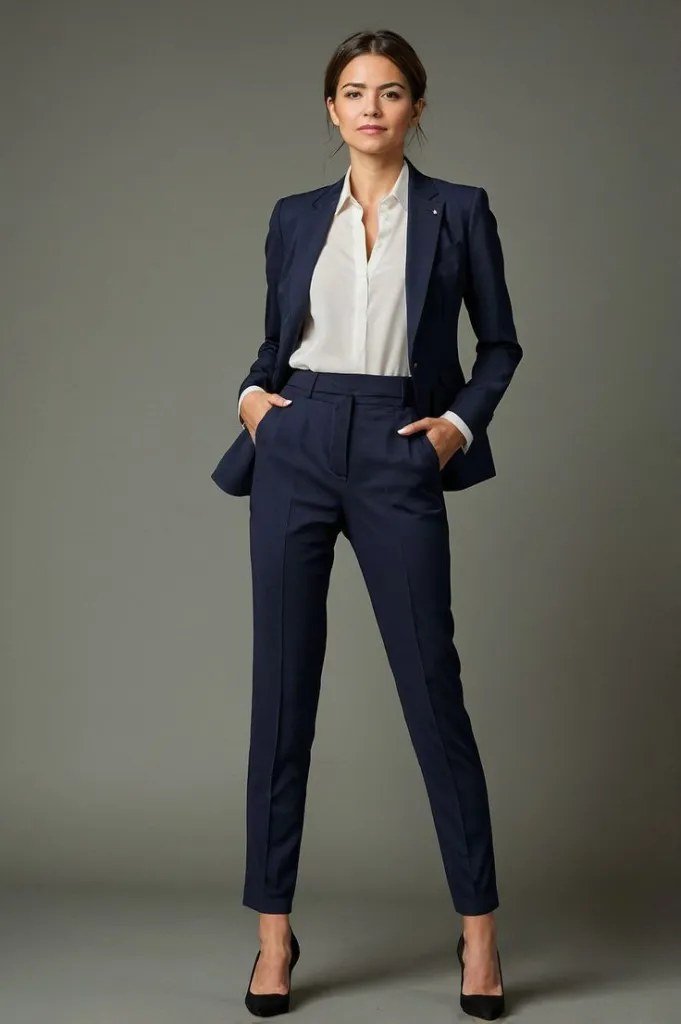
If what is business casual really supposed to look like for women has been living rent-free in your head, you’re in good company. Style questions have a way of feeling trivial until they start affecting your confidence — and then they don’t feel trivial at all. How you dress shapes how you carry yourself, and that’s not vanity, it’s psychology. The good news: you don’t need a new wardrobe or a fashion degree. You need a clear-eyed look at what works for you specifically. That’s exactly where we’re headed.
Permission slip, if you need one: you’re allowed to care about this. Caring about how you look isn’t shallow — it’s a form of self-respect, and it affects how you move through the world. The people who dismiss style as vanity usually haven’t felt the quiet confidence of an outfit that’s exactly right. You deserve that feeling, and it’s more accessible than you’ve been led to believe.
The Honest Answer to: What is business casual really supposed to look like for women
The straightforward answer: yes, and it’s more achievable than the fashion industry wants you to believe. The industry profits from making style feel like a moving target that requires constant purchases. In reality, the fundamentals are stable: fit, proportion, color harmony, and grooming do the vast majority of the work. Get those right and the specific items matter surprisingly little. I’ve seen people look incredible in thrifted outfits and terrible in designer head-to-toe — the difference was never the price tag.
And please, dodge the comparison trap. Social media style is curated, filtered, professionally lit, and often sponsored. Real life is none of those things, and that’s fine. You’re dressing for your life — your commute, your job, your weekends — not for a photoshoot. The only audience that matters is you, feeling good in your own skin. Keep your eyes on your own closet and you’ll go further than the trend-chasers.
If you want to go deeper, fashion and lifestyle advice from Good Housekeeping and style coverage at Vogue are both solid next stops — reputable sources worth bookmarking alongside this guide.
Why This Is Worth Getting Right
Here’s why I think this deserves real effort: the ripple effects go way beyond clothes. When you feel good in what you’re wearing, you carry yourself differently — you speak up more, you stop tugging at your sleeves, you walk into rooms a little taller. That’s not vanity; it’s the well-documented psychology of enclothed cognition. Your outfits are tools, and learning to use them well pays dividends in confidence that spill into work, dating, and daily life.
What Actually Works in Real Life
Here’s your step-by-step. Take it at your own pace; even the first three steps change the game:
- Prioritize fit above everything. Shoulders sit at the shoulder, hems hit the right spot, nothing pulls or pools. When in doubt, buy to fit the largest part and tailor the rest — it’s cheaper than you think.
- Learn your actual measurements and sizes across brands. Sizes are meaningless — vanity sizing made sure of that. Know your numbers, and online shopping stops being a gamble.
- Do the closet audit first. Try on everything, keep what fits and feels like you, and be ruthless with the rest. You can’t build good outfits from a closet full of maybes. This single afternoon of work clarifies everything that follows.
- Don’t skip grooming. Hair, nails, skin — the frame around the outfit matters enormously. You can wear simple clothes and look fantastic if the grooming is on point; the reverse is rarely true.
- Learn basic care and maintenance. A steamer, a lint roller, shoe polish, and knowing when to wash things — maintenance is what separates ‘nice clothes’ from ‘nice outfits.’ Looking polished is mostly just looking cared-for.
- Find your references. Save photos of outfits you love — real people, not just models — and look for patterns. Your saved folder is a map of your taste; follow it.
- Take the mirror photo. Before you leave, snap a quick full-length photo. The camera is brutally honest in a way mirrors aren’t, and you’ll train your eye ten times faster with this one habit.
Mistakes That Get in the Way
Now the pitfalls — I see these constantly, and they’re all avoidable:
- Copying someone else’s style wholesale. Inspiration is great; imitation usually misfires because their body, coloring, and life differ from yours. Steal principles, not outfits.
- Keeping clothes that don’t fit ‘just in case.’ They take up space, guilt you daily, and never get worn. Release them — your closet should be a toolbox, not a museum of intentions.
- Buying for a fantasy life. The occasion-wear for events you never attend, the aspirational sizes, the ‘someday’ pieces. Dress for the life you actually live — that’s where the value is.
- Forgetting comfort. If you’re tugging, adjusting, or counting the minutes until you can change, the outfit has failed no matter how it photographs. Comfort isn’t the enemy of style — it’s a prerequisite.
- Neglecting tailoring. Off-the-rack is cut for an imaginary average person. Small alterations make clothes look custom, and they’re far cheaper than buying up a price tier.
Quick Answers to Common Follow-Ups
What about sustainable and ethical concerns?
The most sustainable garment is the one you wear for years, so longevity is the greenest choice you can make. Buy less, choose well, care for what you own, and consider secondhand for trend experiments. You don’t need perfection here — just better defaults than fast-fashion impulse cycles.
How do I handle dress codes I don’t understand?
When in doubt, aim one notch above what you expect and keep it simple. You can always dress down a slightly polished outfit with casual details, but you can’t dress up an underdressed one on the spot. And asking the host or a colleague is never the faux pas people fear it is.
How much should I realistically budget?
Less than you fear. A functional refresh is very doable for $200 to $400 if you shop strategically — focusing on gaps, not overhauls. And remember the closet audit comes first; many people find they need far less than they assumed. Spend on fit and fabric where it shows, save everywhere else.
The Bottom Line
If there’s one takeaway here, it’s this: what is business casual really supposed to look like for women rewards attention, not spending. The people who look best aren’t the ones with the biggest budgets — they’re the ones who learned their fit, their colors, and their patterns, then applied them consistently. Do the audit, learn your numbers, build around what works. Style is a skill, and like any skill, it responds to practice. Start practicing today.
Keep exploring on SnapNews24: How can I Dress Professionally while Working from Home on Video Calls and What are the Best Fabrics for Hot Summer Weather and How do I Build a Capsule Wardrobe with under 30 Pieces.