
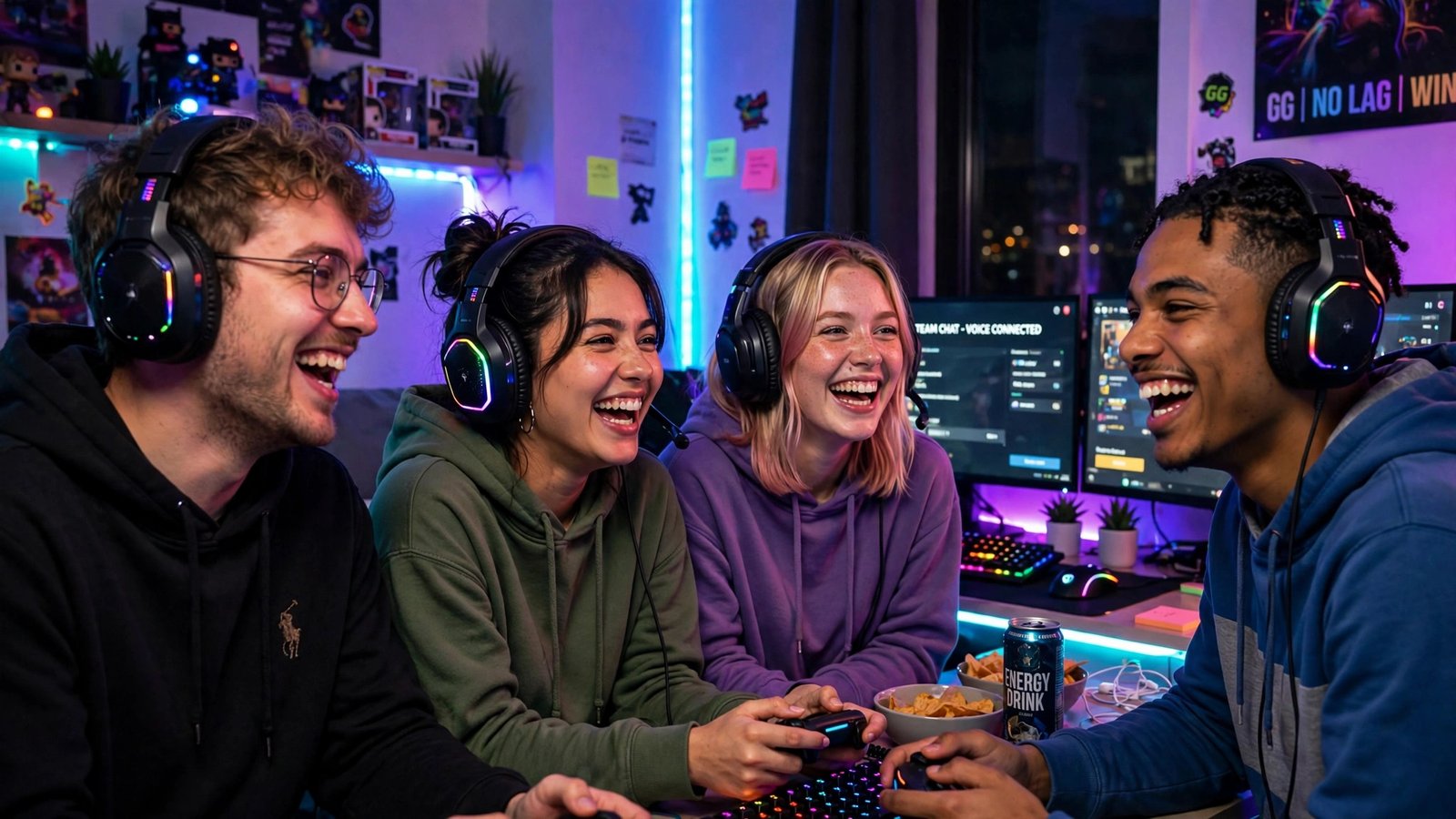
Gaming alone is fine. Gaming with the right people is transformative — the clutch revives, the inside jokes, the 2 a.m. “one more game” sessions. But finding those people as an adult, especially if your real-life friends don’t game (or don’t game your games), feels oddly like dating: where do you even meet people, and how do you know they’re not terrible?
The good news: gaming in 2026 has more structured ways to find your people than ever — if you know where to look and how to vet. Here’s the complete guide.
Start In-Game: The Built-In Systems
Most modern games have friend-finding infrastructure players ignore:
- Looking-for-group (LFG) tools: built into Destiny 2, Final Fantasy XIV, World of Warcraft, and many others — filter by activity, skill level, and vibe (chill vs. sweaty).
- Guilds/clans/communities: the single best friend source in MMOs and live-service games. Shop around — good guilds recruit with clear descriptions of their culture (“casual adults, no raging”). Leave bad fits fast; there’s always another guild.
- In-game events and social hubs: seasonal events, hub areas, and community challenges are designed for mingling. Show up, be friendly, add the fun people.
- Mentor/novice systems: FFXIV’s Novice Network and similar systems pair veterans with newcomers — great for learning and meeting patient people.
Pro move: after a great random match, send the friend request immediately with a note (“great comms on that push”). Most lifelong gaming friendships start as one good random queue.
Discord: The Real Social Layer of Gaming
Discord is where gaming friendships actually live in 2026 — most games’ communities organize there:
- Official game servers: nearly every major game has one with LFG channels. Start here for volume.
- Community servers: streamer communities, subreddit Discords (r/GamerPals, game-specific subs), and regional servers (“US East adults 25+”) offer better culture matching.
- Introduce yourself properly: use the intro channels — age range, games, schedule, playstyle, mic status. Specificity attracts compatible people; “looking for friends to play with” attracts no one.
- Lurk, then engage: join voice channels for casual hangouts before committing to a group. Vibe-checking is normal and expected.
The ESRB’s online-safety resources include guidance on managing privacy and interactions in gaming communities — worth reviewing before sharing personal details with new online friends.
Dedicated Friend-Finding Platforms
- r/GamerPals and game-specific subreddits: post with details (games, platform, timezone, age, mic, playstyle). The template posts that list everything get the best responses.
- Gaming friend-finder apps and sites: several platforms match gamers by game, schedule, and playstyle — think dating-app mechanics for squad formation.
- Xbox/PlayStation/Steam communities: platform-level groups and clubs organize regular sessions; Steam’s game hubs have active LFG discussions.
- Twitch streamer communities: smaller streamers’ Discords are genuinely social — regulars play together off-stream. Find a streamer whose vibe matches yours.
Vetting: Finding Good People (and Avoiding Bad Ones)
- Play a few low-stakes games first before committing to a regular group — quick play, not ranked.
- Watch how they handle losing: raging at teammates in game two predicts game twenty. Leave early; don’t “give them another chance.”
- Check the schedule fit honestly: a great group you can never play with isn’t a great group for you. Timezone and availability alignment matters more than skill matching.
- Prefer voice: mic users build real friendships; text-only stays transactional. If you’re mic-shy, start in casual voice channels — it gets comfortable fast.
- Trust your gut on toxicity: slurs, harassment, or cruelty aren’t “just gamer culture” — they’re disqualifiers. Mute, block, report, move on.
Safety basics from the FTC’s online-safety guidance: never share your real name, address, school/workplace, or financial info with gaming acquaintances; use gaming handles everywhere; and be cautious with voice changers off — your voice is identifying. For younger gamers, parental controls done right keep the social side of gaming safe.
Keeping the Friendship Alive
Finding people is step one; keeping a group is the real game:
- Regular sessions beat sporadic marathons: a weekly 2-hour night outlasts monthly 8-hour binges for group cohesion.
- Rotate games: groups die when the main game gets stale. Keep a secondary game in the rotation.
- Use a shared chat: a Discord channel or group chat for memes, scheduling, and non-gaming talk turns teammates into friends.
- Be the organizer sometimes: groups need someone who proposes the time. If nobody does, do it — leadership is attractive.
- Handle skill gaps gracefully: mixed-skill groups last longer with the right norms — casual modes together, ranked separately, no shaming.
And when the squad’s game gets cozy rather than competitive, relaxing games for casual players make perfect group wind-down titles. Planning an actual hangout? A well-planned virtual game night turns online friends into real memories.
From Online to IRL: Taking Friendships Offline Safely
Many gaming friendships eventually outgrow the game — here’s how to deepen them safely:
- Expand the connection gradually: move from game voice to Discord hangouts, then to watching movies together (streaming party apps), then to other shared interests. Let trust build in layers over months.
- Video calls before anything else: a face-to-face video chat verifies identity and deepens the friendship enormously. Catfishing in gaming communities is real — video is the verification.
- Meeting in person: start with group meetups at gaming conventions (PAX, local cons) — public, structured, with easy exits. One-on-one meetups should wait until deep trust exists, and even then: public place, daytime, tell someone your plans, and have your own transport.
- Respect boundaries: some online friends prefer staying online-only — that’s valid. Never pressure for personal details, photos, or meetups.
- Watch for red flags: requests for money, reluctance to video verify, love-bombing, or pushing for personal info are disqualifiers regardless of how fun the games are.
The best gaming friendships follow the same arc as any friendship: shared activity, regular contact, growing trust, deeper connection. The game is just the place you met — what you build from there is up to you.
Frequently Asked Questions
Is it weird to look for gaming friends as an adult?
Not at all — the average gamer is in their 30s, and huge communities exist specifically for adult gamers with jobs, kids, and limited schedules. “Dad gamers,” “9-to-5 gamers,” and similar groups are massive.
How do I find people in my timezone?
Filter explicitly: mention timezone in every LFG post and Discord intro, join regional servers, and prefer communities organized around your region. Nothing kills a group faster than a 5-hour timezone spread.
What if I’m bad at the game?
Join casual/chill-labeled groups — they exist for every game and explicitly welcome learners. Everyone was bad once; the right group teaches rather than mocks. Avoid “sweaty”/competitive-labeled groups until your skills match.
How do I stay safe meeting online friends?
Keep personal details private until deep trust is established (months, not days), never share financial info, use platform voice rather than phone numbers, and if you ever meet in person, make it public, daytime, and with someone knowing where you are.
The Bottom Line
Finding online gaming friends is a system: use in-game LFG and guilds, live in the right Discord servers, post specific friend-finder listings, vet through low-stakes games, and maintain the group with regular sessions. Your next favorite people are one good random queue — or one well-written LFG post — away.