
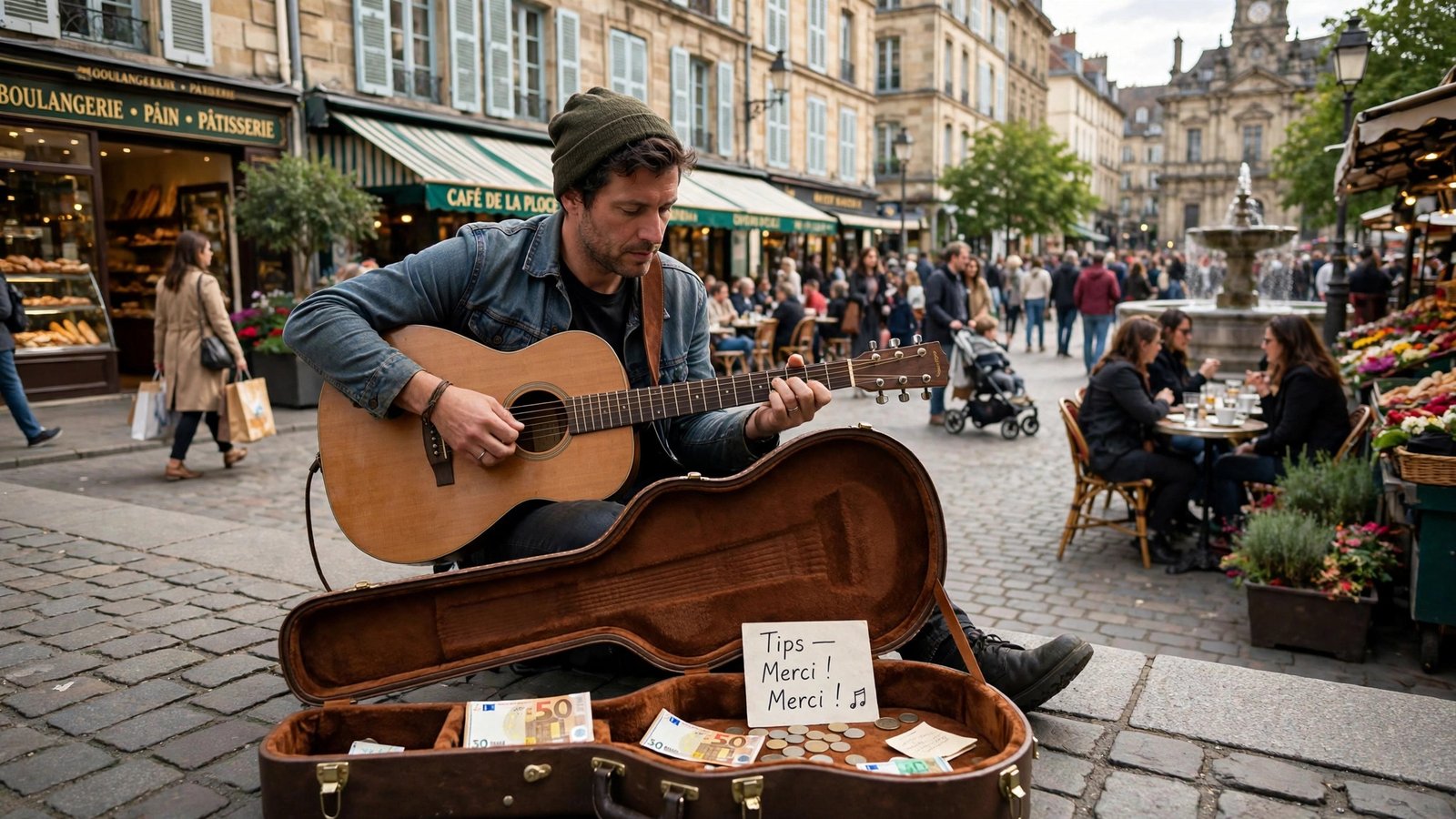
Street performing — busking — is one of humanity’s oldest gigs, and in 2026 it’s having a quiet renaissance. Viral busker videos mint careers overnight, cities are formalizing busking programs, and cashless tipping has solved the oldest problem in the business (nobody carries cash). Top street performers in prime locations report earning $100–$300+ on good days — real money for doing what you love.
But busking profitably isn’t just “play well in public.” It’s location strategy, crowd psychology, legal compliance, and showmanship. Here’s how to busk and actually make money at it.
First: Check the Law (It’s Hyper-Local)
Busking legality varies wildly — by city, and often by block:
- Permit cities: many major cities require busking permits ($25–$100+/year). Some use lotteries or auditions for prime spots (notably some transit systems and tourist districts).
- Amplification rules: often regulated separately from busking itself — many areas allow acoustic performance freely but restrict amps.
- Location restrictions: transit stations, parks, and commercial districts each have their own rules. What’s legal on the sidewalk may be banned in the subway.
- Time and noise ordinances: decibel limits and curfews apply.
Research your specific city before your first outing — a ticket wipes out a week’s earnings. Start with your city’s website and local busker communities, who know the unwritten rules (which corners are claimed, which security guards are strict). The SCORE small-business resources (free mentorship from the SBA) can help if you decide to formalize busking into a real music business.
Location: 80% of the Income
Experienced buskers agree: location matters more than talent. What makes a spot profitable:
- Foot traffic with dwell time: you need crowds that slow down — transit exits, shopping streets, restaurant rows, park entrances, tourist areas. Highways of rushing commuters don’t tip; lingering crowds do.
- Good acoustics: subway arches, building alcoves, and narrow streets amplify naturally. Open windy plazas dissipate sound (and tips).
- Visibility: people tip performers they can see approaching. Corners and open sightlines beat hidden nooks.
- Right crowd, right time: lunch crowds (office workers, generous, time-pressed), weekend shoppers, evening entertainment districts, tourist seasons. Learn your city’s rhythms.
- Low competition: scout spots at your planned times — three guitarists on one block splits everyone’s income.
Test spots systematically: play the same 2-hour window at different locations and track earnings. Data beats hunches within a couple of weeks.
The Performance: Busking Is a Different Skill Than Gigging
- Play the hits: recognizable songs stop foot traffic; obscure originals don’t (yet). The 80/20 rule: 80% crowd-pleasers, 20% your own material — and watch which originals get responses.
- Start strong: your first 60 seconds determine whether a crowd forms. Open with your most arresting, upbeat piece.
- Perform, don’t just play: eye contact, smiles, movement, talking to the crowd between songs. Passersby tip performers; they walk past background music.
- Build the crowd: acknowledge tippers by name if you catch it, thank the crowd collectively, create moments (the big finish, the singalong chorus).
- Read the energy: families with kids want fun and familiar; evening crowds want atmosphere; lunch crowds want upbeat brevity.
Repertoire depth matters: 3–4 hours of material without obvious repeats, since regulars notice. And keep learning — learning guitar as an adult is how many buskers started, and busking itself is the fastest practice there is.
Maximizing Income: The Business Side
- Go cashless: a QR code to Venmo/CashApp/PayPal on a clear, large sign is now essential — most tippers under 40 don’t carry cash. Some buskers report cashless doubling their income.
- Seed the case: put a few of your own bills in the tip jar/case — social proof works. An empty case stays empty; a case with money attracts money.
- Signage: your name/act, social handles, QR codes, and a tip prompt (“Tips keep the music playing!”). Professional signage signals you’re serious — serious gets tipped.
- Merch: CDs still sell to tourists; stickers and small items ($5) convert listeners to supporters. An email/SMS list signup (QR code) builds a following beyond the street.
- CDs of originals: “that song you liked is on here” converts applause to $10–$15 sales.
- Book gigs from the street: your best-paying outcome isn’t tips — it’s the restaurant owner, wedding planner, or event booker who discovers you. Have cards ready.
Track everything: earnings by location, day, and hour. Busking is a business, and businesses run on data. Top performers treat spot selection like retail site selection.
Gear: Sound Good Without Going Broke
- Acoustic-first: start acoustic — no permits for amps in many areas, no batteries, no setup. A good acoustic instrument in a good spot needs nothing else.
- Battery amp (if allowed): compact busking amps ($150–$300) with 4–6 hour battery life transform your projection. Check local amplification rules first.
- Protect your gear: weather, theft, and accidents are occupational hazards. A beater instrument for the street preserves your good one; instrument insurance is cheap.
- Comfort: a good stool, water, sunscreen, weather-appropriate clothing. Four hours is a workday — dress for it.
The Recording Academy’s career resources cover the broader music-business skills — contracts, rights, promotion — that turn busking momentum into a sustainable career.
Winter Busking: Adapting to the Cold Months
Street income craters in winter — fewer pedestrians, numb fingers, weather damage. Adapt or hibernate:
- Move indoors-ish: transit stations, covered markets, shopping arcades, and mall-adjacent spots (with permission) keep you playing through winter. Indoor acoustics are often better anyway.
- Protect your hands: fingerless gloves with mitten flaps, hand warmers in pockets between songs, and shorter sets. Cold fingers don’t just hurt — they play badly, which costs tips.
- Protect the instrument: rapid temperature/humidity swings crack wood. Acclimatize gradually, use a humidified case, and consider a carbon-fiber or laminate beater for winter duty.
- Shift to content: many buskers use winter for recording, video editing, and building the online audience that amplifies next summer’s earnings. The street teaches; winter lets you package the lessons.
- Holiday premium: December is actually lucrative in shopping districts — festive repertoire plus gift-buying crowds plus generosity. The two weeks before Christmas can match a summer month.
Growing Beyond the Sidewalk
Busking is a launchpad, not just an income: film your sets (a tripod and a phone), post consistently, engage the followers you collect. The buskers who break out combine street income with content income — and the street provides endless content. Local press loves busker stories; pitch yours. And the private-gig pipeline (weddings, corporate events, restaurants) pays 10–50x the hourly rate of tips — every street set is an audition.
Finding your audience starts locally too — finding local live music events plugs you into the scene that books buskers for real gigs, and the vinyl community overlaps heavily with live-music supporters.
Frequently Asked Questions
How much can you realistically make busking?
Wildly variable: $20–$50 for a slow weekday set in an average spot; $100–$300+ on prime weekend/tourist locations for skilled performers. Annualized, dedicated buskers in great cities clear meaningful income — but treat early months as learning, not earning.
Do I need a permit to busk?
Depends entirely on your city — many require permits, some require auditions for premium spots, some are effectively unregulated. Check municipal codes and ask local buskers; fines erase profits fast.
What songs work best for busking?
Recognizable, upbeat, singable songs — classics and current hits that make people stop. Originals work once a crowd has gathered, not before. Watch what gets tips and adjust ruthlessly.
How do I handle hecklers or bad days?
Professionally and briefly — acknowledge with humor, don’t engage beyond that, and keep playing. Bad days are data (wrong spot? wrong time? off performance?), not verdicts. Every veteran busker has bombed; the ones who lasted kept showing up.
The Bottom Line
Profitable busking is a craft stacked on a craft: legal compliance, strategic location selection, crowd-pleasing performance skills, cashless tipping infrastructure, and business tracking. Master the stack and the sidewalk becomes both a stage and a livelihood — with the best audience development program in music: thousands of potential fans walking past daily.