Bill Murray: Net Worth, Age, Family and Career Explained
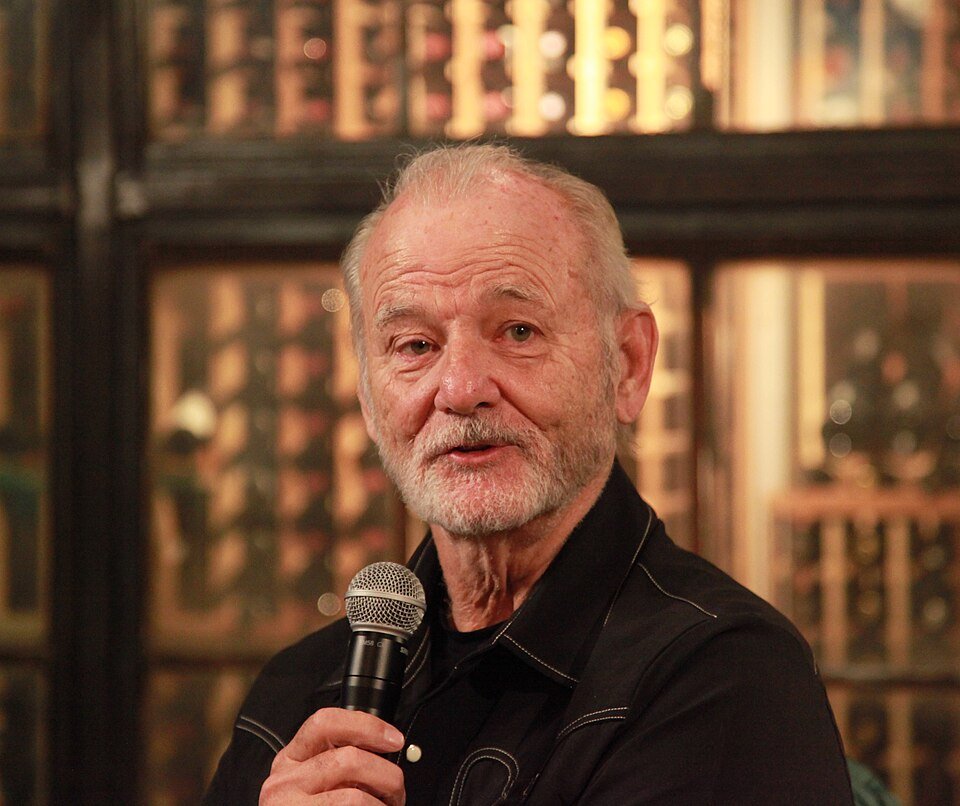
Bill Murray is 76 years old, born William James Murray on 21 September 1950 in Evanston, Illinois, and he remains the most gloriously unpredictable figure in American comedy — a Saturday Night Live pioneer, the star of Ghostbusters and Groundhog Day, and an Oscar-nominated dramatic actor who still turns up unannounced at other people’s parties, weddings and, lately, on tour with a blues-rock band. Celebrity Net Worth estimates his fortune at $180 million, and this profile covers his family of nine children, his two marriages — he has no current wife — his six sons, and a career now entering its sixth decade.
One of nine children in Evanston
William James Murray was born on 21 September 1950 in Evanston, Illinois, and was raised in Wilmette, a suburb north of Chicago, as the fifth of nine children in a large Irish Catholic family. His father, Edward Joseph Murray II, was a lumber salesman. His mother, Lucille, born Collins, worked as a mailroom clerk. The household was crowded, competitive and funny by necessity — several of the Murray children would eventually make their living in comedy, which tells you something about the standard of the dinner-table competition. Murray has described a childhood of caddying at local golf clubs, singing in a school rock band and absorbing the particular Chicago skill of deflating pomposity, his own included, before it gets started.
His father died in 1967, when Murray was seventeen, a loss that arrived just as the family’s eldest children were leaving home and that he has occasionally, and unusually seriously, acknowledged as the end of his childhood. He attended Loyola Academy in Wilmette, then briefly studied pre-medicine at Regis University in Denver — an episode that ended, in the most famous anecdote of his early life, with an arrest at Chicago’s O’Hare Airport on his twenty-first birthday for joking about bombs in his luggage, and a sentence of probation. The medical career died there. What replaced it was Chicago improvisation: his older brother Brian had joined The Second City, the legendary improv troupe, and Murray followed him into it, studying under Del Close. It was the single most important decision of his professional life, because everything in the Murray method — the deadpan, the improvisation inside written scenes, the refusal to signal the joke — was built on that stage.
SNL, Ghostbusters and the Rushmore turn
1977: Saturday Night Live and the new comedy
Murray’s national break came through radio and then television: he joined The National Lampoon Radio Hour alongside future collaborators including John Belushi and Gilda Radner, and in 1977 he was hired for Saturday Night Live, initially — in a piece of casting history he has never let anyone forget — as a replacement for Chevy Chase. He won an Emmy Award for his writing on the show, created beloved characters including the hopeless lounge singer Nick, and left in 1980 as one of the defining performers of the programme’s first great era. The films arrived in a rush: Meatballs (1979), his first starring role; Caddyshack (1980), in which his largely improvised groundskeeper Carl Spackler stole a film full of thieves; and Stripes (1981), a major hit that confirmed him as a bankable film comedian.
1984: Ghostbusters and superstardom
After Tootsie (1982), in which he held his own in a supporting role opposite Dustin Hoffman, Murray starred in Ghostbusters (1984) as Dr Peter Venkman — the performance that made him one of the biggest film stars in the world and a fixture of popular culture for the next forty years. The same year he took the dramatic lead in The Razor’s Edge, a passion project that failed commercially and taught him the cost of following his instincts in public; he stepped away from acting for a period afterwards. He returned with Scrooged (1988), Ghostbusters II (1989), What About Bob? (1991) and then Groundhog Day (1993), the comedy about a weatherman reliving the same day that has grown with every decade since into something close to a philosophical classic — regularly voted among the greatest comedies ever made, and studied in contexts its makers never anticipated. Even an actor’s off-duty reading follows the same pattern of small decisions accumulating, rather like a homeowner working through how to stop a cat from scratching the furniture — one habit, patiently redirected, changes the whole room.
1998: Rushmore and the second career
The reinvention came from a young director named Wes Anderson, who cast Murray in Rushmore (1998) as the melancholy industrialist Herman Blume. The performance — funny, sad and entirely without mugging — opened a second career that has arguably outlasted the first: Murray became Anderson’s stock company leader, appearing in The Royal Tenenbaums (2001), The Life Aquatic with Steve Zissou (2004), The Darjeeling Limited (2007), Fantastic Mr. Fox (2009), Moonrise Kingdom (2012) and The Grand Budapest Hotel (2014) among others. In parallel, Sofia Coppola cast him in Lost in Translation (2003) as a fading film star marooned in Tokyo, and the performance won him the BAFTA and Golden Globe awards for Best Actor and an Academy Award nomination — the industry formally acknowledging what audiences had suspected since Groundhog Day, that the deadpan was an instrument, not a limitation. Broken Flowers (2005) for Jim Jarmusch deepened the dramatic register further.
2009: The legend years and the unlisted phone number
From Zombieland (2009), in which he played himself in one of the most celebrated cameos in modern comedy, onwards, Murray’s career became partly a work of performance art conducted in public. He famously has no agent and no manager; filmmakers reach him through a freephone number and leave messages, a system that has produced both masterpieces and famous near-misses. He headlined St. Vincent (2014), voiced Baloo in The Jungle Book (2016), returned to the Ghostbusters universe in Afterlife (2021) and Frozen Empire (2024), and appeared in the Marvel film Ant-Man and the Wasp: Quantumania (2023). Alongside the films runs the folklore — the parties crashed, the wedding photographs photobombed, the bartending shifts worked in Brooklyn — much of it documented, all of it consistent with a man who decided decades ago that his life would not be run by an office. In 2025 and into 2026 he has been touring as a singer with the blues-rock band the Blood Brothers, a septuagenarian frontman playing clubs — the latest, and perhaps the most Murray, chapter of all.
The unpredictable comic in brief
| At a Glance | Details |
|---|---|
| Born | 21 September 1950, Evanston, Illinois |
| Age | 76 years old |
| Height | 6 feet 2 inches (listings have varied between 6 feet 1 inch and 6 feet 2 inches) |
| Weight | No reliable published figure exists |
| Wife | No current wife. Previously married to Margaret Kelly (1981–1996) and Jennifer Butler (1997–2008) |
| Children | Six sons: Homer, Luke, Caleb, Jackson, Cooper and Lincoln |
| Parents | Edward Joseph Murray II (died 1967) and Lucille Murray (née Collins) |
| Siblings | One of nine children; his brothers include actors Brian Doyle-Murray, John Murray and Joel Murray |
| Net Worth | $180 million (Celebrity Net Worth) |
| No official personal account — he has no confirmed social media presence |
Six sons and a life without a listed number
Murray’s family is where the comedy started. Edward and Lucille Murray raised nine children in Wilmette, and the siblings remain central to his story: he is the fifth of the nine. Three of his brothers followed him into acting — Brian Doyle-Murray, the eldest of the acting brothers, who co-wrote Caddyshack and has appeared alongside Bill in film after film; John Murray; and Joel Murray, the youngest, a familiar face from Mad Men and dozens of other productions. His other brothers are Ed and Andy, and his sisters are Nancy, Peggy and Laura. The family business, in effect, became show business, with Brian in particular serving as collaborator, co-writer and occasional on-screen conscience across forty years of his brother’s career.
The wife question, like the listings, needs updating: Bill Murray has no current wife and has not remarried since 2008. His first marriage was to Margaret Kelly, known as Mickey, whom he married on 25 January 1981 — first in Las Vegas, during the filming of Stripes, and then again in Chicago for the family. They had two sons, and the marriage ended in divorce in 1996. His second marriage was to Jennifer Butler, a costume designer he had met during the production of Scrooged; they married in 1997 and had four sons. Butler filed for divorce in 2008, and the marriage ended that year. Butler died on 19 January 2021, at the age of fifty-seven — a fact recorded here plainly, as the end of a long and complicated chapter in the family’s life.
He has six sons. With Margaret Kelly: Homer, born in 1982, who became a restaurateur in Brooklyn, and Luke, born in 1985, who became a college basketball coach — an assistant coach with the University of Connecticut’s championship programme, which has made his father the sport’s most famous courtside spectator. With Jennifer Butler: Caleb, born in 1993; Jackson, born in 1995; Cooper, born in 1997; and Lincoln, born in 2001. Murray has described fatherhood across that forty-year span — his eldest son is in his forties, his youngest in his twenties — as the one continuous role in a life of discontinuous ones, and his public appearances at his sons’ restaurants and basketball games are among the few predictable entries in an unpredictable diary.
The $180 million of a man who turns up anywhere
Celebrity Net Worth estimates Bill Murray’s net worth at $180 million. The figure rests on one of the longest earning careers in American film comedy: leading-man salaries from the 1980s onwards, a share of one of the most durable franchises in cinema history in Ghostbusters, four decades of steady film work since, and the kind of backend participation available to a star of his standing in his peak years. He has never published financial information, and the $180 million should be read as a tracker estimate — but it is one of the most stable figures in celebrity finance, unchanged across sources and years, which itself says something about how little speculation his finances invite.
His lifestyle is famously resistant to the usual celebrity inventory. He has owned property in several places over the years, including South Carolina, where he became a part-owner of minor-league baseball teams — most famously the Charleston RiverDogs — and has indulged a lifelong devotion to golf, to the Chicago Cubs, and to turning up where he is not expected. There is no verified inventory of homes or possessions of the kind attached to his contemporaries, because Murray has never supplied one and rarely cooperates with the machinery that produces them.
Instagram completes the picture: there isn’t one. Murray has no official personal Instagram account and no confirmed social media presence of any kind — a position multiple profiles note with something like awe, given his fame. Accounts bearing his name are fan-run and unofficial. In an industry that now treats a social feed as a second career, the most imitated comic actor of his generation conducts his entire public life the way he did in 1977: in person, unannounced, and on his own schedule.
The legend who never learned to sit still
Bill Murray’s career has lasted because it was never only a career. The Second City training produced a comedian; Ghostbusters and Groundhog Day produced a legend; Rushmore and Lost in Translation produced the dramatic actor the legend had been hiding. At 76, one of nine children from Wilmette, a father of six sons, worth an estimated $180 million and currently fronting a blues band on tour, he remains the industry’s standing proof that the most durable strategy in show business is to be, stubbornly and completely, yourself.