Jerry Seinfeld: Net Worth, Age, Family and Career Explained
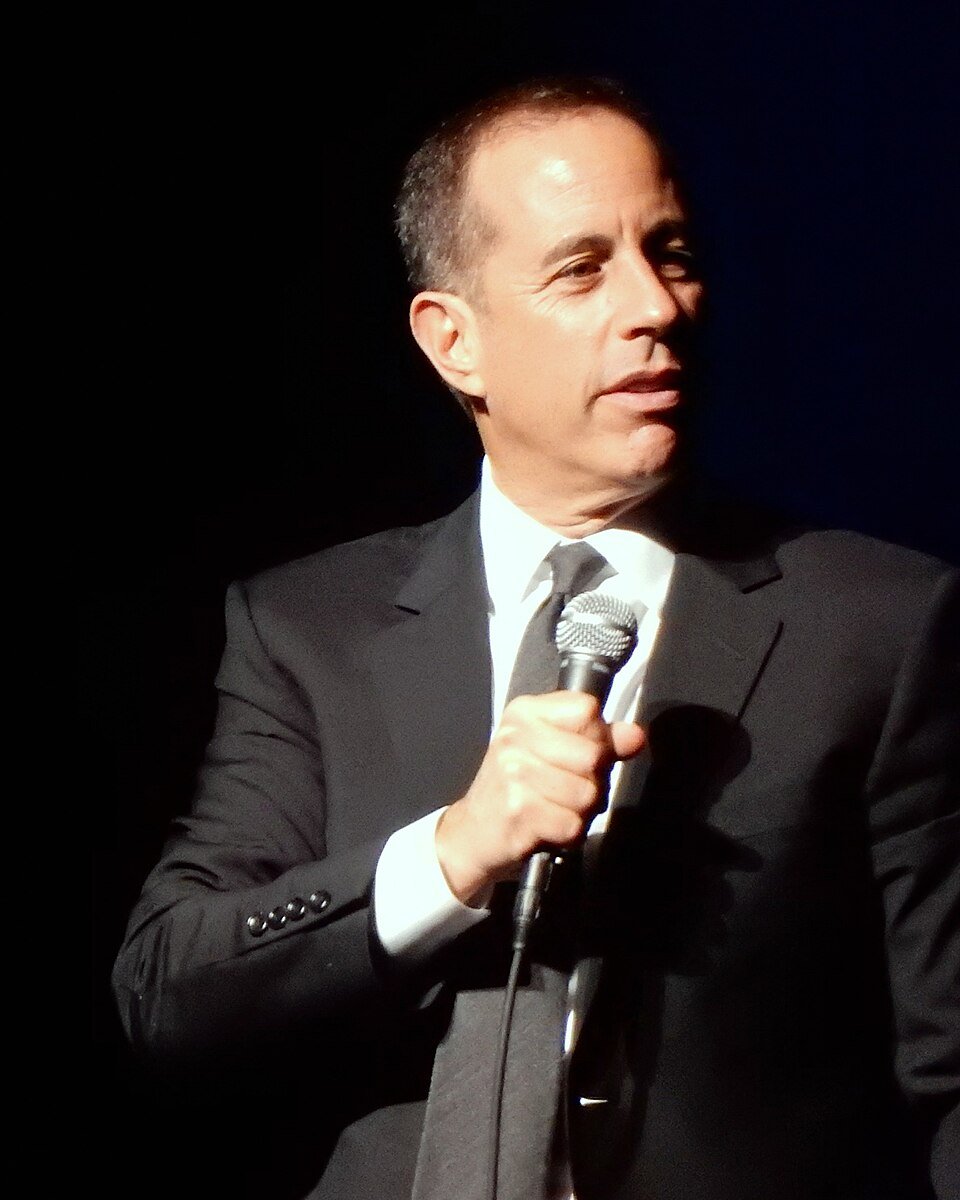
Jerry Seinfeld is 72 years old, born on 29 April 1954 in Brooklyn, New York, and he remains the most successful stand-up comedian of the television age, the co-creator and star of the sitcom that still earns him a fortune more than a quarter of a century after its final episode. Forbes estimates his net worth at $1.1 billion, while Celebrity Net Worth puts it at $900 million, and this profile covers his wife Jessica, his three children, his parents, his films and television programmes, and the Porsche-centred car collection that is almost as famous as the comedy.
A Brooklyn Childhood With a Sign Painter Father
Jerome Allen Seinfeld was born on 29 April 1954 in Brooklyn, New York City, and his birthday falls in late spring, a detail his audiences have had reason to note for decades because so much of his comedy is built from the small, dated particulars of ordinary life. He was raised in Massapequa, a suburb in Nassau County on Long Island, in a family where humour was not an abstraction. His father, Kálmán Seinfeld, was a sign painter who had collected jokes throughout his years of wartime service, storing them up the way other men stored tools, and his mother, Betty, née Hosni, ran the family end of a life built on modest means and sharp observation. Kálmán died in 1985, before his son became famous; Betty lived to see the whole arc of the success, dying in 2014 at the age of 97.
The biography, as Seinfeld tells it himself, is a story of a boy who decided early that the stage was the trade he wanted. He was drawn to stand-up as a teenager, studied the great television comics of the era, and began working the New York comedy clubs in the mid-1970s, building an act out of the material that would become his signature: the tiny absurdities of everyday behaviour, the rituals of waiting, eating, travelling and dating, examined with a precision that made the familiar look newly strange. There was no single lucky break. There were years of club sets, late spots, and slow improvement, and then, at the end of the 1970s, the first television appearances that told him the act could travel beyond the clubs.
What those club years gave him, and what never left his work afterwards, was discipline. Seinfeld has described writing every day, treating jokes as manufactured objects to be built, tested and rebuilt, and that craftsman’s attitude explains both the longevity of his career and the shape of his fortune: he built one great asset, patiently, and he kept ownership of it.
A Billion Dollars, Counted Two Ways
The two permitted sources for his fortune disagree, and the disagreement is the story. Forbes lists Jerry Seinfeld at $1.1 billion in its real-time billionaire tracking, having added him to its World’s Billionaires list in 2025. Celebrity Net Worth puts him at $900 million and disputes the billionaire calculation, arguing that it rests on assumptions about earnings and investment returns that cannot be verified from public records. His own representative has called the billionaire figures inaccurate, without offering an alternative number. The honest answer, printed here as the sources give it, is a range: $900 million to $1.1 billion, with Forbes at the top and Celebrity Net Worth at the bottom. Celebrity Net Worth estimates that he has earned roughly $800 million from the sitcom alone across salary, syndication, disc sales, merchandise and streaming — an earnings estimate, fenced off here from the net-worth totals, but an indication of where the money was made: ownership. Because he and Larry David held profit participation in the programme, every rerun cycle and every streaming deal since 1998 has paid him again.
The lifestyle attached to that fortune is famously narrow. He tours, he writes, and he collects cars. The car collection is one of the best-known private collections in the world, built around Porsche: at its height it has been reported at around 150 cars, with one tally counting 43 Porsches, among them a 1949 Porsche 356/2, a 1955 Porsche 550 Spyder of the same model and colour as the car James Dean drove, 911s from many production years, and ten Porsche Boxsters, each painted a different colour. He is reported to own the first and the last air-cooled Porsche 911s ever produced. In 2002 he bought property on Manhattan’s Upper West Side and built a two-storey garage, reported to have cost $1.4 million, to keep part of the collection on the East Coast; in the 1990s he had rented a hangar at Santa Monica Airport for the same purpose. Secondary reporting has valued the collection at between $50 million and $100 million — an estimate about the cars, printed here as reporting rather than as any part of the net-worth figures above. His Instagram account, @jerryseinfeld, is used sparingly and mostly professionally: tour dates, photographs from the road, and the occasional car, presented without ceremony to an audience that has followed him across four decades and three television eras.
Television Spots, Seinfeld and Comedians in Cars
1980–1988: Television spots and the long apprenticeship
His first television work came at the start of the 1980s, including a guest role in the sitcom Benson in 1980, but the real apprenticeship was on the talk-show circuit. Appearances on late-night television through the decade turned him into a familiar face to audiences who had never seen a comedy club, and his first stand-up special, Stand-Up Confidential, arrived in 1987. By then he was regarded within the business as one of the cleanest and most reliable acts in the country: no gimmicks, no persona beyond the raised eyebrow and the question “what is the deal with that?”, and a work rate that club owners trusted completely.
1989–1998: Seinfeld and the show about nothing
In 1989, NBC aired the pilot of a sitcom created by Seinfeld with fellow comedian Larry David. Seinfeld ran for nine seasons and 180 episodes, ending in 1998, and it became one of the most successful television programmes ever made. Seinfeld played a version of himself, a stand-up comedian in New York, surrounded by George Costanza, Elaine Benes and Cosmo Kramer, in a series famous for its interlocking plots, its catchphrases, and its refusal of sentimentality. The programme won Emmy and Golden Globe Awards, topped the ratings in its later seasons, and made its star, by the final season, the highest-paid performer on television, earning a reported $1 million per episode. He was offered a fortune to continue into a tenth season and declined, ending the show at its peak — a decision that protected the asset that would make him rich for the rest of his life, because the rerun, disc and streaming value of a catalogue that stops at its best is very different from one that fades.
1999–2009: Specials, Bee Movie and the ownership years
After the sitcom he returned to stand-up, the work he has always described as his real job. The 1998 special I’m Telling You for the Last Time closed the book on his old material in front of a live audience, and he then built an entirely new act on the road, a process documented by others as a study in professional pride: a man who never needed to work again, working as hard as the youngest comic in the club. In 2007 he co-wrote, produced and starred in Bee Movie, the animated film in which he voiced Barry B. Benson, a bee who sues the human race — a project that showed his instinct for turning an observational joke into a family entertainment property.
2010–2019: Comedians in Cars Getting Coffee
In 2010 he created and produced the reality series The Marriage Ref, and in 2012 he launched the project that defined his second act: Comedians in Cars Getting Coffee. The format was simplicity itself — Seinfeld collects a fellow comedian in a carefully chosen vintage car, drives to a coffee shop, and talks. The series ran from 2012 to 2019, moved to Netflix for its later seasons, and earned three Webby Awards. It also fused his two public passions, comedy and cars, into a single programme, and it introduced him to a streaming audience that had been too young for the sitcom’s first run. His guest appearances as himself on Curb Your Enthusiasm during these years, reuniting him on screen with Larry David, were received as events in their own right.
2017–2026: Netflix, Unfrosted and the streaming fortune
The Netflix era formalised his value. The specials Jerry Before Seinfeld (2017) and 23 Hours to Kill (2020) bookended a deal that also brought the sitcom itself to the platform, where a new generation found it through recommendation rows rather than broadcast schedules. For readers wondering how those rows are built, this explainer on how AI recommends what you watch on streaming services sets out the machinery that now decides which classic programmes surface first. In 2024 he directed, co-wrote and starred in Unfrosted, a Netflix comedy about the invention of the Pop-Tart and his feature directorial debut, leading an ensemble cast in a story built, characteristically, out of breakfast. Through 2025 and 2026 he has continued to tour theatres and arenas with new material, one of the very few performers of his generation still treating the road as the centre of the job.
The Show About Nothing and a Billion-Dollar Fortune, in Figures
| At a Glance | Details |
|---|---|
| Born | 29 April 1954, Brooklyn, New York City |
| Age | 72 years old |
| Height | 5 feet 11 inches (180 cm) |
| Weight | No reliable published figure exists |
| Wife | Jessica Seinfeld (married 1999) |
| Children | Three: Sascha (born 2000), Julian Kal (born 2003) and Shepherd Kellen (born 2005) |
| Parents | Kálmán Seinfeld and Betty Seinfeld (née Hosni) |
| Net Worth | $1.1 billion (Forbes); $900 million (Celebrity Net Worth) — sources disagree, see below |
| @jerryseinfeld |
Jessica Seinfeld, Three Children and a Long Island Home
Seinfeld met Jessica Sklar in 1998, and they married on 25 December 1999. Jessica Seinfeld is an author of cookbooks and the founder of the GOOD+ Foundation, a charity working on family poverty, and the marriage has been the fixed point of his private life for more than 25 years. Their daughter, Sascha, was born on 7 November 2000; their son Julian Kal followed in March 2003; and their youngest son, Shepherd Kellen, was born in August 2005. The three children grew up largely out of the public eye, in keeping with a family rule both parents have described: the fame was the father’s job, not the family’s identity.
His parents’ influence is easy to trace in the work. From Kálmán came the joke-collecting instinct — the belief that humour is material to be gathered, kept and used well — and from both parents came the watchful, slightly bemused view of ordinary behaviour that became the act. Family, in Seinfeld’s interviews, is spoken of with the same plainness he brings to everything else: it is the part of life that is not material, and he has kept it that way on purpose, rarely discussing his children in detail and never building content around them. What he does discuss, freely and at length, is process — the writing, the touring, the cars — and it is noticeable that the private and professional ledgers have stayed separate for four decades in the public eye.
The Most Successful Stand-Up of the Television Age
Jerry Seinfeld’s career is the cleanest case study in entertainment of ownership beating salary. A sign painter’s son from Massapequa built an act out of everyday life, turned it into a sitcom he part-owned, stopped that sitcom at its peak, and has spent the years since touring, filming comedians in his own cars, and watching the catalogue pay him again and again. At 72, married to Jessica for more than 25 years, father of Sascha, Julian and Shepherd, and worth an estimated $900 million to $1.1 billion depending on which permitted source you trust, he is still, by his own account, simply doing the job he chose as a teenager: standing on a stage, asking what the deal is.