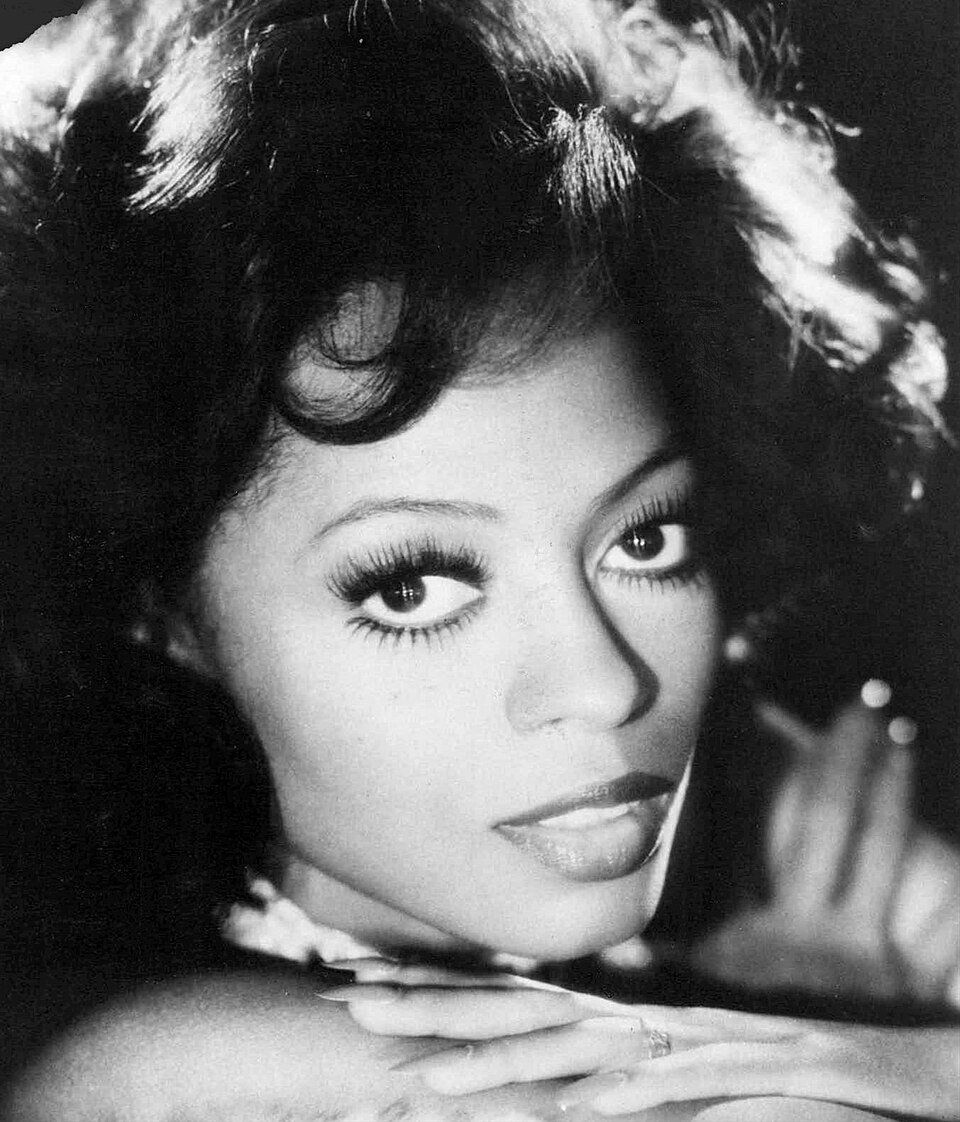
Diana Ross: Net Worth, Age, Family and Career Explained
Diana Ross is 82 years old, born Diana Ernestine Earle Ross on 26 March 1944 in Detroit, Michigan, and she remains one of the most successful singers of all time, with more than 100 million records sold across her group and solo careers. Celebrity Net Worth currently estimates her fortune at $350 million, and this profile covers her five children, her parents, her two marriages, and the songs and albums that carried her from the Primettes to the Supremes and far beyond.
Detroit, eighty-two, $350 million: the Diana Ross file
| At a Glance | Details |
|---|---|
| Born | 26 March 1944, Detroit, Michigan, US |
| Age | 82 years old |
| Height | 5 feet 4 inches (163 cm) |
| Weight | No reliable published figure exists |
| Partner | No publicly confirmed partner; previously married to Robert Ellis Silberstein (1971–1977) and Arne Næss Jr. (1986–2000) |
| Children | Five: Rhonda, Tracee, Chudney, Ross and Evan |
| Parents | Fred Ross Sr. and Ernestine Ross (née Moten) |
| Net Worth | $350 million (Celebrity Net Worth); an earlier figure of $250 million was also published citing Celebrity Net Worth |
| @dianaross |
Ten number ones with the Supremes, then a solo career without equal
1961–1964: The Supremes find their footing
The early Supremes records made little commercial impression, and for three years the group was known inside Motown, with some cruelty, as the no-hit Supremes. Ross, Florence Ballard and Mary Wilson kept working, touring on package bills and recording whatever the label’s writers brought them. The breakthrough came in the summer of 1964 with “Where Did Our Love Go”, written by the Holland–Dozier–Holland team. It reached number one in the United States, and it did so with Ross’s light, precise voice placed firmly at the front of the record, a decision by Gordy that defined the group’s sound from then on.
1964–1969: Ten number ones and a new name
Between August 1964 and May 1967 the Supremes placed ten singles at number one, a run that made them Motown’s most successful act of the decade and one of the most commercially powerful groups anywhere. “Baby Love”, “Come See About Me”, “Stop! In the Name of Love”, “Back in My Arms Again” and “I Hear a Symphony” arrived in quick succession, followed by “You Can’t Hurry Love”, “You Keep Me Hangin’ On” and “Love Is Here and Now You’re Gone”. In 1967 the billing changed to Diana Ross and the Supremes, a public acknowledgement of where the group’s centre of gravity now sat, and the hits continued with “Reflections”, “Love Child” and “I’m Livin’ in Shame”. The group’s final single with Ross, “Someday We’ll Be Together”, became their twelfth number one at the end of 1969, and she made her last appearance with them in Las Vegas in January 1970.
1970–1980: The solo breakthrough
Ross’s solo career opened in 1970 with her self-titled debut album, Diana Ross, which carried her version of “Ain’t No Mountain High Enough” to number one and established that the voice could carry a record entirely on its own. Everything Is Everything followed the same year, and Surrender in 1971. Touch Me in the Morning, released in 1973, gave her a second solo number one with its title track, and the albums Diana Ross (1976) and Baby It’s Me (1977) kept her in the charts through the decade. “Love Hangover”, from the 1976 album, became another number one single, shifting her sound towards the dancefloor without abandoning the phrasing that had made her famous. By the end of the decade she had nothing left to prove as a solo artist, and she spent it accordingly, headlining, touring and recording at a pace few of her contemporaries matched.
1980–1991: Diana, RCA and the biggest deal of its day
The album Diana, released in 1980 and produced by Nile Rodgers and Bernard Edwards of Chic, became the best-selling album of her career, carried by “Upside Down”, which spent four weeks at number one, and “I’m Coming Out”, which has long outlived its chart run as an anthem. A duet with Lionel Richie, “Endless Love”, spent nine weeks at number one in 1981 and remains one of the biggest-selling singles of its era. That same year she left Motown after two decades and signed with RCA Records in a reported seven-year, $20 million deal, at the time the largest recording contract in music history — a contract figure, reported as such, and not a measure of her personal wealth. Her first RCA album, Why Do Fools Fall in Love (1981), sold more than a million copies, and the RCA years produced Silk Electric (1982), Swept Away (1984), Eaten Alive (1985) and Red Hot Rhythm & Blues (1987). “Chain Reaction”, written by the Bee Gees, reached number one in Britain in 1986, and Workin’ Overtime (1989) and The Force Behind the Power (1991), the latter back on Motown and containing “When You Tell Me That You Love Me”, closed a thirty-year run in which she had never been far from a chart.
1995–2026: The later albums and the long stage career
Take Me Higher (1995) and Every Day Is a New Day (1999) kept the album sequence going into a fourth decade, and Blue, a collection of standards recorded in the early 1970s and released in 2006, showed how much finished work her catalogue still held. Thank You, released in 2021, was her first studio album of new material in more than twenty years and earned a Grammy nomination for Best Traditional Pop Vocal Album, an extraordinary late chapter for an artist whose first hits predated most of the voters’ lifetimes. She has continued to perform internationally into her eighties, mounting tours built on the full catalogue, and in 2026 she was still on stage, in a fifth consecutive year of active touring. Her honours reflect the span of it: a Grammy Lifetime Achievement Award, a Kennedy Center Honor and the Presidential Medal of Freedom, awarded in 2016. Played back to back, the Supremes singles and the solo hits still form the backbone of any collection of feel-good songs for a morning playlist that needs to lift a room quickly, which is one practical measure of how completely those records entered everyday life.
A Detroit housing project, a dream, and a group called the Primettes
Diana Ernestine Earle Ross was born on 26 March 1944 in Detroit, Michigan, and her birthday, 26 March, has been marked by fans and broadcasters ever since as the starting point of one of popular music’s longest careers. Her mother, Ernestine, née Moten, worked as a schoolteacher; her father, Fred Ross Sr., worked in a factory after his years in uniform. The name on her birth certificate was Diana, although her mother had intended to call her Diane, and the certificate’s version is the one the world came to know.
The family lived in Detroit’s North End and then in the Brewster-Douglass housing projects, one of the largest public housing developments of its time, where the young Ross grew up surrounded by neighbours who would themselves become central to the city’s musical story. Music was present from the start: she sang from childhood, and as a teenager she joined a vocal group, the Primettes, formed as a counterpart to a local male group. The Primettes performed wherever they could, won a talent competition across the river in Windsor, and set their sights on the small Detroit label that was beginning to attract national attention: Motown.
What followed is one of the best-documented apprenticeships in pop. The group auditioned for Motown founder Berry Gordy, who judged them too young to sign but encouraged them to return. They did more than return: they turned up at the label’s headquarters again and again, adding handclaps and backing vocals to other artists’ sessions and making themselves impossible to ignore. In January 1961 Gordy signed them, on the condition that they take a new name. From a list he offered, they chose the Supremes.
Five children, two marriages, and a family of performers
Ross’s parents shaped the outline of her story: a teacher mother and a working father in a Detroit household where money was limited and expectation was not. Ernestine died in 1984, just as her daughter’s RCA years were at their height, and Fred Ross Sr. lived until 2007, long enough to see his daughter’s career pass its fifth decade. Ross has spoken over the years about the discipline of that upbringing and about Detroit itself, a city she has returned to in interviews throughout her life as the place where everything, including the Primettes and Motown, began.
She has been married twice, and she has had no publicly confirmed partner for many years. Her first marriage, to music executive Robert Ellis Silberstein, began in 1971 and ended in divorce in 1977. Her second, to Arne Næss Jr., a businessman and mountaineer, began in 1986 and ended in divorce in 2000. Næss died in 2004. Profiles of Ross in 2026 describe her as unmarried, and no current partner has been reported by any reliable source; this profile therefore records the position exactly as it stands and names no one.
Her five children span both marriages and the years around them. Her eldest, Rhonda Ross Kendrick, born in 1971, is the daughter of Berry Gordy; Silberstein married Ross while she was expecting Rhonda and raised her as his own, a fact the family has discussed openly for years. Tracee Ellis Ross, born in 1972, and Chudney Ross, born in 1975, are her children with Silberstein. With Næss she had two sons, Ross Arne, born in 1987, and Evan Ross, born in 1988. Tracee and Evan both built acting careers of their own, Rhonda works as a singer and actress, and Ross has kept the family close in public view: they appear together at her concerts and honours, and she is a grandmother several times over.
Three hundred and fifty million dollars from a hundred million records
Celebrity Net Worth currently estimates Diana Ross’s net worth at $350 million, the figure carried on its page in its November 2026 snapshot. The same source’s reporting has not always put the number there: Parade, in its January 2026 profile, cited Celebrity Net Worth for a figure of $250 million. The two figures are printed here as they were published, because the disagreement is part of the record: tracker estimates are built from public reporting on sales, touring and contracts, they move as those inputs are revised, and Ross has never published her own finances. Neither figure is an audited statement.
The structure behind either estimate is clear enough. More than 100 million records have been sold across her group and solo careers, and the catalogue spans the Supremes’ twelve number one singles and a solo run of more than ninety singles, twenty-five studio albums and six solo number ones. Publishing and licensing income follows songs of that durability, and her live work has continued, at headline level, into her eighties. The reported $20 million RCA contract of 1981 belongs in this section only as history: it was the largest deal of its day, it is a gross contract figure from forty-five years ago, and it is not treated here as a component of present wealth.
Her Instagram account, @dianaross, is the public window she controls directly: concert announcements, photographs from the road, archive images from the Supremes years and messages to an audience that now spans the original Motown buyers, their families and a streaming generation that met the records long after they were made. It is a working artist’s page rather than a personal diary, which suits a performer who has always kept the boundary between the stage and the rest of her life firmly drawn.
Ross sang her way out of Detroit, and never stopped singing
Diana Ross’s career is the rare one that contains two complete stardoms: the lead voice of the most successful group Motown ever produced, and a solo artist who then matched that run on her own for another two decades. At 82, mother of five, and worth an estimated $350 million on Celebrity Net Worth’s current figure, she is still performing the songs — “Baby Love”, “Upside Down”, “Ain’t No Mountain High Enough” — that she first sang as a teenager who kept turning up at a small Detroit studio until somebody signed her.