George Clooney: Net Worth, Age, Family and Career Explained
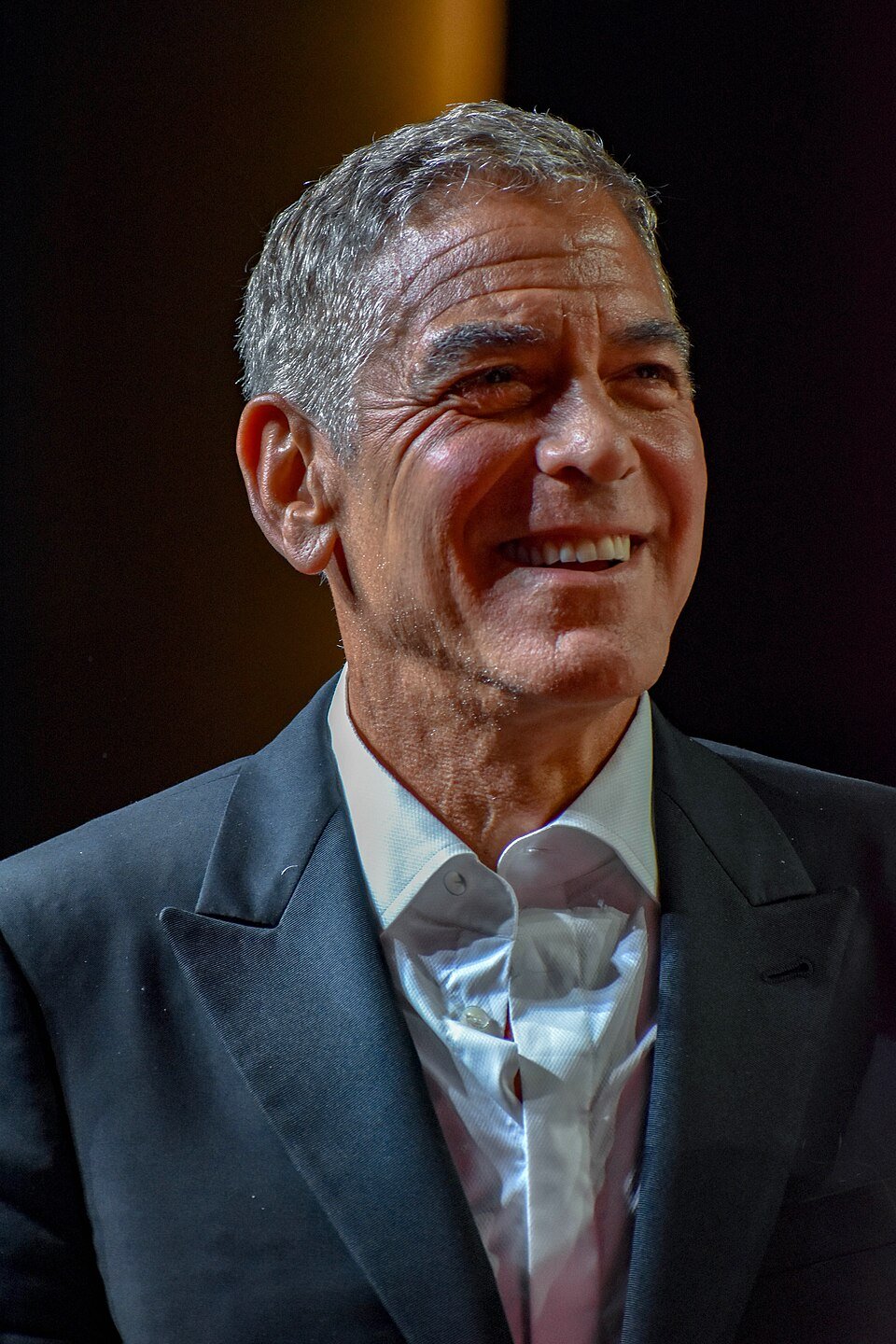
George Clooney is 65 years old, born on 6 May 1961 in Lexington, Kentucky, and the actor and film-maker remains one of the most recognisable screen stars of his generation, a two-time Academy Award winner whose biggest payday came from a tequila brand rather than a film set. Celebrity Net Worth estimates his fortune at $500 million, and this profile covers his wife Amal, his twins, his parents, his homes, and the films and television programmes that carried him from a decade of small roles to the top of Hollywood.
Lexington, ER, $500 million
| At a Glance | Details |
|---|---|
| Born | 6 May 1961, Lexington, Kentucky, USA |
| Age | 65 years old |
| Height | 5 feet 11 inches (180 cm) |
| Weight | No reliable published figure exists |
| Wife | Amal Clooney (married 2014) |
| Children | Twins: Ella Clooney and Alexander Clooney (born 2017) |
| Parents | Nick Clooney and Nina Clooney (née Warren) |
| Net Worth | $500 million (Celebrity Net Worth) |
| No official personal account |
A Kentucky schoolboy cut tobacco before Hollywood
George Timothy Clooney was born on 6 May 1961 in Lexington, Kentucky, and his birthday has been marked by profiles and retrospectives for three decades now, because the career that followed is one of the most unusual in modern Hollywood: a star who did not become a star until his thirties. His father, Nick Clooney, was a former anchorman and television host, a familiar face on regional television who understood the business his son was entering. His mother, Nina, née Warren, was a former beauty queen who served as a city councilwoman. Broadcasting and public life were, in other words, the family trade — but that did not shorten the apprenticeship.
Clooney spent the 1980s and the early 1990s doing what working actors do: a run of short-lived series, guest spots and small parts, including the sitcom E/R in 1984, a recurring role in The Facts of Life, and a stint on Roseanne. He has never disguised how long the lean years lasted or how close they came to being the whole story. The biography matters to the career that followed, because the patience of that decade — turning up, learning sets, watching how programmes were actually made — is what turned an actor into a film-maker: by the time fame arrived, he had a decade of production floors behind him and firm ideas about the kind of work he wanted to control.
His parents remained a visible part of the story after fame came. Nick Clooney appeared alongside his son at events and in interviews, and the family ease in front of a camera — inherited, practised and entirely unforced — became part of the public Clooney style: the interviews are relaxed because he grew up around people for whom being on air was ordinary work.
ER made him a star, Ocean’s made him a mogul
1994–1999: ER and the breakthrough
The breakthrough arrived in 1994, when Clooney was cast as Dr Doug Ross in the hospital drama ER. The series was an enormous hit, and Ross — charming, reckless, good at the job — made him a television star at 33. Film work followed while the series ran: From Dusk till Dawn (1996) showed a harder edge, Batman & Robin (1997) was a famous misfire he has joked about ever since, and Out of Sight (1998), his first film with director Steven Soderbergh, showed the register that would define him — relaxed, funny and dangerous in the same scene. He left ER in 1999 as one of the most in-demand leading men in the industry.
2000–2007: Ocean’s, Syriana and the Oscar
The 2000s were spent at the top of the billing. O Brother, Where Art Thou? (2000) and The Perfect Storm (2000) were followed by Ocean’s Eleven (2001), in which his Danny Ocean led an ensemble of stars through Soderbergh’s heist film; Ocean’s Twelve (2004) and Ocean’s Thirteen (2007) completed the trilogy. He stepped behind the camera with Confessions of a Dangerous Mind (2002) and Good Night, and Good Luck (2005), which he directed and co-wrote to wide acclaim. In Syriana (2005) he played a weary intelligence operative and won the Academy Award for Best Supporting Actor. Michael Clayton (2007) added an Academy Award nomination for Best Actor and confirmed the pattern of the decade: alternating popular entertainments with serious, adult drama, and increasingly making both through companies he part-owned.
2009–2016: Leading man and producer
Up in the Air (2009) and The Descendants (2011) brought further Best Actor nominations, and The Ides of March (2011), which he directed and starred in, extended his run as a political film-maker. As a producer on Argo (2012), he collected a second Academy Award, for Best Picture. Gravity (2013), opposite Sandra Bullock, was one of the biggest hits of his career, and The Monuments Men (2014), which he directed, and Hail, Caesar! (2016), for Joel and Ethan Coen, kept the balance of the filmography intact: one for the audience, one for the craft, and a production company — Smokehouse Pictures, run with his long-time collaborator Grant Heslov — underneath both. For viewers planning a Clooney evening at home, the ritual matters as much as the running order, and a guide to how to make iced coffee that tastes like a coffee shop’s is a small upgrade worth having before the opening credits.
2017–2026: Casamigos, directing and Broadway
In 2017 the largest single payday of his life arrived from outside the industry entirely. Casamigos, the tequila brand he had co-founded in 2013 with Rande Gerber and Mike Meldman, was sold to Diageo in a deal worth up to $1 billion — a price for the whole company, not a personal fortune in itself, and one he shared with his partners. Screen work continued alongside the business headlines: Catch-22 (2019) for television, The Midnight Sky (2020), which he directed and starred in, a crowd-pleasing reunion with Julia Roberts in Ticket to Paradise (2022), Wolfs (2024) opposite Brad Pitt, and Jay Kelly (2025). In 2025 he also made his Broadway debut, playing Edward R. Murrow in the stage version of Good Night, and Good Luck — the same story he had directed twenty years earlier — and earned a Tony nomination for it, a late-career first that underlined how deliberately the work is still chosen.
Two threads run underneath the acting and directing work and belong in any full account of the career. The first is humanitarian campaigning: Clooney was among the most prominent public voices on the conflict in Darfur in the 2000s, co-founding the Not On Our Watch organisation with fellow performers to direct attention and money towards mass atrocities, and later supporting satellite monitoring of abuses in Sudan. He was named a United Nations Messenger of Peace in 2008, and the Clooney Foundation for Justice, founded with his wife in 2016, now does legal work in more than forty countries. The second thread is commercial: a long-running association with Nespresso, begun in 2006, became one of the most durable endorsement arrangements in the industry and a steady earner entirely separate from his screen fees. Both threads — the campaigning and the endorsements — were built with the same asset, a public image assembled over thirty years and spent carefully.
Amal and twins Ella and Alexander fill his family life
Clooney married Amal Alamuddin, the international human rights lawyer, on 27 September 2014 in Venice, in one of the most photographed weddings of the decade. His first marriage, to the actress Talia Balsam, had run from 1989 to 1993, long before the ER years. With Amal, the public shape of his life changed: the couple’s work overlaps in the Clooney Foundation for Justice, which they founded together, and their public appearances are as likely to concern a legal case as a film premiere.
Their twins, Ella and Alexander, were born on 6 June 2017 in London. Clooney became a father at 56 and has spoken about the twins with the same dry timing he brings to everything else, while keeping their lives notably private for children of two very public parents — no public accounts, few photographs, and their daily lives kept out of the coverage. Family, in the Clooney telling, runs in both directions: the parents who gave him the trade are still the reference point, and the household he has built with Amal — split between their work, their foundation and their homes in several countries — is run on the principle that the twins’ childhood is theirs, not the audience’s.
Tequila and film paydays built $500 million
Celebrity Net Worth estimates George Clooney’s net worth at $500 million, in a page updated on 29 July 2026, and Parade used the same figure in January 2026. It is a solo figure for Clooney himself; his wife’s separate fortune from her legal career is not added to it. The estimate should be read as a tracker figure built from public reporting — film salaries across three decades at the top of the industry, producing earnings, long-running endorsement work, and his share of the Casamigos sale — rather than an audited statement, since he has never published his finances. Two related figures are often confused with net worth and are not: the up-to-$1 billion Casamigos price was the value of the whole company, shared between its founders and paid over time, and Forbes’ $239 million figure for 2017–18 was a single year’s earnings, not a fortune.
The homes are the most visible part of the lifestyle. His best-known property is Villa Oleandra at Laglio, on Lake Como in Italy, bought in 2002 and credited with transforming the lake’s international profile. In 2014 the couple bought Aberdash House at Sonning in Berkshire, a historic riverside home in England, and in 2021 they added the Domaine du Canadel estate in Provence, in the south of France. He also keeps a home in Studio City, Los Angeles, and a condominium in Manhattan. On the Instagram keyword, the position is simple and often misreported: Clooney has no official personal Instagram account, and accounts using his name are fan-run. He has kept that distance from social media deliberately and consistently, and the foundation’s channels, not a personal page, carry his public campaigns.
There is also the question of what he has chosen not to do, which has shaped the career as much as the work itself. He has never fronted a franchise built around a single recurring character beyond the Ocean’s films, never signed the multi-picture deals that consumed many of his contemporaries’ best years, and never chased the largest available salary when a smaller film with the right director was on the table. The result is a body of work with very few entries he has had to apologise for — Batman & Robin being the cheerful exception he raises himself, before anyone else can — and a reputation among directors and fellow performers as the collaborator who improves a production simply by being organised, prepared and funny on it.
From a Kentucky farm to Broadway, still in control
George Clooney’s career is a study in arriving late and lasting: a decade of small roles, a television breakthrough at 33, an Academy Award as an actor and another as a producer, a directing career, a Broadway debut in his sixties, and a business sale that out-earned every film he ever made. At 65, married to Amal for more than a decade, father of Ella and Alexander, and worth an estimated $500 million, he remains what the long apprenticeship made him — a star who behaves like a film-maker, and chooses like one too.