Kate Moss: Net Worth, Age, Family and Career Explained
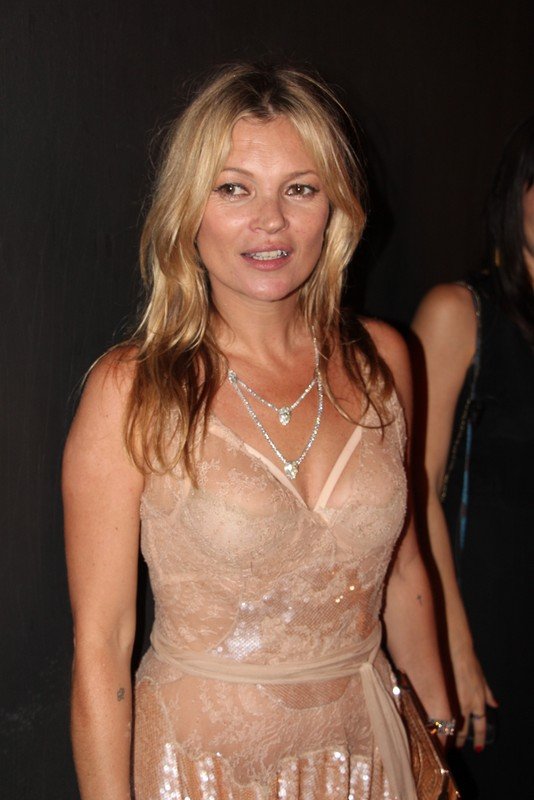
Kate Moss is 52 years old, born on 16 January 1974 in Croydon, London, and the model who redefined what a fashion face could look like in the 1990s is still, in her fifties, closing shows, fronting campaigns and running an agency of her own. Celebrity Net Worth estimates her fortune at $70 million, and this profile covers her family, her daughter Lila, her brother and half-sister, her houses in London and the Cotswolds, and the modelling career — from a chance discovery at an airport at 14 to the Kate Moss Agency and Cosmoss — that made her the most imitated model of her generation.
Croydon, Calvin Klein, $70 million
| At a Glance | Details |
|---|---|
| Born | 16 January 1974, Croydon, London |
| Age | 52 years old |
| Height | 5 feet 7 inches (170 cm) |
| Weight | No reliable published figure exists |
| Partner | No publicly confirmed current partner (long relationship with Count Nikolai von Bismarck reported ended in December 2024) |
| Children | One: Lila Moss (born Lila Grace Moss Hack, 2002) |
| Parents | Peter Edward Moss and Linda Rosina Moss (née Shepherd) |
| Net Worth | $70 million (Celebrity Net Worth) |
| No public personal account — her agency’s account is @katemossagency |
A Croydon schoolgirl was spotted at JFK airport at fourteen
Katherine Ann Moss was born on 16 January 1974 in Croydon, in south London, and her birthday in mid-January has become a fixed point of the London social calendar. She was raised in Addiscombe and Sanderstead, districts of Croydon, in a family of ordinary working life: her father, Peter Edward Moss, worked for an airline and later as a travel agent, and her mother, Linda Rosina Moss, née Shepherd, worked as a barmaid. Her parents divorced when she was 13, a fact she has rarely dwelt on in public, in keeping with a lifelong habit of giving interviews sparingly and letting the work speak instead.
She has a younger brother, Nick Moss, and a younger half-sister, Lottie Moss — Charlotte — born in 1998 to her father and his wife Inger Solnordal, and now a model and media personality in her own right. The 24-year gap between the half-sisters shaped their relationship: Lottie was a bridesmaid at Kate’s wedding in 2011 and stayed at her Cotswolds home during the pandemic lockdowns, but in November 2026 Lottie spoke publicly, on a podcast, about the distance between them, saying they have next to no relationship now and grew up in different times. The family, including their father Peter, had gathered in September 2026 for his 80th birthday, with Nick sharing photographs of the occasion — a reminder that the Moss family story, like most, runs closer and cooler by turns.
The discovery story is the most retold in modern modelling, and it is true in outline. In 1988, returning from a family holiday in the Bahamas, the 14-year-old Moss was spotted at JFK Airport in New York by Sarah Doukas, the founder of the Storm agency, who approached her and her father. She was notably shorter than the era’s supermodel standard and unlike anyone then working — which turned out, within about four years, to be precisely the point.
Calvin Klein and a waif look rewrote modelling
1990–1993: The Face, Corinne Day and Calvin Klein
Her first significant work came with the photographer Corinne Day, whose natural, unretouched photographs of the teenage Moss for the style magazine The Face in 1990 introduced a new kind of fashion image: no gloss, no padding, no armour. The look the press took to calling the “waif” style divided opinion sharply — admirers saw honesty and youth, critics saw something they considered unhealthy — but it made her famous with extraordinary speed. The decisive commercial breakthrough came in 1993 with the Calvin Klein Obsession fragrance campaign, shot opposite Mark Wahlberg in a series of stark images that ran everywhere. By the end of 1993 she was the face of a generational argument about beauty, and the most booked young model in the world.
1994–2004: The supermodel decade
Through the rest of the 1990s and into the 2000s she became the defining model of her era by accumulation rather than by any single moment: campaign after campaign for Chanel, Gucci, Versace, Dior, Burberry, Dolce & Gabbana, Alexander McQueen and Saint Laurent; long-running work with Longchamp, Mango and Rimmel; and magazine covers by the hundred, including dozens of Vogue covers across its international editions. At 5 feet 7 inches she was several inches shorter than the runway norm she displaced, and her influence ran the other way from the era before her — designers, photographers and younger models copied her proportions, her off-duty style and her refusal to perform enthusiasm she did not feel. The “Kate effect” on high-street fashion was a standing feature of the period: an item photographed on her, however casually, could sell out within days, a pattern the industry still studies and that our own look at the best fashion trends for women over 40 in 2026 traces into the present, where her influence on grown-up dressing remains one of its reference points.
2005–2015: Scandal, return and Topshop
In September 2005 a tabloid published photographs that cost her several contracts at once, in the most serious professional crisis of her career. She apologised, withdrew briefly, and then experienced the rarest of outcomes: within a year the brands returned, new contracts followed, and her earnings rose above their previous level. The episode fixed a second part of her legend — not just the face, but the survivor. In 2007 she launched a collection with Topshop, one of the most successful high-street collaborations of its time, with queues outside the Oxford Street flagship at its launch and further collections following. Modelling work continued at the top level into her forties, increasingly on her own terms: fewer shows, chosen campaigns, and the beginnings of a shift from being represented to doing the representing.
2016–2026: The agency, Cosmoss and the fifties
In 2016 she founded the Kate Moss Agency, a management company representing modelling and creative talent — including, in time, her own daughter — built on the principle she stated at its launch: that she wanted to look after the people doing the work, having spent 28 years being the work. In 2022 she launched Cosmoss, a beauty and wellness brand drawing on the calmer routines of her Cotswolds life, and the same year she took a creative director role with Diet Coke. The modelling itself never stopped. She has continued to walk select shows and front campaigns through her forties and into her fifties, closing a major Milan show in February 2026 and fronting a 170th-anniversary campaign for Hunter in the autumn of 2026, photographed in London in October and November 2026 looking, as coverage tends to put it, entirely unbothered. Time magazine named her one of the world’s 100 most influential people as long ago as 2007; the more unusual achievement is that the influence is still current nearly two decades later.
Modelling, Topshop and Cosmoss built $70 million
Celebrity Net Worth estimates Kate Moss’s net worth at $70 million, a solo figure cited from the tracker across 2026 reporting, including a November 2026 survey of the wealthiest models. The estimate is built from public reporting — modelling fees across more than three decades, long-running fragrance and cosmetics contracts, the Topshop collaboration, agency ownership and Cosmoss — and it should be read as a tracker estimate, since she has never published her finances. She first appeared on the Sunday Times Rich List in 2007, and Forbes ranked her second on its top-earning models list in 2012 with estimated earnings of $9.2 million in a single year; that Forbes figure is a one-year earnings estimate, not a net worth total, and is recorded here as earnings only. The shape of the fortune is unusual for her era: most of it was earned in fees rather than equity in the years when fees were the only currency on offer, which is why a cultural reach arguably larger than any model of her generation sits alongside a total lower than the founders who came after her.
The house story runs from London to the country. In 2011 she bought 3 The Grove, in Highgate, north London, as her London home, and sold it in 2022. Her country base is her house in the Cotswolds, in the Little Faringdon area of Oxfordshire — a property reported at about $10 million in one 2026 profile — where she has spent increasing time since 2022, where her half-sister stayed during the pandemic, and where the plum jam and garden routines behind Cosmoss are, by her own rare interviews, actually lived. London remains her working base, and she was photographed there through the autumn of 2026. On Instagram she is a deliberate absence: Moss has no public personal account, and the presence attached to her name is her company’s — the Kate Moss Agency account, @katemossagency — through which her work, and her stable’s work, is shown. Handles elsewhere presented as her personal account are not verified as hers.
Daughter Lila follows her mother onto the runway
Her parents’ Croydon household — an airline worker and a barmaid, divorced when she was 13 — is the unglamorous root of a story usually told in gloss, and her brother Nick, who runs a catering business, remains the sibling she is seen with most often, including at their father’s 80th birthday gathering in September 2026. Her half-sister Lottie’s public remarks in November 2026 about their distance were sad rather than scandalous in tone: two people, a generation apart in age, who were close in one period of their lives and are not in this one.
Her daughter, Lila Moss, born Lila Grace Moss Hack on 29 September 2002, is her child with Jefferson Hack, the magazine editor who co-founded Dazed, her partner in the early 2000s. Lila has followed her mother into modelling, is represented in the industry her mother helped shape, and appears with her at shows and campaigns — the second generation of the family business, conducted with notably more public ease than the first. Moss married Jamie Hince, of the band The Kills, in July 2011 in a Cotswolds wedding at which Lila and Lottie were among the bridesmaids; the couple separated in 2015 and divorced in 2016.
On the partner question, the verified position must be stated exactly. From 2015 she was in a long relationship with the photographer Count Nikolai von Bismarck, a friend of long standing through his mother, Countess Debonnaire von Bismarck. In December 2024 it was reported, first in The Sun and then widely, that the couple had ended their nine-year relationship after months of being on and off, parting on good terms and wanting different paces of life — he a quieter one, she, at 50, ready to be back out in the world. No new partner has been reliably confirmed since, and through 2025 and 2026 she has kept her romantic life private; profiles of her in 2026 describe her as largely private about current romance. This profile therefore records no current partner, because none is publicly confirmed — anything firmer would be invention.
The Face of the nineties became a brand of her own
Kate Moss’s career is the story of an industry changing its mind about what beauty was, in public, around one person — and of that person outlasting the argument. At 52, mother of Lila, sister of Nick and half-sister of Lottie, founder of an agency and a brand, and worth an estimated $70 million, she works at a pace she sets herself, says very little, and remains, nearly four decades after an airport in New York, the reference point her industry still measures itself against.