
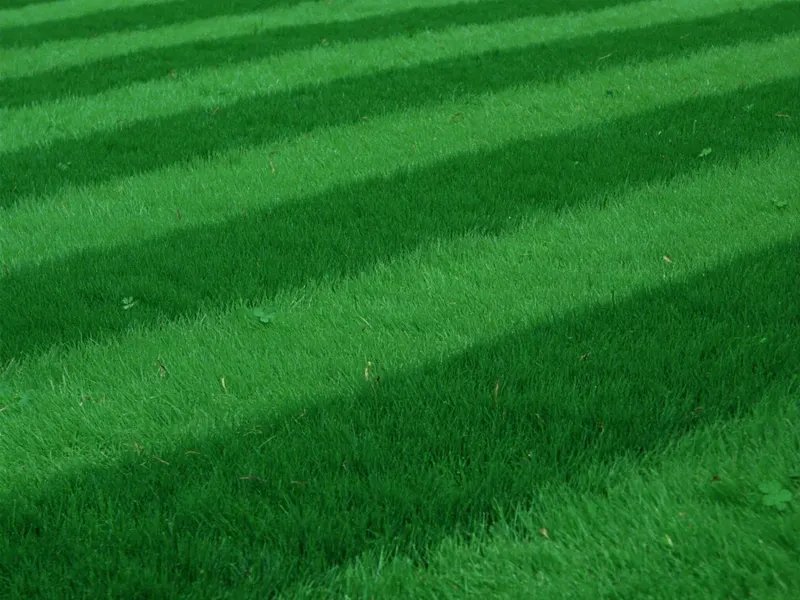
A sprinkler system is convenient, not necessary. Some of the best lawns I’ve seen are hand-watered — because their owners follow the principles that matter more than the delivery method: mow high, water deep but rarely, and feed the soil.
Here’s the complete no-sprinkler lawn system. It takes less time than you’d think.
What Is the Best Way to Maintain a Lawn Without a Sprinkler System? Water Deep, Not Often
The core principle: water deeply once or twice a week, not daily. Deep watering (1 inch per watering, reaching 6-8 inches into soil) trains roots to grow deep, making grass drought-tolerant. Daily light watering keeps roots shallow and grass dependent — the worst of both worlds. A $5 rain gauge (or an empty tuna can) measures your inch.
Water early morning — 5 to 9 a.m. — always. Morning watering minimizes evaporation and gives grass time to dry before nightfall (wet grass overnight invites fungus). Evening is the second choice; midday is the worst (evaporation wastes half the water). With a hose and oscillating sprinkler ($30-$50), early-morning deep watering takes 30-60 minutes per zone, once or twice weekly.
Know when to water: the screwdriver test — push a screwdriver into the soil; if it goes in easily 6 inches, you’re fine; if not, water. Or watch the grass: footprints that stay visible (grass doesn’t spring back) and a bluish-gray tint mean thirst. Watering on the grass’s schedule, not the calendar’s, prevents both drought stress and wasteful overwatering.
Mow High: The Single Biggest Factor
Mow at 3.5-4 inches — the highest setting most mowers allow. This is the most impactful lawn practice, sprinkler or not. Tall grass shades the soil (less evaporation, fewer weeds germinating), grows deeper roots, and photosynthesizes more. Short-mowed lawns are stressed lawns; tall lawns are resilient lawns. It looks slightly less manicured and performs dramatically better.
Follow the one-third rule: never cut more than one-third of the blade at once. Cutting a 6-inch lawn to 2 inches shocks the grass and invites weeds into the thinned canopy. If the grass got away from you, mow high first, wait 3-4 days, then mow again — step it down gradually.
Leave the clippings — always. Mulching (just mowing without bagging) returns nitrogen and organic matter to the soil, equivalent to one fertilizer application per year, for free. Modern mulching blades ($20) chop clippings finely so they disappear. Bagging clippings is literally throwing away free fertilizer and then buying it back in a bag.
Feed the Soil, Fight Weeds Smart
Fertilize modestly: 2-4 applications per year of slow-release fertilizer, with fall being the most important (fall feeding builds roots for next year). Soil test first ($15 through your extension service) — many lawns need specific nutrients, not generic fertilizer, and over-fertilizing burns grass and pollutes waterways. More is not better; right is better.
Weed strategy without obsessing: a thick, tall, healthy lawn crowds out most weeds naturally — that’s 80 percent of weed control. For the rest, spot-treat with a pump sprayer rather than broadcasting chemicals over the whole lawn, and hand-pull after rain when roots release easily. Corn gluten meal works as a mild pre-emergent for the organic-minded. Accept some imperfection — a lawn with character beats a chemical-dependent monoculture.
Overseed thin areas every fall: rake the bare spots, spread seed matched to your region, keep moist for 2-3 weeks (this is when hand-watering earns its keep — light daily watering until germination, then back to deep-and-rare). Fall overseeding thickens the lawn before winter, and thick lawns need less of everything — water, fertilizer, weed control. It’s the compounding investment of lawn care.
- Mow 3.5-4" high — the #1 practice, sprinkler or not
- Water 1" deep, 1-2x weekly, 5-9 a.m. only
- Leave clippings = free fertilizer application yearly
- Soil test ($15) before fertilizing; fall feeding matters most
- Overseed thin spots every fall; keep seed moist 2-3 weeks
- Thick tall grass IS the weed control — 80% of the battle
Equipment and Efficiency Without Irrigation
You need: a decent oscillating or pulsating sprinkler ($30-$60 — covers large rectangles efficiently), 100+ feet of good hose (kink-free is worth the premium), a hose timer ($30-$50 — the no-sprinkler essential: set it and walk away, no more forgotten running hoses), and a rain gauge. Total: under $150 for a complete manual system.
The hose timer deserves emphasis: it converts hand-watering from a chore you must attend to a system you set. Mechanical timers ($30) are bulletproof; smart timers ($50+) allow phone control and rain skips. Either beats the flooded lawn / $200 water bill from the forgotten hose — the classic no-sprinkler disaster.
Consider reducing lawn where it’s hardest: steep slopes, deep shade, narrow strips. Replace with mulch beds, native plantings, or groundcover (see our low-maintenance landscaping ideas) — less lawn to water by hand means better care for the lawn you keep. The best no-sprinkler strategy includes knowing where lawn doesn’t belong.
Dealing With Lawn Pests and Problems Without Panic
Grubs, the classic lawn destroyer: irregular brown patches that lift like carpet (grubs eat roots) signal trouble. Confirm by peeling back the turf — 10+ grubs per square foot needs treatment. Beneficial nematodes (applied in late summer) are the organic fix; preventive grub control in spring works too. But don’t treat preventively without evidence — most lawns don’t need it, and unnecessary pesticides harm beneficial insects.
Weeds tell you what’s wrong: clover means low nitrogen (fertilize), moss means shade + acidity (test pH, prune for light), crabgrass means thin turf (overseed in fall). The weed is the symptom; the condition is the disease. Fix the condition and the weed loses. This diagnostic approach beats spraying everything and hoping.
Brown patch and fungus: water early morning only (never evening — wet grass overnight invites fungus), improve air circulation (prune low branches), and avoid excess nitrogen in summer (it fuels disease). Most lawn diseases are cultural problems with cultural solutions — the chemical fix treats the symptom while the watering habit recreates it. For water-wise practices that prevent most issues, the EPA’s outdoor water guidance is excellent. And remember the surrounding landscape: our living privacy screens reduce the lawn area you need to perfect in the first place.
- Grubs: brown patches that lift like carpet — confirm before treating
- Weeds diagnose conditions: clover=low N, moss=shade, crabgrass=thin turf
- Water mornings only; wet grass overnight = fungus invitation
- Fix the condition, not just the weed — cultural solutions last
- Beneficial nematodes > preventive pesticides for grubs
The No-Sprinkler System
Mow high (3.5-4″), water deep (1″) once or twice weekly in early morning, leave the clippings, feed the soil based on a test, overseed every fall, and let thick grass handle the weeds. Add a hose timer and you’re running a $150 manual system that rivals irrigation — with a lawn that’s tougher for it.