
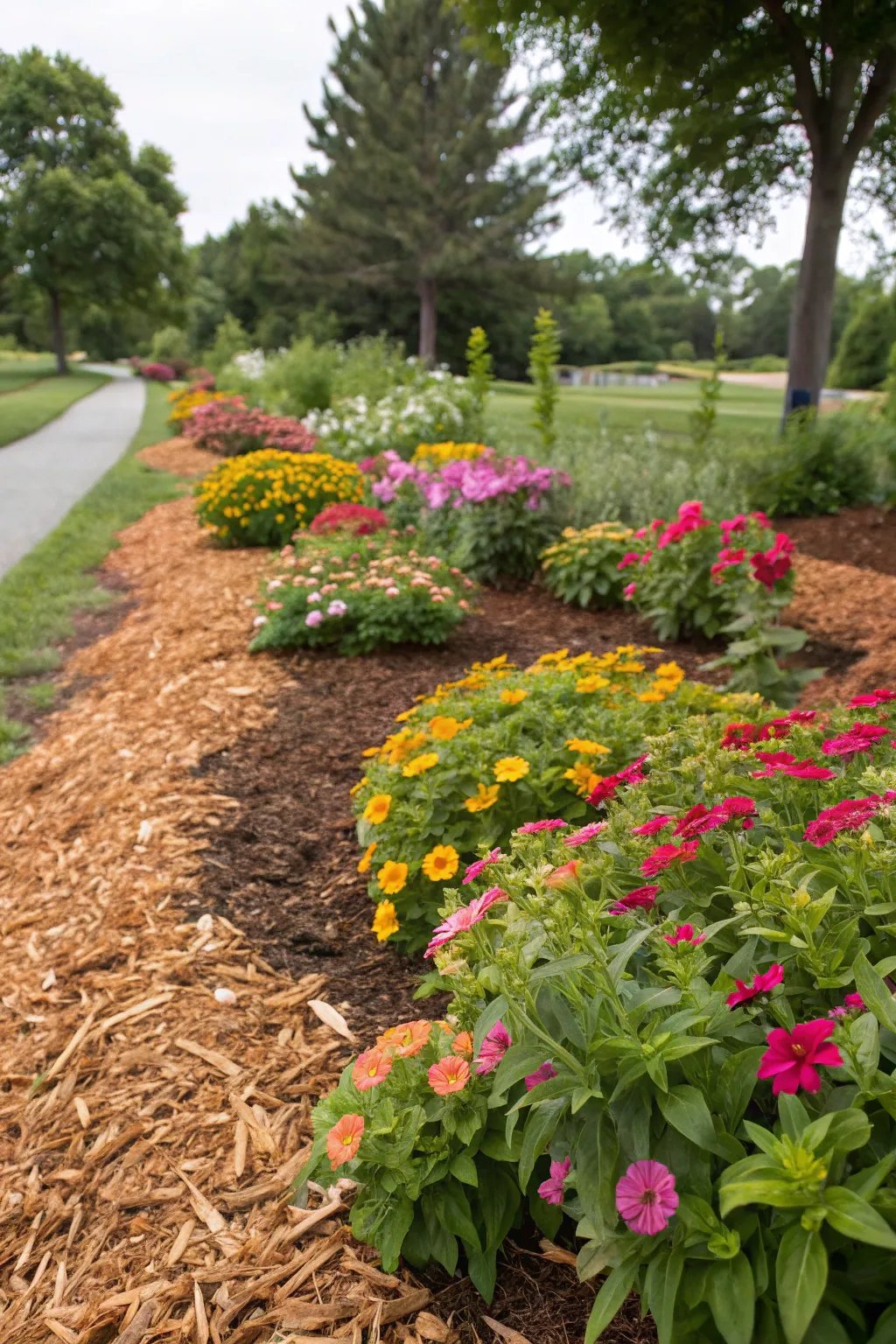
Here’s the truth about landscaping: the difference between a high-maintenance yard and a low-maintenance one isn’t money — it’s plant choices and design. A yard full of fussy roses and thirsty turf is a part-time job. A yard designed for laziness practically takes care of itself.
These are the beginner-friendly ideas that deliver maximum looks for minimum effort. No green thumb required.
What Are the Best Low-Maintenance Landscaping Ideas for Beginners? Start With Less Lawn
The lawn is the highest-maintenance thing in most yards — mowing, watering, fertilizing, weeding, repeat forever. Shrinking it is the single biggest maintenance win. Replace hard-to-mow strips and slopes with mulch beds, groundcover, or native plantings, and watch your weekend chores collapse.
Where you keep lawn, make it easy: choose a grass suited to your region (not the prettiest bag at the store), mow high (3-4 inches — taller grass crowds out weeds and needs less water), and leave the clippings (free fertilizer). Consider shrinking further with a low-water lawn routine if irrigation feels like a burden.
Groundcovers are the lawn alternative most beginners overlook. Creeping juniper, liriope, mondo grass, or native sedges cover ground, suppress weeds, and need mowing approximately never. For shady spots where grass won’t grow anyway, they’re not just easier — they’re the only thing that works.
Plant It and Forget It: The Right Plants
Native plants are the ultimate low-maintenance cheat code. They’re adapted to your exact rainfall, soil, and pests — meaning less water, no fertilizer, and fewer problems. A native plant bed, once established (give it one season of watering), basically runs itself. Your local extension service has free native plant lists; use them.
For shrubs, pick evergreens with natural shapes that don’t need shearing: boxwood alternatives like inkberry holly, dwarf yaupon, or native viburnums. Avoid anything labeled ‘fast-growing’ unless you enjoy pruning — fast growth means fast maintenance. Slow, steady, and well-behaved beats impressive-but-needy every time.
Perennials over annuals, always. Annuals need replanting every single year; perennials come back on their own. Daylilies, coneflowers, black-eyed Susans, hostas (shade), and ornamental grasses give months of color and interest for a one-time planting effort. Mulch the beds 3 inches deep and weeds barely stand a chance.
Hardscape: The Zero-Maintenance Multiplier
Every square foot of hardscape is a square foot you never weed, water, or mow. A stone patio, gravel paths, or a dry creek bed through a problem drainage area all reduce maintenance while looking intentional and designed. Start with the areas that fight you — the muddy side yard, the slope that won’t grow grass.
Mulch is the beginner’s best friend. A 3-inch layer of shredded bark or wood chips suppresses weeds, retains moisture, and makes beds look finished instantly. It’s $3-4 a bag and the highest visual ROI in landscaping. Replenish once a year — that’s the entire maintenance program.
Drip irrigation on a timer eliminates the daily watering chore for beds and containers. A basic kit costs $30-$50 and installs in an afternoon; the timer does the remembering for you. It’s dramatically more water-efficient than sprinklers and keeps foliage dry (fewer diseases). Set it, check it monthly, done. The EPA’s WaterSense program has excellent guides on water-smart landscaping by region.
- Shrink the lawn — it's the biggest maintenance hog
- Native plants + perennials: plant once, enjoy for years
- 3 inches of mulch: suppresses weeds, looks instantly finished
- Hardscape problem areas instead of fighting them
- Drip irrigation on a timer beats hand-watering everything
- Avoid 'fast-growing' plants unless you love pruning
Design Tricks That Fake Effort
Repetition looks designed. Planting the same three plants in drifts and repeats reads as intentional landscaping; one of everything reads as a clearance sale. Pick a simple palette — say, coneflowers, ornamental grass, and boxwood — and repeat it around the yard. Instant cohesion, minimal decisions.
Edge everything. A crisp edge between lawn and beds — cut with a half-moon edger twice a year — makes even simple plantings look professional. It’s a 30-minute job with disproportionate visual payoff, the landscaping equivalent of ironing a shirt.
Add one focal point per area: a birdbath, a large pot, a small tree, a bench. Focal points give the eye somewhere to land and make simple plantings feel complete. You don’t need many — restraint reads as design, clutter reads as neglect.
Seasonal Calendar: What to Do When
Spring (March-May): clean up winter debris, edge beds, apply pre-emergent weed preventer to lawn areas, refresh mulch where thin, plant summer annuals after last frost, start the mower high, and divide overgrown perennials. This is the big push — 2-3 weekends sets up the whole year. Don’t prune spring-flowering shrubs until after they bloom.
Summer (June-August): mow high and leave clippings, water deeply but infrequently (early morning), deadhead spent flowers to encourage rebloom, watch for pests (treat early, treat targeted), and pull weeds before they seed — 10 minutes weekly beats 3 hours monthly. Container plants need daily water in heat; everything else should be on cruise control if spring was done right.
Fall (September-November): the most important season — plant perennials, shrubs, and trees (fall planting establishes roots with less stress, which also makes it the ideal time to put in living privacy screens), overseed lawns, apply fall fertilizer, plant spring bulbs, cut back spent perennials (or leave seed heads for birds), drain and store hoses, and mulch beds before winter. Spring success is built in fall. Winter (December-February): plan next year’s changes, order seeds, maintain tools, and rest. The low-maintenance yard earns its winter off.
- Spring: cleanup, mulch, pre-emergent, plant after frost
- Summer: mow high, water deep AM, 10-min weekly weeding
- Fall: plant perennials/trees, overseed, fertilize, bulbs — key season
- Winter: plan, order seeds, maintain tools, rest
- Rule: 10 minutes weekly beats 3 hours monthly, always
The Lazy Yard Manifesto
Less lawn, native and perennial plants, deep mulch, drip irrigation, and simple repeated designs. That’s the whole formula for a yard that looks great on two hours of maintenance a month. Landscaping doesn’t have to be a hobby — with the right choices up front, it can just be the nice background of your life.