
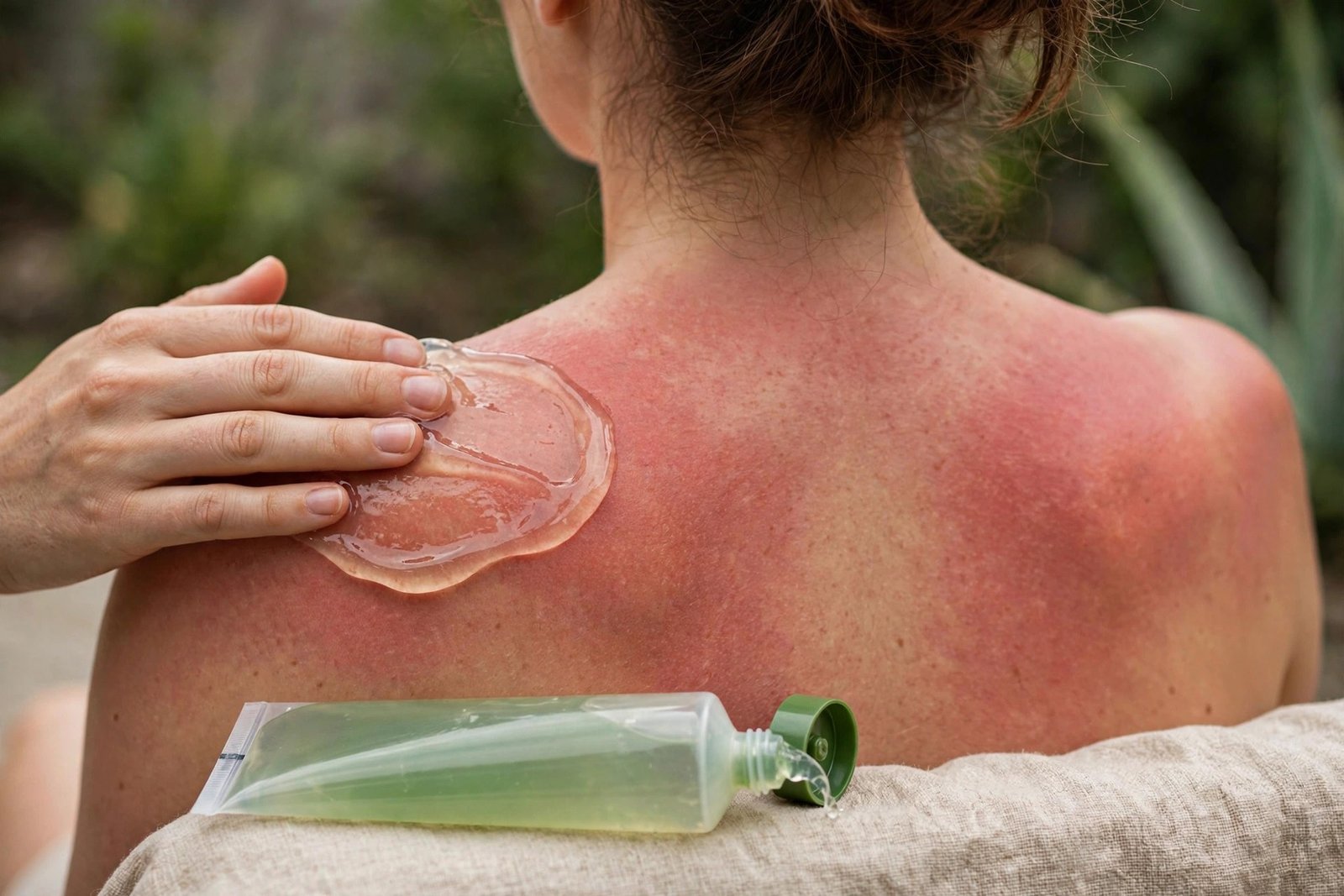
You fell asleep in the sun, you missed a spot with sunscreen, or the clouds tricked you — and now your skin is red, hot, and throbbing. Sunburn is not just uncomfortable; it is acute skin damage that increases your lifetime skin cancer risk with every burn. But once the damage is done, the goal is to soothe the pain, support healing, and prevent it from getting worse.
This guide explains the fastest way to soothe a sunburn, what helps and what does not, and when to see a doctor.
Immediate Relief: Cool the Burn
Act fast. Get out of the sun immediately — continued exposure worsens the burn even if you do not feel it yet. Cool the skin with damp towels, cool (not ice-cold) baths, or cool showers. The coolness constricts blood vessels, reducing redness and pain. Do this for 10-15 minutes, several times a day for the first 48 hours.
Apply pure aloe vera gel liberally and frequently. Aloe contains compounds that reduce inflammation and promote healing — it is one of the few home remedies with actual clinical evidence. Keep the gel in the refrigerator; cold aloe feels amazing on hot skin. Avoid aloe products with alcohol, which dries and irritates burned skin. For widespread burns, a cool bath with a cup of oatmeal (colloidal oatmeal, not breakfast oatmeal) soothes itching and inflammation. Proper skin care supports healing — see the best foods for healthy skin from the inside for nutritional support.
Reduce Pain and Inflammation
Over-the-counter anti-inflammatories (ibuprofen or aspirin) reduce both pain and the inflammatory response that causes swelling. Take them as soon as possible after the burn — they are most effective when started early. Acetaminophen helps with pain but does not reduce inflammation as effectively.
Stay hydrated. Sunburn draws fluid to the skin’s surface and can cause dehydration, especially with extensive burns. Drink more water than you think you need, and avoid alcohol (which dehydrates) until healed. If the burn covers a large area, an oral rehydration solution helps replace lost electrolytes. Do not pop blisters — they protect the underlying skin from infection. If a blister breaks on its own, clean gently with mild soap, apply antibiotic ointment, and cover with a bandage. For allergic-type reactions or severe itching, dealing with seasonal allergies without drowsy medicine covers antihistamine options that can help.
Moisturize to Support Healing
After the initial cooling phase (first 24-48 hours), keep the burned skin moisturized to prevent excessive peeling and support barrier repair. Use fragrance-free, gentle moisturizers — look for ingredients like ceramides, hyaluronic acid, and niacinamide. Apply while skin is still damp to lock in moisture. Avoid products with fragrances, retinoids, or AHAs until fully healed; they irritate compromised skin. If peeling starts, do not pull the skin — let it shed naturally, and keep moisturizing.
What NOT to Do
Do not apply butter, coconut oil, or petroleum jelly to a fresh burn — they trap heat and worsen the damage. (Moisturizer is fine after the first day, but occlusive oils on a hot burn are harmful.) Do not use benzocaine or lidocaine sprays marketed for sunburn; they can cause allergic reactions and irritate damaged skin. Do not exfoliate, scrub, or use harsh cleansers on burned skin. And do not go back in the sun until fully healed — burned skin is extremely vulnerable to further damage.
Perhaps most importantly: do not ignore severe symptoms. See a doctor if you have blistering over a large area, severe pain, fever, chills, nausea, dizziness, or signs of infection (increasing redness, swelling, pus). These indicate a second-degree burn or systemic response that needs medical attention. The American Academy of Dermatology’s burn care guidelines detail when home treatment is insufficient.
Preventing the Next Burn
The best sunburn treatment is prevention. After you heal, commit to better sun protection. Use broad-spectrum SPF 30+ daily — not just at the beach, but every day. UV damage is cumulative, and daily incidental exposure (driving, walking to work) adds up. Reapply every 2 hours when outdoors, and use enough (a shot glass for full body).
Wear protective clothing: UPF-rated shirts, wide-brimmed hats, and UV-blocking sunglasses. Seek shade during peak hours (10 AM – 4 PM). Remember that water, sand, and snow reflect UV and increase exposure — you can burn even in the shade near reflective surfaces. And do not trust clouds; 80% of UV penetrates overcast skies.
Check your medications — some antibiotics, acne treatments, and other drugs increase sun sensitivity. If you are on photosensitizing medication, be extra vigilant. And get annual skin checks from a dermatologist, especially if you have had multiple blistering sunburns. Early detection of skin cancer saves lives. The Skin Cancer Foundation’s prevention guidelines are the definitive resource.
Helping Skin Heal Faster
Beyond immediate relief, support your skin’s healing process. Stay hydrated — burned skin loses moisture rapidly. Eat foods rich in antioxidants (berries, leafy greens) and omega-3s (fish, walnuts) to support skin repair from the inside. Avoid alcohol, which dehydrates and impairs healing.
Do not exfoliate until fully healed (at least a week). When peeling starts, resist the urge to pull — let it shed naturally. Apply fragrance-free moisturizer liberally to support barrier repair. And stay out of the sun until completely healed; re-burning damaged skin increases cancer risk and worsens scarring. Patience is part of the treatment.
Sunburn recovery reminds us how important prevention is. Once healed, make sun protection a daily habit. Your skin has a memory; every burn increases risk. It is never too late to start protecting yourself. Future you will thank present you for the sunscreen and shade-seeking.
Sunburns are a clear signal from your body that it needs better protection. Once you’ve soothed the immediate pain and redness, take it as motivation to build better sun habits going forward. Keep aloe in the fridge, reapply sunscreen every two hours outdoors, and don’t forget often-missed spots like ears, feet, and the back of your neck. Your future skin will thank you.
Frequently Asked Questions
How long does sunburn last?
Mild sunburn (redness, tenderness) typically peaks at 24-36 hours and resolves in 3-5 days. More severe burns with blistering can take 1-2 weeks to heal fully. Peeling usually starts around day 3-4.
Does aloe vera really help sunburn?
Yes. Aloe vera has anti-inflammatory and wound-healing properties supported by clinical studies. Pure aloe vera gel (or directly from the plant) is most effective. Products with added alcohol or fragrance are less helpful and may irritate.
Can I put ice on a sunburn?
No — ice can damage already injured skin and cause further tissue injury. Use cool (not cold) water, damp towels, or refrigerated aloe. The goal is gentle cooling, not freezing.
Will one sunburn cause skin cancer?
A single sunburn increases risk, but skin cancer is linked to cumulative damage and pattern of burns. Five or more blistering sunburns in youth doubles melanoma risk. Every burn matters, which is why prevention (sunscreen, shade, protective clothing) is critical going forward.
When should I see a doctor for sunburn?
See a doctor if: blisters cover a large area, you have severe pain not relieved by OTC medication, you develop fever, chills, nausea, or dizziness, or you see signs of infection (increasing redness, swelling, pus, red streaks). These indicate a serious burn that needs medical attention.