
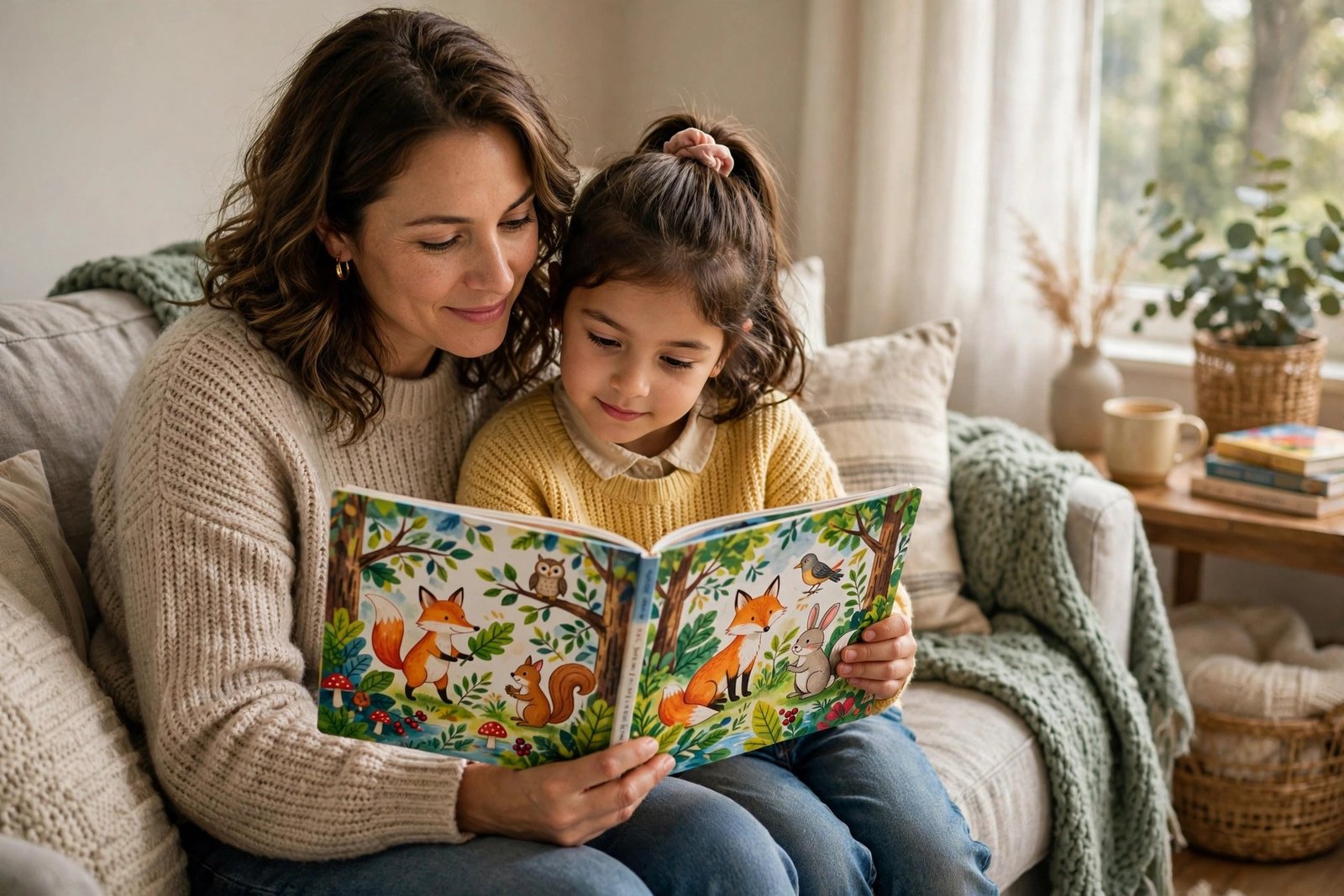
Watching your child struggle with reading is uniquely stressful — it feels urgent, because reading underpins everything else in school. The reassuring news: reading is a teachable skill, not a talent, and targeted practice at home produces fast, measurable improvement at every age. The research on how children learn to read is among the most settled in all of education science. This guide distills it into what actually works, by age group.
You don’t need to become a teacher. You need 15–20 focused minutes a day and the right activities.
First: Figure Out Where the Struggle Is
“Bad at reading” has specific causes, and the fix depends on the diagnosis. Listen to your child read aloud for five minutes and notice:
- Can’t sound out words? The issue is phonics/decoding — letter-sound relationships. Most common in K–2.
- Reads slowly, word by word? A fluency problem — they can decode but not automatically. Needs practice volume.
- Reads fine but can’t explain what happened? A comprehension gap — decoding works, meaning-making doesn’t.
- Avoids reading entirely? Often a confidence/motivation problem layered on a skill gap — fix the skill, and willingness usually follows.
- Reverses letters, can’t rhyme, family history of dyslexia? Possible learning difference — worth a professional screening; early intervention is dramatically effective.
When in doubt, ask the teacher specifically: “Is this a decoding, fluency, or comprehension issue?” The answer focuses your effort where it counts. Reading Rockets offers parent guides for each type of reading struggle. And rule out vision problems — undiagnosed vision issues masquerade as reading problems more often than parents expect.
Ages 4–7: Build the Foundation (Phonics First)
Early reading runs on phonemic awareness and phonics — hearing and mapping sounds to letters. The science of reading is unambiguous here: systematic phonics instruction is the fastest route to decoding ability.
- Read aloud daily, 15+ minutes. The single strongest predictor of early reading success. Point at words occasionally, let them turn pages, ask “what do you think happens next?”
- Play with sounds: rhyming games, clapping syllables, “what sound does ‘cat’ start with?” — phonemic awareness games that feel like play.
- Letter-sound practice: magnetic letters, tracing letters while saying sounds, simple decodable books that only use taught sounds.
- Don’t skip the re-reading: reading the same favorite book 20 times builds fluency and confidence — repetition is the point, not a problem.
Ages 8–12: Build Fluency and Comprehension
Once decoding is solid, the game shifts to speed and understanding:
- Volume matters most: the best readers read enormously more. 20 minutes of daily independent reading compounds into millions of words per year — the famous “million word gap” between strong and weak readers.
- Let them choose: graphic novels, sports bios, joke books, nonfiction about dinosaurs — anything they actually want to read counts. Choice drives volume; volume drives skill. Getting kids into reading starts with abandoning the idea that only “proper” books count.
- Echo and paired reading: you read a sentence with expression, they repeat it — builds fluency and models phrasing.
- Talk about books: “Why do you think she did that?” “What would you have done?” — comprehension grows through conversation, not worksheets.
- Audiobooks count: listening builds vocabulary and story sense; pair audio with text for struggling decoders.
A good cheap tablet for reading loaded with library apps gives kids a portable library — many reluctant readers engage more with a device than a paper book, and the reading is what matters.
The Daily 20-Minute Routine (Any Age)
- Minutes 1–5: warm-up reading. Something easy and fun — re-read a favorite, or you read aloud to them. Low pressure entry.
- Minutes 5–15: the stretch. Material at the right challenge level (they should know ~95 percent of words — the “just right” zone). For strugglers: take turns reading pages. For comprehension: pause every few pages to predict or summarize.
- Minutes 15–20: word work or talk. Younger: one phonics game. Older: discuss what they read, or look up one interesting new word together.
Same time daily, tied to an existing routine (after dinner, before bed). Bedtime reading has a bonus: sleep consolidates learning, and the ritual becomes cherished family time rather than homework.
What Actually Accelerates Progress
- Reading aloud to them — at every age. Even 10-year-olds benefit enormously from hearing fluent, expressive reading above their level. Don’t stop when they can read alone.
- Series books: once hooked on book one, kids devour the rest — volume on autopilot. Find the series that clicks (every reader has one).
- Library trips as adventures: let them choose freely, get their own card, attend story times. Librarians are matchmakers — describe what your kid likes and let them work magic.
- Model reading yourself: kids who see parents read read more. It really is that simple.
- Summer reading: the “summer slide” is real — kids who don’t read over summer lose months of progress. Library summer programs make it fun.
Make Reading Social
Reading feels like solitary work, but social motivation multiplies practice. Start a mini book club with your child and a friend — even two kids reading the same book creates accountability and conversation. Read the same book they’re reading so you can discuss it genuinely (kids detect fake interest instantly). For older kids, online reading communities and reading challenges with friends turn solitary pages into shared experience. And celebrate milestones visibly: finishing a first chapter book deserves recognition. The goal is associating reading with belonging and pride, not just school compliance — because the readers who persist are the ones who find their people in books.
When to Seek Professional Help
Trust your gut if — Understood.org has free screening checklists — there’s little progress after 2–3 months of consistent practice, the gap with peers is widening, there’s family history of dyslexia, or your child shows unusual patterns (can’t rhyme by 6, extreme letter reversals past 7, strong verbal skills but can’t decode). Request a school evaluation in writing — schools must respond. Private assessments (educational psychologists) are faster but cost $500–$2,000. Early, evidence-based intervention (structured literacy programs like Orton-Gillingham) works remarkably well — the earlier, the better the outcome. Struggling is not a character flaw; it’s a signal to get the right help.
Conclusion
The fastest way to improve your child’s reading: diagnose the specific struggle (decoding, fluency, or comprehension), read aloud daily at every age, ensure 20 minutes of daily practice at the “just right” level, let them choose what they read, talk about books together, and seek professional screening if progress stalls. Reading growth responds to consistent, targeted practice faster than almost any other academic skill — 20 focused minutes a day for three months transforms most struggling readers. Start tonight: one book, one child, one chapter.
Frequently Asked Questions
How can I help my child read better at home?
Read aloud to them daily, ensure 20 minutes of daily practice at the right difficulty level, let them choose their books, and talk about what they read. Consistent, low-pressure practice beats occasional intensive sessions.
At what age should a child read fluently?
Most children decode basic text by ages 6–7 and read with growing fluency through ages 8–9. Wide variation is normal — but persistent struggle beyond these windows, or a widening gap with peers, warrants attention.
Do audiobooks help kids learn to read?
Yes — audiobooks build vocabulary, comprehension, and story sense, especially valuable for struggling decoders. Pairing audio with the printed text is even more powerful for connecting sounds to print.
What are signs my child might have dyslexia?
Difficulty rhyming, learning letter sounds, or sounding out words despite instruction; family history of reading difficulty; strong thinking skills paired with weak decoding. Early professional screening leads to highly effective intervention.