
You woke up with puffy eyes — again. Whether it is from crying, allergies, too much salt, lack of sleep, or just genetics, under-eye puffiness makes you look exhausted even when you are not. The good news: most puffiness is temporary fluid retention, not permanent fat, which means it responds quickly to the right interventions. You can visibly de-puff in 10-15 minutes with techniques that actually work. Under-eye skin is delicate, so the AAD’s skin care secrets are a good companion read.
This guide explains the fastest way to de-puff tired eyes, why puffiness happens, and how to prevent it.
Why Eyes Get Puffy
The skin around your eyes is the thinnest on your body, and the underlying tissue is loose — which means fluid accumulates there easily. Common causes: fluid retention from high salt intake, alcohol, or hormonal changes; lack of sleep (which impairs lymphatic drainage); allergies (which cause inflammation); crying (salt in tears draws fluid); and aging (which weakens the tissue holding fat in place).
Distinguishing temporary puffiness from permanent bags matters. If the puffiness is worse in the morning and improves throughout the day, it is fluid — and treatable. If it is constant and does not change, it may be fat prolapse (herniated fat pads), which only surgery corrects. Most people deal with the fluid type. Understanding the cause guides the solution — just as understanding sleep needs helps you address the root cause rather than just the symptom.
Immediate De-Puffing Techniques
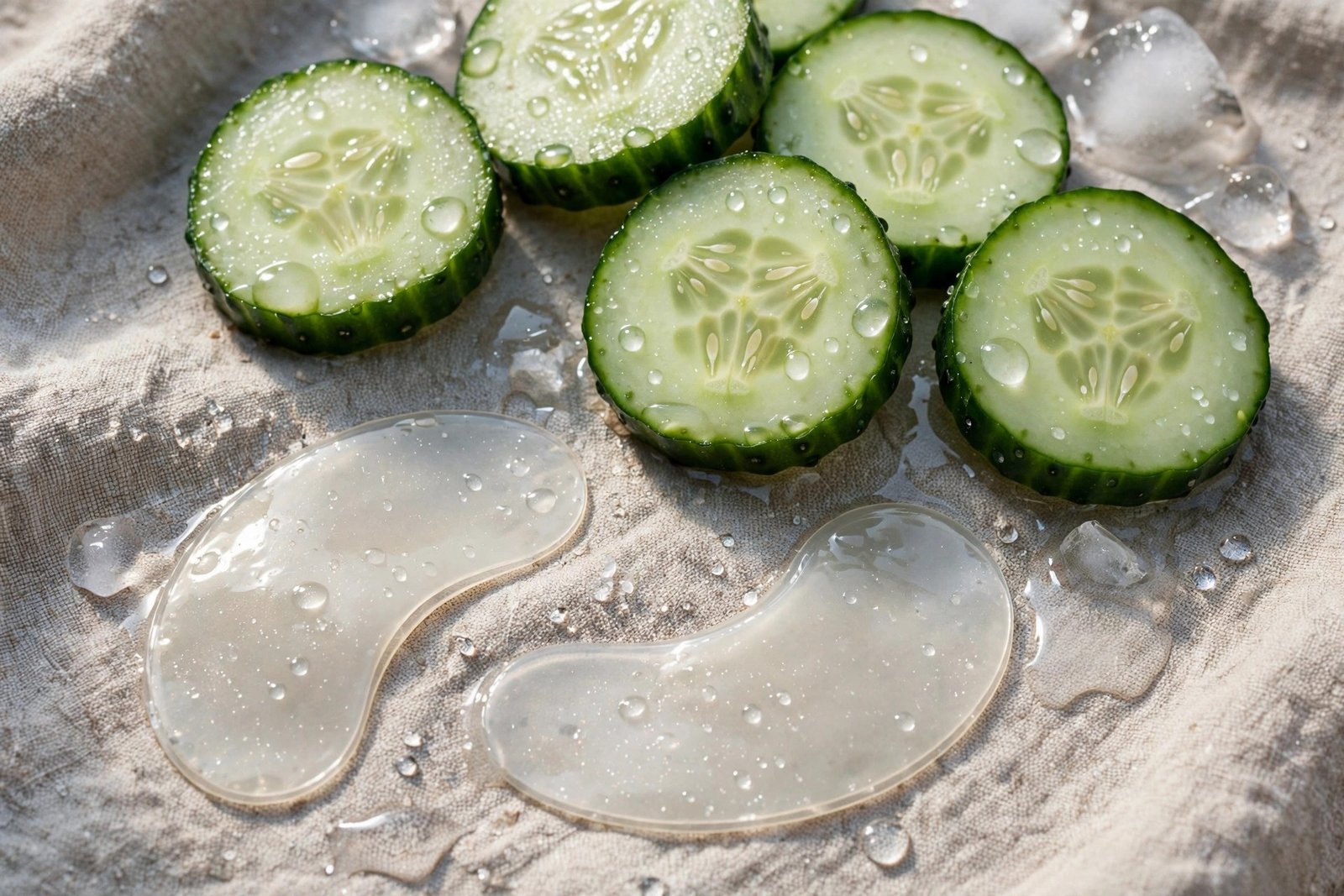
Cold is the fastest de-puffer. It constricts blood vessels, reducing swelling and fluid accumulation. Keep gel eye masks, eye cream, or even spoons in the refrigerator — apply for 10-15 minutes. The combination of cold + gentle pressure is most effective. Cucumber slices work (they are cold and contain antioxidants), but refrigerated gel patches work better and do not slide off.
Caffeine is the second most effective ingredient. It constricts blood vessels topically, just like cold. Look for eye creams with caffeine, or use cooled green tea bags (which contain both caffeine and anti-inflammatory compounds). Place them over closed eyes for 10 minutes. The effect is temporary (a few hours) but visible. For a comprehensive approach to eye-area care, foods for healthy skin support the tissue from within.
Lymphatic Drainage Massage
Puffiness is often stagnant lymph fluid. A simple massage technique drains it: using your ring fingers (weakest, gentlest), press gently at the inner corners of your eyes, then sweep outward along the under-eye area toward the temples, then down the sides of the neck. Repeat 5-10 times. This manually moves fluid toward the lymph nodes where it can be processed. Do this with eye cream to avoid tugging. Facial tools (jade rollers, gua sha) work on the same principle — the tool matters less than the technique.
Preventing Morning Puffiness
The best treatment is prevention. Sleep on your back with your head slightly elevated — this prevents fluid from pooling in the face overnight. A second pillow or a wedge pillow helps. Reduce salt and alcohol in the evening, especially if you are prone to puffiness. Stay hydrated (dehydration causes water retention — counterintuitive but true).
Remove makeup thoroughly before bed — residue irritates the eye area overnight. Manage allergies proactively during high-pollen seasons; antihistamines reduce the inflammation that causes puffy eyes. If you cry, rinse with cool water afterward to remove the salt that draws fluid. These habits compound: after a week of elevated sleep, reduced salt, and proper hydration, most people see a baseline improvement. The AAD’s eye care tips reinforce that consistent prevention beats reactive treatment.
When Puffiness Signals Something More
Occasional puffiness is normal, but persistent puffiness can indicate underlying issues. Thyroid disorders (especially hypothyroidism) cause facial puffiness. Kidney problems impair fluid balance. Allergies cause chronic inflammation. High blood pressure can contribute. If puffiness is new, severe, or accompanied by other symptoms (fatigue, weight changes, shortness of breath), see a doctor.
Medications can cause puffiness too — corticosteroids, some blood pressure medications, and NSAIDs all promote fluid retention. If you started a new medication and noticed increased puffiness, discuss it with your doctor. Do not stop medication without medical guidance, but be aware of the connection.
For most people, though, puffiness is lifestyle-related: salt, alcohol, sleep position, and allergies. Address these first before worrying about medical causes. Keep a simple log for a week — note puffiness severity, sleep hours, salt intake, alcohol, and allergy symptoms. Patterns emerge quickly and point to the culprit. This systematic approach works for many health issues, not just puffiness.
Long-Term Eye Health
Beyond puffiness, protect your eye health. Wear sunglasses with UV protection — UV damages the delicate eye area and contributes to cataracts. Do not rub your eyes; it breaks capillaries, causes dark circles, and can damage the cornea. Remove eye makeup gently every night.
Get regular eye exams, especially if you notice vision changes. Many eye conditions are asymptomatic in early stages. And manage allergies proactively — chronic rubbing from allergies causes long-term damage to the eye area. An allergist can help if over-the-counter options are insufficient.
De-puffing works with your body, not against it. Cold, caffeine, and drainage support natural fluid movement. Make these part of your morning routine, and address root causes for lasting improvement.
Keep your de-puffing tools (gel mask, eye cream, spoons) in the refrigerator so they are always ready. The 10 minutes you spend in the morning pays off in how you look and feel for the rest of the day.
Prevention is better than treatment. Elevate your head while sleeping, reduce evening salt, and manage allergies. These habits reduce morning puffiness at the source.
For more detailed guidance, see American Academy of Dermatology.
Puffy eyes are usually a temporary cosmetic concern, not a medical one, but persistent swelling deserves attention. If puffiness doesn’t improve with these remedies, or if you notice pain, vision changes, or swelling in other areas, check with a healthcare provider. For most people, though, a combination of cold therapy, good sleep habits, and reduced sodium will keep eyes looking bright and refreshed.
Frequently Asked Questions
How quickly can I de-puff my eyes?
With cold + caffeine + massage, you can see visible improvement in 10-15 minutes. The effect lasts several hours. For an important event, do the full routine 30 minutes before you need to look your best.
Do hemorrhoid creams really work for puffy eyes?
They can temporarily tighten skin (they contain vasoconstrictors), but dermatologists advise against it — the ingredients are not formulated for the delicate eye area and can cause irritation, especially with regular use. Stick to products designed for eyes.
When is puffiness a medical concern?
If puffiness is sudden, severe, accompanied by vision changes, or does not improve with typical measures, see a doctor. It can indicate thyroid issues, kidney problems, or allergic reactions that need medical attention. Persistent, one-sided puffiness also warrants evaluation.
Can diet reduce under-eye puffiness?
Yes. Reducing sodium, limiting alcohol, staying hydrated, and eating potassium-rich foods (bananas, avocados) help balance fluid. Chronic puffiness often improves significantly with dietary changes, though genetics and age set the baseline.
Are eye creams worth the money?
For puffiness specifically, the active ingredients (caffeine, cold) matter more than the price. A $10 caffeine eye cream stored in the fridge works as well as a $80 one. What you are paying for in luxury brands is often packaging and marketing. Focus on ingredients, not price.