
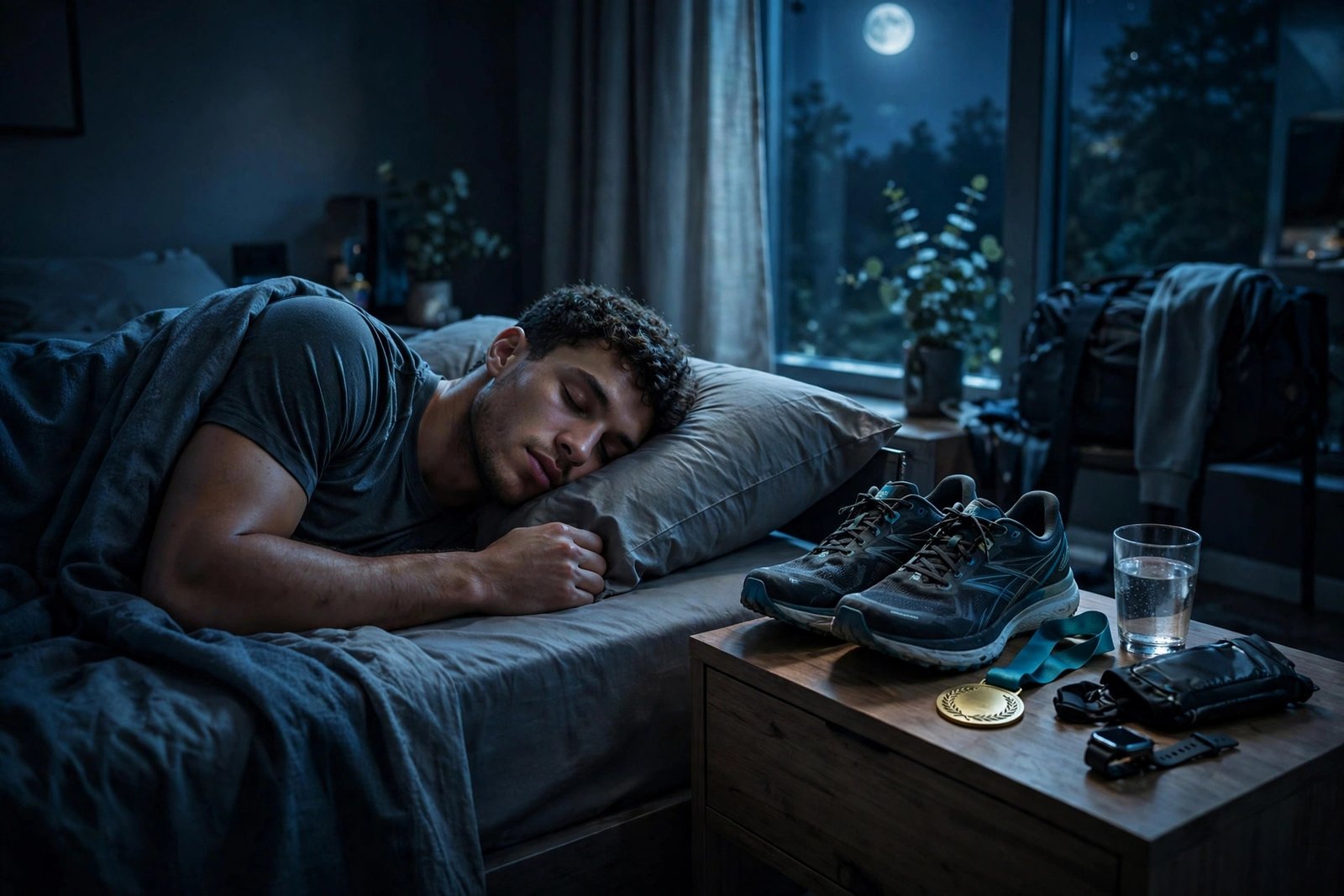
Ask elite coaches about the most powerful legal performance enhancer — these quick tips for better sleep as an athlete start there: and most will say the same thing: sleep. Not supplements, not ice baths, not the latest recovery gadget — sleep. Research keeps confirming it: a landmark Stanford study found basketball players who extended sleep to 10 hours improved sprint times, shooting accuracy, and reaction time measurably. Yet athletes — juggling training, competition, travel, and nerves — are among the worst sleepers in the population. Here’s how to sleep like performance depends on it, because it does.
Why Sleep Is an Athlete’s Superpower
Muscle repair happens during deep sleep: growth hormone — the primary driver of tissue repair and muscle growth — pulses mainly during slow-wave sleep in the first half of the night. Shortchange deep sleep and you blunt the very adaptation training is for. The brain consolidates motor skills overnight: the movement patterns drilled in practice get encoded during sleep — “sleep on it” is literal neuroscience for skill sports.
Reaction time and decision-making degrade fast: even mild sleep restriction (6 hours vs. 8) measurably slows reaction time and impairs judgment — the difference between winning and losing in any timed or reactive sport. Injury risk climbs: adolescent athletes sleeping under 8 hours face significantly higher injury rates in published studies, and the pattern holds for adults. Immunity dips: heavy training already stresses the immune system; poor sleep compounds it, which is why overtrained athletes catch every cold going around. The Sleep Foundation maintains athlete-specific sleep guidance grounded in this research — and for baseline needs, see how much sleep adults really need each night.
How Much Sleep Do Athletes Need?
More than non-athletes: while 7-9 hours covers most adults, athletes in heavy training typically need 8-10 hours — the Stanford basketball study’s 10-hour target wasn’t arbitrary. Endurance athletes, adolescents (who need 8-10 hours baseline anyway), and anyone in a high-volume training block sit at the upper end. Naps count: a 20-30 minute early-afternoon nap boosts afternoon performance without harming nighttime sleep — the siesta is sports science-approved. Avoid late or long naps (over 45 minutes risks sleep inertia and nighttime disruption).
Bank sleep before big events: you can’t fully “catch up” on chronic debt, but 2-3 nights of extended sleep before competition measurably improves performance — and since pre-competition nerves often ruin the night before, the nights before that matter most. Track it: a simple sleep log (bedtime, wake time, quality rating) reveals patterns — most athletes are shocked to learn they average 6.5 hours, not the 8 they assumed.
The Athlete’s Sleep Hygiene Playbook
Consistency beats everything: same bedtime and wake time daily — including weekends. The body clock (circadian rhythm) governs sleep quality as much as duration; irregular schedules fragment sleep architecture even when total hours look fine. Cool, dark, quiet: 65-68°F room, blackout curtains, earplugs or white noise for travel — the hotel-room trifecta. Wind down deliberately: 30-60 minutes of low stimulation before bed — stretching, reading, breathing exercises. Screens aren’t the enemy per se, but doomscrolling and heated group chats are.
Time training wisely: vigorous evening training elevates core temperature and adrenaline, delaying sleep onset — finish intense sessions at least 3 hours before bed when possible; morning training actually improves nighttime sleep. Watch the fuel: heavy late meals disrupt sleep; a light carb-plus-protein snack is fine. Caffeine curfew: no caffeine within 8 hours of bedtime — its half-life is 5-6 hours, so that 4 PM pre-workout is still quarter-strength at midnight. Alcohol: the great pretender — it hastens sleep onset but fragments the second half of the night, exactly when memory consolidation peaks. If falling asleep faster without pills is the goal, these behavioral levers outperform supplements.
Supplements: What Actually Helps (and What Doesn’t)
Magnesium: modest evidence for sleep quality, especially if deficient — common in athletes who sweat heavily. Food first (nuts, seeds, leafy greens); supplements second. Tart cherry juice: one of the few supplements with real trial data showing small improvements in sleep duration and quality — a plausible natural melatonin source. Melatonin: effective for shifting sleep timing (jet lag, schedule changes) at low doses (0.5-1mg); less useful as a nightly sedative, and quality varies wildly between brands.
Skip: high-dose “sleep stacks” with proprietary blends, alcohol as a sleep aid (fragments sleep architecture), and antihistamine-based sleep aids for regular use (tolerance builds in days, grogginess impairs morning training). The hierarchy never changes: consistent schedule, cool dark room, and caffeine curfew outperform every pill. Supplements are the final 5% — master the behavioral 95% first, then experiment with one variable at a time.
Travel, Competition, and Special Situations
Travel: bring your sleep kit (earplugs, eye mask, familiar pillowcase — scent familiarity aids sleep onset), request quiet rooms away from elevators, and shift your schedule toward the destination time zone 2-3 days early for big trips. Pre-competition nerves: normalize them — even Olympians sleep poorly before big events. The fix is banking sleep in the preceding week, not lying awake worrying about lying awake (paradoxically, accepting a bad night reduces its harm).
Overtraining and sleep: persistent insomnia despite fatigue is a classic overtraining marker — if sleep quality collapses alongside performance and mood, back off training volume before reaching for sleep aids. When to get help: chronic insomnia (3+ nights/week for 3+ months), loud snoring with daytime exhaustion (possible sleep apnea — common in larger athletes), or restless legs warrant a sleep specialist. The CDC’s sleep resources cover the public-health basics; a sports-medicine physician connects them to your training.
The Bottom Line
Better sleep as an athlete means: target 8-10 hours (not the standard 7-9), keep a rigid sleep schedule, optimize the room (cool, dark, quiet), finish hard training 3+ hours before bed, set a caffeine curfew, use 20-30 minute naps strategically, and bank sleep before competitions. Sleep is the only recovery tool that’s free, legal, and more powerful than everything else combined. Treat it like training — because it is.
Frequently Asked Questions
How much sleep do athletes need?
8-10 hours for athletes in heavy training — more than the 7-9 recommended for general adults. Adolescent athletes need 8-10 as baseline. Naps of 20-30 minutes can supplement nighttime sleep without disrupting it.
Does lack of sleep affect athletic performance?
Significantly — even mild restriction slows reaction time, impairs decision-making and accuracy, blunts muscle repair (growth hormone releases during deep sleep), raises injury risk, and suppresses immunity. Sleep loss is among the largest controllable performance variables.
Should athletes take naps?
Yes — 20-30 minute early-afternoon naps boost alertness and performance without harming nighttime sleep. Keep them under 45 minutes and before mid-afternoon to avoid sleep inertia and bedtime disruption.
How can athletes sleep better before competition?
Bank extra sleep 2-3 nights before (pre-race nerves often ruin the final night), keep your normal routine, bring your sleep kit when traveling, and accept that some restlessness is normal — worrying about it causes more harm than the lost sleep itself.
Does late-night training ruin sleep?
Vigorous training within 3 hours of bedtime can delay sleep onset via elevated core temperature and adrenaline. When evening sessions are unavoidable, prioritize an extended cool-down, a cool shower, and a longer wind-down routine.