
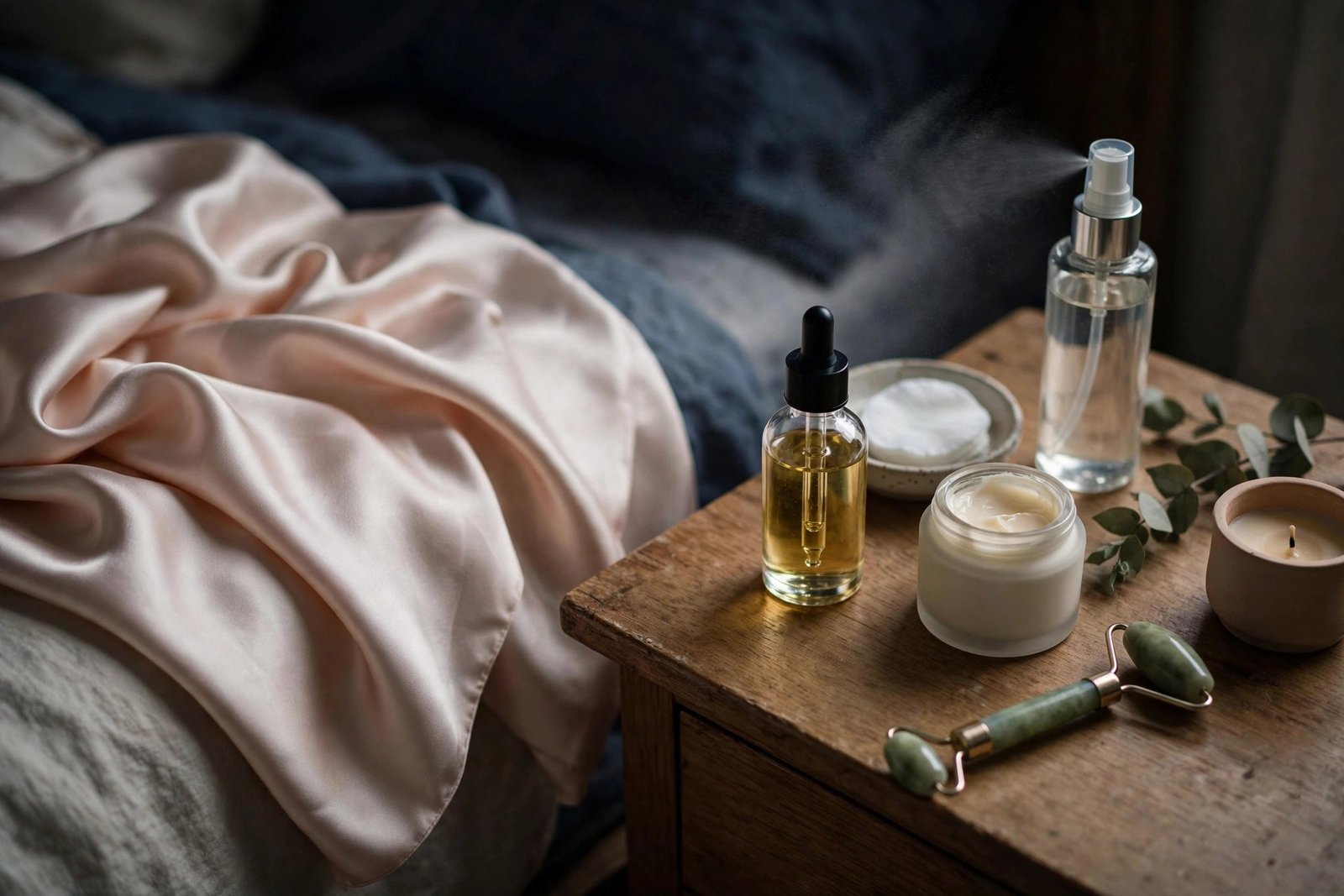
The internet is full of “beauty hacks” — most of them useless, some actively harmful (lemon juice on your face, anyone?). But buried in the noise are genuine tricks that dermatologists, makeup artists, and skincare chemists actually endorse. These are not miracles; they are smart techniques that make your existing products work better or solve common problems with simple adjustments.
This guide collects the overnight beauty hacks that actually work — evidence-based, dermatologist-approved, and practical. More dermatologist favorites live in the AAD’s skin care secrets.
Skin: Work While You Sleep
Night is when skin repairs itself, making it the ideal time for intensive treatments. The most effective overnight hack is slugging — applying a thin layer of petroleum jelly (Vaseline) over your moisturizer. It sounds strange, but petroleum jelly is the most effective occlusive known: it reduces transepidermal water loss by 98%, locking in all the products underneath. Use a pea-sized amount warmed between palms, pressed gently over your night cream. It is non-comedogenic (despite the myth) and costs pennies.
For targeted treatment, apply a retinoid or exfoliating serum at night (when UV will not degrade it and your skin is in repair mode), then seal with moisturizer. For dry lips, apply a thick layer of lip balm or Aquaphor before bed — you will wake up with noticeably smoother lips. For hands, the “glove method”: apply heavy hand cream, then wear cotton gloves overnight. It looks silly and works brilliantly. These intensive night treatments complement nutrition for healthy skin — external and internal approaches work synergistically.
The Pillowcase Upgrade
Switching from cotton to silk or satin pillowcases is one of the highest-impact beauty hacks. Cotton absorbs moisture from your skin and hair and creates friction that causes wrinkles, frizz, and breakage. Silk reduces friction, retains moisture, and is gentler on skin. It is not a miracle, but the cumulative effect over months is noticeable — especially for curly or fragile hair. Wash pillowcases twice weekly; they accumulate oil, bacteria, and product residue that contribute to breakouts.
Hair: Overnight Repair
Overnight hair masks work better than quick conditioners because time matters — ingredients need hours to penetrate the hair shaft. Apply a deep conditioning mask or hair oil to dry hair before bed, cover with a satin bonnet or old t-shirt (to protect your pillow), and wash out in the morning. For very damaged hair, this weekly treatment makes a significant difference.
The “pineapple” method preserves curls overnight: gather hair into a loose, high ponytail on top of your head. This prevents flattening and frizz while you sleep. In the morning, take it down, shake gently, and refresh with a light mist. For straight hair, a loose braid prevents tangles. These protective sleep styles reduce morning styling time and mechanical damage. For more on sleep and appearance, how much sleep adults really need explains why rest is the ultimate beauty treatment.
Eyes and Lashes
For puffy morning eyes, keep eye cream or gel patches in the refrigerator — the cold constricts blood vessels and reduces swelling faster than room-temperature products. Even cold spoons work in a pinch. For lashes, apply a thin coat of castor oil before bed; while the evidence for growth is anecdotal, it conditions and prevents breakage, making lashes look fuller.
The most underrated overnight eye hack is simply sleeping on your back. Side and stomach sleeping compresses the face, contributing to wrinkles and morning puffiness. It takes training to change sleep position, but a contoured pillow helps. And stay hydrated — dehydration shows in the under-eye area first. The AAD’s skin care basics confirm that consistent sleep and hydration outperform most topical products.
Hacks That Do NOT Work (Avoid These)
Not all viral hacks are beneficial. Lemon juice on skin causes phytophotodermatitis (severe burns when exposed to sun) — never use it. Baking soda as exfoliant disrupts skin’s pH and damages the barrier. Toothpaste on pimples causes irritation and chemical burns; use actual acne treatment instead. Glue as a blackhead mask tears skin and causes broken capillaries.
Other myths: “pore strips shrink pores” (they do not — pores do not open/close, and strips irritate), “ice facials slim your face” (temporary de-puffing at best), and “DIY chemical peels” (dangerous without proper formulation and pH). The pattern: if it sounds too good to be true, or involves household chemicals on your face, it is bad. Stick to hacks with dermatological support.
When evaluating a hack, ask: Is there a plausible mechanism? Is it recommended by dermatologists? Are there risks? If the answer to the first two is no, or the third is yes, skip it. Your skin is not a chemistry experiment. The hacks in this guide work because they are based on skin physiology, not viral videos.
Creating an Overnight Routine
Do not try all the hacks at once — build a routine gradually. Start with the basics: cleanse, treat (retinoid or serum), moisturize, seal (petroleum jelly if your skin tolerates it). Add lip treatment and hand cream. Once this is habit, add targeted treatments for your specific concerns.
Keep it sustainable. A 10-step routine you do twice a week is less effective than a 4-step routine you do nightly. Consistency beats complexity. And listen to your skin — if something causes irritation, stop. The best routine is one you actually follow.
The most powerful overnight hack is sleep itself. During deep sleep, skin repairs, collagen rebuilds, and growth hormone peaks. Chronic deprivation undermines every product. Prioritize 7-9 hours. Beauty truly starts with rest.
Start with one hack tonight — perhaps the silk pillowcase or the heavy hand cream with gloves. Notice the difference in the morning. Then add another. Small, consistent changes compound into visible results within weeks.
Consistency is key. Choose 2-3 hacks that fit your routine and do them nightly. The cumulative effect over a month is far greater than trying everything once.
For more detailed guidance, see American Academy of Dermatology.
Frequently Asked Questions
Does slugging really work?
Yes — petroleum jelly is the most effective moisturizer ingredient for preventing water loss. It does not add moisture itself; it seals in the hydrating products underneath. It is safe for most skin types, though those prone to milia (tiny white bumps) should avoid the eye area.
Can I do overnight hacks every night?
It depends on the hack. Moisturizing treatments (slugging, hand masks) are fine nightly. Active treatments (retinoids, exfoliants) should follow product directions — usually 2-3x per week to start. Overdoing actives causes irritation that undoes the benefits.
Do silk pillowcases prevent wrinkles?
They reduce friction that contributes to sleep wrinkles and hair breakage, but they do not prevent age-related wrinkles. Think of them as reducing unnecessary damage, not reversing aging. They are worth it for the hair benefits alone.
What is the single best overnight beauty hack?
Getting enough sleep. No product compensates for chronic sleep deprivation, which causes dark circles, dull skin, and impaired barrier function. Aim for 7-9 hours. All the topical hacks work better on well-rested skin.
Can I do these hacks if I have acne-prone skin?
Be cautious. Slugging (petroleum jelly) is non-comedogenic and safe for most, but heavy oils can clog pores in acne-prone skin. Patch test everything. Avoid coconut oil (highly comedogenic). Stick to non-comedogenic products and introduce one hack at a time so you can identify irritants.