
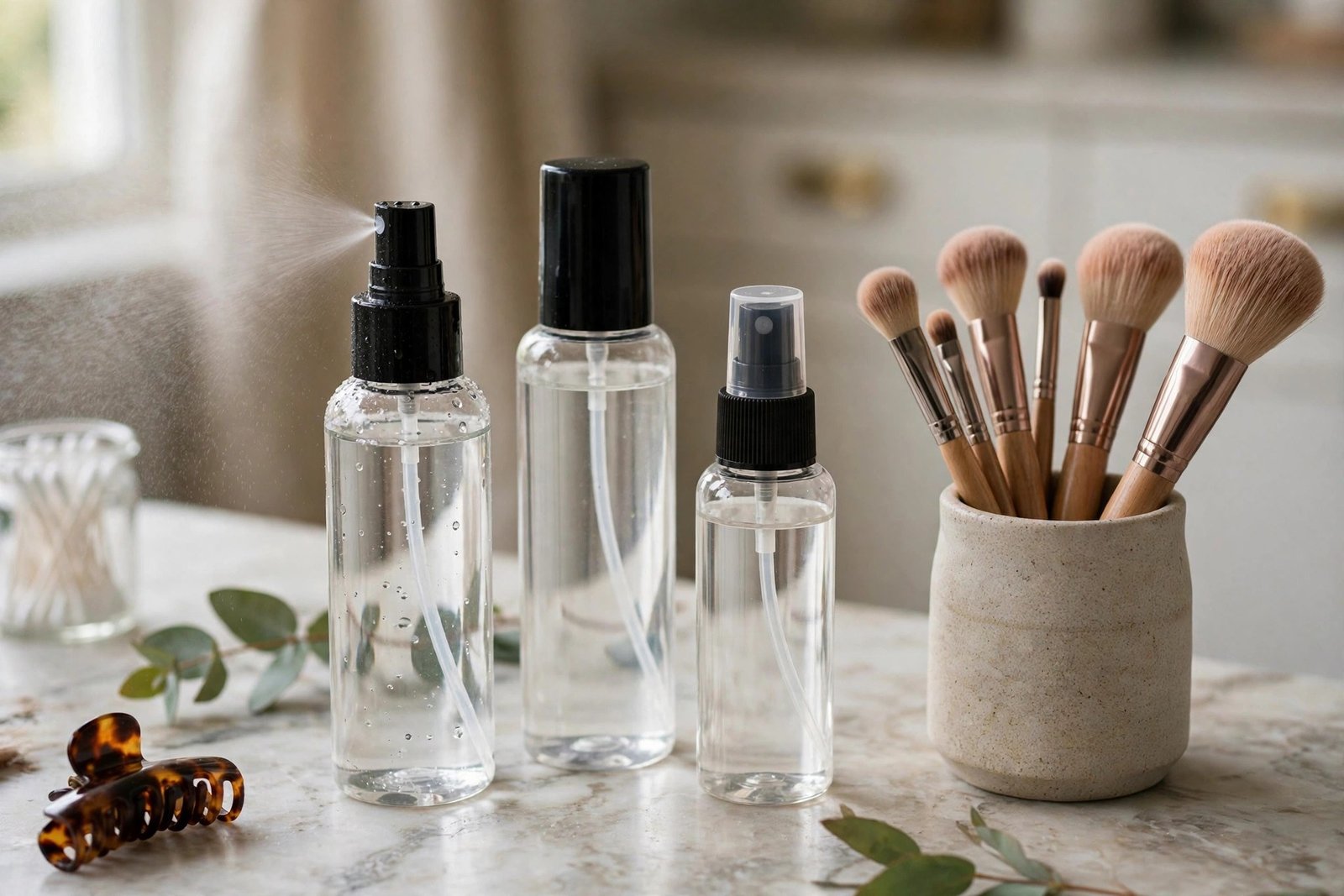
You spent 30 minutes on your makeup, it looked flawless at 8 AM, and by 2 PM it has faded, creased, and separated. Setting spray is supposed to fix this — but the market is flooded with options promising “all-day wear,” “dewy finish,” “matte lock,” and you have no idea which ones actually work versus which are just scented water. The truth: good setting sprays make a measurable difference, but only if you choose the right formula and use it correctly. Skin prep matters as much as the spray — see the AAD’s skin care secrets and Cleveland Clinic’s dermatologist-approved skin care tips.
This guide reviews the best setting sprays for all-day wear, how they work, and the techniques that maximize their effectiveness.
How Setting Sprays Work
Setting sprays are not magic; they are chemistry. Most contain polymers (like PVP) that form a flexible film over makeup, holding it in place and reducing transfer. Some include alcohol (which helps the film set quickly but can be drying), while alcohol-free formulas use gentler film-formers. Hydrating sprays add humectants like glycerin for a dewy finish; mattifying sprays include oil-absorbing ingredients.
The key distinction: setting sprays vs. fixing sprays vs. refreshing mists. Setting sprays (Urban Decay All Nighter, NYX Matte Finish) lock makeup in place — they are the workhorses. Fixing sprays (MAC Fix+) melt powders into skin for a natural finish but do not extend wear significantly. Refreshing mists (rose water, etc.) hydrate but do not set. Many products blur these lines in marketing; check the ingredient list and reviews for actual performance. Understanding product functions helps you build an effective routine — see looking polished with minimal makeup effort for the fundamentals.
Best Picks by Category
Best Overall: Urban Decay All Nighter ($36)
The industry standard for a reason. In independent wear tests, it consistently extends makeup life by 4-6 hours, controls oil without looking flat, and works across skin types. The spray pattern is fine and even (no splotches), and it does not alter the finish of your makeup. It is expensive, but one bottle lasts 3-4 months with daily use. If you buy one setting spray, make it this one.
Best Budget: NYX Professional Makeup Setting Spray ($9)
Available in Matte and Dewy finishes, this $9 spray performs remarkably close to luxury options. The matte version controls shine for 6-8 hours; the dewy version gives a natural glow without looking greasy. The spray nozzle is decent (not as fine as Urban Decay, but good for the price). For under $10, it is the best value in the category and a perfect entry point if you have never used setting spray.
Best for Dry Skin: MAC Fix+ ($32)
Technically a fixing spray, not a setting spray — it will not extend wear as dramatically as All Nighter. But for dry skin, it is unmatched at melting powder into skin, eliminating the cakey look, and providing a hydrating boost. Use it before setting spray (to meld) or on its own for a natural finish. The coconut and cucumber extracts feel refreshing, though the fragrance may irritate very sensitive skin.
Best for Oily Skin: Skindinavia The Makeup Primer Spray ($35)
Skindinavia actually manufactures Urban Decay’s All Nighter (same formula, different branding), and their oil-control primer spray is excellent for very oily skin. It creates a matte base that grips makeup and controls shine for 10+ hours. If your makeup slides off by noon, this is worth the investment. For oil control throughout the day, choosing the right shades matters less than choosing the right formulas.
Application Techniques That Matter
How you apply setting spray affects performance as much as the formula. Hold the bottle 8-10 inches from your face — too close causes splotches and disrupts makeup; too far wastes product. Spray in an X and T formation (forehead to chin, then across) for even coverage. Apply in light layers: one after foundation (before powder) and one at the end. This “sandwich” method locks each layer.
Let it dry naturally — do not fan or blot. Fanning disrupts the film formation. If you use powder, apply setting spray after powder to meld everything together; the spray dissolves the powdery finish into skin. For extra longevity, try the “wet” technique: dampen your beauty sponge with setting spray instead of water when applying foundation. This embeds the setting polymers directly into the base. These professional techniques are why makeup artists’ work lasts through 12-hour shoots — and they work for everyday wear too.
Setting Spray vs. Other Setting Methods
Setting spray is one option, but not the only one. Setting powder (translucent or tinted) absorbs oil and sets liquid products — it is essential for oily skin, but can look cakey if over-applied. Use a light hand and a fluffy brush, focusing on the T-zone. Baking (packing powder under eyes and letting it sit) provides extra longevity for special events but is too heavy for daily wear.
Primer is the foundation of long wear — a good primer grips makeup and controls oil/smooths texture. Silicone-based primers work best for longevity; hydrating primers suit dry skin. The combination of primer + setting spray is the professional standard for all-day wear. Powder is optional depending on skin type and desired finish.
For maximum longevity, layer: primer, foundation, setting spray (light mist), powder (if needed), then final setting spray. This “sandwich” method locks each layer. It seems like a lot, but it takes 30 extra seconds and doubles wear time. For everyday natural looks, primer + light setting spray is sufficient. Save the full sandwich for long days or special events.
Travel and Touch-Ups
Setting spray is not just for initial application — it is great for touch-ups. Carry a travel-size spray for midday refreshes. A light mist revives makeup, reduces cakiness, and adds hydration. It is better than piling on more powder, which looks heavy.
For travel, decant into a small spray bottle (under 3.4 oz for carry-on). Setting spray also works to dampen brushes for more intense eyeshadow application, or to revive dried-out cream products. It is a multi-tasker — not just a finisher.
For more detailed guidance, see American Academy of Dermatology.
For more detailed guidance, see Paula’s Choice ingredient guides.
Frequently Asked Questions
Do setting sprays really work?
Yes — good ones measurably extend wear time by 4-8 hours, reduce transfer, and prevent makeup from settling into fine lines. They are not miracle workers (they will not make cheap foundation perform like luxury), but they optimize whatever you are wearing.
Can I use hairspray as setting spray?
No. Hairspray contains alcohols and chemicals not formulated for skin — it causes irritation, breakouts, and dryness. It is a persistent internet myth that dermatologists universally condemn. Use actual setting spray.
Should I apply setting spray before or after powder?
Both, for maximum longevity. A light mist after foundation (before powder) helps the base adhere. A final mist after all makeup melds powders and sets everything. If you only do one, do the final mist.
How do I choose between matte and dewy?
Match to your skin type and preference. Oily skin usually prefers matte (controls shine); dry skin prefers dewy (adds glow). You can also mix — matte in the T-zone, dewy on cheeks. There is no wrong answer, only what looks best on you.
Can I make DIY setting spray?
DIY recipes (rose water, glycerin, etc.) make nice refreshing mists, but they do not set makeup like commercial setting sprays with film-forming polymers. They are fine for hydration, but they will not extend wear time. For actual setting, buy a proper product.