
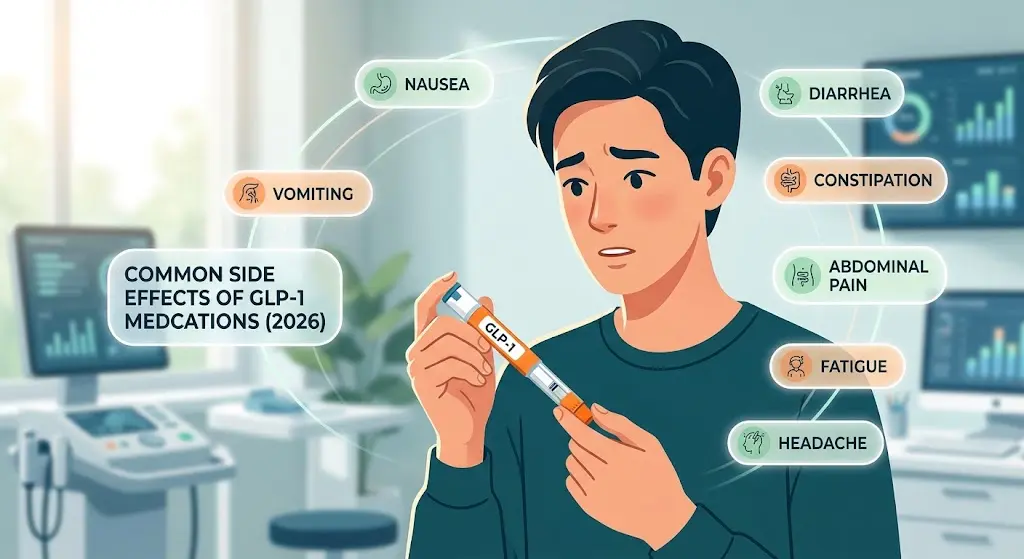
GLP-1 medications have become some of the most widely discussed treatments for type 2 diabetes and obesity. Medicines such as semaglutide and liraglutide belong to the GLP-1 receptor agonist class, while tirzepatide works on both GIP and GLP-1 pathways. Their benefits can include improved blood sugar control and significant weight loss, but they can also cause side effects.
So, what are the most common side effects of GLP-1 medications in 2026?
The most frequently reported problems are generally related to the digestive system. Nausea, vomiting, diarrhea, constipation, abdominal discomfort, bloating, and reduced appetite are among the side effects people commonly experience. Recent research continues to show that gastrointestinal symptoms are the dominant side-effect pattern across this medication class.
Importantly, side effects can vary depending on the specific medication, dose, how quickly the dose is increased, and an individual’s health.
What Are GLP-1 Medications?
GLP-1 medications work by mimicking or activating hormones involved in blood sugar regulation and appetite control.
Depending on the medication, they can:
- Increase insulin release when blood glucose is elevated
- Reduce glucagon secretion
- Slow stomach emptying
- Reduce appetite
- Increase feelings of fullness
- Help lower blood glucose
- Support weight loss in people for whom these medications are prescribed
Commonly discussed medications include Ozempic, Wegovy, Rybelsus, Saxenda, Mounjaro, and Zepbound, although these medicines do not all have identical indications or mechanisms.
For example, Ozempic contains semaglutide, while Mounjaro and Zepbound contain tirzepatide.
What Are the Most Common GLP-1 Side Effects?
1. Nausea
Nausea is one of the most common side effects of GLP-1 medications.
It may be more noticeable when someone first starts treatment or after the dose is increased. GLP-1 medicines can slow gastric emptying and affect appetite and digestion, which can contribute to feelings of nausea.
Recent evidence continues to identify nausea as the leading gastrointestinal complaint associated with GLP-1 therapies. A large meta-analysis of randomized trials found nausea in about 22.8% of participants receiving GLP-1 medications.
For many people, nausea becomes less troublesome as the body adjusts to the medication.
2. Vomiting
Vomiting can occur alongside nausea, particularly during the early stages of treatment or following dose escalation.
The frequency varies between medications and studies. In the same large meta-analysis, vomiting occurred in approximately 9.1% of people receiving GLP-1 receptor agonists.
Repeated vomiting shouldn’t simply be ignored. Severe or persistent vomiting can contribute to dehydration and may require medical evaluation.
3. Diarrhea
Diarrhea is another frequently reported GLP-1 side effect.
It may occur when beginning treatment or increasing the dose. Some people experience it temporarily, while others may have recurring episodes.
FDA information for several GLP-1-related medications lists diarrhea among their common adverse reactions. For example, clinical trial data for Wegovy reported diarrhea among the most frequently observed gastrointestinal reactions.
Staying adequately hydrated can be particularly important if diarrhea is persistent.
4. Constipation
Although GLP-1 medications are associated with diarrhea, constipation is also common.
Changes in appetite, food intake, fluid intake, and gastrointestinal movement may all contribute.
Recent research identifies constipation as one of the major gastrointestinal adverse effects associated with GLP-1 medications.
If constipation becomes severe, lasts for an extended period, or is accompanied by significant abdominal pain or vomiting, contacting a healthcare professional is appropriate.
5. Abdominal Pain or Stomach Discomfort
Some people experience:
- Stomach pain
- Abdominal discomfort
- Bloating
- Gas
- Indigestion
- A feeling of fullness
These symptoms are generally considered part of the gastrointestinal side-effect profile of GLP-1 therapies.
However, severe or persistent abdominal pain should not automatically be assumed to be a normal medication side effect because certain serious conditions can also cause abdominal pain.
6. Reduced Appetite
Reduced appetite is often an intended effect of GLP-1 treatment, particularly when these medications are prescribed for obesity or weight management.
However, an overly strong reduction in appetite can sometimes make it difficult for someone to consume enough food and fluids.
This is particularly important for people who experience substantial nausea or vomiting at the same time.
7. Bloating, Burping and Indigestion
Some patients report increased:
- Bloating
- Burping
- Gas
- Indigestion
- Acid reflux or similar digestive symptoms
These symptoms can occur because GLP-1 medicines affect gastrointestinal motility and stomach emptying. Recent reviews describe these upper and lower gastrointestinal symptoms as part of the commonly observed adverse-effect pattern.
Are GLP-1 Side Effects Worse After Increasing the Dose?
They can be.
Many GLP-1 medications are introduced at a lower dose and gradually increased. Gastrointestinal symptoms can become more noticeable during dose escalation.
For example, FDA information for Ozempic notes that many reports of nausea, vomiting and diarrhea occurred during dose escalation.
This is one reason healthcare professionals generally follow a specific dose-escalation schedule rather than starting patients immediately at higher doses.
Never increase your GLP-1 dose faster than prescribed.
How Long Do GLP-1 Side Effects Last?
There isn’t one timeframe that applies to everyone.
For some people, nausea, diarrhea or other digestive symptoms improve within days or weeks as the body adjusts. Others may experience symptoms for longer, particularly after dose increases.
A recent review found that gastrointestinal symptoms commonly occur after treatment begins or after a dose increase and often become less troublesome once patients reach a maintenance dose.
If symptoms are severe, persistent or getting worse rather than improving, patients should discuss them with their healthcare professional.
What Can Help With Common GLP-1 Side Effects?
The best approach depends on the specific symptom and medication.
For mild digestive symptoms, healthcare professionals may recommend strategies such as:
- Eating smaller meals
- Eating slowly
- Avoiding foods that consistently trigger symptoms
- Maintaining adequate fluid intake
- Following the prescribed dose-escalation schedule
- Discussing persistent symptoms with the prescribing clinician
People should not independently stop, restart or change their medication dose without medical advice.
If side effects become difficult to tolerate, a clinician may decide whether the dose should be adjusted or whether another treatment approach is more appropriate.
Are GLP-1 Medications Safe?
GLP-1 medications have been extensively studied, but safe does not mean completely free of risks.
Most commonly reported side effects are gastrointestinal, but some less common reactions can be medically serious.
Depending on the medication, prescribing information includes warnings concerning problems such as pancreatitis, gallbladder disease, kidney injury associated with dehydration, hypoglycemia when certain diabetes medications are used together, and serious allergic reactions.
Therefore, people taking these medications should understand both the common side effects and the warning signs that require medical attention.
When Should You Contact a Doctor?
Seek medical advice if you experience:
- Persistent or severe vomiting
- Severe or continuing abdominal pain
- Signs of dehydration
- Severe diarrhea
- Difficulty keeping fluids down
- Symptoms of a serious allergic reaction
- Significant changes in blood sugar if you have diabetes
- Any symptom that is unusual, severe or rapidly worsening
Severe abdominal pain, particularly if it is persistent or accompanied by vomiting, should be evaluated rather than automatically attributed to a GLP-1 medication.
What About Serious GLP-1 Risks in 2026?
The safety conversation around GLP-1 medications continues to evolve.
For example, in January 2026, the FDA announced that its review did not identify an increased risk of suicidal ideation or behavior with GLP-1 receptor agonists and requested removal of related warnings from affected product labeling.
At the same time, established medication-specific warnings remain important.
In March 2026, the FDA approved a higher-dose version of Wegovy, called Wegovy HD. The agency reported that the safety profile was consistent with the known effects of semaglutide and again identified gastrointestinal reactions—including nausea, vomiting, diarrhea, constipation and abdominal pain—as common adverse reactions.
This highlights an important point: newer doses or formulations don’t necessarily eliminate the gastrointestinal side-effect profile of GLP-1 treatment.
Do All GLP-1 Medications Cause the Same Side Effects?
No.
There is considerable overlap between medications, but the frequency and severity of adverse effects can differ.
For example, clinical data for semaglutide and tirzepatide both show gastrointestinal side effects, but individual patients can respond very differently.
A recent systematic review of 101 randomized controlled studies found statistically significant increases in nausea, vomiting, diarrhea, constipation and other gastrointestinal adverse effects across the GLP-1 medications studied.
Your medical history, dose, other medications and individual tolerance can all influence your experience.
The Bottom Line
So, what are the most common side effects of GLP-1 medications in 2026?
The short answer is nausea, vomiting, diarrhea, constipation and abdominal discomfort. Reduced appetite, bloating, burping and indigestion can also occur.
For many patients, these symptoms are most noticeable when treatment begins or the dose increases and may improve as the body adapts. However, severe or persistent symptoms should be discussed with a healthcare professional rather than treated as an unavoidable part of GLP-1 therapy.
GLP-1 medications can provide important benefits for appropriate patients, but they should be used under proper medical supervision.
Frequently Asked Questions
What is the most common side effect of GLP-1 medications?
Nausea is generally the most commonly reported side effect, followed by other gastrointestinal symptoms such as vomiting, diarrhea and constipation.
Do GLP-1 medications cause diarrhea or constipation?
They can cause both diarrhea and constipation. Individual responses differ, and symptoms may change during dose escalation.
How can I reduce GLP-1 nausea?
Eating smaller meals, eating slowly, maintaining hydration and following the prescribed dose-escalation schedule may help. If nausea is severe or persistent, speak with your healthcare professional before making changes to your medication.
Are GLP-1 side effects permanent?
Not necessarily. Many gastrointestinal symptoms become less noticeable as the body adjusts to treatment, although some people can experience persistent symptoms.
Do higher GLP-1 doses cause more side effects?
Higher doses or dose increases can make gastrointestinal symptoms more noticeable in some patients. This is why GLP-1 medications are commonly titrated gradually.
Can GLP-1 medications cause stomach pain?
Yes. Abdominal pain or discomfort can occur. However, severe or persistent abdominal pain requires medical evaluation, because it can sometimes indicate a more serious problem.
Are GLP-1 medications safe in 2026?
GLP-1 medications have established benefits and known risks. Their safety depends on the specific drug, dose, patient characteristics and medical supervision. They are not appropriate for everyone.
When should I stop taking a GLP-1 medication?
Do not stop or change your prescribed medication without speaking with your healthcare professional, unless you are experiencing an emergency and are following emergency medical advice.