
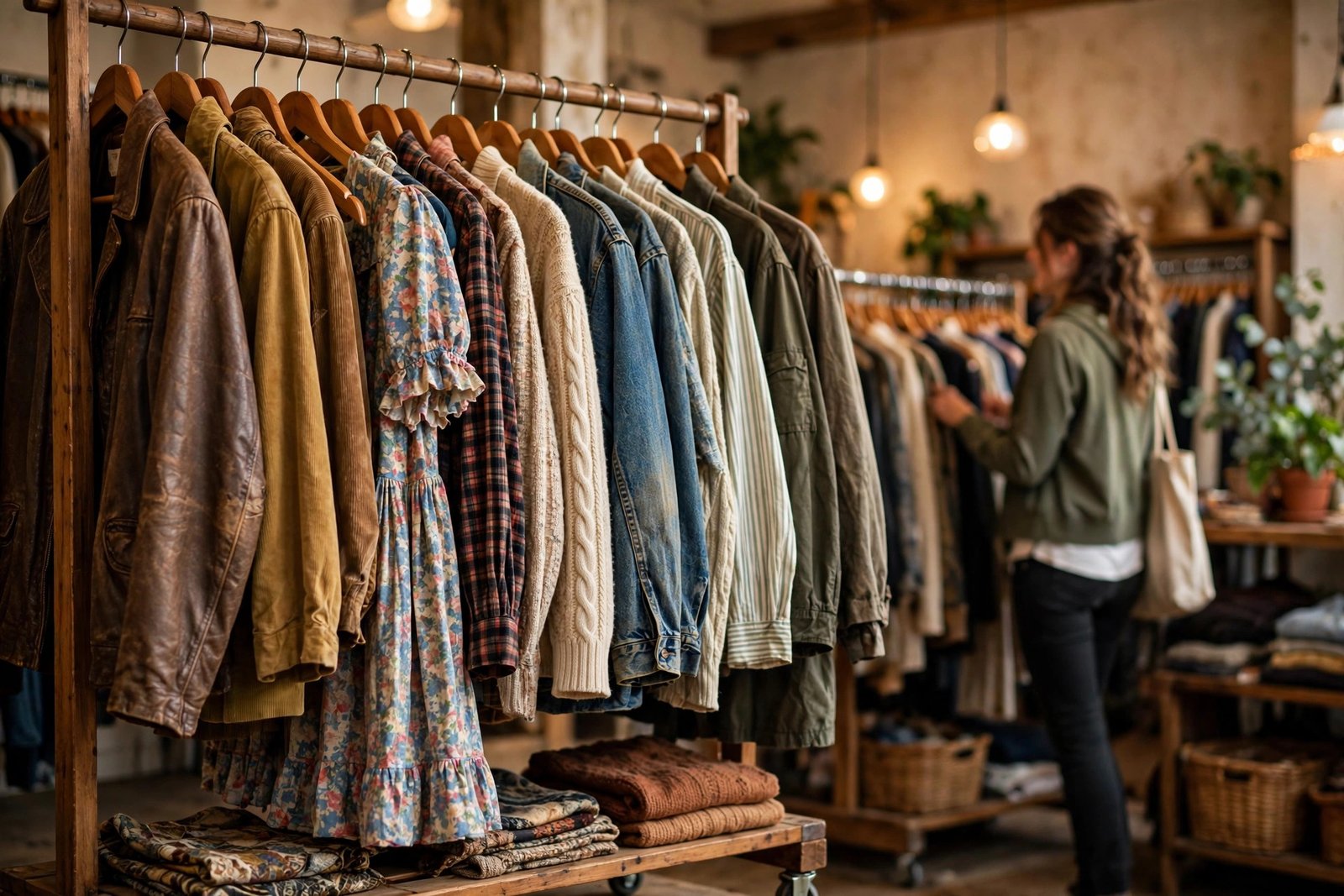
Americans throw away roughly 11 million tons of textiles every year, according to EPA data — most of it perfectly wearable clothing. Meanwhile, thrift stores, consignment shops, and resale apps overflow with quality pieces at 70-90% off retail. These best secondhand shopping tips for beginners prove it’s the rare life hack that’s simultaneously cheaper, more sustainable, and more fun than the alternative: every trip is a treasure hunt where patience gets rewarded with designer finds at fast-fashion prices. Whether you’re thrifting for the planet, the wallet, or the thrill, here’s how to do it like a pro from day one.
Why Secondhand Wins (The Numbers)
Environmental: buying used extends a garment’s life — wearing an item just nine months longer cuts its carbon, water, and waste footprint by roughly 30%. The fashion industry accounts for about 10% of global carbon emissions; every secondhand purchase is one less new item manufactured. Textiles in landfills generate methane as they decompose, so keeping clothes circulating is direct waste prevention. If the scale of fashion’s impact surprises you, read how bad fast fashion really is for the environment — it’s the context that makes thrifting feel less like a hobby and more like a responsibility.
Financial: quality compounds in your favor. A $200 retail blazer for $15 at a thrift store isn’t just cheap — it’s often better-made than anything at that price new, since older and higher-end garments used superior construction. The treasure factor: designer labels, vintage pieces, and dead-stock items appear regularly for those who learn where and when to look. Resale platforms have made price discovery transparent — check what an item sells for on Poshmark before deciding whether that $8 price tag is a steal.
Where to Shop: The Full Map
Thrift stores (Goodwill, Salvation Army, local independents): cheapest, most chaotic, best for casual treasure hunting. Go often — inventory turns over daily, and regulars learn restock schedules. Consignment and curated resale (Buffalo Exchange, Crossroads, local boutiques): pre-screened quality, higher prices than thrift but still far below retail, great for workwear. Estate sales and garage sales: the deepest discounts, especially on the last day when sellers just want things gone.
Online resale: ThredUp (huge inventory, easy search, quality photos), Poshmark (social marketplace, negotiate via offers), eBay (best for specific searches — saved searches with alerts are the pro move), The RealReal (authenticated luxury). Online costs more than in-person thrifting but lets you hunt precisely. Specialty: vintage stores for statement pieces, uniform/workwear suppliers for durable basics, and “by the pound” outlets (Goodwill Outlets) for the truly committed — chaotic, astonishingly cheap. ThredUp’s annual resale reports track the secondhand market’s explosive growth if you want the industry data.
What to Buy Used (and What to Buy New)
Buy secondhand with confidence: blazers and coats (construction quality is easy to assess), denim (already broken in), leather goods (patina improves them), dresses for occasions, furniture, books, and kids’ clothes (they outgrow everything in months). Buy new: underwear and socks (non-negotiable), swimwear (hygiene + elastic wear), shoes (molded to someone else’s feet — though barely-worn pairs are fine), mattresses, and safety gear (helmets, car seats — hidden damage risks).
The gray zone: handbags (check straps and corners), watches (verify movement), and electronics (test everything, check return policies). For clothing, fabric matters more than brand: natural fibers (wool, silk, cotton, linen, leather) age gracefully and are worth buying used; cheap synthetics pill and look tired fast regardless of label. Learn to read fabric content tags — it’s the single highest-ROI thrifting skill.
The Inspection Checklist
Every item, every time: check seams and hems (pull gently — weak stitching reveals itself), look for stains in natural light (store lighting hides them; check armpits, collars, and cuffs especially), test zippers and buttons, sniff for smoke or mildew (smoke rarely fully washes out — pass), and stretch elastic (waistbands, cuffs). Hold it up to light to spot thin spots and holes. Check the size, not the tag: vanity sizing means a 2026 “medium” differs wildly from a 1996 “medium” — and vintage sizing runs small. When in doubt, measure against a garment you own that fits.
The fitting room is mandatory for anything structured; for casual online buys, know your measurements in inches (chest, waist, hips, inseam) and compare to listed garment measurements, not size labels. Our guide to shopping for clothes online without getting the wrong size covers measurement technique in detail. Price-check instinct: if you wouldn’t pay the price for it new at a discount store, it’s not a deal used — “cheap” isn’t the same as “worth it.”
Cleaning, Repairing, and Selling
Sanitize everything: wash on hot with vinegar or borax added, or dry-clean structured pieces. Sunlight is a natural disinfectant and deodorizer — a day on the line freshens musty finds remarkably. Learn basic repairs: sewing a button, hemming pants, and fixing a loose seam take minutes to learn on YouTube and rescue countless “almost perfect” finds. A $15 handheld steamer makes thrifted clothes look new. Know when to walk away: alterations costing more than the item’s value, persistent odors, or structural damage (broken zippers in lined coats, worn seams) turn bargains into money pits — the best thrifting skill is the discipline to put things back.
Close the loop — sell what you don’t wear: Poshmark and eBay for individual pieces, consignment for bundles, buy-sell-trade stores for instant cash (at ~30% of resale value). The EPA’s sustainable materials management data shows textile recycling infrastructure growing — donate what’s unsellable to textile recyclers rather than trashing it. A functioning secondhand wardrobe is circular: buy used, wear well, repair, resell, repeat.
The Bottom Line
Secondhand shopping for beginners comes down to: go often, inspect ruthlessly (seams, stains, smell, stretch), learn fabrics over brands, know your measurements, sanitize everything, and repair the almost-perfect finds. You’ll spend less, waste nothing, and own things with stories — which beats another identical fast-fashion haul every time.
Frequently Asked Questions
Is it sanitary to buy secondhand clothes?
Yes, with proper cleaning — hot-water washing with vinegar or borax, dry-cleaning structured items, and sunlight exposure eliminate hygiene concerns. Avoid items with persistent smoke or mildew smells, which rarely wash out fully.
What should you never buy secondhand?
Underwear, socks, swimwear, mattresses, safety helmets, and car seats. Shoes are best bought new (they mold to the wearer’s feet), though barely-worn pairs are acceptable. Everything else is fair game with inspection.
How do you find good stuff at thrift stores?
Go frequently (inventory turns daily), learn restock schedules, check the premium/designer sections first, learn fabric content tags, and inspect in natural light. Regulars who know their measurements and move fast get the best finds.
Is secondhand shopping actually better for the environment?
Yes — extending a garment’s life by nine months cuts its environmental footprint ~30%, and every used purchase displaces new manufacturing. With 11 million tons of US textiles landfilled yearly, keeping clothes in circulation is one of the highest-impact consumer choices.
Can you make money selling secondhand clothes?
Modestly — curated sellers on Poshmark/eBay profit from underpriced thrift finds, but it takes knowledge and effort. For most people, reselling recoups costs on clothes you no longer wear rather than generating real income. Buy-sell-trade stores pay ~30% of resale value in instant cash.