Cate Blanchett: Net Worth, Age, Family and Career Explained
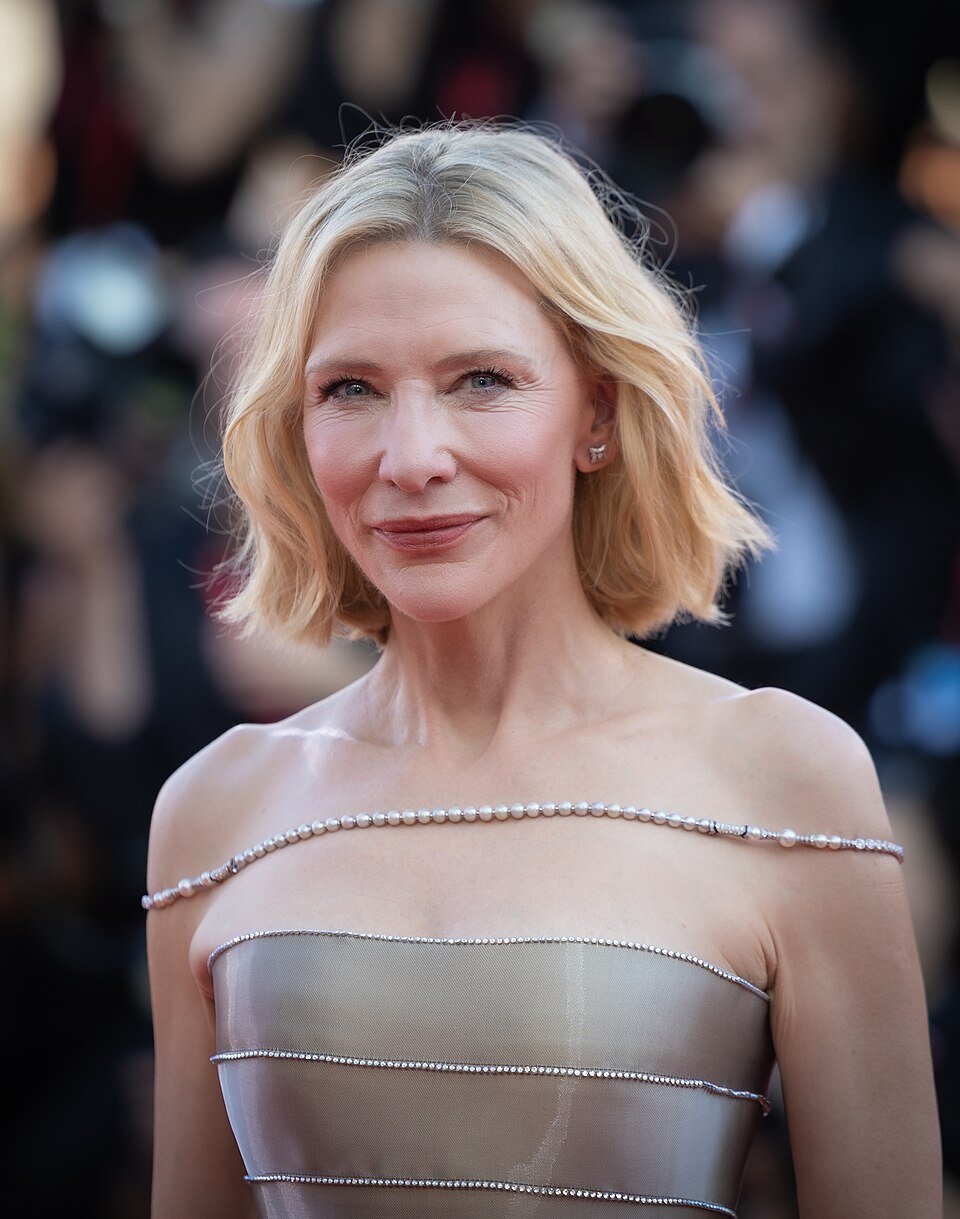
Cate Blanchett is 57 years old, born Catherine Élise Blanchett on 14 May 1969 in Ivanhoe, Melbourne, and she is an Australian performer widely regarded as one of the finest of her generation. Celebrity Net Worth estimates her fortune at $95 million, and this profile covers her two Academy Awards, her husband Andrew Upton, their four children, and the East Sussex home where the family is based.
A quick portrait of Cate Blanchett
| At a Glance | Details |
|---|---|
| Born | 14 May 1969, Ivanhoe, Melbourne, Victoria, Australia |
| Age | 57 years old |
| Height | 5 feet 8½ inches (174 cm) |
| Weight | No reliable published figure exists |
| Nationality | Australian |
| Husband | Andrew Upton (married 29 December 1997) |
| Children | Four: Dashiell John (born 2001), Roman Robert (born 2004), Ignatius Martin (born 2008) and Edith Vivian Patricia (adopted 2015) |
| Parents | June Gamble Blanchett and Robert DeWitt Blanchett Jr. |
| Net Worth | $95 million (Celebrity Net Worth) |
| No official personal account |
The Ivanhoe family behind the performer
Catherine Élise Blanchett was born on 14 May 1969 in Ivanhoe, a suburb of Melbourne, Victoria, Australia. Her mother, June Gamble, was an Australian teacher who later worked in property development. Her father, Robert DeWitt Blanchett Jr., was from Texas and had come to Australia during his service as a chief petty officer in the United States Navy, later working in advertising. The family’s story was marked early by loss: her father died of a heart attack when Blanchett was ten years old, an event she has spoken about factually in interviews as a defining fact of her childhood, after which her mother raised the family in Melbourne.
Her birthday, 14 May, is the fixed point of a biography that began in Australian theatre rather than in film. After early stage work in Sydney in the first years of the 1990s, including an acclaimed production of Oleanna opposite Geoffrey Rush, she built a reputation as the most exciting young stage performer in the country before the cinema had properly noticed her. Her first significant screen roles came in Australian productions in the mid-1990s, and by 1997 she was carrying a major international film. That sequence — stage first, screen second — matters to understanding her career, because she has returned to the theatre at every stage of her fame, treating it as her home medium rather than as a sideline.
Blanchett’s nationality is Australian, and it is worth stating plainly because she is sometimes misfiled in reference lists under other countries on the strength of her father’s origins and her later homes in England and the United States. She was born in Melbourne, she was formed professionally in Sydney, she holds her career’s roots in Australian companies, and she has represented Australian culture internationally throughout her working life, including in formal cultural roles at home. Her father was American-born; she is Australian. The distinction is simple, and this profile records it as she herself has always presented it.
By the late 1990s she was working between Australia, Britain and Hollywood, and the pattern of her adult life was set: an Australian base of identity, an international career, and a private family life kept deliberately separate from both. The films came quickly after that, and they are covered in the work covered later in this profile, but the biography underneath them never really changed shape — Melbourne childhood, a father lost young, a mother who held the family together, theatre training in Sydney, and then a screen career that made her, within a decade, a two-time Academy Award winner.
The money The Lord of the Rings brought in
Celebrity Net Worth estimates Cate Blanchett’s net worth at $95 million. Other trackers repeat broadly the same figure, and there is no competing published total from Forbes or from a rich list that this profile can set against it, so the $95 million estimate stands here as the named anchor — with the standard caution that it is an estimate built from public reporting, not an audited account, and Blanchett has never published her finances.
The composition of the estimate is visible in the career above. She has been a leading performer for more than twenty-five years, with salaries rising from the independent films of the late 1990s to the very large productions of the Marvel era, in which Thor: Ragnarok alone grossed more than $850 million worldwide. Two Academy Awards, eight nominations, and a filmography whose total box office runs into many billions of dollars underpin the figure, as do her years running a major theatre company and the value of Dirty Films, the production company she owns with her husband, which entered its Searchlight arrangement in 2026 with a slate of film and television projects.
The family’s home is in East Sussex, England. Reporting over several years has consistently placed Blanchett and Upton at a historic Victorian house near Crowborough, bought in the mid-2010s for a reported figure of around £5 million, with later reporting describing the purchase of neighbouring land and a farmhouse. Before the move to England the family lived in Sydney, in the Hunters Hill area, and they have retained property interests in Australia. The East Sussex base fits the pattern of her public life: close enough to London for stage and film work, far enough from it for four children to grow up unphotographed.
On Instagram, the honest answer is that there is no official personal account to give. Blanchett has no verified personal Instagram presence, has said in interviews over many years that she stays away from social networks, and has described reading about herself online as something she has no interest in doing. Accounts using her name are fan accounts. This profile records that position plainly rather than printing an unverified handle: for a performer whose keyword list includes Instagram, the verified fact is that she has chosen not to have one.
The Lord of the Rings opens the door
1998: Elizabeth and an overnight international name
Blanchett’s breakthrough came with Elizabeth (1998), in which she played Elizabeth I. The performance brought her a Golden Globe Award, a BAFTA Award and her first Academy Award nomination, and it established the quality that has defined her work since: complete physical and vocal transformation in the service of a historical figure. The same period brought supporting work in The Talented Mr Ripley (1999), and her Australian reputation was converted, in the space of about eighteen months, into an international one. Few performers have announced themselves so completely with a single leading role.
2001–2003: The Lord of the Rings and global fame
As Galadriel in The Lord of the Rings trilogy — The Fellowship of the Ring (2001), The Two Towers (2002) and The Return of the King (2003) — Blanchett reached the largest audience of her career. The three films grossed close to $3 billion worldwide in their original releases, and her small but pivotal role became one of the series’ most quoted performances. She later returned to the part in The Hobbit trilogy (2012–2014). Alongside the blockbusters she continued with smaller work, including The Shipping News (2001) and the title role in Veronica Guerin (2003), maintaining the alternation between scale and intimacy that has characterised her whole filmography.
2004–2007: The Aviator, an Academy Award, and Babel
In The Aviator (2004), directed by Martin Scorsese, Blanchett played Katharine Hepburn and won the Academy Award for Best Supporting Actress — becoming the first performer to win an Oscar for playing another Oscar winner. Babel (2006) placed her in a large international ensemble, and Notes on a Scandal (2006) brought another Academy Award nomination. In I’m Not There (2007) she played one of several versions of Bob Dylan, a performance that won her the Volpi Cup at Venice and a further Oscar nomination, and in the same year she returned to her breakthrough role in Elizabeth: The Golden Age (2007), earning yet another nomination for playing the same queen a decade on.
2008–2014: Benjamin Button, Blue Jasmine and a second Academy Award
The Curious Case of Benjamin Button (2008) reunited her with large-scale Hollywood storytelling, and she took a rare blockbuster villain’s part in Indiana Jones and the Kingdom of the Crystal Skull (2008). Robin Hood (2010) and Hanna (2011) followed. Then, in Blue Jasmine (2013), directed by Woody Allen, she gave the performance many critics regard as her finest: a disgraced socialite unravelling in public. It won her the Academy Award for Best Actress, along with the BAFTA and Golden Globe in the same category, making her one of a small number of performers with Oscars in both acting categories. In the same period, from 2008 to 2013, she and her husband Andrew Upton served jointly as artistic directors of the Sydney Theatre Company, running one of Australia’s major stages while her film career peaked.
2015–2019: Carol, Thor: Ragnarok and Ocean’s 8
Carol (2015), in which she played a 1950s New Yorker in a forbidden romance, brought another Academy Award nomination and is now regularly listed among the finest films of its decade. Cinderella (2015) showed her relishing a fairy-tale stepmother for a family audience. Thor: Ragnarok (2017) cast her as Hela, the Marvel films’ first female main villain, in one of the series’ biggest hits, and Ocean’s 8 (2018) placed her alongside Sandra Bullock at the head of an ensemble heist film that grossed nearly $300 million. Where’d You Go, Bernadette (2019) and the television series Mrs America (2020), in which she played Phyllis Schlafly to wide acclaim, closed a decade in which she had worked in every format available to her.
2022–2026: Tár, Black Bag and the stage again
In Tár (2022) Blanchett played a fictional conductor, Lydia Tár, in a performance that won her a fourth Golden Globe, a second BAFTA for leading work and an eighth Academy Award nomination. Don’t Look Up (2021) and Nightmare Alley (2021) had preceded it, and Guillermo del Toro’s Pinocchio (2022) added voice work. Borderlands (2024) was a rare commercial disappointment, honestly recorded here as such. Black Bag (2025), a spy thriller directed by Steven Soderbergh in which she starred opposite Michael Fassbender, returned her to strong reviews. Through 2025 and 2026 she has remained active across film and the London stage, and her production company, Dirty Films, founded with Upton, signed a first-look deal with Searchlight Pictures in 2026 — the clearest sign that her next phase is as much behind the camera as in front of it.
The range of that filmography explains the range of the questions asked about her. Viewers search her performances film by film, parents search the practical questions that trend alongside any famous name, and families comparing early-years options look up guidance such as how to choose the right preschool for your child. Blanchett herself has never fed that curiosity machine directly, which is part of the point of her public position: the work is public, the life is not.
Parents, partners and children
Blanchett married the Australian playwright, screenwriter and director Andrew Upton on 29 December 1997, shortly before Elizabeth made her famous. The marriage has now lasted more than twenty-eight years, an unusual span for two people working at their level of public exposure, and it has also been a working partnership: the couple co-ran the Sydney Theatre Company between 2008 and 2013 and co-founded the production company Dirty Films. Upton has generally stayed out of the spotlight that follows his wife, appearing with her at major events but giving few interviews of his own.
The couple have four children. Their sons are Dashiell John Upton, born on 3 December 2001, Roman Robert Upton, born on 23 April 2004, and Ignatius Martin Upton, born on 13 April 2008. In 2015 they adopted a daughter, Edith Vivian Patricia Upton. The children were raised first in Sydney and then, after the family’s move in the mid-2010s, in England. Blanchett has spoken about motherhood in general terms in interviews — about the logistics of combining filming with family life, and about keeping her children’s lives private — while declining to make them part of her public image, and they have grown up almost entirely outside the publicity circuit.
Her parents’ story frames the family story in this profile, as it frames her biography. Her father, Robert DeWitt Blanchett Jr., died when she was ten; her mother, June Gamble Blanchett, raised the children in Melbourne and lived to see her daughter become one of the most decorated performers of her generation. Blanchett has credited her mother’s steadiness after that early bereavement as the foundation of the family’s life, and the pattern she and Upton have built — long marriage, four children, one settled home base, work organised around it — reads as a deliberate continuation of that foundation rather than a rejection of it.
The performer from Ivanhoe, in the end
Cate Blanchett’s career needs no exaggeration. At 57, Australian-born and Melbourne-raised, with two Academy Awards from eight nominations, an estimated $95 million fortune according to Celebrity Net Worth, a marriage of more than twenty-eight years and four children raised largely out of sight, she has built the rare career that satisfies both the blockbuster audience and the critics — and she has done it while keeping the private half of her life genuinely private.