Cillian Murphy: Net Worth, Age, Family and Career Explained
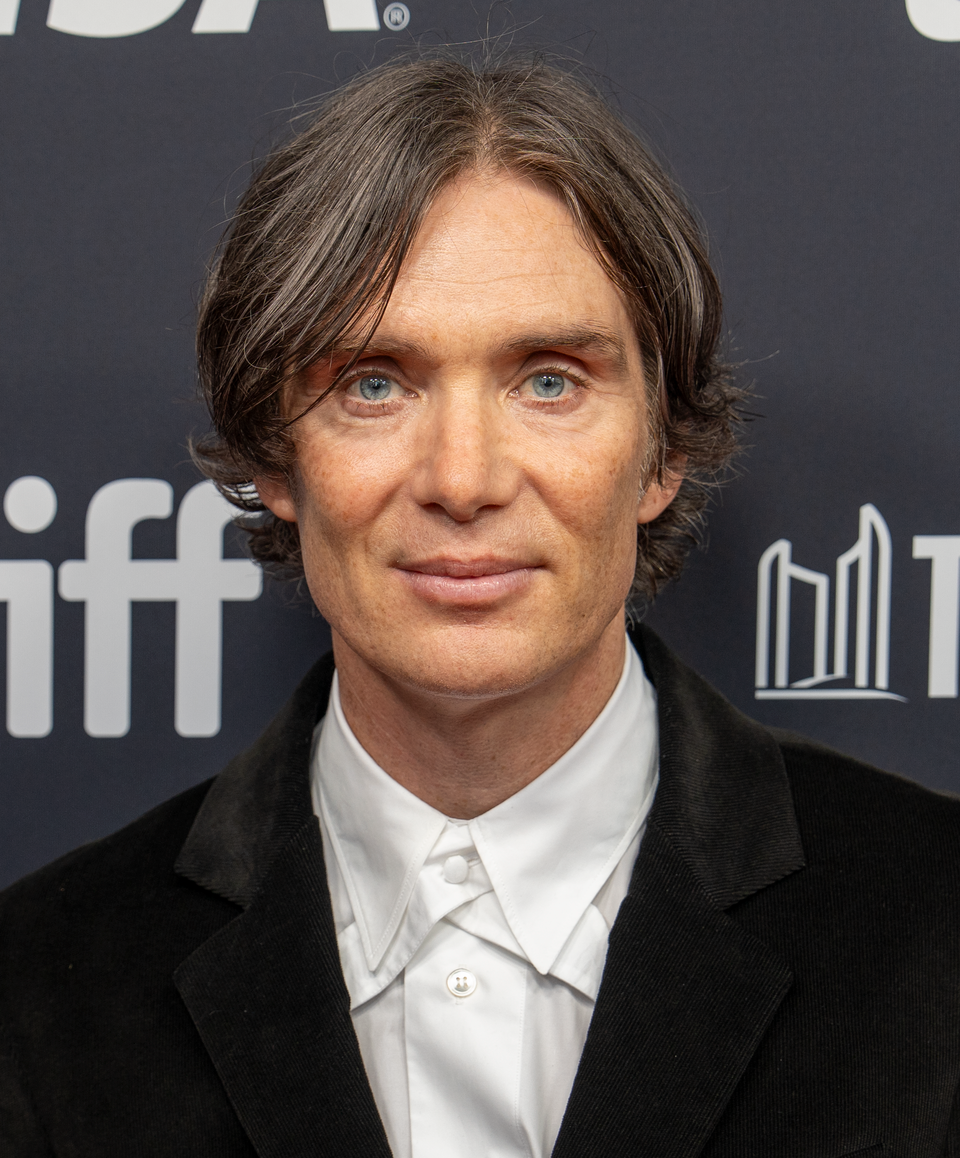
Cillian Murphy is 50 years old, born on 25 May 1976 in Douglas, Cork, and the Irish actor has moved from the Cork stage to the very centre of world cinema, winning an Academy Award for Oppenheimer while keeping his private life almost entirely his own. Celebrity Net Worth estimates his fortune at $20 million, and this profile covers his wife Yvonne McGuinness, his two sons, his parents, and the films and television shows — from 28 Days Later to Peaky Blinders — that built one of the most respected careers of his generation.
A Cork schoolboy who played in a band before he acted
Cillian Murphy was born on 25 May 1976 in Douglas, a suburb of Cork, and grew up in Ballintemple, nearby. His birthday falls in late spring, and the half-century he reached in May 2026 was marked, characteristically, with little public fuss from the man himself and a great deal of retrospective attention from everyone else. His father, Brendan Murphy, worked as a civil servant in Dublin, and his mother taught French; teaching ran through the wider family, and the home he grew up in was one where books, languages and argument were simply the furniture of daily life. He has described a happy, secure childhood in Cork, and an early restlessness that found its outlet first in performance of various kinds before acting took hold of him properly in his late teens.
The decisive turn came through the Cork theatre scene. He was cast in Enda Walsh’s play Disco Pigs, a two-hander about teenagers on the edge, and the production’s success carried him from Cork to Dublin, London and beyond while he was still around twenty. It was the making of him in a specific way: the play demanded intensity, precision and stamina, night after night, and those became the qualities casting directors associated with him. He has never presented his start as a struggle narrative. By his own account he was fortunate in his teachers, fortunate in his family, and fortunate in the timing of a Cork arts scene that was producing serious work. The biography since then has been a matter of choices — an unusual number of them, for a leading man, choices that traded scale for quality.
His nationality is Irish, and it matters to the shape of the career. He was born in Ireland, raised in Ireland, formed as an actor in Ireland, and after years based in London he moved his family back to Dublin in 2015 so that his sons would grow up Irish. Film work takes him everywhere, but the base, the accent, the sensibility and the loyalties are Cork and Dublin, and Irish roles — from The Wind That Shakes the Barley to Small Things Like These — punctuate the filmography at deliberate intervals. Anyone looking to discover indie movies worth watching will find his name recurring across two decades of exactly that kind of cinema, because independent film is where he has done much of his defining work.
Disco Pigs on stage, 28 Days Later on screen, an Oscar for Oppenheimer
1996–2002: From Disco Pigs to 28 Days Later
Murphy’s stage breakthrough in Disco Pigs led to a screen version in 2001, and to a run of Irish and British films in which he was quickly marked out as the most interesting young actor in most of them. The international break came with Danny Boyle’s 28 Days Later in 2002, in which he played Jim, a bicycle courier who wakes from a coma into an emptied, dangerous London. The film was a substantial hit, it travelled worldwide, and its opening images — Murphy alone in a deserted capital — became some of the most recognisable in modern horror. Hollywood noticed, and the offers that followed tested the pattern he has kept ever since: he took interesting parts in large films and leading parts in smaller ones, and declined to become only one kind of actor.
2005–2009: Batman, Pluto and the barley
In 2005 he appeared in two films that showed his range in a single year: as the Scarecrow, Dr Jonathan Crane, in Christopher Nolan’s Batman Begins — the beginning of a collaboration with Nolan that has run for two decades — and as Patrick “Kitten” Braden in Neil Jordan’s Breakfast on Pluto, a performance of warmth and wit that earned him a Golden Globe nomination. In 2006 he led Ken Loach’s The Wind That Shakes the Barley, a drama of the Irish War of Independence that won the Palme d’Or at Cannes and remains one of the most significant Irish films ever made. Roles in Sunshine, The Edge of Love and Perrier’s Bounty filled out a decade in which he worked constantly, rarely repeated himself, and built a reputation among directors that mattered more than any single hit.
2010–2012: Inception and the Nolan years deepen
Nolan cast him again in Inception in 2010, as Robert Fischer, the heir whose mind the team must enter; it is a measure of Murphy’s standing with the director that the film’s emotional climax rests on his performance. He returned as the Scarecrow in the remaining Dark Knight films, completing a trilogy that grossed billions worldwide, and took leading roles in films such as Retreat and Red Lights alongside ensemble work that kept him visible in every register of the industry. By the early 2010s he was, in the trade’s terms, a prestige actor: not a conventional box-office star, but a name that signalled quality to audiences and financiers alike — a position that was about to be transformed by television.
2013–2022: Peaky Blinders and Thomas Shelby
In 2013 Murphy took the role of Thomas Shelby in Steven Knight’s Peaky Blinders, a Birmingham crime drama set in the aftermath of the First World War. The series ran for six seasons until 2022, became a global phenomenon in its streaming afterlife, and made Shelby — flat cap, razor stare, a voice kept at a near-whisper — one of the defining television characters of the era. Murphy has said he pursued the part and then inhabited it for the better part of a decade, executive-producing as well as starring. Alongside it he continued in film, including Nolan’s Dunkirk in 2017, in which he played a shell-shocked soldier rescued from the sea, and A Quiet Place Part II in 2021, where his turn as a hardened survivor broadened his audience again. Few actors have carried a television era and a film career simultaneously at that level; Murphy did it while giving almost no interviews about anything except the work.
2023–2026: Oppenheimer, the Oscar and the Shelby film
Nolan’s Oppenheimer, released in 2023, gave Murphy his first leading role for the director, as J. Robert Oppenheimer, the physicist who led the laboratory that built the first atomic weapons. The film grossed close to a billion dollars and Murphy’s performance won the Academy Award for Best Actor, along with the BAFTA, the Golden Globe and the Screen Actors Guild Award — a clean sweep of the major prizes, accepted in speeches that were brief, gracious and, true to form, largely about the work and the people who made it. He followed it with Small Things Like These in 2024, a quiet Irish drama he also produced, and Steve in 2025. In 2026 he returned to the role that television made famous in Peaky Blinders: The Immortal Man, the feature film continuation of the series — a closing of the Shelby chapter on the big screen, thirteen years after it began.
Douglas, Cork, fifty years old, $20 million: Murphy in brief
| At a Glance | Details |
|---|---|
| Born | 25 May 1976, Douglas, Cork, Ireland |
| Age | 50 years old |
| Height | 5 feet 9 inches (175 cm) |
| Weight | No reliable published figure exists |
| Nationality | Irish |
| Wife | Yvonne McGuinness (married 2004) |
| Children | Two sons, Malachy (born 2005) and Aran (born 2007) |
| Parents | Brendan Murphy and a mother who taught French; both parents worked in teaching |
| Net Worth | $20 million (Celebrity Net Worth) |
| No official account |
Yvonne McGuinness and two sons, kept far from the cameras
Murphy married Yvonne McGuinness, an Irish visual artist whose work spans film, performance, installation and print, in 2004. They had met in the late 1990s, during the touring years of Disco Pigs, and the marriage has been conducted with the same privacy that marks everything else in his life: McGuinness has her own career and public profile as an artist, and the couple appear together only occasionally, at events connected to his work. They have two sons, Malachy, born in 2005, and Aran, born in 2007. The family lived in London for a period and moved to Dublin in 2015, a decision Murphy has explained simply: they wanted the boys to grow up Irish, near their grandparents, in the culture that had formed both parents.
His parents’ world — classrooms, languages, public service — is the background he returns to in the few personal remarks he makes. Brendan Murphy’s work as a civil servant and his mother’s French teaching gave him, among other things, an ease with language and an expectation that a person does the job properly. He speaks about his family rarely and with evident protectiveness, and his sons have been raised almost entirely out of public view, a deliberate achievement in an era when the children of famous actors are often public figures before they can consent to it. The family life, by every account including his own brief ones, is ordinary in the ways he values: Dublin, work, and long stretches in which acting simply does not feature.
That privacy is a policy, not an accident. Murphy does not maintain a public profile of his own on social platforms, does not court coverage of his life outside his films, and has said in substance that he would rather the work be famous than himself. Directors who have worked with him describe the same quality from the other side: he arrives prepared, does the work at the highest level, and leaves the set’s dramas to others.
Twenty million dollars for an actor who never chased the money
Celebrity Net Worth estimates Cillian Murphy’s net worth at $20 million. It is a solo figure, and it is modest next to the fortunes of many actors with comparable fame — a fact that follows directly from the shape of the career. His wealth was built largely from independent film, theatre-rooted choices, one long-running television role and a single enormous hit in Oppenheimer, rather than from franchise leading-man salaries, endorsement deals or business ventures. Celebrity Net Worth’s figure is a tracker estimate drawn from public reporting of salaries and earnings, not an audited statement; Murphy has never discussed his finances publicly, and no figure from Forbes or a rich list has been published for him to set against it.
The earnings pattern is nonetheless clear. Peaky Blinders, across six seasons and now a film, provided a decade of leading-role television income, with an executive producer’s participation in later years. The Nolan films, culminating in a title role in a near-billion-dollar hit, paid at a level his earlier independent work never approached, and the awards sweep of 2024 raised his value for every negotiation since. His production work, including Small Things Like These through his own company, adds a producer’s share to an actor’s fee. What the $20 million does not include is any monetisation of fame itself: there are no product lines, no sponsored posts and no brand ambassadorships of the kind that multiply other actors’ fortunes, because he has consistently declined that entire economy.
On Instagram the answer is short and, for searchers, important: Cillian Murphy has no official Instagram account, and no official personal account on any major social platform. Accounts that use his name and photographs are run by fans or by impostors, and none is his. News of his work reaches the public through the studios, festivals and broadcasters releasing it — which is precisely the arrangement he has always wanted, and one more reason the face is famous while the man remains, by his own design, comparatively unknown.
Murphy lets the work speak, and it speaks loudly
Cillian Murphy’s career is proof that the quiet route still leads to the top: Cork theatre, independent film, a decade as Thomas Shelby and then an Academy Award for playing the most consequential scientist of the twentieth century. At 50, Irish to the core, married to Yvonne McGuinness since 2004, father of Malachy and Aran, and worth an estimated $20 million, he has achieved the rarest combination in modern fame — work that everyone knows, and a life that almost nobody does.