Drew Barrymore: Net Worth, Age, Family and Career Explained
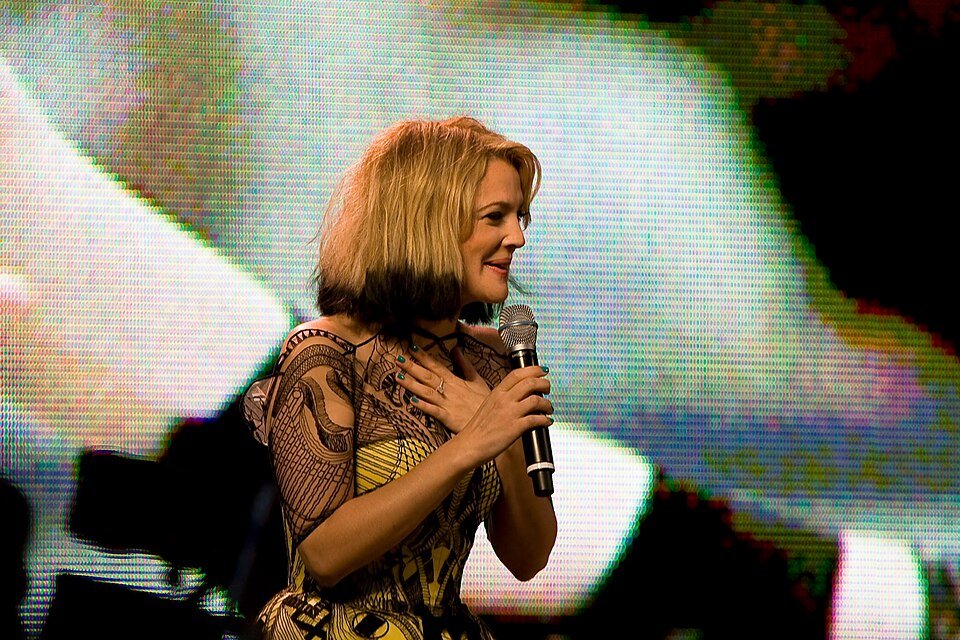
Drew Barrymore is 51 years old, born Drew Blythe Barrymore on 22 February 1975 in Culver City, California, and she has been famous, in one form or another, since she was seven. Celebrity Net Worth estimates her fortune at $85 million, and this profile covers her two daughters, her parents, her half-siblings, her three marriages and the films and television shows — from E.T. the Extra-Terrestrial to The Drew Barrymore Show — that turned a troubled child star into one of the most durable careers in entertainment.
Famous at seven, in trouble before her teens
Drew Blythe Barrymore was born on 22 February 1975 in Culver City, California, and her birthday, 22 February, arrived with a weight of expectation attached that few newborns have ever carried. She was born into the Barrymore acting dynasty: her father, John Drew Barrymore, was an actor, her paternal grandfather, John Barrymore, was one of the most acclaimed stage and screen actors of his generation, and her great-aunt and great-uncle, Ethel and Lionel Barrymore, were stars in their own right. Her mother, Jaid Barrymore, was an aspiring actress who had been born in a displaced persons camp in West Germany to Hungarian refugee parents. Her godfather is the director Steven Spielberg, a detail that stopped being a piece of trivia and became a plot point within seven years.
Her parents divorced in 1984, when she was nine, and her father, whose struggles with alcohol were long-standing and public, was largely absent from her upbringing. Her mother managed her early career and, by Barrymore’s own later accounts, treated her more as a companion than as a dependant, taking her into adult nightlife while she was still of primary age. The consequences are a matter of her own record, set out in her 1990 memoir Little Girl Lost: drinking from nine, serious substance abuse in her early teens, treatment at thirteen, and legal emancipation from her parents at fourteen, after which she lived alone and worked ordinary jobs while her acting career appeared to be over.
That biography matters to everything that followed, because Barrymore has never presented her adult success as a continuation of her childhood fame. She presents it as a second career, built deliberately, by somebody who had already lost the first one. The steadiness of the later decades — the production company, the long-running talk show, the carefully protected private life of her daughters — is, in her own telling, the point: a life constructed in reaction to the one she started with.
E.T., Flower Films and the talk-show chair
1980–1984: A child star is made
Her screen debut came at five, in a small role in Altered States (1980). At seven she played Gertie, the younger sister in Spielberg’s E.T. the Extra-Terrestrial (1982), one of the biggest films ever made, and became internationally famous almost overnight. Firestarter (1984), in which she carried the lead role, and Irreconcilable Differences (1984), which earned her a Golden Globe nomination, confirmed that the fame was not a single lucky casting. What the industry could not give her was a childhood, and by the end of the decade the career had stalled along with everything else in her life.
1992–1998: The rebuild
The comeback began with Poison Ivy (1992), a deliberately adult role that announced she was no longer the child from E.T., and continued through a run of work that rebuilt her standing piece by piece: Bad Girls (1994), Boys on the Side (1995), in which she played a young woman fleeing an abusive relationship, and a brief, knowing appearance in Batman Forever (1995). None of those films depended on her childhood image, and that was the point of them: casting directors and audiences were being taught, one credit at a time, to see an adult actor where a former child star had been. In 1995 she co-founded the production company Flower Films with Nancy Juvonen, the single most consequential business decision of her career, because it turned her from an employee of other people’s films into an owner of her own. Scream (1996) used her fame cleverly, casting her in its famous opening sequence. Ever After (1998), a retelling of the Cinderella story, and The Wedding Singer (1998), opposite Adam Sandler, re-established her as a romantic lead the public genuinely liked, which had not been the obvious outcome five years earlier.
1999–2009: Flower Films and full control
Never Been Kissed (1999) was Flower Films’ first production and a hit. Charlie’s Angels (2000), which she produced and starred in alongside Cameron Diaz and Lucy Liu, was a global success, and its sequel, Charlie’s Angels: Full Throttle (2003), repeated it. Donnie Darko (2001), on which she was an executive producer as well as a cast member, became a cult landmark. 50 First Dates (2004), her second romantic comedy with Sandler, and Fever Pitch (2005) kept the commercial run going, and Music and Lyrics (2007) and He’s Just Not That Into You (2009) closed the decade with her position secure. Whip It (2009) was her directorial debut, and the same year her performance in the television film Grey Gardens won her a Golden Globe. Anyone planning a date night at home that feels special rather than routine will find that half the romantic comedies on the list from these years have her name on them, as star, producer or both.
2017–2026: The talk show era
Santa Clarita Diet, the comedy series she led for three seasons from 2017 to 2019, showed her timing intact in a darker register. Then, in September 2020, came The Drew Barrymore Show, her daytime talk show, built around her own warmth, candour about her past and willingness to interview guests as a fellow survivor rather than as a presenter reading questions. The show became the centre of her working life, running through the decade and into 2026, alongside her lifestyle and beauty businesses and occasional acting work, including film roles reported in 2026. Her second memoir, Wildflower (2015), and her cookery writing filled out a public identity that by now owed as much to her own platforms as to any studio.
The Culver City star in brief
| At a Glance | Details |
|---|---|
| Born | 22 February 1975, Culver City, California, US |
| Age | 51 years old |
| Height | 5 feet 4 inches (163 cm) |
| Weight | No reliable published figure exists |
| Partner | No publicly confirmed partner; previously married to Jeremy Thomas (1994–1995), Tom Green (2001–2002) and Will Kopelman (2012–2016) |
| Children | Two daughters, Olive (born 2012) and Frankie (born 2014) |
| Parents | John Drew Barrymore and Jaid Barrymore |
| Siblings | Three older half-siblings: John Blyth Barrymore, Blyth Dolores Barrymore and Jessica Blyth Barrymore |
| Net Worth | $85 million (Celebrity Net Worth) |
| @drewbarrymore |
Two daughters and three marriages behind her
Her parents remain the defining facts of her early life. John Drew Barrymore, her father, died on 29 November 2004; their relationship, by her account, was distant for most of her life, though she supported him financially in his later years and has spoken about him with a frankness that stops short of either bitterness or sentimentality. Her mother, Jaid, managed her first career and shared the nightlife that damaged it; mother and daughter were estranged for long periods, and Barrymore has described the emancipation at fourteen as necessary rather than cruel. The dynasty behind them — grandfather John, great-aunt Ethel, great-uncle Lionel — gave her a name, a profession and a cautionary tale, all three of which she has used.
Her siblings are her three older half-siblings through her father. John Blyth Barrymore, her half-brother, worked as an actor. Blyth Dolores Barrymore, her half-sister, has lived almost entirely outside public life. Jessica Blyth Barrymore, also known as Brahma, her half-sister, died on 29 July 2014; Barrymore marked the loss privately, and this profile records it in the same brief, factual terms.
She has been married three times. Her first marriage, to Jeremy Thomas, in 1994, when she was nineteen, ended in divorce in 1995. Her second, to the comedian Tom Green, began in 2001 and ended in divorce in 2002. Her third, to art consultant Will Kopelman, began on 2 June 2012 and produced her two daughters: Olive Barrymore Kopelman, born on 26 September 2012, and Frankie Barrymore Kopelman, born on 22 April 2014. That marriage ended in divorce in 2016. She has no publicly confirmed partner in 2026: she has described herself, on her own show and in interviews through 2025 and 2026, as single and content, and she has said plainly that she will not marry again. Her co-parenting relationship with Kopelman is close and publicly warm, extending to his wife, Alexandra Michler, and her daughters are raised largely out of the public eye — a deliberate contrast, often noted by Barrymore herself, with the way she was raised.
How $85 million followed a childhood in the spotlight
Celebrity Net Worth estimates Drew Barrymore’s net worth at $85 million, the figure on its page as updated in March 2026 and repeated by Parade in its September 2026 profile. It is a solo figure for Barrymore herself, and it should be read as a tracker estimate built from public reporting rather than an audited statement: she has never published her finances, and higher figures circulating on unsourced tracker sites are not used here.
The composition behind the estimate is unusually visible for an actor of her generation. Roughly half of it is generally attributed to acting and producing earnings across four decades, and the turning point is structural rather than any single salary: Flower Films, founded in 1995, meant that the hits of her biggest commercial period — the Charlie’s Angels films above all — paid her as an owner as well as a performer. The Drew Barrymore Show added a long-running presenter’s income from 2020 onwards, and her beauty, lifestyle and kitchenware ventures operate as businesses in their own right. Those companies are mentioned here as what they are — trading businesses whose value is not the same thing as personal cash — and no company valuation is treated in this profile as her net worth.
Her Instagram account, @drewbarrymore, has millions of followers and is central to how she works: clips from the talk show, candid pieces to camera recorded at home, and the unpolished, confessional style that distinguishes her public voice from almost every contemporary who grew up, as she did, inside a studio publicity system. It is the platform on which the second career announces itself, daily, in her own words.
The child star who rebuilt herself twice
Drew Barrymore’s career is two careers: the child star of E.T. the Extra-Terrestrial, famous at seven and emancipated at fourteen, and the producer, presenter and business founder who rebuilt everything from the ground up and kept it. At 51, mother of Olive and Frankie, single by her own cheerful account, and worth an estimated $85 million, she has outlasted the story that was supposed to define her — which is, in the end, the achievement she talks about most, and the one her audience believes in most completely.