
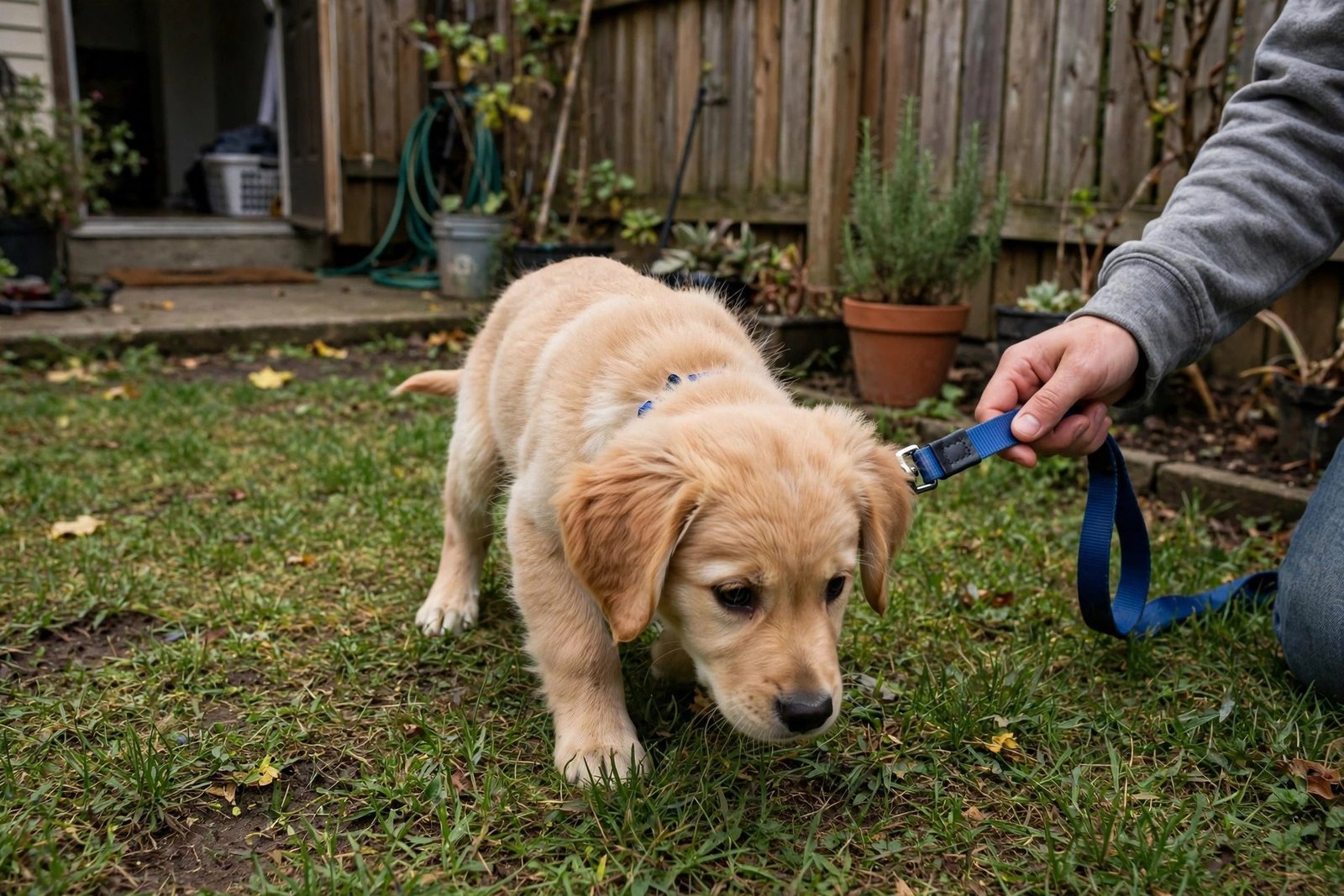
House-training a puppy feels like a race against tiny bladders — and in the early weeks, the bladder usually wins. Accidents on the rug, 3 AM wake-ups, and the constant vigilance can make new owners question their life choices. But here is the truth: house-training is one of the most predictable parts of puppy raising. Follow a consistent method, and most puppies are reliably trained within 4 to 6 weeks.
This guide gives you the fastest proven method for house-training a puppy, the schedule that prevents accidents, and how to handle the inevitable setbacks without losing progress.
The Core Principle: Prevention Over Correction
Forget punishment — it does not work and it damages your relationship. Dogs do not connect a scolding with an accident that happened minutes ago; they just learn that you are scary and unpredictable. The entire game is prevention: manage the puppy so accidents cannot happen, and reward outdoor success so enthusiastically that going outside becomes the obvious choice.
This means supervision or confinement 100 percent of the time. When you cannot watch the puppy with full attention, they go in a crate or a small puppy-proofed area. Not as punishment — as management. Dogs naturally avoid soiling their sleeping area, so a properly sized crate (just enough room to stand, turn, and lie down) leverages that instinct. A crate that is too large defeats the purpose, because the puppy will sleep in one corner and potty in the other. Keeping the environment clean supports the training — see the easiest way to keep a house clean with kids for the same contain-the-mess philosophy applied to small humans.
The Schedule That Works
Puppies need to go out: first thing in the morning, after every meal, after every nap, after every play session, and every 1-2 hours in between. Young puppies (8-12 weeks) physically cannot hold it longer than about 2 hours during the day. Set a timer if you have to — consistency beats memory.
Take the puppy to the same spot every time, on a leash, and stand still. Wandering around is distracting; you want boring. Use a specific cue phrase like “go potty” as they start to go. The moment they finish, throw a party — enthusiastic praise, a high-value treat, a brief play session. You are building an association: potty outside equals the best thing ever. After success, they earn 15-20 minutes of supervised freedom before going back to the crate or tether. Freedom is earned through reliability, not given by default.
Nighttime: The Hard Part
For the first few weeks, set an alarm for every 2-3 hours overnight. Yes, it is exhausting. Yes, it is temporary. Carry the sleepy puppy straight outside (do not let them walk — they will squat on the way), cue, reward, and back to the crate. As bladder capacity grows, stretch the intervals. Most puppies sleep through the night by 12-16 weeks. Restricting water 2 hours before bedtime helps, but never restrict water for very young puppies or in hot weather.
When Accidents Happen (They Will)
Interrupt gently if you catch them mid-squat — a calm “oops!” and immediate trip outside. If they finish outside, reward. If you find an accident after the fact, just clean it. No scolding, no rubbing noses in it (this is a myth that causes fear, not learning). You missed a management failure, not a training failure — adjust your schedule. The AKC’s guide to potty training a puppy walks through the same routine step by step.
Clean with an enzymatic cleaner specifically designed for pet urine. Regular cleaners leave behind proteins that dogs can still smell, which signals “bathroom here” and invites repeats. An enzymatic cleaner actually breaks down the odor molecules. For carpet, blot (never rub), apply the enzymatic cleaner generously, cover with a damp towel for the recommended time, then blot dry. A consistent cleaning routine prevents odor buildup — a simple weekly cleaning schedule keeps the whole house fresh while you train.
Troubleshooting Common Problems
Regression around 6-9 months is normal — adolescence brings testing and sometimes a backslide. Go back to basics: tighter schedule, more supervision, more rewards. Do not assume they “know better”; they are teenagers, not rebels.
If a puppy consistently has accidents in the crate, the crate may be too large, the schedule too sparse, or there may be a medical issue. Urinary tract infections are common in puppies and cause frequent, urgent accidents — if house-training was progressing and suddenly collapses, see a vet before assuming a behavior problem. Similarly, if a puppy over 6 months still cannot hold it for reasonable periods despite consistent training, a vet check rules out medical causes. The American Veterinary Society of Animal Behavior’s position statements support reward-based methods as the most effective and humane approach.
Training Tools That Help
The right tools make house-training faster and less stressful. A properly sized crate is essential — wire crates with dividers let you adjust the space as the puppy grows. An exercise pen creates a safe confinement area larger than a crate for longer periods. Baby gates restrict access to carpeted areas during training.
For cleaning, invest in a quality enzymatic cleaner (Nature’s Miracle, Rocco & Roxie) — not just for accidents, but for peace of mind. A blacklight flashlight reveals old urine spots you cannot see, which is invaluable if you are training in a new home or if a previous pet had accidents. For outdoor training, a specific “potty spot” with a pee post (a stake with pheromones) can help puppies understand where to go.
Consider a potty bell — a bell hung on the door that the puppy learns to ring when they need to go out. It takes 1-2 weeks to train (ring the bell yourself before opening the door, then help the puppy do it), but it gives them a clear communication method. Not all puppies take to it, but those that do make the process much smoother. The key with all tools: they support the method (prevention + reward), they do not replace it.
Regression: When Training Goes Backward
It is normal for puppies to regress around 6-9 months — adolescence brings testing, distraction, and sometimes a complete forgetting of house-training. Do not panic and do not punish. Go back to basics: tighter schedule, more supervision, higher-value rewards. The regression is temporary if you respond correctly.
Common triggers for regression: a change in routine (new work schedule, move), a new pet or family member, or simply the developmental stage. Sometimes it is medical — urinary tract infections cause frequent accidents. If regression is sudden and severe, see a vet before assuming it is behavioral. Most regressions resolve in 2-4 weeks with consistent management. The key is not to get frustrated and give up on the method — it worked before, it will work again.
For more detailed guidance, see American Kennel Club resources.
Frequently Asked Questions
How long does house-training take?
Most puppies are reliably house-trained by 4-6 months with consistent effort, though full reliability (no accidents for months) often takes until 8-12 months. Small breeds and stubborn individuals may take longer. Consistency matters more than the calendar.
Should I use puppy pads?
They are a useful backup for apartments, high-rises, or owners who cannot get outside quickly — but they can slow outdoor training by teaching the puppy that indoor elimination is acceptable. If you use them, place them in one consistent spot and transition to outdoor-only as soon as practical.
Is it okay to punish accidents?
No. Punishment after the fact does not teach anything — the puppy cannot connect your anger to something they did minutes ago. It teaches them to hide accidents from you and damages trust. Prevention and reward are the entire method.
When can my puppy have free roam of the house?
When they have gone 4-6 weeks without accidents AND reliably signal when they need to go out. Grant freedom gradually — one room at a time, supervised. Most puppies earn full house freedom between 8 and 12 months.