Garth Brooks: Net Worth, Age, Family and Career Explained
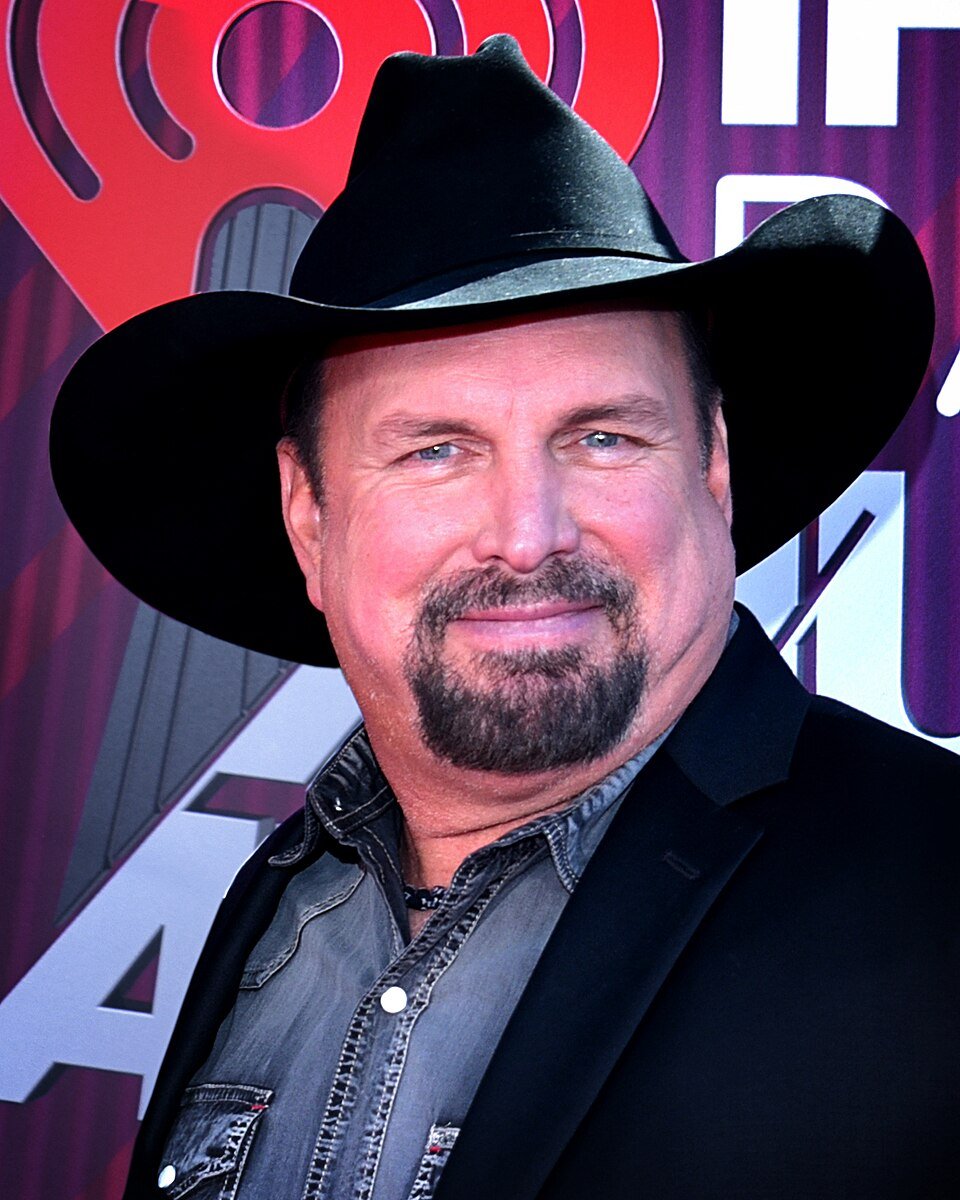
Garth Brooks is 64 years old, born Troyal Garth Brooks on 7 February 1962 in Tulsa, Oklahoma, and he is the best-selling solo albums artist in United States history, a country singer whose stadium-scale career rewrote what the genre could sell. Celebrity Net Worth estimates his fortune at $400 million, and its own page flags the essential detail: that is a combined figure with his wife, fellow country singer Trisha Yearwood, with the vast majority of it — $300 million to $350 million — attributable to Brooks himself. This profile covers Yearwood, his three daughters, his parents, and the songs and albums that made “Friends in Low Places” a national chorus.
The Garth Brooks years
1989–1990: Garth Brooks and No Fences
His self-titled debut album, Garth Brooks, was released in 1989 and reached the upper end of the country chart, producing four hit singles including “The Dance”, a reflective ballad that became one of his signature songs and a standard at weddings and funerals alike. The second album changed the scale of everything. No Fences, released in 1990, sold in quantities country records were not supposed to reach — it remains his best-selling studio album, with sales in the tens of millions — and it carried the songs that made him a phenomenon: “Friends in Low Places”, a rowdy singalong that became a bar-room anthem across the country, “Unanswered Prayers”, “Two of a Kind, Workin’ on a Full House” and “The Thunder Rolls”, whose dramatic story and staging showed how theatrical his instincts had become. Within two years of his debut, Brooks was filling arenas and being discussed, in sales terms, alongside the biggest pop acts in the world.
1991–1993: Ropin’ the Wind and The Chase
Ropin’ the Wind, released in September 1991, became the first country album to debut at number one on the all-genre Billboard 200, a landmark that announced country’s arrival as pop’s commercial equal. It produced “Shameless”, a Billy Joel cover delivered as a full-throated country ballad, “What She’s Doing Now” and “The River”, which became another of his defining songs. The Chase followed in 1992, and In Pieces in 1993, the latter carrying “Ain’t Goin’ Down (‘Til the Sun Comes Up)”, a frantic, tongue-twisting hit that became a centrepiece of his concerts, where he performed with a headset microphone — then a novelty in country — so that he could run, climb and swing across the stage while he sang. For amateur players working through how to read chord charts easily, his catalogue is a gift: songs such as “The Dance” and “The River” are built on clear, learnable progressions, which is one reason they are still among the most covered country songs ever written.
1995–2001: Fresh Horses, Sevens and retirement
Fresh Horses (1995) and Sevens (1997) kept the run going, and a live album in 1998 captured the concerts that had become his legend: multi-night stands in single cities, ticket prices deliberately held low, and shows that treated every seat in the building as entitled to the same effort. In 1999 he released an experimental pop album under the name Chris Gaines, a fictional alter ego — a project received with bafflement at the time and reappraised, by some, as ahead of its moment. Then, in October 2000, at the height of his commercial powers, Brooks announced his retirement from recording and performing, saying he wanted to be present while his daughters grew up. Scarecrow, released in 2001, was presented as a farewell album. He meant it: for most of the following decade, the biggest-selling solo artist in the country’s history simply did not tour, and the absence only enlarged the legend.
2007–2014: The return and Man Against Machine
The return came in stages. In 2007 his single “More Than a Memory” became the first song ever to debut at number one on the country singles chart, a statistic that measured how completely his audience had waited for him. A long Las Vegas residency followed, in an intimate theatre format — one man, a guitar, and the story of his musical life — that ran until 2014 and reminded critics that underneath the stadium machinery was a solo performer of unusual warmth. That year he released Man Against Machine, his first studio album of new material in thirteen years, and launched a world tour with Trisha Yearwood that ran for three years, broke attendance records across North America, and played to more than six million people, frequently performing two or three shows in a single city on a single weekend.
2016–2026: Gunslinger, Fun and the stadium years
Gunslinger followed in 2016 and Fun in 2020, the latter carrying a duet version of “Shallow” recorded with Yearwood. In 2019 he began a stadium tour that took the full-scale show into the largest venues in the country, and he has continued to perform in residencies and special engagements through the mid-2020s, alongside a Las Vegas residency run that extended into 2024 and 2025. The honours accumulated in parallel: induction into the Country Music Hall of Fame in 2012, the Gershwin Prize for Popular Song in 2020 — the youngest recipient at the time — and a Kennedy Center Honor in 2021. The totals beneath the honours remain the headline: more than 170 million albums sold worldwide, a run of Diamond-certified albums unmatched by any other solo artist, and a catalogue — “The Dance”, “Friends in Low Places”, “The Thunder Rolls”, “The River”, “Unanswered Prayers” — that functions, in his home country, as a shared songbook.
The singer from Tulsa, summed up in facts
| At a Glance | Details |
|---|---|
| Born | 7 February 1962, Tulsa, Oklahoma, United States |
| Age | 64 years old |
| Height | 6 feet 2 inches (188 cm) |
| Weight | No reliable published figure exists |
| Wife | Trisha Yearwood (married 2005) |
| Children | Three daughters — Taylor (born 1992), August (born 1994) and Allie (born 1996) |
| Parents | Troyal Raymond Brooks Sr. and Colleen Brooks (née Carroll) |
| Net Worth | $400 million combined with Trisha Yearwood (Celebrity Net Worth), of which $300–$350 million is attributed to Brooks |
| @garthbrooks |
The Brooks family story, in Garth’s own terms
His parents’ influence is written into the act itself. Troyal Brooks Sr. gave him the guitar and the work ethic; Colleen Brooks gave him the proof, inside his own family, that a country singer was a thing a person could be — she had recorded and performed professionally before family life took precedence, and her son has spoken of his career, in part, as the completion of the one she set aside. She died in 1999, at the height of his fame, and he has continued to credit the Yukon family music nights as the true start of everything.
Brooks married Sandy Mahl, his girlfriend from his early Oklahoma years, in 1986, just as the Nashville years were beginning, and their three daughters were born during the decade of maximum fame: Taylor in 1992, August in 1994 and Allie in 1996. The marriage ended in divorce in 2001, shortly after his retirement announcement, and the two facts belong together in his own telling: the retirement was a deliberate choice to be a present father through his daughters’ growing-up years, and he kept to it even as the commercial cost mounted. All three daughters are now adults; the youngest, Allie, has pursued a singing career of her own.
On 10 December 2005 Brooks married Trisha Yearwood, a fellow country star whose career had run alongside his since the early 1990s — they had sung together for years, including the duet “In Another’s Eyes” in 1997, long before their relationship became a marriage. He proposed to her on stage in California earlier that year, in front of a crowd of thousands. The marriage joined two substantial solo careers, and the couple have since toured together extensively, recorded together, and presented, in public, one of the most settled partnerships in country music. Yearwood is stepmother to his three daughters, a role both have described as one of the marriage’s central happinesses.
The Tulsa roots that shaped Garth
Troyal Garth Brooks was born on 7 February 1962 in Tulsa, Oklahoma, and his birthday falls in the winter he has marked, in the touring years, as often in an arena as at home. He was raised in Yukon, a town outside Oklahoma City, in a household where music was not a hobby but a family trade practised at the kitchen table. His father, Troyal Raymond Brooks Sr., worked as an executive for an oil company and played guitar. His mother, Colleen Brooks, née Carroll, had been a country singer in her own right in the 1950s, recording for a major label and appearing on the Red Foley Show, and the family held regular musical evenings at which every member was expected to perform. The young Brooks learned guitar, banjo and a performer’s first lesson in that room: an audience, even one made of relatives, can tell whether you mean it.
Sport ran alongside music through his youth — he was a capable athlete in several disciplines — and for a time it competed with singing as the likeliest route out of Yukon. Music won gradually, then suddenly. He began playing in clubs and bars around Oklahoma while still a young man, absorbing the two influences that would define his sound: the storytelling country of George Jones and Merle Haggard, and the arena-sized showmanship of the rock acts, Kiss and Queen among them, whose concerts taught him that a performer could treat a stadium crowd the way a club singer treats a bar — personally, and at full throttle. That combination, country songs delivered with a rock concert’s scale and energy, did not really exist in Nashville in the mid-1980s. Brooks arrived there in 1985, left within weeks discouraged, and returned in 1987 with his future manager and a clearer head. This time the showcases landed, a Capitol Records executive heard him sing in a Nashville club, and the contract followed.
What the biography explains, and the sales figures later proved, is that Brooks was never simply a singer with good songs. He was a student of audiences — of what a crowd wants to feel, in what order, and at what volume — raised in a house where performing was a family obligation and trained in bars where indifference was the default. Nashville gave that instinct a catalogue and a marketing machine. The result, beginning in 1989, was the most commercially successful career country music has ever produced.
What $400 million looks like in Garth’s life
Celebrity Net Worth estimates Garth Brooks’s net worth at $400 million, and its page states the qualification plainly: that is a combined net worth with his wife, fellow country singer Trisha Yearwood. The same source adds the most useful breakdown available — the vast majority of the couple’s combined fortune, $300 million to $350 million, is attributable to Brooks. The figure is therefore printed here exactly as Celebrity Net Worth presents it: a combined household total of $400 million, within which Brooks’s own share is estimated at $300 million to $350 million and Yearwood’s at the remainder. It is a tracker estimate built from public reporting, not an audited statement; neither Brooks nor Yearwood has published personal finances.
The documented base under the estimate is unusually solid for the genre. Brooks is the best-selling solo albums artist in United States history; his catalogue has generated decades of royalties; his tours — the 1990s arena runs, the 2014–2017 world tour with its millions of tickets, the stadium tour that followed — rank among the highest-grossing in country history, though tour grosses are ticket revenue before costs and are not, in themselves, personal wealth. In June 2026 it was reported that Brooks was considering a sale of his music catalogue, with a sought valuation reported at up to roughly $2 billion. That report must be fenced off precisely: it describes a possible transaction that had not taken place, at a valuation that was reported rather than agreed, and it is not counted in the $400 million combined figure above. If such a sale were ever completed, the picture would change entirely; as of this profile, it has not been, and the Celebrity Net Worth combined estimate stands as the published figure.
His Instagram account, @garthbrooks, is run as a performer’s page: tour and residency announcements, photographs from the road and the studio, tributes to fellow artists, and messages to a fan base he addresses, in a long-standing tradition, as friends. It is also the public front of a carefully managed operation — Brooks has famously controlled the digital distribution of his music more tightly than almost any artist of his generation — and its tone, warm and direct, is the same one that filled the arenas.
Garth Brooks done, Garth still standing
Garth Brooks’s career is a lesson in scale honestly earned: country songs from a Yukon family music night, delivered with a rock show’s ambition, sold in numbers no solo artist in his country has matched. At 64, married to Trisha Yearwood, father of three daughters, and one half of a combined fortune estimated at $400 million, he remains what he was in 1990 — a performer who treats every audience, however large, as if it were the room he grew up singing in.