Goldie Hawn: Net Worth, Age, Family and Career Explained
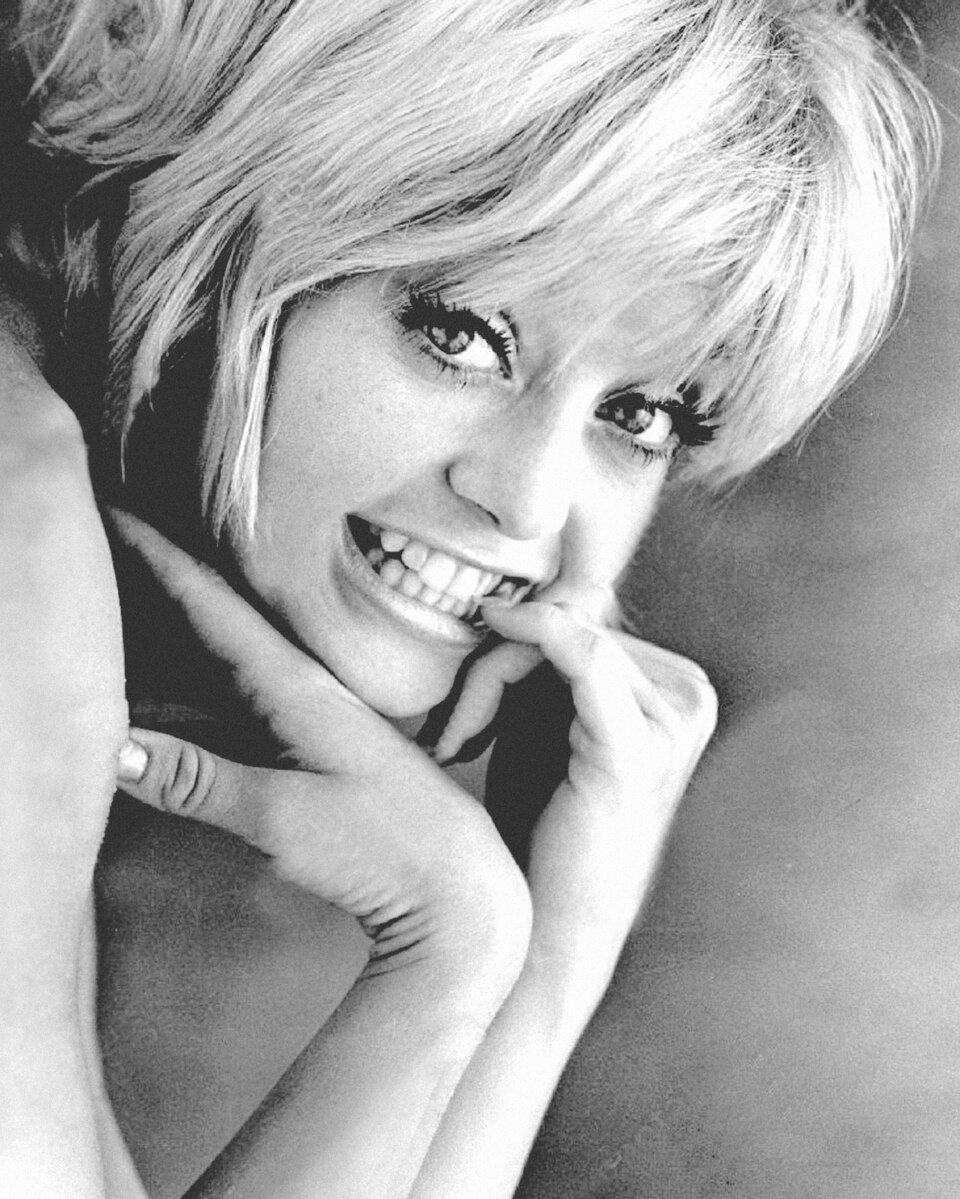
Goldie Hawn is 80 years old, born on 21 November 1945 in Washington, D.C., and the actress remains one of the defining comic performers of her generation, an Academy Award winner whose career has run, with one long pause, for nearly six decades. Celebrity Net Worth estimates her fortune at $90 million, and this profile covers her partner Kurt Russell, her three children, her parents, and the films and television programmes that carried her from a television sketch show to the top of the box office.
Goldie Hawn by the numbers: Washington, Private Benjamin and $90 million
| At a Glance | Details |
|---|---|
| Born | 21 November 1945, Washington, D.C., USA |
| Age | 80 years old |
| Height | 5 feet 6 inches (168 cm) |
| Weight | No reliable published figure exists |
| Partner | Kurt Russell (together since 1983; never married) |
| Children | Three: Oliver Hudson (born 1976), Kate Hudson (born 1979) and Wyatt Russell (born 1986) |
| Parents | Edward Rutledge Hawn and Laura Hawn (née Steinhoff) |
| Net Worth | $90 million (Celebrity Net Worth) |
| @goldiehawn |
Love, loss and family for Goldie
Hawn’s partnership with Kurt Russell is the centre of her personal story, and its terms are precise: they have been together since Valentine’s Day 1983, when they reconnected during the making of Swing Shift, and they have never married. Both have been entirely consistent about this across four decades of being asked — the commitment, they say, is the relationship itself, renewed by choice rather than by certificate. Coverage that calls Russell her husband is simply wrong, and both of them correct it with good humour when it happens. Her earlier marriages were to the dancer and director Gus Trikonis, from 1969 to 1976, and to the musician Bill Hudson, from 1976 to 1982.
Her three children have each built performing careers of their own. Oliver Hudson, born on 7 September 1976, and Kate Hudson, born on 19 April 1979, are her children with Bill Hudson; both were raised, from early childhood, in the household she built with Russell, whom they regard as their father in every practical sense. Wyatt Russell, born on 10 July 1986, is her son with Russell, a former professional ice hockey player who moved into acting. She also helped raise Russell’s son Boston, born in 1980, making the blended family a household of four children in total. Her parents’ household — the conductor father, the mother with the dance studio, the sister who went into publicity, and the brother whose brief life the family carried quietly — is where she locates the origin of all of it: performance as ordinary work, and family as the thing the work is for.
The star at work, year after year
1967–1970: Laugh-In and the Academy Award
Her first regular television work came in the sitcom Good Morning World (1967–68), but the breakthrough was Rowan & Martin’s Laugh-In, the fast-cut sketch programme she joined in 1968. As its giggling, bikini-clad regular she became one of the most recognisable faces on television, and — the part that mattered — she was funnier than the format required, with timing that directors noticed. Her first film, The One and Only, Genuine, Original Family Band (1968), had already put her on a set alongside a young Kurt Russell, though neither could have guessed at the sequel life had planned. In Cactus Flower (1969), opposite Walter Matthau and Ingrid Bergman, she played Toni Simmons and won the Academy Award for Best Supporting Actress at 24, along with the Golden Globe in the same category.
1970–1980: The first film decade
The decade after the Oscar established her as a film star rather than a television personality who had got lucky. There’s a Girl in My Soup (1970) and Butterflies Are Free (1972) played to her comic strengths, The Sugarland Express (1974) — an early Steven Spielberg film — showed her dramatic range in a story of a mother on the run, and Shampoo (1975) placed her in one of the era’s defining ensembles. Foul Play (1978), a comic thriller opposite Chevy Chase, was a major hit and a template for the Hawn vehicle: an ordinary woman, an absurd danger, and a performance that kept both funny and grounded at once. The decade closed with her in full command of her billing, and with a decision that changed her position in the industry: she would produce her next film herself.
1980–1992: Private Benjamin and the producer years
Private Benjamin (1980) was that film. Hawn starred as Judy Benjamin, a widowed socialite who joins the army on a recruiter’s false promises, and she produced it as well — a credit that mattered at a time when few actresses held one. The film was one of the biggest hits of its year and earned her an Academy Award nomination for Best Actress. Seems Like Old Times (1980) followed, and Swing Shift (1984) reunited her with Kurt Russell, this time as adults, in a wartime drama; the partnership that began on that production has outlasted every professional arrangement of her career. Overboard (1987), again with Russell, paired them as romantic leads and has only grown in reputation since. Bird on a Wire (1990), Death Becomes Her (1992) — a blackly comic hit opposite Meryl Streep and Bruce Willis — and Housesitter (1992) carried the run into a third decade at the top.
1996–2026: The First Wives, the pause and the return
The First Wives Club (1996), with Bette Midler and Diane Keaton, was one of the year’s biggest comedies and a cultural moment in its own right. The Out-of-Towners (1999) and The Banger Sisters (2002) followed, and then Hawn stepped away from the screen for fifteen years, a pause she has always described as chosen rather than imposed: she founded the Hawn Foundation in 2003 and built its MindUP programme, which teaches attention and emotional regulation to children, into work adopted by classrooms in many countries. The return, when it came, was on her own terms: Snatched (2017) as a mother on a disastrous holiday with her daughter, and then The Christmas Chronicles (2018) and The Christmas Chronicles: Part Two (2020), in which she plays Mrs Claus opposite Russell’s Santa — the couple’s shared screen story arriving, happily, at its most festive chapter. For readers building a Hawn evening of their own, a guide to the best romantic comedies of all time is the natural place to plan it, because her name belongs near the top of any honest version of that list.
The foundation work deserves its own paragraph in the career, because for fifteen years it was the career. MindUP, the programme Hawn built through the Hawn Foundation from 2003 onwards, teaches children a short set of practices — focused breathing, understanding how the brain responds to stress, deliberate acts of kindness — through a curriculum delivered by ordinary classroom teachers. It grew from her long-standing interest in meditation and child development into an organisation working internationally, and she wrote and campaigned for it with the same energy she had once given to a production schedule. When she returned to the screen in 2017, she said repeatedly that the pause had not felt like retirement at all: it had felt like the main job, and acting like the thing she used to do. The Christmas films with Russell closed the circle neatly — a performer who had stepped away for a cause, returning for the pleasure of working opposite the partner of four decades.
How Washington shaped Goldie Hawn
Goldie Jeanne Hawn was born on 21 November 1945 in Washington, D.C., and her birthday arrives just before the holiday season each year — she turns 81 on 21 November 2026, a week after this profile’s publication month began. She was named after her mother’s aunt, and she was raised in Takoma Park, Maryland, in a household where performance was the family business in the most literal sense. Her father, Edward Rutledge Hawn, was a musician and conductor who played at major events in Washington. Her mother, Laura, née Steinhoff, owned a jewellery shop and ran a dance studio. A child in that home did not have to explain wanting to perform; she had only to start, and Hawn started at three years old, with dance lessons.
She has one sister, Patti Hawn, who became an entertainment publicist. The family’s story carries a quiet sadness that the girls learned only later: a brother, Edward Hawn Jr., had died in infancy before Patti was born, and the two sisters grew up unaware of his existence. Hawn has written about the discovery as part of the family’s private history — the kind of fact that reframes a childhood when it surfaces in adulthood. By her late teens she was teaching dance herself and performing professionally, and in 1964 she left for New York to work as a dancer, taking chorus work and go-go dancing jobs while the television opportunities gathered. The biography from there is unusually direct: the dancer became a sketch performer, the sketch performer became a film star, and the timing — the late 1960s, when television was remaking comedy — did the rest.
Goldie earns $90 million — here is how
Celebrity Net Worth estimates Goldie Hawn’s net worth at $90 million, a solo figure for Hawn herself; her partner’s separate fortune is not added to it. It should be read as a tracker estimate built from public reporting — film salaries across the decades when she was one of the most bankable comedy stars in the world, producing earnings beginning with Private Benjamin, book earnings and her later work — rather than an audited statement, since she has never published her finances. No separate Forbes or Sunday Times Rich List solo figure for her is published, so the Celebrity Net Worth figure stands as the attributed anchor.
The shape of the fortune reflects the shape of the career: a star who was bankable for more than three decades, who took a producer’s share as well as a salary on one of her biggest hits, and who then stepped away for fifteen years without the earnings engine of constant production. Her Instagram account, @goldiehawn, is among the warmest in its category: family photographs across three generations of performers, MindUP work, birthdays marked generously, and Russell never far from the frame. In 2026 it is where her public life mostly happens — an 80-year-old star communicating directly with an audience that includes people who first saw her on Laugh-In and grandchildren who know her as Mrs Claus.
What Goldie leaves behind — and what comes next
Goldie Hawn’s career is a study in timing and nerve: the sketch-show performer who won an Academy Award at 24, the star who took a producer’s credit when few actresses could, the partner in one of Hollywood’s longest relationships — entered into in 1983 and never formalised, by mutual and cheerful choice. At 80, mother of Oliver, Kate and Wyatt, founder of a foundation whose classroom work has outlasted most filmographies, and worth an estimated $90 million, she remains what she has been since 1968: a comic performer of the first rank who decided, early and often, how her own story would be run.