
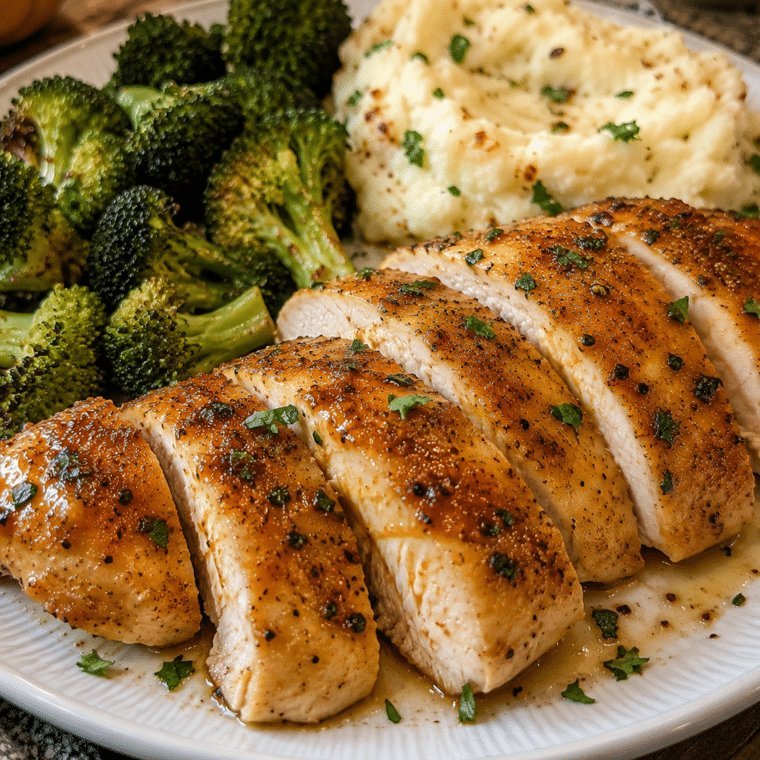
Baked chicken breast is the meal-prep staple everyone dreads: dry, stringy, chalky. But it doesn’t have to be. The difference between dry and juicy is about 15 degrees and three technique choices.
This is the definitive method — brine, temp, rest — plus the variations for different ovens and situations.
How Can I Bake Moist Chicken Breasts Every Time? Brine + Thermometer
The two non-negotiables: brine (or dry-brine) and a thermometer. Brine 30 minutes minimum in salted water (1/4 cup kosher salt per quart) — or dry-brine by salting generously 1-24 hours ahead, uncovered in the fridge (also dries the surface for better browning). Brining is the forgiveness factor; it keeps breasts juicy even if you overshoot temp slightly.
Pull at 150-155°F internal, rest 5 minutes. Carryover cooking brings it to a safe 165°F while retaining juices — pulling at 165°F means it coasts to 170°F+ and dries out. The thermometer ($15) is the entire game; without it you’re guessing, and guessing is why chicken is dry. Insert into the thickest part, avoiding bone.
Even thickness first: pound breasts to uniform 3/4-inch (or butterfly thick ones). Uneven breasts are physically impossible to cook evenly — the thin end hits 180°F while the thick end reaches 150°F. Five minutes with a mallet (or rolling pin in a zip bag) fixes the geometry, and geometry is half the battle.
The Method: High Heat, Covered Options, Variations
Standard method: 425°F, 18-25 minutes depending on size, on a lined sheet pan or in a baking dish. High heat cooks quickly (less moisture loss than low-and-slow for lean breasts) and browns nicely. Brush with oil or butter, season boldly — the exterior is where flavor lives on a mild protein.
The covered method (most foolproof): sear 2 minutes per side in an oven-safe skillet, add a splash of broth or white wine, cover tightly, and bake at 375°F for 10-15 minutes. The trapped steam gently finishes the chicken — nearly impossible to dry out. This is the restaurant ‘pan-roast’ adapted for home, and it’s the method I’d teach a beginner first.
Variations: parchment packets (chicken + vegetables + herbs sealed in parchment, 400°F 20 min — steams in its own juices, zero cleanup, endlessly variable), mayo-coated (a thin spread of mayo before baking — sounds odd, keeps incredibly moist and browns beautifully), and stuffed (butterfly, fill with spinach/cheese/sun-dried tomatoes — the filling insulates and adds moisture). Our meal-prep chicken guide covers the weekly-batch version.
Resting, Slicing, and Serving
Rest 5-10 minutes tented with foil — non-negotiable. Cutting immediately lets juices flood the board instead of redistributing through the meat. The rest is when ‘cooked chicken’ becomes ‘juicy chicken.’ Use the time to finish sides or make a pan sauce.
Slice against the grain: look at the muscle fibers and cut across them — shorter fibers = more tender bites. This matters enormously for chicken breast; with-the-grain slices are stringy regardless of cooking. For salads and bowls, slice thin; for plating, slice thick on the bias for presentation.
Sauce it: chicken breast is a mild canvas that begs for sauce — pan sauce from the drippings (deglaze with wine/broth, swirl in butter), salsa verde, romesco, peanut sauce, or even good jarred marinara. A juicy breast with sauce beats a dry breast every time, but a juicy breast WITH sauce is the weeknight luxury. Keep 2-3 sauce options in the fridge and chicken night never gets boring.
- Brine 30+ min (or dry-brine overnight) — the forgiveness factor
- Pound to even 3/4" thickness — geometry is half the battle
- 425°F, pull at 150-155°F internal, rest 5-10 min tented
- Covered pan-roast method = most foolproof for beginners
- Slice against the grain; sauce generously
- Thermometer ($15) eliminates all guesswork forever
Troubleshooting Dry Chicken
‘I brined and it was still dry’: check your thermometer’s accuracy (ice water should read 32°F) and your pull temp — most ‘brined but dry’ cases are still overcooked. Also verify oven temp with an oven thermometer; ovens lie by 25-50°F routinely, and a 475°F oven when you set 425°F will wreck chicken.
Rubbery texture: usually cooked too fast at too high heat, or cooked from frozen unevenly. Thaw fully before baking (or add 50% time for frozen, with less even results). And let refrigerated chicken sit 15-20 minutes before baking — ice-cold centers with done exteriors is a geometry problem.
For frozen-in-a-hurry: bake from frozen at 375°F for 30-40 minutes (50% longer than thawed), still to 150-155°F internal. It works fine — slightly less even, but safe and juicy if temped right. The USDA’s poultry guidelines confirm the temperature rules. Moist chicken breast isn’t luck; it’s brine, geometry, temperature, and rest — repeatable every single time.
Chicken Breast Meal Prep: The Weekly Blueprint
The Sunday system for perfect weekly chicken: dry-brine Saturday night (salt the breasts, refrigerate uncovered — 10 seconds of effort, massive payoff), Sunday cook two batches (one simply seasoned for versatility, one with a bold marinade for variety), rest properly, slice half and cube half (different shapes for different meals — slices for salads and wraps, cubes for bowls and pasta), and portion into containers with the week’s bases.
Storage that preserves quality: cool within 2 hours, store with a spoonful of broth or sauce per container, refrigerate 3-4 days max (plan Sunday cook through Wednesday, quick Wednesday refresh for Thursday-Friday — or freeze half on Sunday). Label with the date; the ‘mystery container Friday’ game is how food gets wasted. Our leftover safety guide has the full timelines.
The assembly formulas (pick one per day): grain bowl (chicken + rice/quinoa + roasted veg + sauce), big salad (greens + sliced chicken + crunchy toppings + vinaigrette), wrap (tortilla + chicken + hummus + veggies), pasta (noodles + cubed chicken + vegetables + olive oil/parmesan), soup (broth + shredded chicken + noodles + veg — shreds reheat best). Five formulas, infinite variation, zero boredom. Juicy chicken plus smart assembly equals a week of lunches you’d pay $15 for downtown.
Brine, Temp, Rest — Every Time
Dry-brine or brine, pound to even thickness, bake hot (425°F), pull at 150-155°F on a thermometer, rest tented 5-10 minutes, slice against the grain. That’s the complete formula — no luck, no hoping, just juicy chicken breasts every time. The thermometer is the $15 purchase that changes your cooking permanently.