
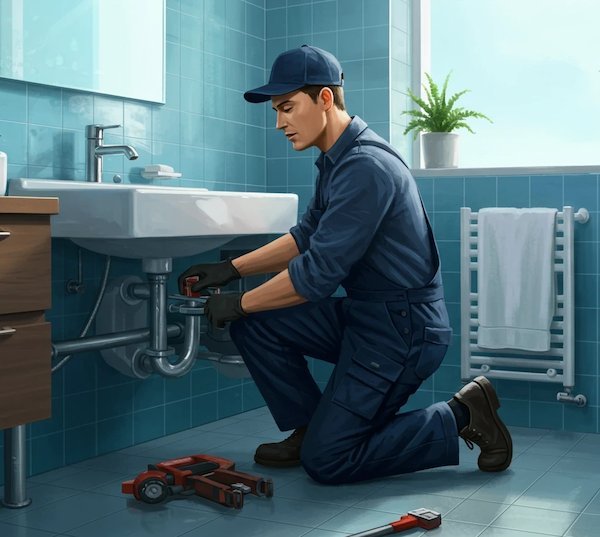
It takes 4 to 5 years to become a licensed plumber in most US states. The core of that timeline is a paid apprenticeship lasting 4 to 5 years, during which you complete roughly 8,000 hours of on-the-job training and 500 to 750 hours of classroom instruction. After the apprenticeship, you pass a journeyman exam to earn your license.
Plumbing is one of the most recession-resistant skilled trades: the Bureau of Labor Statistics projects steady demand with median pay around $62,000, and experienced journeymen in high-cost metros earn $80,000 to $100,000+. The BLS plumber occupational profile confirms the outlook and shows how pay varies by region and union status. Unlike college paths, you earn a paycheck from day one of the apprenticeship, which makes the multi-year timeline much easier to stomach.
Phase 1: Pre-Apprenticeship (0 to 12 Months, Optional)
You do not need trade school to become a plumber, but a 6 to 12 month pre-apprenticeship or trade school program can make landing an apprenticeship much easier. These programs teach tool basics, safety, blueprint reading, and code fundamentals, and they cost $3,000 to $15,000 depending on the school. Some programs have direct pipelines into union apprenticeships, which is their real value.
The minimum requirements to start are simple: be 18, hold a high school diploma or GED, have a valid driver’s license, and pass a basic math test. A clean driving record matters more than most applicants expect, since plumbers drive company vehicles to job sites.
Phase 2: The Apprenticeship (4 to 5 Years)
The apprenticeship is where the real timeline lives. Working under licensed journeymen and master plumbers, apprentices progress through roughly 2,000 hours of supervised work per year — installing water lines, drain systems, fixtures, and gas lines, plus service and repair calls. Classroom instruction runs alongside, usually one or two evenings a week, covering code, math, safety, and system design.
Apprentices earn while they learn, starting at 40 to 50% of journeyman wages (roughly $18 to $25 per hour in most markets) with scheduled raises each year. Union apprenticeships through local UA chapters offer structured raises and benefits; non-union apprenticeships through open-shop contractors or ABC chapters follow a similar hour structure with more variable pay. Either way, the 8,000-hour requirement is set by the state licensing board, not the employer.
Phase 3: Journeyman License (Exam + Application)
Once your hours are documented and classroom requirements met, you apply to your state board and sit for the journeyman exam — typically a multiple-choice test on code, theory, and trade math, sometimes with a practical component. Exam fees run $50 to $200. Pass, and you are a licensed journeyman plumber, qualified to work independently.
After 1 to 2 more years as a journeyman (requirements vary by state), you can test for a master plumber license, which allows you to pull permits, run your own jobs, and eventually open a shop. That contractor step has its own licensing track — see how to get a contractor’s license for what running your own business requires.
Can You Become a Plumber Faster?
The timeline is fairly rigid because states mandate the hour counts — you cannot test out of an apprenticeship the way you might test out of a college class. The realistic accelerators are: completing a pre-apprenticeship that counts toward first-year hours, working overtime to accumulate hours faster, and choosing a state with a 4-year rather than 5-year requirement. Military veterans should check whether their service plumbing experience counts toward hours; many states grant partial credit.
Compared with other trades, plumbing’s timeline is standard: electricians also serve 4 to 5 year apprenticeships, while welding school can be completed in under a year but leads to a different kind of work. Plumbing’s advantage is the combination of high demand, strong wages, and genuine protection from automation and offshoring.
What Apprentices Actually Do Day to Day
The first year of an apprenticeship is heavy on the fundamentals: carrying materials, digging trenches, cutting and threading pipe, and watching journeymen work. It is humbling, but every plumber starts there. By year two, you are running your own rough-ins under supervision — drilling studs, setting DWV (drain-waste-vent) systems, and soldering copper joints. Years three and four bring service calls, where diagnostic skill matters as much as wrench work: figuring out why a second-floor bathroom backs up or tracing a slab leak takes judgment that only repetition builds.
The classroom side runs in parallel, usually two evenings a week through a union training center or community college. Expect trade math (offset calculations, grade and fall for drainage), code book navigation, blueprint reading, and OSHA safety certification. Apprentices who treat the classroom hours as seriously as the job site tend to pass the journeyman exam on the first attempt; those who coast through often need two or three tries.
Frequently Asked Questions
Do you need a license to be a plumber’s apprentice?
Most states require apprentices to register with the state board and work under a licensed plumber’s supervision, but the apprentice registration is a simple application, not an exam. A few states let you start as a helper with no registration.
How much does plumbing trade school cost?
Pre-apprenticeship programs cost $3,000 to $15,000. The apprenticeship itself is free — in fact, you are paid — though union apprentices may pay modest dues and book fees.
What is the difference between a journeyman and a master plumber?
A journeyman can perform plumbing work independently but generally cannot pull permits or operate a plumbing business. A master plumber, earned after additional years and a harder exam, can pull permits, supervise journeymen, and own a plumbing company.
Is 40 too old to become a plumber?
No. Career changers in their 30s, 40s, and even 50s regularly complete apprenticeships. The physical demands are real — crawling under houses and lifting water heaters — but many older apprentices thrive, especially on the service and repair side.