
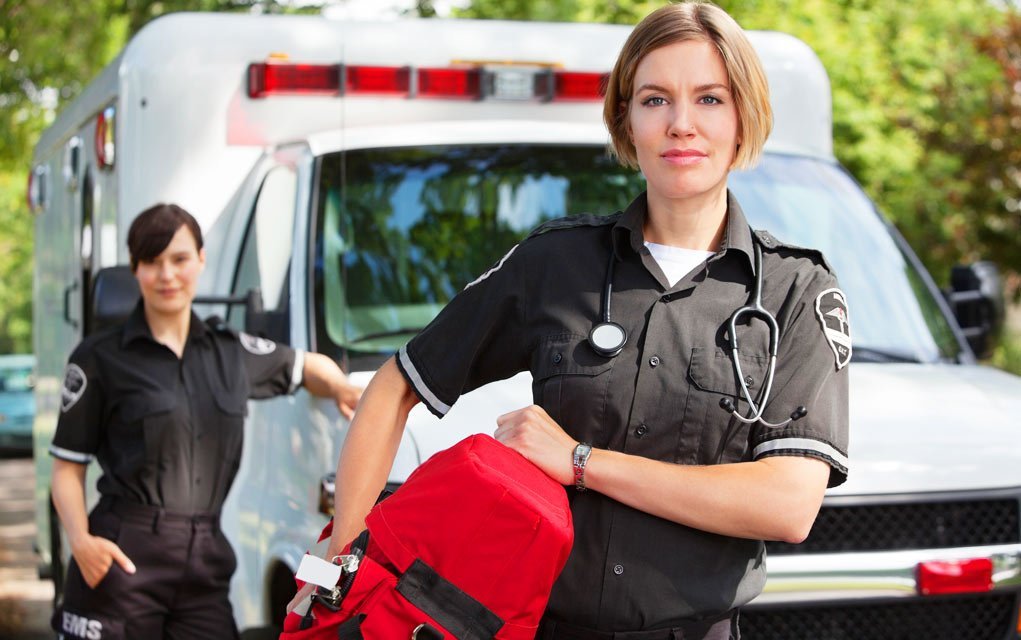
EMT-Basic training takes 120 to 170 hours to complete, which typically translates to three to six months when taken part-time alongside work, or as little as three to four weeks in an accelerated full-time academy. After training, you must pass the National Registry of Emergency Medical Technicians (NREMT) cognitive and psychomotor exams and obtain state certification before you can work on an ambulance. Paramedic training — the advanced level — is a separate commitment of 1,200 to 1,800 hours over one to two years.
Emergency medical technicians are the first medical professionals on the scene of accidents, medical emergencies, and disasters. The training is intense and hands-on by design: you learn to assess patients, control bleeding, manage airways, perform CPR, and make rapid decisions under pressure. For people drawn to high-adrenaline, meaningful work, few credentials deliver as much capability per hour of training.
EMT-Basic Training: The Full Breakdown
The EMT-Basic (now officially called “EMT”) curriculum follows national standards covering preparatory topics, airway management, patient assessment, medical and trauma emergencies, special populations (pediatrics, geriatrics, obstetrics), and EMS operations. Training mixes classroom lectures, skills labs where you practice on mannequins and classmates, clinical shifts in hospital emergency departments, and field ride-alongs on working ambulances. Most programs require around 10-24 hours of clinical and field time on top of classroom hours, and you must be certified in CPR (BLS for Healthcare Providers) before you start.
Typical Schedules
Community colleges usually run EMT courses over one semester — two evenings a week plus occasional Saturdays for about four months. Accelerated academies compress the same hours into three to five weeks of full-time, boot-camp-style training. Fire departments and private EMS companies sometimes sponsor recruits through training in exchange for a service commitment. Whichever format you choose, the hour requirement and the NREMT exam at the end are the same.
The NREMT Exams and State Certification
Training alone does not make you an EMT. You must pass the NREMT cognitive exam — a computer-adaptive test of 70-120 questions covering the full curriculum — and a psychomotor exam demonstrating hands-on skills like patient assessment, bleeding control, and airway management. Most states then require you to apply for state certification or licensure, which involves a background check and proof of NREMT certification. The whole process from first day of class to certified EMT typically takes four to eight months for part-time students.
Going Further: Advanced EMT and Paramedic
EMT is the entry level of a three-tier system. Advanced EMT (AEMT) adds about 150-250 more hours, including IV therapy and advanced airway techniques. Paramedic is the highest pre-hospital level: 1,200-1,800 hours over 12-24 months, covering advanced pharmacology, cardiology, and complex procedures like intubation. Paramedic programs usually require EMT certification plus anatomy and physiology prerequisites, and many are run as associate degree programs. Each step up brings significantly higher pay and responsibility — paramedics function almost as mobile emergency-room clinicians. If you prefer hospital-based technical work instead, see how long surgical tech training takes.
How Much Does EMT Training Cost?
EMT-Basic programs at community colleges typically cost $800-$2,000 including books, uniform, and exam fees; private training companies charge $1,500-$3,000. Paramedic programs run $5,000-$15,000+. Many fire departments, volunteer squads, and EMS agencies cover training costs for recruits, and the GI Bill covers approved programs for veterans. Compared with other healthcare credentials of similar length — like CNA training — EMT offers a distinctive path toward emergency and fire service careers.
EMT Salary and Job Outlook
The Bureau of Labor Statistics reports median annual pay for EMTs and paramedics around $44,000 combined, but the range is wide: EMT-Basics typically earn $35,000-$45,000, while paramedics earn $50,000-$70,000+, with fire department-based positions paying the most. Employment is projected to grow about 6 percent over the next decade. Many EMTs use the credential as a launchpad — the emergency experience is prized by nursing schools, physician assistant programs, and fire academies, and some employers offer tuition help for paramedic school.
Is EMT Training Hard?
It is demanding but very doable for motivated students. The academic content is straightforward — anatomy, protocols, procedures — but the volume is large and the skills testing is strict: you must perform assessments exactly to standard under observation. Students who struggle usually do so because of the pace, not the difficulty. Showing up prepared, practicing skills repeatedly, and taking the clinical shifts seriously gets the vast majority of students through.
Frequently Asked Questions
How old do you have to be to become an EMT?
You must be at least 18 to take the NREMT exam and work as an EMT in most states. You can usually begin training at 17, and some states allow 16-17 year-olds to train with restrictions, but certification waits until 18.
Do I need a college degree to become an EMT?
No. EMT-Basic requires a high school diploma or GED, CPR certification, and completion of an approved training program. Paramedic programs sometimes award associate degrees, but a degree is not a universal requirement.
Can I work as an EMT while in nursing school?
Yes, and many students do exactly that. Part-time and per-diem EMT shifts offer flexible scheduling, the pay helps with expenses, and the patient-care experience strengthens nursing school applications and clinical confidence.
How long is EMT certification valid?
NREMT certification lasts two years. Renewal requires 40 hours of continuing education (through the NREMT’s recertification model) plus a skills verification. State certifications have their own cycles, usually two to three years.
Sources: U.S. Bureau of Labor Statistics — EMTs and Paramedics, National Registry of Emergency Medical Technicians