
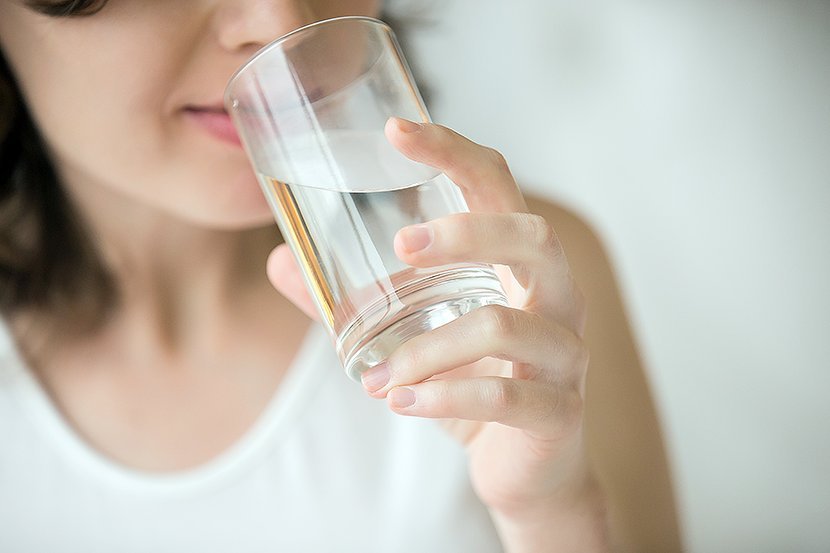
Eight glasses a day. You’ve heard it forever — but where did that number come from, and is it actually right? The question of how much water you should actually drink every day has a more interesting answer than the old rule suggests, because the truth is personal, not one-size-fits-all.
Let’s look at what the science actually says, and how to know if you’re getting enough.
How Much Water Should I Actually Drink Every Day? What Science Says
The “8×8” rule (eight 8-ounce glasses) has no rigorous scientific origin — it’s a guideline that hardened into gospel through repetition. Actual needs vary enormously: the National Academies suggest about 3.7 liters daily for men and 2.7 liters for women from all sources — but that includes food moisture (fruits, vegetables, soups contribute significantly) and other beverages. Your actual drinking-water need depends on body size, activity level, climate, diet, and health conditions. A construction worker in Arizona summer needs vastly more than a desk worker in air-conditioned Seattle winter.
The better framework is responsive rather than prescriptive. Your body has a sophisticated thirst mechanism that works well for most healthy people — drinking when thirsty, with attention to the signals, covers most situations. The people who need deliberate hydration strategies are those whose thirst signals are unreliable or whose losses are extreme: older adults (thirst perception declines with age), endurance athletes, people working in heat, and anyone ill with fever, vomiting, or diarrhea. For everyone else, the 8-glass anxiety is mostly unnecessary. Related hydration-adjacent health basics are covered in how do I Start Running as a Complete Beginner over 40.
Factors That Change Your Needs
Exercise is the biggest variable — an hour of intense activity can cost 1–2 liters through sweat, more in heat. Climate matters enormously: hot, dry, or high-altitude environments accelerate losses. Diet plays a role: high-protein and high-fiber diets need more water, while water-rich foods (cucumber, watermelon, oranges, soups) contribute meaningfully. Pregnancy and breastfeeding increase needs. And certain medications and conditions (kidney issues, heart failure) can require fluid restriction — in which case your doctor’s guidance overrides every general rule.
- Exercise: add 1–2 liters per hour of intense activity.
- Heat and altitude: significantly increase losses.
- Age: older adults need deliberate hydration (thirst fades).
- Illness: fever, vomiting, diarrhea demand extra fluids urgently.
Signs You’re Getting Enough (or Not)
Forget counting glasses — watch the signals. The simplest reliable indicator is urine color: pale straw to light yellow means well-hydrated; dark yellow means drink more; completely clear constantly might mean you’re overdoing it. Other good signs: steady energy, skin that bounces back when pinched, infrequent headaches, regular digestion. Signs of chronic under-hydration: persistent afternoon fatigue, frequent headaches, constipation, dark urine, dizziness when standing.
A note on overhydration, because it’s real though rare: drinking extreme amounts rapidly can cause hyponatremia — dangerously low blood sodium — which is why marathon runners are warned against over-drinking. More isn’t always better; the goal is adequate, not maximal. And be skeptical of hydration hype products — for most people, plain water beats expensive alkaline waters and most sports drinks (which are sugar delivery systems for anyone not doing endurance exercise). Your kidneys are excellent water managers; give them reasonable input and they handle the rest.
Practical Hydration Habits
Make it easy rather than obsessive. Keep water visible and available — a bottle on your desk outperforms any reminder app. Drink a glass with each meal (that’s three down without thinking). Have water before coffee in the morning. Eat your water too — fruits, vegetables, and soups count meaningfully. And front-load on exercise days rather than trying to catch up after. These boring habits beat any elaborate hydration protocol, because they’re the ones you’ll actually maintain.
Hydration Myths Worth Retiring
A few persistent myths deserve burial. “Coffee dehydrates you” — false for regular drinkers; coffee’s mild diuretic effect is offset by its water content, and it counts toward daily fluid intake. “You need 8 glasses of pure water specifically” — other beverages and water-rich foods count; your kidneys don’t care about the delivery vehicle. “If you’re thirsty you’re already dehydrated” — an exaggeration; thirst is an early signal, not an emergency alarm, for healthy people in normal conditions.
“More water flushes toxins” — your liver and kidneys handle detoxification; excess water doesn’t accelerate it and can be harmful in extremes. “Everyone needs electrolyte drinks” — only for prolonged intense exercise or significant fluid loss; for desk work, they’re expensive sugar water. The unsexy truth remains: drink reasonable amounts of fluids, mostly water, guided by thirst and the pale-urine check. Everything beyond that is marketing.
So forget the rigid eight-glass rule. Drink when thirsty, watch for pale urine, increase intake with exercise and heat, and pay extra attention as you age. Your body is an excellent hydration manager — give it reasonable fluids and get out of its way. Simple, sustainable, and backed by actual science rather than marketing slogans.
Fill a bottle, keep it visible, and let thirst do the rest. Hydration solved.
Thirst, pale urine, common sense — the only hydration guide you’ll ever need.
Keep a bottle nearby, drink to thirst, and stop worrying about the magic number. Your body has this handled.
One more consideration: if you exercise heavily, work outdoors, or live somewhere hot, add an extra liter or two to your baseline. Athletes and outdoor workers can lose remarkable amounts through sweat, and thirst alone may lag behind actual needs during intense activity. When in doubt during hard efforts, drink on a schedule rather than waiting for thirst.
Drink to Your Life, Not to a Number
How much water you should drink daily isn’t 8 glasses — it’s whatever keeps your urine pale, your energy steady, and your body functioning well, adjusted for your activity, climate, and health. For most people that’s somewhere around 2–3 liters from all sources, more when active or hot. Trust your thirst, watch the signals, and save the measuring cups for baking. For more everyday health guidance, what Causes Constant Back Pain from Sitting at a Desk and how do I Write a Professional Invoice that Gets Paid Faster continue the series.
To verify and expand on what’s covered here, check Mayo Clinic and the CDC.