
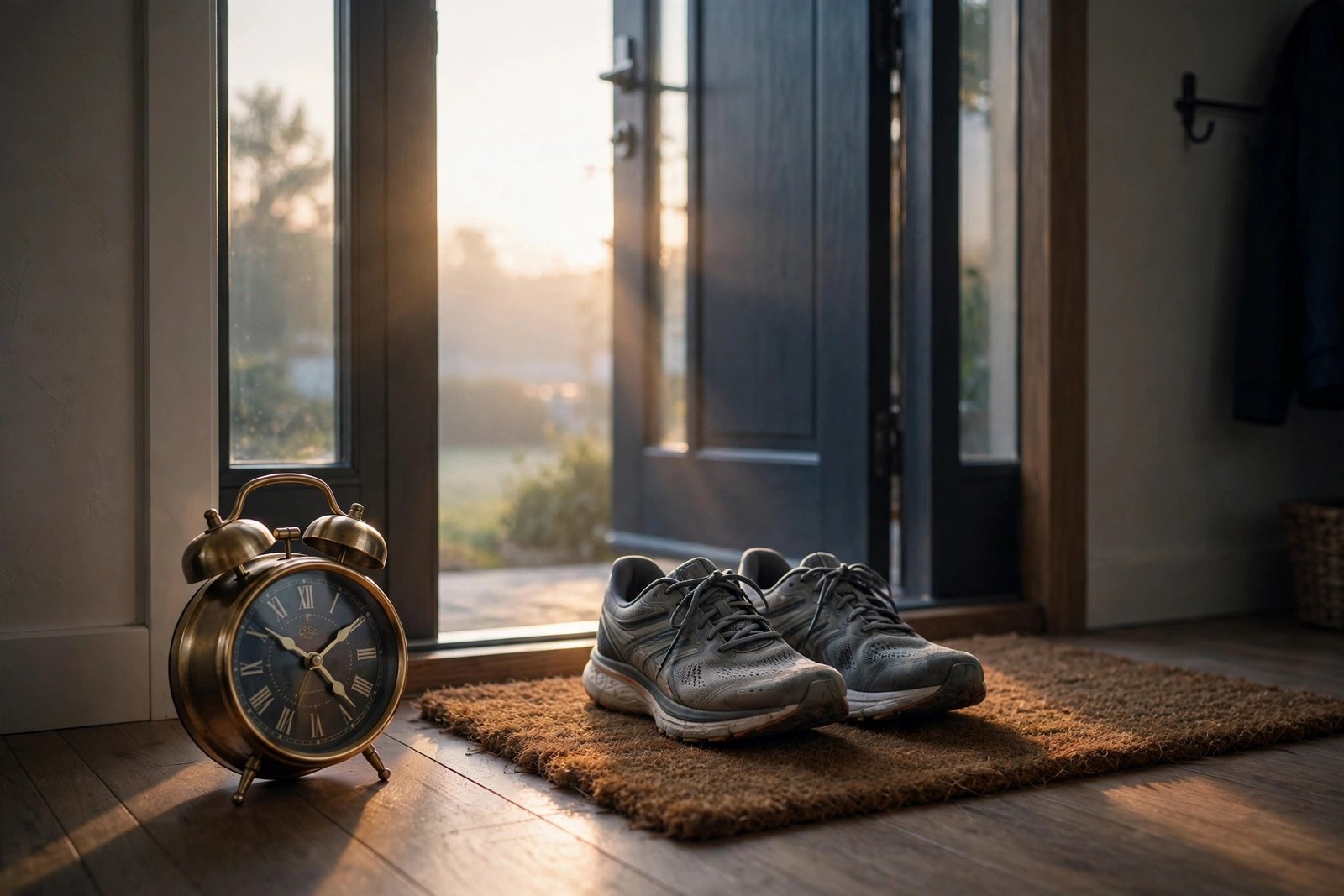
Discipline has a PR problem. We picture grim-faced grinding, white-knuckling through temptation, endless self-denial. No wonder it never lasts — that version of discipline is exhausting by design. Real, lasting discipline looks completely different: it’s not about having more willpower, it’s about needing less of it. Here’s how to build the kind that sticks.
The Willpower Myth
The famous “marshmallow test” suggested willpower was destiny; follow-up research complicated that story enormously. What the science actually shows: willpower behaves like a depletable resource and like a belief — people who believe it depletes, deplete faster. But the most useful finding is simpler: people we call “disciplined” don’t resist more temptation — they encounter less of it. They’ve structured their lives so the right choice is the easy choice.
This reframes everything. Discipline isn’t a character trait you either have or don’t — it’s an engineering problem. The question isn’t “how do I force myself?” but “how do I design this so forcing isn’t needed?” Every lasting-discipline strategy below is really a way to reduce the willpower tax on good behavior. The APA’s research reviews on self-control converge on the same point: situation beats willpower, consistently — a theme explored practically at James Clear’s site on habit systems.
Design Your Environment First
Remove friction from good behaviors: gym bag packed by the door, running shoes visible, healthy food at eye level, book on the pillow, work tools open on the desk. Every second of setup friction is a chance for resistance to win; eliminate it the night before. Add friction to bad behaviors: delete the apps (re-downloading is friction), keep junk food out of the house (you can’t eat what isn’t there), put the TV remote in another room, log out of distracting sites.
Design for your worst self, not your best: Sunday-night you is motivated and wise; Wednesday-evening you is tired and impulsive. Build systems for Wednesday you. Meal prep, laid-out clothes, website blockers scheduled in advance — all gifts from your best self to your worst. One environment, one purpose: where possible, dedicate spaces — a desk that’s only for deep work trains your brain to focus on arrival. Even small rituals (same playlist, same tea) signal “it’s time.” Pair environment design with good weekend habits for a healthier lifestyle — weekends are where discipline systems get tested.
Identity: Become the Person Who Does This
The deepest discipline hack is identity-based. Outcome habits (“I’m trying to run”) require constant decisions. Identity habits (“I’m a runner”) make the behavior self-evident — runners run; that’s what runners do. Every action is a vote for an identity; cast enough votes and the identity solidifies, and then the identity drives the actions automatically.
How to install it: decide the identity (“I’m someone who keeps promises to myself”), then prove it with small wins — each kept promise is evidence. Start embarrassingly small: two push-ups, one page, five minutes. The size doesn’t matter; the vote matters. Never miss twice — one miss is an accident, two is the start of a new (bad) identity. And edit your self-talk: “I don’t eat sugar on weekdays” (identity) beats “I can’t have sugar” (deprivation) — research shows identity-framed refusal is dramatically more effective. Mornings are identity prime-time; a simple morning routine is where many people cast their first daily votes.
Systems Over Goals, Recovery Over Perfection
Automate decisions: same breakfast, same workout time, same work blocks — routine eliminates the hundreds of micro-decisions that drain willpower. Implementation intentions: “If situation X, then I will do Y” — pre-decided responses bypass in-the-moment weakness (“If I crave chips at 9 p.m., I will make tea instead”). Temptation bundling: pair a needed behavior with a wanted one — only listen to your favorite podcast while exercising, only get the fancy coffee while doing admin.
Plan for failure: discipline that can’t survive a bad day isn’t discipline, it’s fragility. Define your minimum viable day in advance — the smallest version that counts (5-minute walk, one paragraph, one healthy meal). On terrible days, do the minimum; the streak of identity survives, and that’s what matters. Weekly review: what worked, what broke, what to adjust — discipline is a system you tune, not a vow you keep or break.
Discipline at Work: Deep Work Systems
Professional discipline is mostly attention discipline. Time-block your calendar: schedule deep work like meetings — 90-minute blocks, phone in another room, notifications off. Shallow work (email, admin) gets batched into defined windows, not sprinkled through the day. The shutdown ritual: end each workday by reviewing tomorrow’s top three priorities and closing every loop — an explicit end prevents work from colonizing the evening.
Single-tasking: multitasking is task-switching, and switching costs 20+ minutes of refocus per interruption. One thing at a time, finished before the next begins. Energy matching: schedule demanding work for your peak hours (morning for most), admin for troughs. Discipline isn’t doing hard things when tired — it’s arranging to do hard things when sharp. These systems make “being disciplined at work” mostly a calendar problem, and calendars are solvable.
Social Discipline: Protecting Your Systems From People
Other people are the biggest threat to discipline systems — not maliciously, just through normal social gravity. Learn the positive no: “I can’t do Thursday — I’m training for the marathon” beats a vague decline; anchored no’s are respected, vague ones get negotiated. Curate your circle: you absorb the habits of your five closest contacts — spend more time with people whose defaults match your goals.
Announce systems, not goals: “I run Tuesdays and Thursdays at 6 a.m. — join me?” creates social accountability without the premature-satisfaction trap of announcing outcomes. Design social defaults: suggest walks instead of drinks, active hangouts instead of passive ones. You don’t need new friends — just new defaults with existing ones. And forgive social slip-ups fast: one late night doesn’t end the system; the system resumes tomorrow. Rigidity breaks; resilience bends.
Conclusion
Lasting discipline isn’t more willpower — it’s less-needed willpower: environments designed so good choices are easy, identities that make behavior automatic, systems that remove decisions, and recovery plans for bad days. Stop trying to become someone with iron will. Become someone whose life is arranged so iron will is rarely required.
Frequently Asked Questions
Is discipline more important than motivation?
Yes, for long-term results. Motivation is emotional weather — it changes daily. Discipline-as-system (environment, identity, routine) works regardless of mood, which is why it compounds.
How long does it take to build discipline?
Habit research suggests 2–8 months for automaticity depending on complexity, with ~66 days as the often-cited average. But identity shifts and environment changes pay off immediately — don’t wait for “day 66” to feel different.
What do I do after breaking a streak?
Resume immediately with the minimum viable version — never miss twice. Analyze what broke (tiredness? environment? over-ambition?) and adjust the system, not just your resolve.
Can discipline be learned as an adult?
Absolutely — the strategies here (environment design, identity habits, implementation intentions) work at any age. Adults actually have an advantage: more control over their environments than kids do.
What’s the fastest way to start being more disciplined?
Pick one keystone behavior, shrink it to two minutes, attach it to an existing habit, and design the environment tonight. One small kept promise daily rewires identity faster than any motivational content ever will.
Does discipline mean never having fun?
No — sustainable discipline includes deliberate rest and pleasure. Schedule fun explicitly; guilt-free leisure recharges willpower while stolen leisure drains it. The disciplined life has more joy, not less — it’s just intentional.