
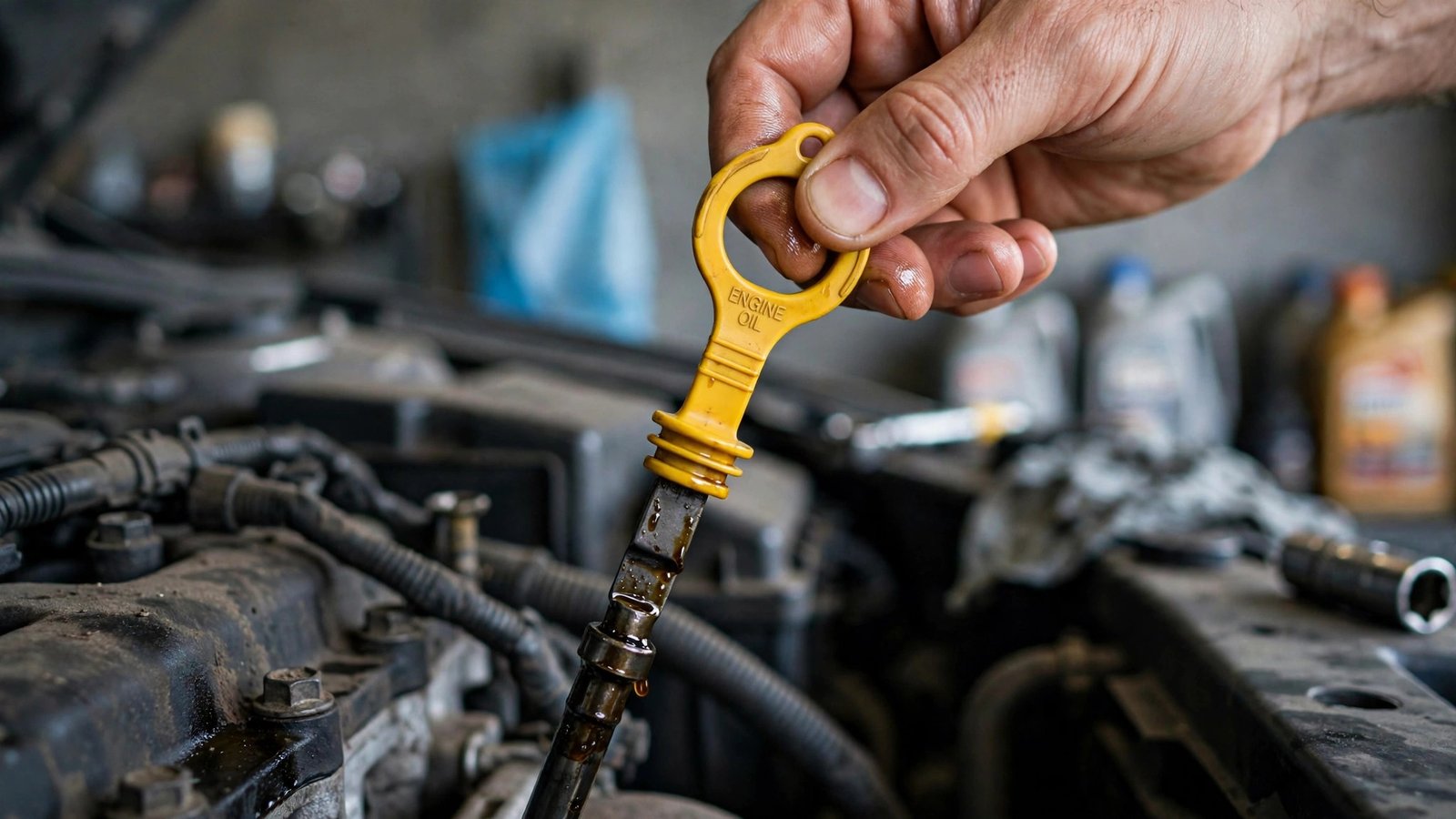
Your engine’s oil is its lifeblood — it lubricates, cools, and cleans thousands of moving parts every time you drive. Let it run low or dirty, and you’re looking at accelerated wear, overheating, and in the worst case, a seized engine that costs more to replace than the car is worth. Yet surveys consistently find that a third of drivers rarely or never check their oil between changes.
The excuse is usually “I don’t know how” or “it takes too long.” Neither holds up: checking your oil takes about two minutes, requires zero tools, and is one of the simplest car-care skills you can learn. Here’s exactly how to do it — and what the dipstick is telling you.
When and Where to Check
Check your oil when the engine is warm but has been off for 5–10 minutes. This lets oil drain back into the pan for an accurate reading while still being warm enough to flow. A level parking spot matters too — checking on a slope gives a false reading.
How often? Once a month is the standard advice, and before any long road trip. Older cars and cars with high mileage can burn oil between changes, so if your car has over 100,000 miles, check every couple of weeks until you learn its habits. Newer cars with electronic oil-level sensors still benefit from a manual check — sensors fail, dipsticks don’t.
The 2-Minute Process, Step by Step
- Pop the hood and locate the dipstick — it usually has a bright yellow or orange loop handle. (Some newer European cars have no dipstick at all; check your owner’s manual.)
- Pull the dipstick out and wipe it completely clean with a rag or paper towel. This first pull gives a false reading because oil splashes up the tube while driving — the wipe resets it.
- Reinsert it fully, pushing it all the way back into the tube until it seats.
- Pull it out again and read the level. The oil film should fall between the MIN and MAX (or L and F) marks — ideally near the top.
- Check the oil’s condition: rub a drop between your thumb and finger. It should feel slick, not gritty, and look amber to dark brown — not black, and definitely not milky.
That’s it. Two minutes, and you know more about your engine’s health than most drivers ever will.
Reading the Dipstick: What You’re Looking At
Level
Between the marks: you’re fine. At or below MIN: add oil — about a quart typically brings it from MIN to MAX, but add half a quart at a time and recheck. Above MAX: too much oil is also bad (it can foam and lose lubricating ability); if significantly overfilled, have some drained.
Color
Amber/honey: fresh. Dark brown: normal for oil with some miles on it. Black and thick: overdue for a change. Milky or creamy (like a milkshake): coolant is mixing with oil — a potential head-gasket failure. Stop driving and get it checked immediately; this one can kill an engine fast.
Texture and smell
Gritty particles mean contaminants the filter isn’t catching. A strong gasoline smell suggests fuel dilution, which thins the oil — common in cars used only for short trips where the engine never fully warms up. Metal flakes or glitter in the oil signal internal wear and warrant a professional inspection right away.
What Oil Does Your Car Need?
Don’t guess — your owner’s manual specifies the exact viscosity (like 5W-30 or 0W-20) and standard your engine requires. Using the wrong weight, especially in modern engines with tight tolerances and variable valve timing, can cause real damage over time.
Conventional vs. synthetic: most cars built in the last decade require full synthetic, which handles heat better and lasts longer. The DOE’s FuelEconomy.gov vehicle care guides note that the right oil also protects fuel economy — the wrong viscosity can cost you 1–2% at the pump. When topping off between changes, match what’s already in there; mixing conventional and synthetic in a pinch won’t hurt, but stick to the specified weight.
If the Level Is Low: Topping Off Safely
- Remove the oil filler cap on top of the engine (marked with an oil-can symbol).
- Using a funnel, add about half a quart of the correct oil.
- Wait a minute for it to drain down, then recheck the dipstick.
- Repeat until the level sits near MAX — never overfill.
If you’re adding more than a quart every 1,000 miles, your engine is burning or leaking oil beyond normal. Look for blue-gray exhaust smoke (burning) or spots on the driveway (leaking), and have it diagnosed — AAA’s auto care guidance flags consumption above that threshold as worth investigating.
Oil Change Intervals: The Truth
The old 3,000-mile rule is dead for most modern cars — with synthetic oil, 7,500 to 10,000 miles is typical, and some manufacturers allow more. But “miles” is only half the story: oil also degrades with time, so follow the manual’s time interval (usually 6–12 months) even if you drive little.
Severe conditions shorten the interval: frequent short trips, stop-and-go traffic, towing, dusty environments, and extreme heat or cold. If your driving looks like that, change toward the shorter end of the range. Your car’s oil-life monitor (if equipped) accounts for actual driving conditions and is worth trusting.
Keeping up with this kind of basic maintenance is what makes long car rides comfortable and drama-free — and if you’re planning miles ahead, planning a budget road trip should always start with a quick under-hood check.
Synthetic vs. Conventional: Does It Actually Matter?
It does — and the gap has widened. Full synthetic oil resists thermal breakdown far better than conventional, flows faster on cold starts (when most engine wear occurs), and maintains its protective film longer between changes. For turbocharged engines, which run extremely hot, synthetic isn’t optional — it’s specified by the manufacturer, and using conventional oil in a turbo engine can cause sludge and premature turbo failure.
High-mileage oils (a synthetic blend with seal conditioners) are worth considering past 75,000 miles — they reduce the minor seal seepage that aging engines develop. But don’t fall for the “thicker is better for old engines” myth: switching to a heavier weight than specified increases cold-start wear. If your engine burns oil, the fix is diagnosis, not thicker oil. Stick to the manual’s specification, choose full synthetic for anything built in the last 15 years, and you’ll be following the same guidance as the engineers who designed the engine.
Frequently Asked Questions
Should I check oil when the engine is hot or cold?
Warm-but-rested is ideal: drive normally, then wait 5–10 minutes after shutting off. Stone cold works too but reads slightly lower; checking immediately after shutting off reads falsely low because oil hasn’t drained back yet.
Can I check my oil if my car has no dipstick?
Use the electronic oil-level display in the instrument cluster or infotainment system (consult the manual for how to access it). Check it under the same conditions — level ground, engine off for a few minutes.
What does it mean if my oil looks milky?
Milky, frothy oil usually means coolant is leaking into the oil system — often a failing head gasket. It’s serious: the mixture lubricates poorly and can destroy bearings. Don’t keep driving; get it to a shop.
How often should I really change my oil?
Follow your owner’s manual — typically 7,500–10,000 miles or 6–12 months with synthetic oil. Ignore the 3,000-mile stickers unless you drive in genuinely severe conditions.
The Bottom Line
Checking your oil is a two-minute habit that protects a multi-thousand-dollar engine: warm engine, level ground, pull-wipe-reinsert-read. Do it monthly, learn what your dipstick looks like when things are healthy, and you’ll catch problems while they’re still cheap. Few car-care tasks deliver this much protection for this little effort.