No single natural method keeps every pest off every plant. Layered defences work because each layer stops what the others miss. A spray used alone fails when the pest arrives from a neighbour’s plot, hides under a leaf, or returns the week after treatment. A garden defended in layers fails more gracefully: the pests that pass one layer meet the next, and the damage that remains is small enough to tolerate. The four layers run in a deliberate order, from the cheapest and kindest measures to the most direct intervention, and most gardens need the later layers only lightly when the early ones are done well.
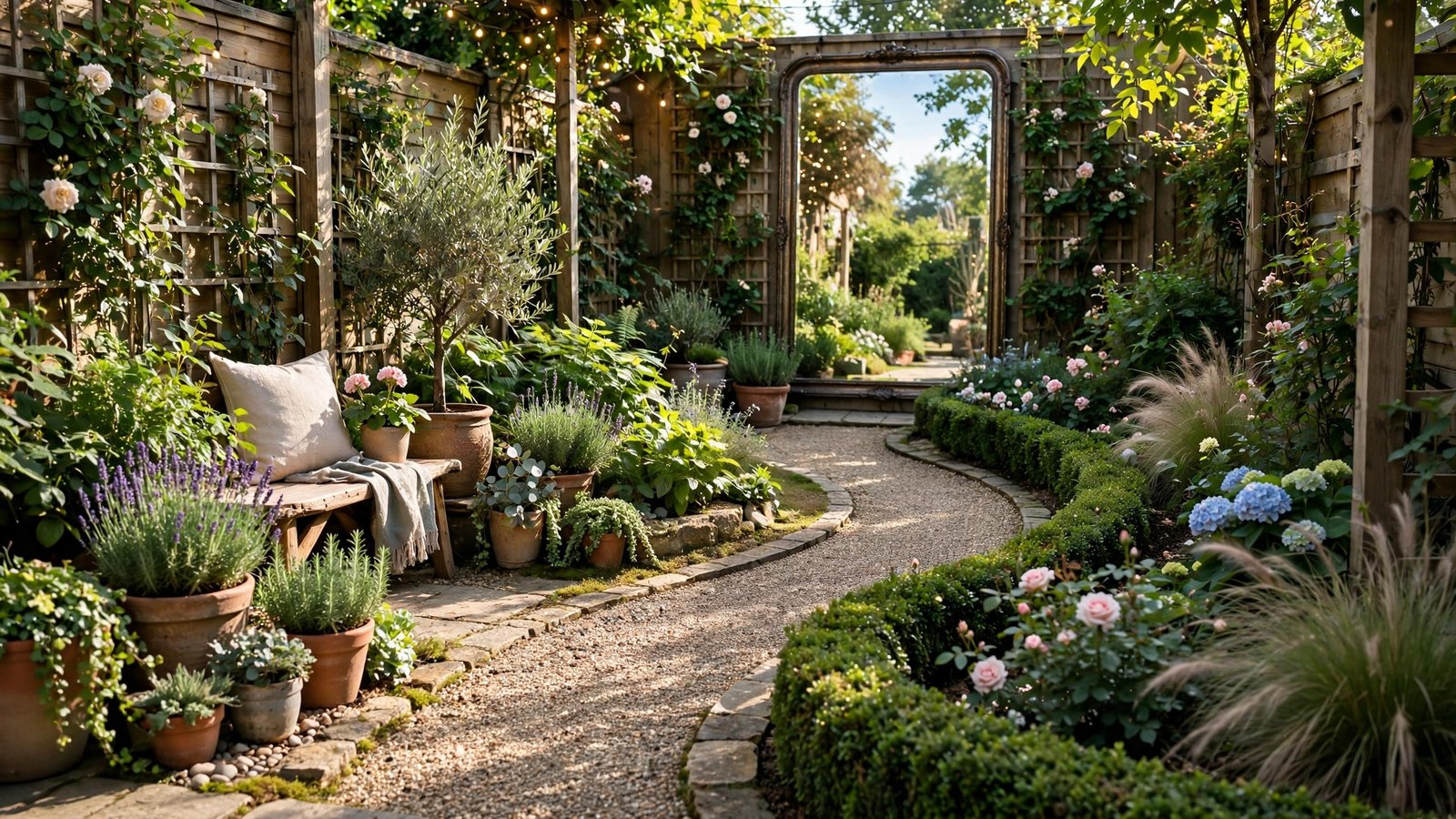
Layer 1: Prevention — the right plant in the right place, spaced for moving air, fed moderately and watered at the base, so plants grow without the soft, stressed growth that pests home in on.
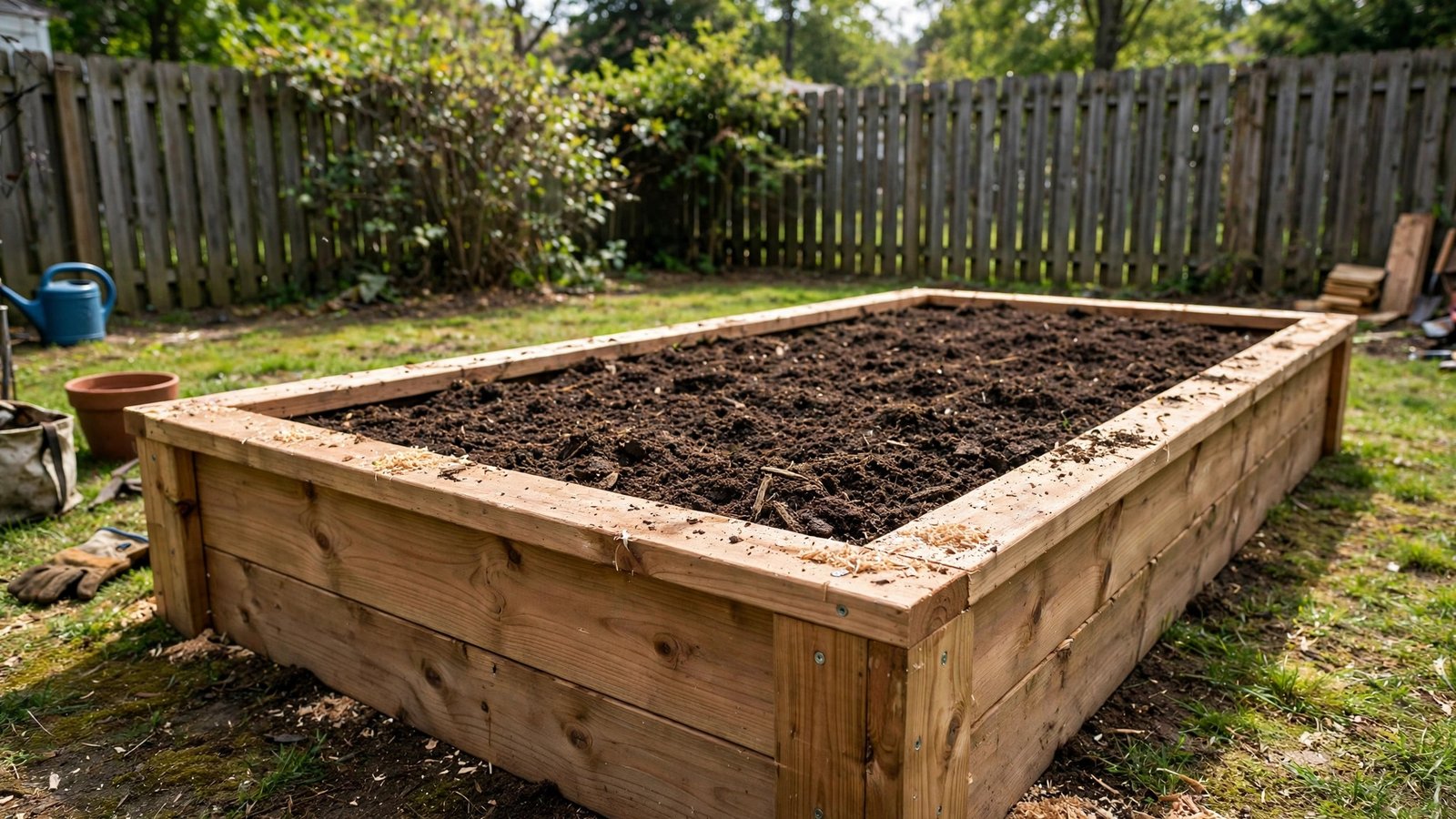
Layer 2: Barriers and traps — fine mesh or fleece over vulnerable crops, collars around young stems, traps used with their limits understood, and regular checking so damage is caught early.
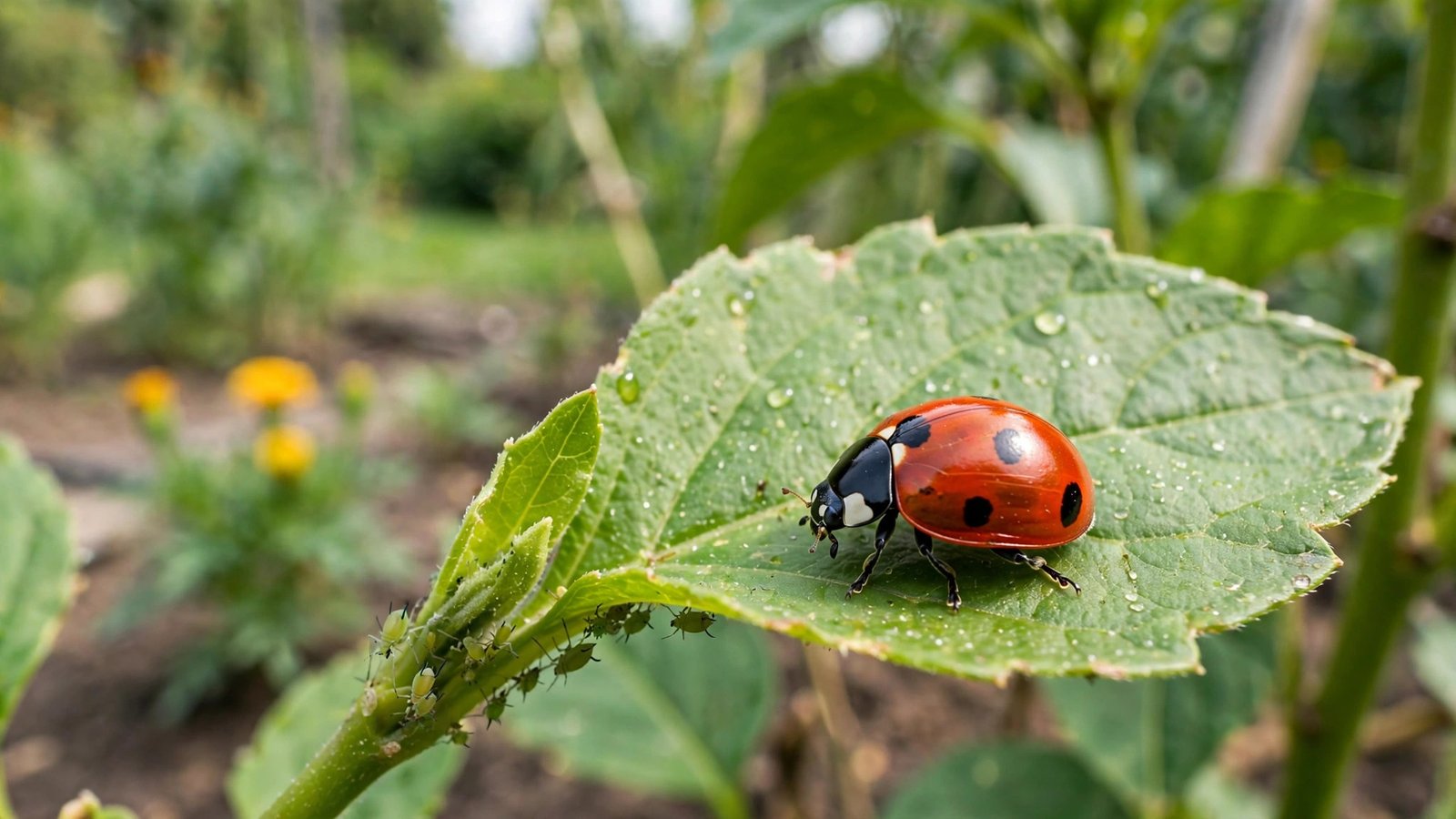
Layer 3: Allies — ladybirds, hoverflies, lacewings, birds and frogs encouraged with flowers, shelter and rough corners, so the garden holds a standing population of pest eaters.
Layer 4: Targeted organic intervention, last and local — hand-picking, a sharp water jet, and aimed soap or neem sprays used only where damage passes the level worth acting on.
Prevention comes first
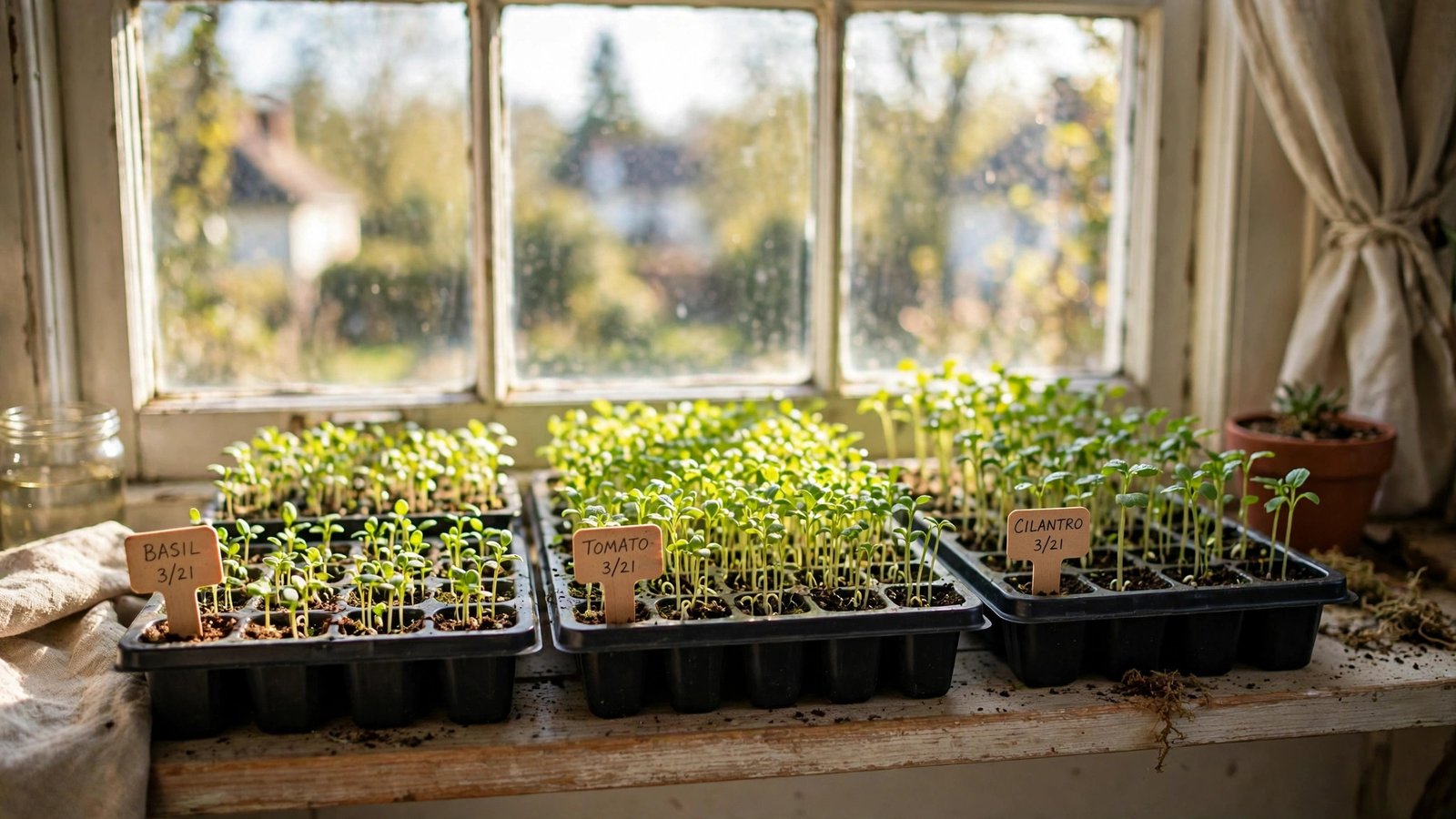
The first layer is prevention, and it does more work than any treatment applied later. Start with the right plant in the right place. A plant matched to the sun, soil and moisture a spot actually offers grows steadily and resists attack, while a plant struggling in the wrong place stays weak no matter how it is treated afterwards. Give plants spacing that lets air move between them. Crowded leaves stay damp after rain and watering, and damp, still foliage is where fungal trouble and several pests settle first, so a little open space around each plant is a defence in itself. Feed moderately. Soft, over-fed growth is what aphids home in on, because lush and sappy stems are easy feeding, and feeding beyond what the plant needs produces exactly that growth while doing nothing for the harvest. Water at the base of plants rather than over the leaves, so the roots receive the water and the foliage stays dry. A watering can or a hose run gently at soil level achieves this without any special equipment. Clear fallen and rotting material from around plants as the season goes on, since decaying leaves and dropped fruit shelter slugs and carry disease from one week to the next. The same thinking applies under cover and indoors, where forgiving plant choice does the same work: choosing resilient kinds listed among low-maintenance houseplants for beginners is the indoor version of the first defence, because a plant suited to its place needs rescuing far less often. Prevention also includes honest observation. Walk the garden slowly and look at the undersides of leaves, the growing tips and the soil line, so the condition of the plants is known before any pest makes it obvious.
Barriers, traps and early checking
The second layer puts physical obstacles between pests and plants. Fine mesh or fleece laid over vulnerable crops keeps flying insects off while still letting light, air and rain through, and it works best when it goes on at planting, before the pest has found the crop, with its edges held down so nothing creeps underneath. Collars around young stems guard the point where slugs and cutworms do their worst damage, at ground level on a plant too young to recover from being severed or ringed. Slug traps have a place, used with their limits understood: a trap catches slugs near it, it does not clear a whole plot, and it needs emptying and refreshing to keep working. Other simple traps can show what is active at night or under leaves, which is useful information even when the trap itself catches little. The habit that holds this layer together is regular checking, so damage is caught at the first leaf rather than the tenth. A small patch of holes noticed early can be answered by removing a few insects by hand or covering one plant, while the same problem noticed late may already cover a row. Checking and acting at thresholds is the working core of integrated pest management, the formal method this layered approach follows, in which treatment is a response to observed need rather than a calendar habit. Keep a rough record in words of what was found and where, because patterns appear across a season: the bed that always suffers first, the crop that only suffers in a wet spell, the corner where slugs gather. Those patterns tell the gardener where barriers earn their keep next season and where they can be skipped.
Allies that eat the pests
The third layer is allies, the creatures that eat pests as their ordinary living. Ladybirds and their larvae eat aphids in quantity, hoverfly larvae work through aphid colonies, and lacewings take a wide range of small soft-bodied insects. Birds pick off caterpillars and grubs, and frogs take slugs at ground level through the night. None of these helpers can be summoned on the day damage appears. They stay in a garden that feeds and shelters them across the whole season. Flowers that feed the adults matter because several of these hunters live on nectar and pollen when they are not hunting, and a garden with flowers in bloom from spring into autumn holds them far better than a garden that flowers in one short burst. Flat, open flowers are the easiest for small insects to feed from, and herbs left to flower pull in more allies than the same herbs kept tightly trimmed. Rough corners left standing do the sheltering work: a patch of long grass, a pile of stones or logs, and stems left uncut over winter all give beetles, frogs and hunting insects somewhere to rest and overwinter. A tolerance for a few pests completes the layer. Predators need food, and a garden sprayed or picked to absolute cleanliness starves the very creatures that would have held pests down. A small colony of aphids on one plant, left alone while ladybirds gather, is often the price of a garden that controls the next outbreak by itself. This layer has no quick result to point to, and that is its nature: it is built over seasons, and its reward is outbreaks that stay small without anyone having to act.
The flower supply deserves planning in its own right, because a gap in bloom is a gap in the workforce. Early flowers feed the allies that emerge first in spring, when aphid colonies are just founding and a resident predator can end them before they grow. Summer flowers carry the population through the hungriest part of the season, and late flowers feed the adults that will overwinter and start work the following year. Planting for that spread does not require rare kinds: a mix of open, simple flowers across the beds and borders, including herbs allowed to bloom, covers most of the season without any single planting having to flower for long. The rough corners earn their place in winter as much as in summer. Stems left standing, leaves left where they fell in a quiet corner, and a log or stone pile left undisturbed give beetles, frogs and hunting insects the shelter they need to survive the cold months in the garden itself, rather than having to find it again from elsewhere in spring. A garden tidied bare every autumn evicts its own allies at the exact moment they are settling, and then wonders why pests arrive unopposed in spring. Leave the rough corners rough, cut stems down late rather than early, and let the sheltering layer build up year on year until the garden holds its defenders as a matter of course.
Targeted help, used last and locally
The fourth layer is targeted organic intervention, kept last and kept local. Hand-picking is the plainest form of it: large caterpillars, slugs found after dark, and beetles that drop when the plant is tapped can all be removed directly, and for many pests on a small plot this alone ends the problem. A sharp water jet handles aphids well, knocking them from stems and leaf undersides so most cannot climb back, and repeating the jet every few days breaks the colony without treating the whole plant. Soap and neem sprays belong here too, described honestly: they are contact treatments, so they work only where they land on the insect, and they can harm beneficial insects too if sprayed broadcast across a bed. For that reason they are aimed at the affected plant rather than spread widely, timed for evening when bees and other pollinators have stopped flying, and used only where damage passes the threshold set in the second layer, the point at which the harm being done outweighs the harm of intervening. Spraying open flowers is avoided for the same reason. Looking further ahead is also part of this layer. companion planting belongs in the plan for next season, because planning planting partnerships is the intervention that happens before any pest arrives: crops placed so their neighbours shelter, confuse or draw pests away are defended from the day they go in. Note which partnerships seemed to help and which crops suffered side by side, and let that record shape the next planting plan. Used in this order, the layers keep intervention rare, small and honest, and the garden spends most of the season defended by its own arrangement rather than by anything applied to it.