
The average American party generates a shocking amount of trash: single-use plates, plastic cups, half-eaten platters, balloons, and gift wrap — most of it headed straight for landfill within 48 hours. The EPA estimates that food waste alone accounts for roughly 30-40% of the US food supply, and celebrations concentrate that waste into single evenings. But learning how to plan a low-waste party doesn’t mean throwing a joyless party — it’s about smart swaps, not sacrifice. With some planning, you can throw a celebration that’s actually better — better food, better atmosphere, better memories — while sending almost nothing to the trash. Here’s the complete playbook.
Start With the Guest Count and the Menu Math
Most party waste begins with overbuying. The fix is simple portion math. For a 2-3 hour cocktail-style gathering, plan 4-6 appetizer bites per person per hour; for a full meal, 1 to 1.25 pounds of total food per guest is plenty when a real meal is served. Write the menu first, then build the shopping list from it — never the reverse. One anchor dish plus two or three supporting items beats a sprawling spread where half the trays go untouched.
The potluck power move: for casual gatherings, assign categories (not dishes) — “bring a side,” “bring a dessert” — so you get variety without duplicates. Guests love contributing, and distributed cooking means distributed leftovers. If you’re scaling up to a bigger event, the same budgeting discipline that helps with hosting a dinner party on a small budget applies double to waste: every item on the list should have a named eater, not a vague hope.
Invitations and Decorations Without the Landfill
Go digital for invites. Paper invitations are read once and recycled (at best). Free digital invitation services handle RSVPs, reminders, and updates — and they eliminate the “wait, did you get the invite?” chaos. For decorations, rent or borrow instead of buying: tablecloths, cake stands, string lights, and serving pieces from a party-rental shop cost less than disposable decor and look dramatically better.
Ban the worst offenders: balloons (they become wildlife-killing litter and many municipalities now restrict releases), plastic confetti, and single-use plastic tablecloths. Instead: potted plants or herbs as centerpieces (guests take them home), beeswax candles, cloth bunting you reuse for years, and fresh greenery clippings. A $15 bunch of eucalyptus from the grocery store out-decorates $60 of plastic party-store filler.
Serveware: The Single Biggest Waste Win
Disposable plates, cups, and cutlery are typically the largest waste stream at any party. The hierarchy, from best to worst:
1. Real dishes you own or borrow. For up to 20 guests, your own dishes plus a borrowed stack usually cover it. Ask a neighbor — most people love lending serving pieces. 2. Thrifted mismatched sets. A $10 thrift-store haul of plates and glasses gives your party a charming eclectic look and becomes your permanent party kit. 3. Compostable serveware — only if you actually compost. “Compostable” plates in a landfill behave like regular trash; they need commercial composting. Check whether your city accepts them curbside before buying. 4. Recyclable last resort. If you must go disposable, choose aluminum or paper over plastic — aluminum is infinitely recyclable and actually gets recycled at high rates.
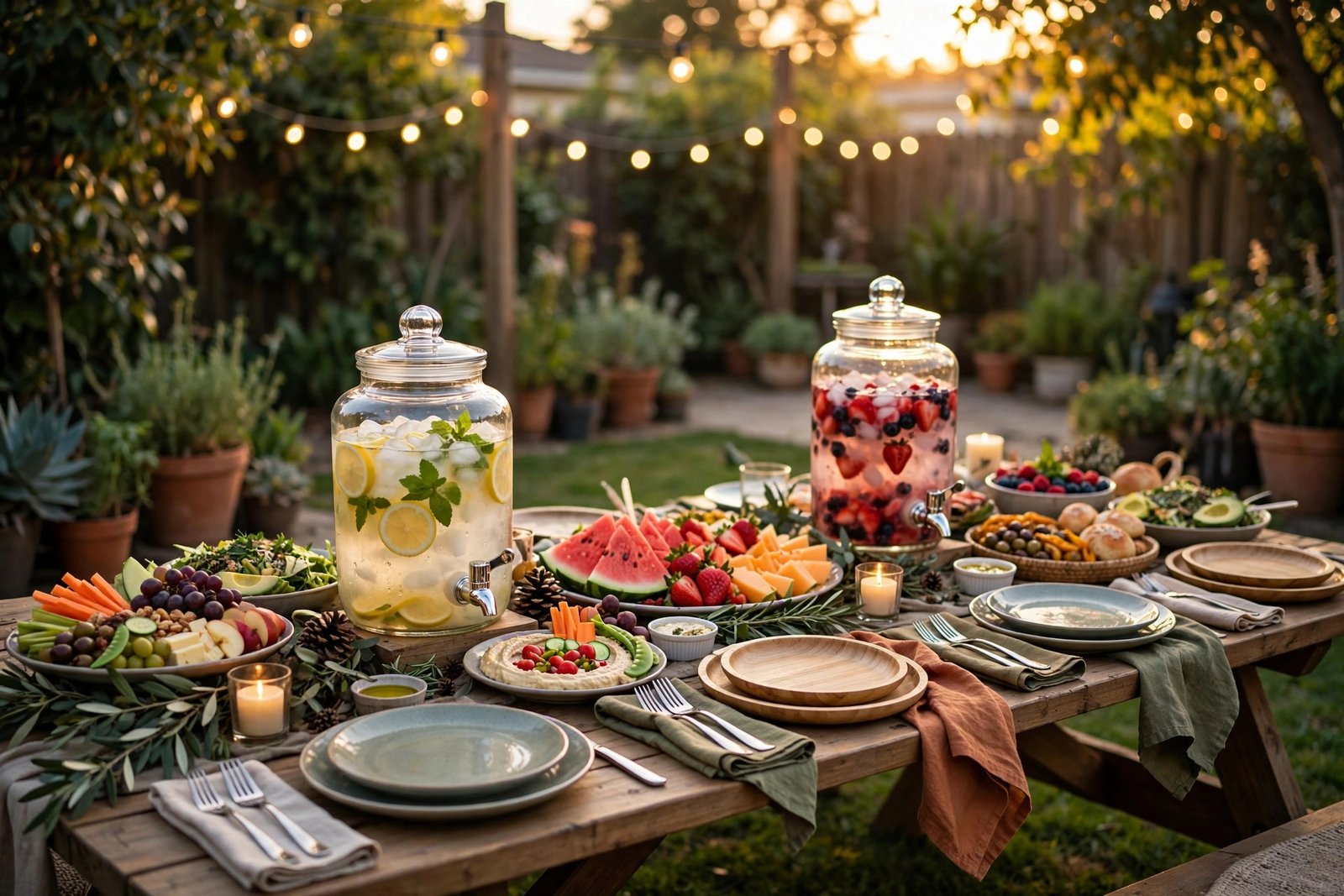
Set up a drink station instead of individual bottles: a big dispenser of infused water, a batch cocktail in a pitcher, and a clearly labeled tub for cans. It cuts packaging waste enormously and looks more generous.
Food Strategy: Serve Smart, Waste Nothing
How you serve matters as much as what you serve. Smaller plates, more rounds: put out half the food at a time and replenish — full-looking small platters get eaten; picked-over giant trays get thrown away. Label everything with ingredients so guests with restrictions can serve themselves confidently instead of skipping dishes. End-of-night packaging station: set out reusable containers (or ask guests to bring their own) and actively send food home — “please take some” said three times moves more leftovers than any container ever will.
Plan the day-after menu before the party: leftover roast becomes tacos, veggie trays become soup, cake becomes trifle. This is the same mindset behind reducing food waste with smart meal planning — waste prevention is a plan, not a personality trait. The EPA’s food recovery hierarchy puts source reduction first for a reason: the cheapest, greenest food waste is the kind that never happens.
Drinks Without the Bottle Mountain
Beverages are the stealth waste stream — a party of 30 can easily generate 100+ bottles and cans. The drink station solves it: one large dispenser of infused water (cucumber-mint, berry-basil — cheap, gorgeous), a batched signature cocktail or mocktail in pitchers, plus coffee and tea. Buy wine in boxes (the quality has genuinely improved, and the packaging footprint is a fraction of glass bottles) or kegs for beer if the crowd is big enough — a sixtel keg replaces roughly 55 cans with zero individual packaging.
For cans and bottles you do serve, make recycling unavoidable: a clearly labeled bin right next to the drink station, plus a second bin for trash a few feet away so people don’t have to choose. Skip the plastic straws entirely — paper straws for those who want them, or better, a jar of reusable metal ones as a conversation piece. Ice? Buy it in paper bags rather than plastic when you can find it, and keep coolers in the shade so you buy less.
Favors, Gifts, and the Cleanup Plan
Skip traditional favors — the little plastic trinkets nobody keeps. If you want a take-home, make it edible (cookies in a paper bag), plantable (seed packets, small succulents), or experiential (a Polaroid from a photo corner). For kids’ parties, one quality item beats a bag of ten disposable toys.
Prep the waste stations before guests arrive: three clearly labeled bins — recycling, compost (if your area offers it), and trash — placed where people actually stand, not hidden in the kitchen. A five-second announcement (“recycling’s by the door, compost’s next to it”) diverts more waste than any signage. After the party, sort once, bag once. Check Earth911’s recycling locator for anything unusual — many areas take items curbside programs reject.
The Bottom Line
A low-waste party comes down to five decisions: accurate guest-count food math, digital invites, real or borrowed serveware, a drink station instead of bottles, and labeled waste bins. None of them cost more — most cost less — and every one of them makes the party itself better. Your guests will remember the food and the atmosphere; nobody has ever fondly remembered the plastic cups.
Frequently Asked Questions
How much food should I buy per person for a party?
For appetizers over 2-3 hours, 4-6 bites per person per hour. For a full meal, 1 to 1.25 pounds of total food per guest. When in doubt, round down — running slightly short beats throwing away trays, and you can always order a pizza as backup.
Are compostable plates actually better than plastic?
Only if they’re commercially composted. In a landfill, compostable plastics and bagasse produce methane like anything else. They’re a genuine win in cities with curbside composting that accepts them — check your local program’s accepted list first.
What’s the easiest first step to a low-waste party?
Ditch single-use serveware. Switching to real dishes (yours, borrowed, or thrifted) eliminates the single largest waste stream at most parties and instantly makes the event feel more special.
How do I handle leftovers so nothing gets wasted?
Set up a take-home station with containers near the end of the night and verbally invite guests to pack food three times — most people need explicit permission. Plan your own day-after meals from likely leftovers before the party starts.
Are balloons really that bad?
Yes — balloon fragments are among the deadliest marine debris for seabirds and sea turtles, and many states and cities now restrict or ban intentional releases. Potted plants, paper decorations, and candles give you better decor with zero wildlife risk.