
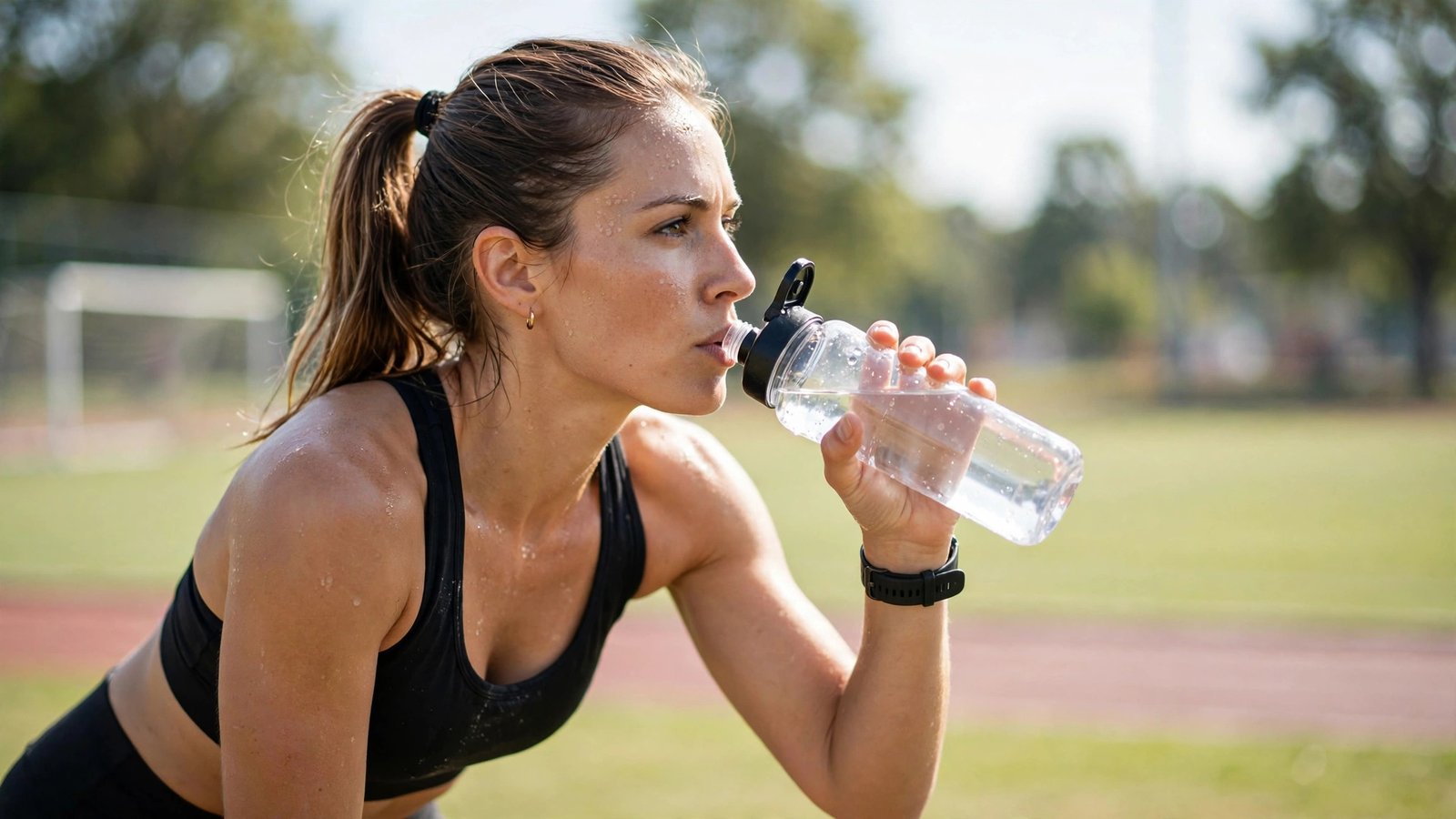
Dehydration is the most underrated performance killer in fitness. It does not announce itself dramatically — it shows up as the workout that inexplicably feels 20% harder, the headache blooming at mile three, the afternoon slump you blame on sleep. By the time you feel thirsty, you are already behind. The fix is not complicated, but it is specific: hydration has a timing, an amount, and a few rules that change with heat, duration, and intensity.
These are the quick rules for staying hydrated during workouts: how much to drink and when, water versus sports drinks, the warning signs you are falling behind, the little-known danger of overdrinking, and how heat changes everything.
Rule 1: Pre-Hydrate (2–3 Hours Before)
Do not start the workout already dry. Drink 16–20 ounces (about 500 ml) of water 2–3 hours before exercise, plus another 8 ounces 20–30 minutes before you start. Your urine is the honest gauge: pale straw color means ready; dark yellow means drink more and consider delaying an intense session. Coffee drinkers, take note — moderate caffeine is a mild diuretic at most, not the dehydration bomb of myth, but it does not replace water either. The CDC’s hydration guidance emphasizes that plain water is the default healthy choice for most activity.
Rule 2: Drink on Schedule During (Don’t Wait for Thirst)
Thirst lags behind actual fluid loss by the time it registers — during exercise, drink 7–10 ounces every 10–20 minutes rather than waiting for the signal. For most gym sessions under an hour, sipping water between sets is plenty. Set a simple cue: drink every time you finish a set, every lap, every quarter. The schedule matters more than the exact ounces — consistent sipping beats heroic chugging, which just sloshes uncomfortably and gets peed out.
Rule 3: After — Replace 150% of What You Lost
Weigh yourself before and after long or sweaty sessions (seriously — it is the most accurate measure available). For every pound lost, drink about 24 ounces of fluid in the hours after. The 150% figure accounts for ongoing urine losses during rehydration. Include sodium in the recovery — food with salt, or an electrolyte drink — because water alone without electrolytes after heavy sweating dilutes blood sodium without replacing what sweat took. Chocolate milk, incidentally, has legitimate research behind it as a recovery drink: fluids, carbs, protein, and sodium in one.
Rule 4: Water vs. Sports Drinks — The 60-Minute Line
For workouts under 60 minutes, plain water wins — sports drinks just add sugar and calories you did not need. Past 60–90 minutes of continuous effort, or in serious heat, electrolyte drinks earn their place: you are losing meaningful sodium and burning through glycogen, and the carbs-plus-electrolytes combo measurably sustains performance. For all-day events (tournaments, long hikes, marathon training), alternate water and electrolyte drinks rather than choosing one exclusively.
Skip the energy drinks as hydration — the caffeine-plus-sugar combo is the opposite of what working muscles need, and the carbonation slows absorption. And be honest about “sports drinks” that are really soda in athletic packaging: check the sodium content — if it is negligible, it is not doing the job. Your broader nutrition matters too; gut-friendly everyday foods and sensible protein choices (see whether protein shakes are necessary) complete the fueling picture that hydration starts.
Rule 5: Learn the Warning Signs
Early dehydration: unusual fatigue, headache, darker urine, dizziness, declining performance. These mean drink now and dial back intensity. Serious signs — confusion, rapid heartbeat, hot dry skin, fainting — mean stop exercising immediately, get to shade, and seek medical help; heat stroke is a medical emergency. Know the dehydration warning signs most people miss before your next hot-weather workout, because the subtle ones precede the dangerous ones by a wide margin.
Rule 6: Respect Heat and Humidity
Heat multiplies fluid needs dramatically — sweat rates can triple on hot humid days versus cool ones. Adjust: exercise early morning or evening, cut intensity 20–30% on the first hot days (acclimatization takes 1–2 weeks), wear light breathable clothing, and increase the drinking schedule. Humidity is the silent multiplier — sweat does not evaporate, so you keep sweating without the cooling benefit, losing fluid fast while feeling less hot. The National Institute on Aging notes older adults are especially vulnerable to heat-related dehydration, with thirst perception declining with age — a critical warning for masters athletes.
Rule 7: Don’t Overdrink (Hyponatremia Is Real)
The lesser-known danger: drinking too much plain water during long endurance events dilutes blood sodium to dangerous levels — exercise-associated hyponatremia, which has hospitalized marathoners and hikers. Symptoms (confusion, bloating, nausea) cruelly mimic dehydration, which is why “just drink more” is bad advice at the extremes. The rule: drink to thirst plus a little during long events, include electrolytes/sodium, and never force fluids beyond comfort. More is not better; enough is better. When in doubt during an ultra-distance event, salty foods at aid stations plus moderate drinking beats aggressive water intake every time.
Special Situations: Kids, Older Adults, and Altitude
Three groups need adjusted rules. Kids and teens overheat faster than adults (less efficient sweating) and often ignore thirst entirely — coaches and parents should schedule mandatory water breaks every 15–20 minutes rather than leaving it to the kids. Older adults have blunted thirst perception and may take medications (like diuretics) that increase fluid loss — pre-hydration matters even more, and the buddy system helps ensure drinking actually happens. Altitude increases fluid loss through faster breathing and drier air, often without obvious sweating — travelers training or hiking above 8,000 feet should deliberately increase intake by 25–50% over their sea-level baseline and watch urine color closely, since the usual thirst cues mislead at elevation.
Conclusion
Staying hydrated during workouts is seven quick rules: pre-hydrate hours ahead, sip on schedule during, replace 150% after, use water under an hour and electrolytes beyond it, learn the warning signs, respect heat, and do not overdrink. None of it requires products or precision — just timing and attention. The workout that feels inexplicably hard is very often just a hydration problem wearing a fitness costume. Drink smart, and your body will handle the rest.
Frequently Asked Questions
How much water should I drink during a workout?
About 7–10 ounces every 10–20 minutes during exercise, sipped consistently rather than chugged. Pre-hydrate with 16–20 ounces 2–3 hours before, and replace about 24 ounces per pound of body weight lost afterward.
Are sports drinks better than water for exercise?
Only for continuous exercise beyond 60–90 minutes or in serious heat, where electrolyte and carb replacement measurably helps. For typical gym sessions under an hour, plain water is superior — sports drinks just add unneeded sugar.
Can you drink too much water during exercise?
Yes — overdrinking plain water during long endurance events can cause hyponatremia (dangerously low blood sodium). Drink to thirst plus a bit, include sodium/electrolytes on long efforts, and do not force fluids.
Does coffee dehydrate you before a workout?
Not meaningfully — moderate caffeine has only a mild diuretic effect in habitual drinkers and does not cause net dehydration. But coffee does not replace water, so drink your water alongside it, not instead of it.