Janet Jackson: Net Worth, Age, Family and Career Explained
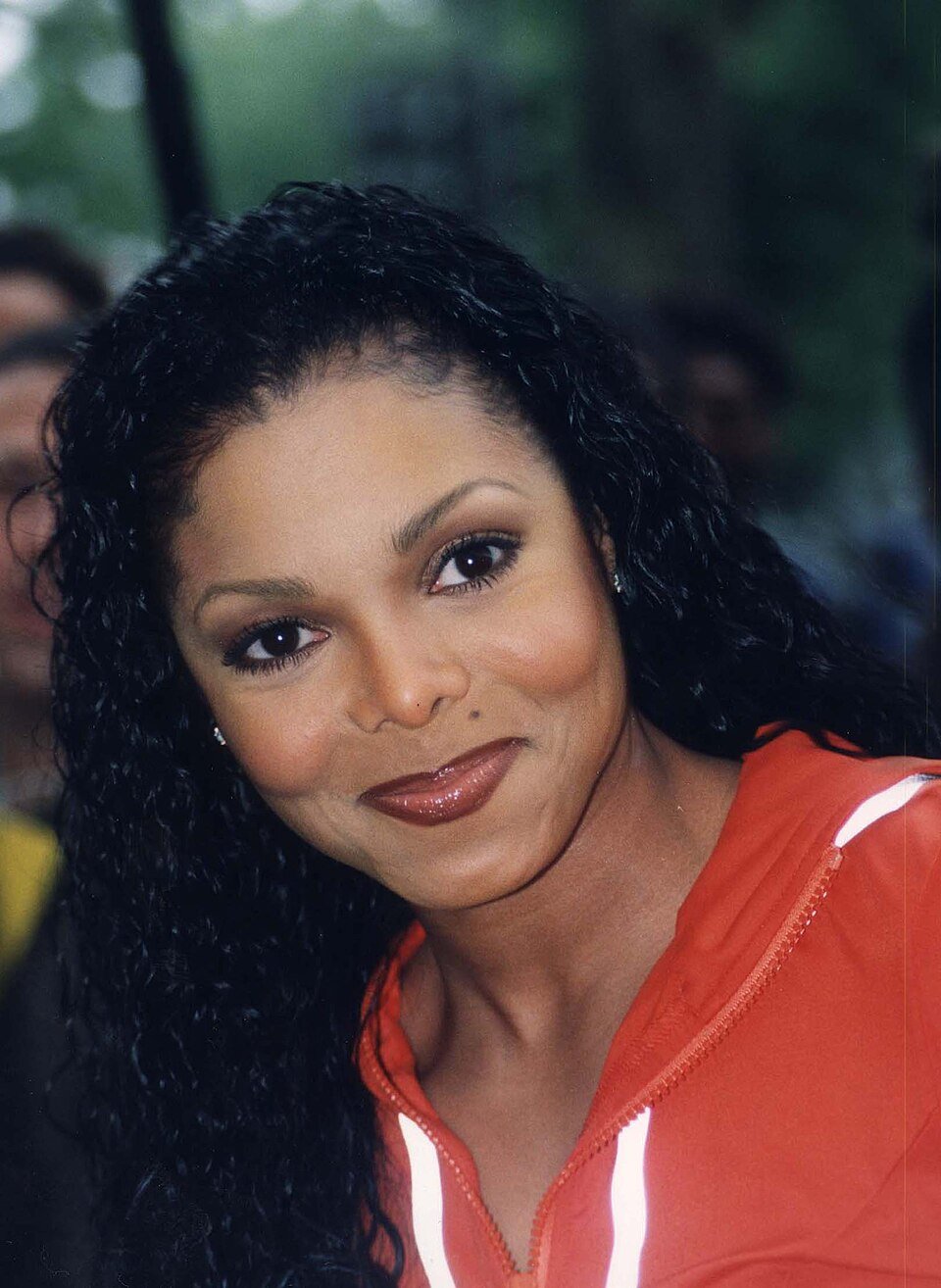
Janet Jackson is 60 years old, born Janet Damita Jo Jackson on 16 May 1966 in Gary, Indiana, and she is the youngest of the ten Jackson children, who built a solo career that eventually stood entirely apart from her famous family. Celebrity Net Worth estimates her fortune at $180 million, and this profile covers her albums and songs from Control to Unbreakable, her parents and her eight surviving siblings, her three marriages, her son Eissa, and the verified position on her life today.
Three Marriages, a Son and a Family Name Carried Lightly
Jackson’s parents shaped her life in opposite ways. Her father, Joe, who died in 2018, built the family’s career with a discipline his children have described as both the making of them and, at times, emotionally distant; Janet recalled that as a child he told her to address him by his first name. Her mother, Katherine, is the family’s centre, and Jackson has remained publicly devoted to her. Of her siblings, the most famous, Michael, died in 2009; Jackson has spoken sparingly about him in public and has let her recorded tributes carry the weight. Her brothers and sisters have pursued their own careers and lives, and the family, once the most scrutinised in entertainment, now guards its privacy collectively.
Jackson has been married three times. Her first marriage, to the singer James DeBarge in 1984, when she was eighteen, was annulled in 1985. Her second, to the dancer and director René Elizondo Jr. in 1991, was kept secret for years and ended in divorce, finalised in 2003. Her third marriage was to the businessman Wissam Al Mana, whom she married privately in 2012 and whose existence as her husband she confirmed in February 2013. On 3 January 2017, at the age of fifty, she gave birth to her only child, a son, Eissa Al Mana. Three months later, in April 2017, Jackson and Al Mana separated, and the marriage subsequently ended in divorce. The financial terms were never publicly confirmed, and reports of a settlement figure that circulated at the time remain unconfirmed; this profile does not print them as fact.
The verified position today is that Jackson has no confirmed current partner. Earlier in her life she had a long relationship with the producer Jermaine Dupri, which ran from 2002 to 2009. Since her separation from Al Mana in 2017 she has not publicly confirmed any relationship, and recent profiles describe her life as centred on her son, who turned nine in January 2026, and on her touring work. She is based largely in London, keeps Eissa almost entirely out of public view, and appears in public chiefly when she is working. That privacy is consistent with the whole pattern of her adult life: an artist who put her independence into her most famous album title has arranged her private life to match it.
A Gary, Indiana Childhood as the Youngest of Ten
Janet Damita Jo Jackson was born on 16 May 1966 in Gary, Indiana, the tenth and youngest child of Joseph Walter Jackson and Katherine Esther Jackson. The family lived in a two-bedroom home on Jackson Street in a working-class neighbourhood. Her father, known as Joe, had been a boxer and worked as a crane operator at a steel plant while also playing guitar in a local rhythm and blues band to supplement the family income. Her mother, Katherine, had musical training of her own and worked part-time in a department store. Janet grew up with two elder sisters, Rebbie and La Toya, and six elder brothers, Jackie, Tito, Jermaine, Marlon, Michael and Randy. Another brother, Brandon, Marlon’s twin, died shortly after birth.
Her brothers began performing together in the Chicago and Gary area while Janet was still a toddler, signed a record deal in March 1969 and quickly had their first number-one hit, after which the family moved to the Encino neighbourhood of Los Angeles. Janet’s own ambitions at first pointed elsewhere: she has said she wanted to be a horse-racing jockey or an entertainment lawyer. The family’s business, however, drew her in. At the age of fifteen her father, who managed his children’s careers, arranged a recording contract for her, and her debut album, Janet Jackson, was released in 1982. It reached number 63 on the main albums chart and number six on the R&B albums chart, a respectable start that nonetheless left her, at sixteen, still known chiefly as the youngest Jackson.
Her second album, Dream Street, followed in 1984 and performed modestly. What happened next defined her biography. Jackson ended her business arrangement with her family, later saying that getting out from under her father’s management was one of the most difficult things she had ever done, and she began work with two producers from Minneapolis whose partnership with her would reshape popular music. The independence she asserted then, professionally and personally, became the subject and the title of the album that made her a star in her own right.
Albums, Tours and a $180 Million Fortune
Celebrity Net Worth estimates Janet Jackson’s net worth at $180 million. Some other trackers put the figure closer to $190 million, and the disagreement is printed here rather than hidden. One persistent error needs correcting plainly: Jackson is not a billionaire. The billion-dollar figure attached to her name traces to a magazine calculation of the gross revenues generated across her whole career by her albums, tours and other projects, a total of around $1.2 billion. Gross career revenue is not personal wealth, and no named tracker places her fortune anywhere near that level.
The composition of the $180 million estimate is broadly clear. She has sold more than one hundred million records. She signed two of the largest recording contracts of the 1990s. Her tours have grossed at the highest level for forty years, culminating in the Together Again Tour, the most lucrative of her career, in 2023 and 2024. Royalties from a catalogue that includes seven top-five singles from a single album continue to accumulate, and her songs remain staples of radio, streaming playlists and other artists’ samples, each use generating income long after the original release.
Her lifestyle, as far as it is publicly documented, is private and disciplined. She has spoken over the years about the physical demands of her stage show and the training required to perform choreography of that intensity into her late fifties. She auctioned a large collection of her personal memorabilia and stage items for charity in 2021, an event that offered a rare public glimpse of the archive behind the career. Beyond such moments, she gives the public very little, and the little she gives is on her schedule.
Her Instagram account, @janetjackson, is her main direct channel to her audience. It is used for tour announcements, rehearsal and performance photographs, birthday tributes to family members and fellow artists, and occasional statements. The account’s tone matches the rest of her public life: professional, warm at a distance, and entirely controlled. For an artist whose career began before the video era had fully formed, she remains one of its most complete products and, on the evidence of her recent tours, one of its most durable.
The Youngest Jackson, Who Built a Solo Career Apart, in Figures
| At a Glance | Details |
|---|---|
| Born | 16 May 1966, Gary, Indiana, United States |
| Age | 60 years old |
| Height | 5 feet 4 inches (163 cm) |
| Weight | No reliable published figure exists |
| Partner | No confirmed current partner; former husband Wissam Al Mana (married 2012, separated 2017) |
| Children | One son: Eissa Al Mana (born 3 January 2017) |
| Parents | Joseph Walter Jackson and Katherine Esther Jackson (née Scruse) |
| Siblings | Eight surviving: Rebbie, Jackie, Tito, Jermaine, La Toya, Marlon, Michael and Randy |
| Net Worth | $180 million (Celebrity Net Worth); some trackers estimate $190 million |
| @janetjackson |
Control, Rhythm Nation and the Together Again Tour
1986: Control and independence
Control, released in February 1986, was made with producers Jimmy Jam and Terry Lewis in six weeks and shot to number one on the albums chart, eventually selling more than ten million copies worldwide. Its songs were declarations of autonomy: “What Have You Done for Me Lately”, “Nasty”, “Control” and “The Pleasure Principle” all became major hits, and “When I Think of You” became her first number-one single. The album produced five top-five singles, won multiple industry awards and was nominated for Album of the Year at the Grammy Awards. Its choreographed videos made Jackson a central figure of the video era and turned an unknown dancer named Paula Abdul, who choreographed them, into a star in her own right. At nineteen, Jackson had done what sceptics doubted was possible: she was no longer introduced by her surname.
1989: Rhythm Nation 1814
Her record label wanted a second Control; Jackson instead made an album about the state of the world. Janet Jackson’s Rhythm Nation 1814, released in September 1989, addressed injustice, illiteracy, crime and drugs inside dance music of unusual force, and it also reached number one, selling more than twelve million copies. It remains the only album in history to produce seven top-five singles: “Miss You Much”, “Rhythm Nation”, “Escapade”, “Alright”, “Come Back to Me”, “Black Cat” and “Love Will Never Do (Without You)”, four of which reached number one across three separate calendar years. The title track’s video, with its military precision and warehouse setting, became one of the most imitated visuals in pop. Her Rhythm Nation World Tour of 1990 was the most successful debut concert tour in history at that time.
1993–2001: janet., The Velvet Rope and All for You
In the 1990s Jackson signed two of the largest recording contracts of the era and released the albums that confirmed her as one of the highest-paid musicians in the world. Janet, released in 1993, produced the number-one singles “That’s the Way Love Goes” and “Again” and sold in the millions worldwide. The Velvet Rope (1997) was a darker, more introspective record whose single “Together Again” became one of the biggest hits of her career. All for You (2001) delivered her tenth number-one single with its title track, alongside “Someone to Call My Lover”. By the turn of the century she had placed eighteen consecutive singles inside the top ten, a record for a female artist, and her catalogue of hits could fill a concert several times over.
2004–2015: Damita Jo, Discipline and Unbreakable
Jackson’s eighth album, Damita Jo, arrived in 2004 in the shadow of a controversy surrounding her halftime performance that year, after which she faced an industry blacklisting that reduced her radio airplay and promotion and depressed the album’s sales. The episode is now widely regarded as one of the clearest examples of a performer being punished out of proportion to an incident, and it shaped the rest of her decade. She continued to record and tour: 20 Y.O. followed in 2006, Discipline in 2008 produced the hit single “Feedback”, and after a seven-year gap she returned in 2015 with Unbreakable, her eleventh studio album, which debuted at number one and made her one of a small group of artists to top the albums chart in four separate decades.
2019–2026: Hall of Fame and the Together Again Tour
Jackson was inducted into the Rock and Roll Hall of Fame in 2019, an honour that formalised her standing as an architect of modern pop and R&B rather than merely a star within it. Her recorded catalogue passed one hundred million sales worldwide. In 2023 she launched the Together Again Tour, a career-spanning production that ran into 2024 and became the highest-grossing tour of her career, followed by a Las Vegas residency. The tour’s set list functioned as an argument made in music: four decades of hits, from “Control” to “Rhythm Nation” to “All for You”, performed by an artist approaching sixty with her choreography and voice intact. Few performers of her generation were still touring at that scale, and none with a catalogue that so completely documented its own era.
The durability of her image is part of that story. Jackson’s look changed with every album cycle and was copied each time, from the key worn on a hoop earring in the Control years to the cropped styles of the Rhythm Nation era, and the care routines behind a stage appearance at her level are a small industry in themselves; readers who follow her tours often end up asking the same everyday questions her own stylists answer in interviews, such as how often you should wash your hair to keep it healthy without stripping it. Jackson herself has generally let the work speak, giving fewer interviews with each decade and keeping her public statements short.
A Solo Career That Stood Entirely Apart
Janet Jackson’s achievement is easy to state and hard to overstate. The youngest child of the most famous family in music, she separated herself from it, made the defining female pop albums of the late 1980s, survived an industry punishment that would have ended most careers, and was still headlining the biggest tour of her life at fifty-seven. At 60, with an estimated $180 million fortune and a nine-year-old son she protects as fiercely as she once protected her independence, she remains what Control announced in 1986: entirely her own artist.