Sinéad O’Connor: Net Worth, Age, Family and Career Explained
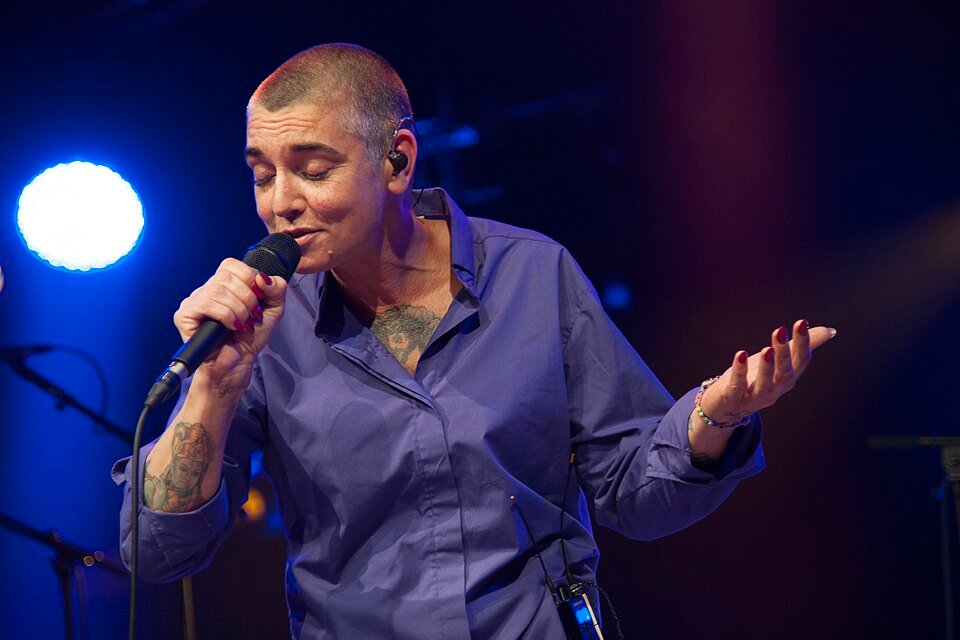
Sinéad O’Connor, the Irish singer whose voice on “Nothing Compares 2 U” defined a musical moment, died in London on 26 July 2023 at the age of 56, a London coroner later confirming that she died of natural causes. Celebrity Net Worth put her fortune at the time of her death at $1.5 million, and this profile covers her four children, her parents, her faith journey from ordination in 1999 to her conversion to Islam in 2018, and the ten albums behind one of the most uncompromising careers in popular music.
Love, loss and family for Sinead
Her parents shaped her in opposite directions, and she wrote about both. Her father, Seán O’Connor, the engineer turned barrister who campaigned for divorce law reform in Ireland, represented order, argument and the law; her mother, Marie, who died when Sinéad was eighteen, was the subject of her most painful writing, in the memoir and in interviews, about a household she described as abusive. Others in the family defended their father publicly while agreeing about their mother’s violence — a disagreement conducted, characteristically, in print, with no reconciliation performed for anyone.
She had four children. Her first son, Jake Reynolds, was born in 1987; her daughter Roisin Waters was born on 10 March 1996, and a long custody arrangement followed under which Roisin lived in Dublin with her father, the journalist John Waters. Her son Shane Lunny was born in 2004. Shane died in January 2022, aged 17 — a bereavement she spoke of as the defining loss of her life. Her youngest son, Yeshua Francis Neil Bonadio, was born in 2006. She became a grandmother in 2015. Motherhood, in her writing, was never a soft subject: it was the centre of her life, and the standard against which she judged almost everything else.
On partners, the verified record is this. She married four times: first John Reynolds, the producer who worked on her early albums, in 1989 — they divorced in 1991. She married the journalist Nick Sommerlad in 2001; they divorced in 2003. She married her long-time collaborator Steve Cooney on 22 July 2010; they separated in March 2011 and divorced that year. On 9 December 2011 she married Barry Herridge, an Irish therapist, in Las Vegas; the marriage effectively ended after they had lived together for seven days, they briefly reunited in January 2012, and in February 2014 she stated that they had not divorced. No partnership was publicly confirmed in her final years, and she was not reported to be in a relationship at the time of her death. Anything beyond that record would be invention, and this profile does not add to it.
Religion ran through her life in two documented chapters. In 1999 she was ordained a priest by Bishop Michael Cox of the Irish Orthodox Catholic and Apostolic Church, an Independent Catholic church not in communion with Rome, and took the name Mother Bernadette Mary; the ordination, of a woman and by a breakaway church, was rejected by the Roman Catholic Church, whose doctrine she continued to argue with for years. In October 2018 she announced that she had converted to Islam, calling it the natural conclusion of a theological journey, and adopted the name Shuhada’ Sadaqat, while continuing to perform and record under the name Sinéad O’Connor. Both steps were entirely characteristic: formal, public, and taken on her own authority.
The short story of Sinead O’Connor, told in facts
| At a Glance | Details |
|---|---|
| Born | 8 December 1966, Dublin, Ireland |
| Died | 26 July 2023, London (aged 56) |
| Age | 56 years old at the time of her death |
| Height | 5 feet 4 inches (163 cm) |
| Weight | No reliable published figure exists |
| Nationality | Irish |
| Partner | No publicly confirmed partner at the time of her death; she married four times, most recently in 2011 |
| Children | Four: Jake Reynolds (born 1987), Roisin Waters (born 1996), Shane Lunny (2004–2022) and Yeshua Bonadio (born 2006) |
| Parents | John Oliver “Seán” O’Connor and Johanna Marie O’Grady |
| Religion | Ordained a priest in an Independent Catholic church in 1999; converted to Islam in 2018, taking the name Shuhada’ Sadaqat |
| Net Worth | $1.5 million at the time of her death (Celebrity Net Worth) |
How Dublin shaped Sinead O’Connor
Sinéad Marie Bernadette O’Connor was born on 8 December 1966 at the Cascia House Nursing Home on Baggot Street in Dublin, Ireland. Her birthday placed her in the middle of a large Dublin family: she was one of five, born to John Oliver “Seán” O’Connor, a structural engineer who later trained as a barrister and chaired the Divorce Action Group, and Johanna Marie O’Grady, who had married him in 1960. She was named Sinéad after the writer Sinéad de Valera and Bernadette in honour of Saint Bernadette of Lourdes, a naming that tied her, from her first day, to both Irish letters and Irish faith.
Her early years were difficult, and she described them without softening anything in her 2021 memoir, Rememberings. In 1979, at thirteen, she went to live with her father. At fifteen, after shoplifting and truancy, she was placed for eighteen months in the Grianán Training Centre in Drumcondra, run by the Order of Our Lady of Charity. It was there, amid a regime she resisted, that her writing and singing developed: a volunteer at the centre heard her sing and connected her with the band In Tua Nua, and although she was judged too young to join, the door had opened. On 10 February 1985, when she was eighteen, her mother died in a car accident at the age of 45, a loss that marked the rest of her life and much of her writing.
Through an advertisement in the Dublin music paper Hot Press in 1984 she had already formed a band, Ton Ton Macoute, whose performances drew the attention of the industry. She signed with Ensign Records, took on an experienced manager, and completed her first major assignment singing “Heroine”, a song she co-wrote with U2’s guitarist the Edge. By twenty she was in London recording an album of her own, with a shaved head, a voice critics struggled to compare to anyone else’s, and a refusal — already fully formed — to be managed into politeness.
Sinead earns $1.5 million — here is how
Celebrity Net Worth estimates that Sinéad O’Connor had a net worth of $1.5 million at the time of her death in July 2023. The figure is an at-death estimate only, and it is supported by the one piece of hard financial record in her story: Irish probate filings reported in January 2025 showed her estate valued at £1.4 million after debts, legal fees and funeral costs were settled — a sum consistent with the Celebrity Net Worth estimate. No Forbes or Sunday Times Rich List figure exists for her, and no larger number is printed here, because none is reliably sourced.
The contrast with her commercial peak is the story. At the height of her fame she sold more than seven million copies of a single album, yet by 2017 she spoke publicly of having lost the majority of the fortune she had earned, and was living for a period in a modest motel room in New Jersey at $70 a night. She also sold her long-time Dublin home in 2017 for around $1 million, well below what she had paid for it in 2009. Money, she said repeatedly, was never the measure she used, and her estate — modest by the standards of her fame — is best read as the financial trace of a career conducted on artistic terms first and commercial terms a distant second.
She died at her home in Herne Hill, south London, on 26 July 2023, and was found unresponsive there; the Metropolitan Police said at the time that the death was not being treated as suspicious. In January 2024, Southwark Coroner’s Court confirmed that she died of natural causes and closed its involvement. Her death certificate, registered in July 2024, gave the specific causes as exacerbation of chronic obstructive pulmonary disease and bronchial asthma together with a low-grade lower respiratory tract infection. Those are the official terms, and they are the ones this profile uses.
The work that filled Sinead’s calendar
1987: The Lion and the Cobra announces her
Her debut album, The Lion and the Cobra, was released in 1987 and was received as a sensation, charting internationally and earning her a Grammy nomination for Best Female Rock Vocal Performance. “Mandinka” became a college radio hit in the United States, “Troy” was released as a single across Europe, and the album’s mixture of rock, electronic textures and starkly personal writing set out the territory she would occupy for thirty-five years. She co-produced the record herself, at twenty, an early sign that creative control would be the non-negotiable term of her career.
1990: Nothing Compares 2 U and global fame
The second album, I Do Not Want What I Haven’t Got, released in 1990, sold more than seven million copies worldwide and made her one of the most famous singers on earth. Its lead single, “Nothing Compares 2 U”, written by Prince, became her signature song and was named the top world single of the year at the Billboard Music Awards; the video, her face in close-up against a Paris backdrop, remains one of the most recognised images in pop. The album also carried “The Emperor’s New Clothes” and “Three Babies”, and it won her the Grammy for Best Alternative Music Performance — an award she refused, in an open letter criticising the industry for promoting materialistic values over artistic merit. The original pressings have since become fixtures of second-hand record shops, and anyone learning how to start collecting vinyl records on a budget will find her early albums among the era’s most sought-after and still affordable finds.
1992: The protest that changed her career
Her third album, Am I Not Your Girl?, a collection of jazz standards and torch songs, appeared in 1992 to mixed reviews. On 3 October 1992, appearing on American television, she sang an a cappella version of Bob Marley’s “War” with its words redirected at child abuse, then tore up a photograph of Pope John Paul II on live television and said, “Fight the real enemy.” The backlash was immediate and severe: her records were publicly destroyed, radio play collapsed in the United States, and she was booed at a tribute concert days later. She never apologised for the protest itself, which she framed, then and for the rest of her life, as a stand against abuse within the Church. The commercial cost was enormous and permanent; the artistic independence it bought her was, by her own account, the point.
1994: Universal Mother and the middle years
Universal Mother (1994), certified gold in the United Kingdom, turned inward, with songs including “Fire on Babylon” and writing that addressed her family history directly. Faith and Courage followed in 2000, also gold-certified in Australia, carrying the single “No Man’s Woman”. Sean-Nós Nua (2002) reinterpreted traditional Irish songs, and Throw Down Your Arms (2005), gold in Ireland, was a collection of reggae classics recorded in Jamaica — two albums that showed the range of a singer equally rooted in Irish tradition and in the Black music she had loved since her teens. Theology (2007) set scriptural texts alongside original songs in acoustic and full-band versions.
2012: The last albums and the memoir
How About I Be Me (and You Be You)? (2012) was received as a return to form, and her tenth and final studio album, I’m Not Bossy, I’m the Boss, followed in 2014, led by the single “Take Me to Church”. Her memoir, Rememberings, was published in 2021 and became a bestseller, praised for the same qualities as the records: precision, humour and a total absence of self-pity. She continued to perform and record into her final years. After her death in 2023 she was nominated, in 2024, for induction into the Rock and Roll Hall of Fame — an institution she might well have argued with, which is perhaps the most fitting tribute of all.
What Sinead leaves behind — and what comes next
Sinéad O’Connor was an Irish singer of rare technical gift and rarer courage, who traded a global pop career, knowingly, for the right to say what she believed. She died at 56 with an estate of $1.5 million, four children, ten albums and one song that will outlive everyone now arguing about her legacy. The records remain: start with I Do Not Want What I Haven’t Got, and listen to the voice that Ireland argued about for thirty years and now, belatedly, mostly agrees about.