
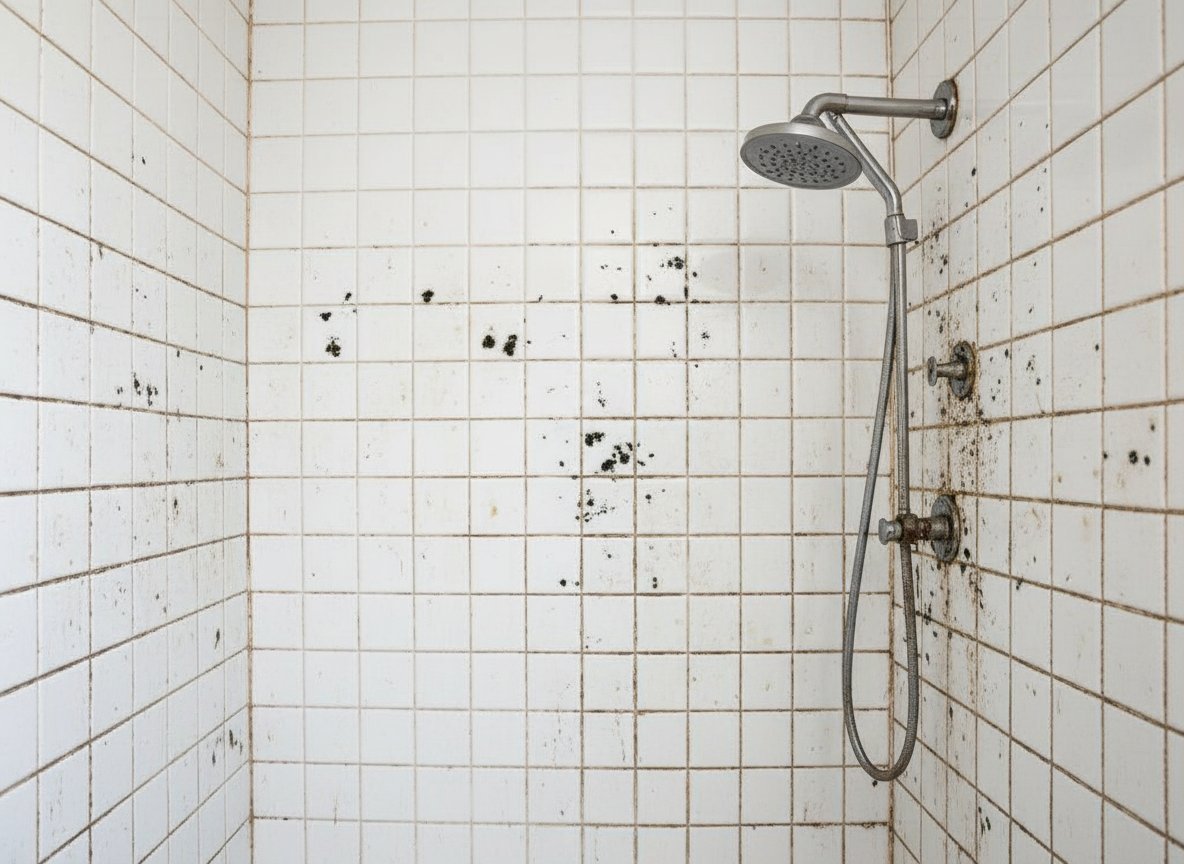
Bathroom mold isn’t a cleaning failure — it’s a moisture problem wearing a cleaning disguise. You can scrub it weekly and it’ll return weekly until you fix the underlying moisture. I learned this the expensive way in a rental with a decorative (non-functional) exhaust fan.
Here’s what’s actually causing your bathroom mold and the prevention hierarchy that stops it permanently — from free habit changes to the ventilation fix that solves 90 percent of cases.
What Causes Mold in Bathrooms and How Do I Prevent It? It's the Moisture
Mold needs three things: moisture, food (soap scum, dust, drywall paper — all abundant in bathrooms), and time. You can’t remove the food; you control the moisture. Every shower dumps roughly half a pint of water into the air as vapor. Without ventilation, that moisture condenses on every cool surface — walls, ceiling, grout — and mold feasts within 24-48 hours.
The number one cause is inadequate or unused ventilation. Either the fan is too weak, vented into the attic (disastrous — you’re just moving the mold), or never turned on. Building code requires bathroom fans to exhaust outside and move enough air (roughly 1 CFM per square foot, minimum 50 CFM). Many older bathrooms have 30-CFM whisper fans that might as well be decorative.
Chronic small leaks are cause number two: dripping showerheads, seeping toilet bases, slow supply-line leaks inside walls. These create constant dampness in hidden spaces where mold grows unseen for months. If mold keeps returning in one spot despite good ventilation, suspect water getting in from somewhere you can’t see.
The Ventilation Fix (Solves Most Cases)
Run the fan during every shower and for 20-30 minutes after. The ‘after’ part is what everyone skips and what matters most — surfaces stay wet long after you step out. Install a timer switch or humidity-sensing switch ($25-$40) that runs the fan automatically; removing human forgetfulness from the equation is the highest-ROI mold prevention there is.
If your fan is weak, loud, or vents into the attic, replace it. A quality 80-110 CFM fan costs $100-$200 and installs in a few hours (attic access helps enormously). Verify it actually vents outside through a dedicated duct — venting into the attic or soffit just relocates the moisture problem and rots your roof deck. This single project resolves the majority of chronic bathroom mold.
Can’t renovate? Interim measures help: shower with the bathroom door open (lets moisture disperse through the house instead of concentrating), squeegee shower walls after use (removes 75 percent of wall moisture in 30 seconds), and run a small dehumidifier. These don’t replace proper ventilation but meaningfully reduce mold pressure.
Cleaning What's There and Keeping It Gone
For existing mold on hard surfaces: scrub with a mold-killing cleaner or a 1:10 bleach-water solution, then dry completely. On grout, a baking soda paste with an old toothbrush works; for stubborn grout mold, a steam cleaner is remarkably effective. The key step everyone skips: after killing it, fix the moisture — or you’re just scheduling the next scrubbing session.
On caulk: if mold is behind or through the caulk (black staining that won’t scrub off), the caulk must be removed and replaced — mold roots into it. Cut it out completely, clean the joint, let it dry 24 hours, and re-caulk with a mold-resistant silicone. This is a 1-hour job that eliminates the most common visible mold in bathrooms.
Preventive routine going forward: squeegee after showers (30 seconds), run the fan on its timer (automatic), leave the shower curtain/door open to dry, wash bath mats weekly (they’re mold farms), and wipe down the shower with a daily spray if you’re motivated. None of this is hard; it’s just consistent. Mold prevention is a systems problem, not an effort problem. For musty smells signaling hidden moisture elsewhere, our basement odor guide covers the detective work.
- Fan on EVERY shower + 20-30 min after (timer switch = $30 fix)
- Fan must be 50+ CFM and vent OUTSIDE, not into attic
- Squeegee walls after showering: 30 seconds, huge impact
- Replace moldy caulk entirely — scrubbing won't save it
- Wash bath mats weekly; leave shower open to dry
- Recurring spot mold = hidden leak; investigate, don't just scrub
When Mold Means a Bigger Problem
Call a professional when: mold covers more than 10 square feet (EPA’s threshold for pro remediation), it’s inside walls or HVAC, there’s a musty smell with no visible source, or anyone in the home has unexplained respiratory issues. Disturbing large mold colonies without containment spreads spores through the house — this is genuinely a pro job.
Suspect hidden mold if: paint bubbles on bathroom walls, baseboards warp, the room smells musty despite cleaning, or mold returns rapidly in the same spot after proper ventilation. A moisture meter ($30) or a thermal camera (rentable) reveals wet spots inside walls without demolition. Plumbers can scope for hidden leaks.
Remediation costs: small professional jobs $500-$1,500; significant remediation $2,000-$6,000+. Homeowner’s insurance sometimes covers mold from sudden leaks (burst pipe) but rarely from chronic moisture (long-term neglect) — another reason to fix ventilation and leaks promptly. Document everything if you file a claim. The EPA’s mold guidance is the authoritative reference on safe cleanup thresholds.
Bathroom Ventilation: The Complete Fix Guide
If your fan is the problem, here’s the full fix. Sizing: you need 1 CFM per square foot of bathroom (minimum 50 CFM) — an 80-square-foot bathroom wants an 80 CFM fan. Bigger bathrooms or those with jetted tubs need more. Undersized fans are the most common ventilation failure; when replacing, go one size up from minimum — the cost difference is $20 and the performance difference is dramatic.
Noise matters for compliance: nobody runs a loud fan for 30 minutes. Look for fans rated 1.0 sones or less (a sone is a loudness unit — 1.0 is whisper-quiet). The quiet fan gets used; the loud one gets switched off the moment the shower ends, defeating the purpose. This is the most underappreciated spec in bathroom ventilation — quiet is a feature, not a luxury.
Installation essentials: dedicated duct to the outside (rigid metal duct preferred — flex duct sags and traps moisture), as short and straight as possible, terminating through the roof or a gable wall (never into the attic or soffit). Insulate the duct in cold climates to prevent condensation. A pro install runs $300-$600; DIY is very doable with attic access. And while you’re improving the bathroom’s moisture defenses, our chemical-free drain guide covers the other maintenance that keeps bathrooms healthy. Ventilate right, and mold never gets its opening.
Dry Bathrooms Don't Grow Mold
Mold is a moisture problem, not a dirt problem. Ventilate every shower properly (fan on a timer, vented outside), squeegee the walls, fix any leaks, and replace compromised caulk. Do those four things and mold simply can’t get established — no heroic scrubbing schedule required. The fan is the fix; everything else is maintenance.