
Not every value-boosting project requires a contractor, a permit, and three weekends. Some of the highest-ROI improvements you can make are genuinely easy — one-day jobs with basic tools that appraisers and buyers actually notice.
I’ve ranked these by the sweet spot of easy, cheap, and effective. No gut renovations, no specialized skills — just smart weekend work that pays off.
What Is the Easiest DIY Project to Increase Home Value? Fresh Paint Wins
Interior paint is the undisputed champion: $200 to $400 in materials, one weekend, and it transforms how every room photographs and feels. Appraisers won’t add $5,000 for paint, but buyers absolutely pay more for homes that feel fresh and move-in ready. Stick to warm neutrals — greige, soft white, warm gray — and avoid bold accent walls that scream ‘you’ll need to repaint.’
The trick is prep, which is where DIY paint jobs fail. Fill nail holes, caulk gaps, sand glossy spots, tape cleanly, and use quality paint — cheap paint needs three coats and still looks thin. Two coats of a good mid-range paint beats three coats of the bargain stuff in both looks and labor. Ceilings and trim matter as much as walls; dingy trim makes fresh walls look unfinished.
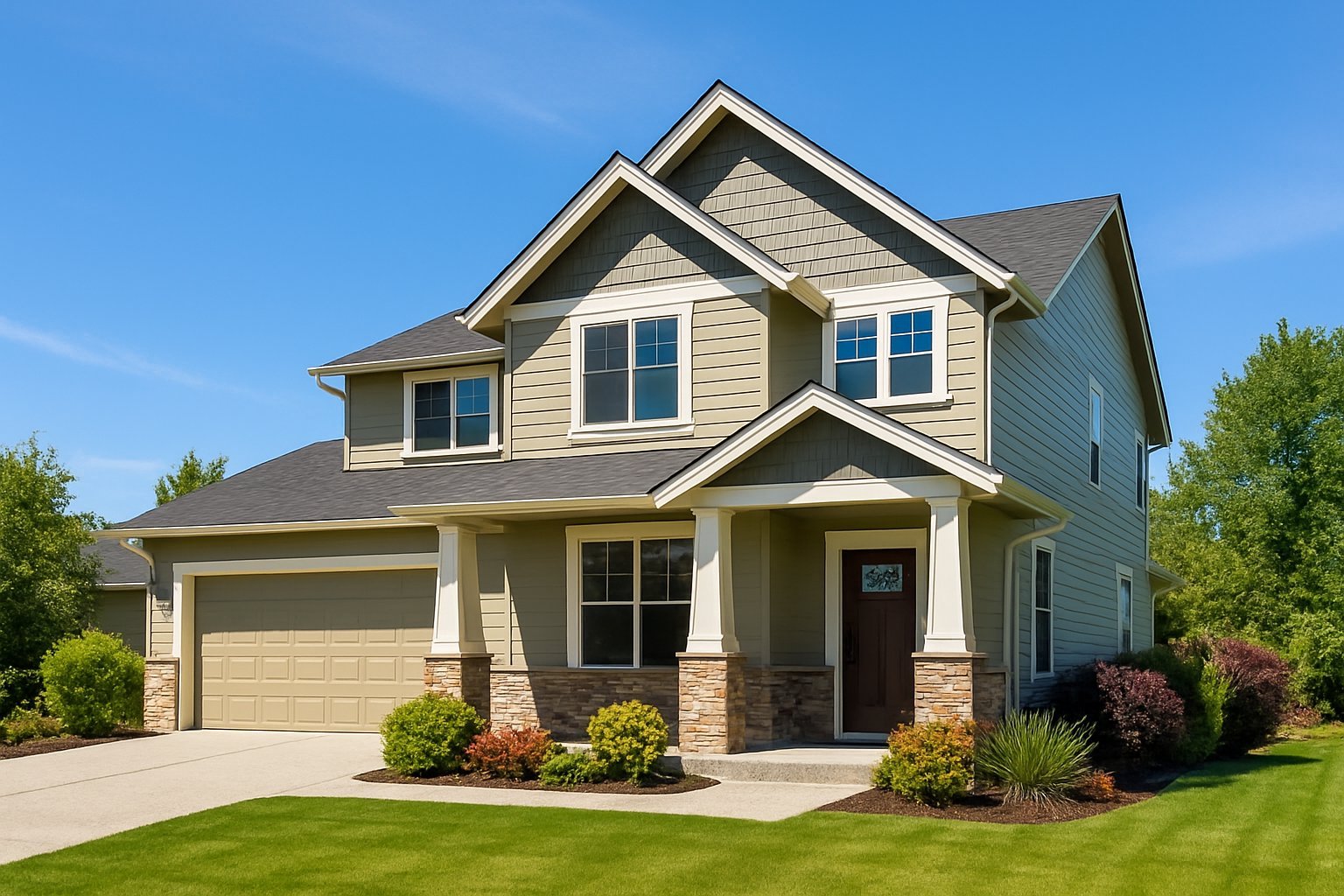
If you only paint one thing, paint the front door. A freshly painted front door — deep navy, classic red, or glossy black — is the highest-ROI single-day project in existence. It costs $30 in paint and transforms your home’s entire first impression. Pair it with new house numbers and a modern handle for under $100 total, and you’ve done more for curb appeal than a $2,000 landscaping job.
Hardware, Lighting, and the Details Buyers Touch
Cabinet hardware is a 2-hour project with outsized impact. Dated brass knobs from 1994 make a whole kitchen feel old; $3-5 modern pulls from a big-box store make it feel updated. Measure the existing hole spacing before you shop — matching it means no drilling, just unscrew and replace. This is also one of our favorite ways to update old kitchen hardware without a renovation.
Light fixtures date a house faster than almost anything. A brass-and-glass chandelier from the 80s or a boob light in every hallway tells buyers ‘dated’ before they’ve seen a second room. Swapping fixtures is a 30-minute job per light (breaker off, three wires, done) and modern fixtures run $50 to $150. Do the entryway, dining room, and kitchen first — the rooms that set the tone.
Don’t forget the small stuff buyers touch: switch plates, outlet covers, door handles, and faucets. A $200 shopping trip replacing yellowed plastic switch plates with clean white ones, wobbly door handles with solid levers, and a crusty bathroom faucet with a modern one makes a house feel maintained. Buyers equate ‘maintained’ with ‘valuable’ — because it is.
Curb Appeal on a Saturday
Landscaping doesn’t mean a designer and a crew. Edge your lawn beds with a clean line, lay fresh mulch ($3-4 a bag, transformative), trim overgrown bushes away from windows, and plant a few colorful annuals by the entrance. One Saturday, $150 in materials, and your house looks five years newer from the street.
Power wash everything. Siding, driveway, walkways, deck, fence — a $75 day-rental washer removes years of grime in hours. It’s the most satisfying DIY there is: the before-and-after looks like a different house. Just keep the pressure reasonable on wood and siding to avoid damage.
Clean your windows, inside and out. It’s free except for time and squeegee supplies, and dirty windows make even beautiful rooms feel neglected. While you’re at it, check our guide to improving curb appeal on a budget for the full playbook. The National Association of Realtors’ remodeling impact report backs this up — exterior and cosmetic projects consistently top the ROI charts.
- Paint interior walls warm neutrals: ~$300, one weekend
- Paint the front door + new hardware: under $100, one day
- Swap cabinet pulls and dated light fixtures: ~$200, a few hours
- Fresh mulch + edged beds + trimmed bushes: ~$150, one Saturday
- Power wash siding, driveway, deck: ~$75 rental, instant facelift
- Replace switch plates, handles, faucets buyers touch daily
What NOT to Bother With
Skip the trendy and the personal. A bold accent wall, a themed room, or ultra-modern fixtures in a traditional house don’t add value — they narrow your buyer pool. The goal is broad appeal: clean, neutral, updated, and well-maintained. Think ‘nice hotel,’ not ‘personality showcase.’
Don’t over-improve for the neighborhood. A $15,000 DIY kitchen refresh in a $200,000 neighborhood won’t return what it would in a $500,000 one. Check what comparable homes have before investing — your house needs to compete with its neighbors, not outclass them by a mile.
And be honest about your skill level. A bad DIY job subtracts value — crooked tile, drippy paint, wobbly fixtures all scream ‘what else did they mess with?’ If a project is beyond you, either learn it properly or hire it out. A clean, simple, well-executed project beats an ambitious botched one every single time.
The Weekend Warrior's Toolkit
You don’t need a workshop full of tools for these projects — a basic kit handles nearly all of them. The essentials: a cordless drill/driver ($80-$120 for a decent kit — the single most-used DIY tool), a 25-foot tape measure, a 4-foot level, a stud finder, a set of screwdrivers, an adjustable wrench, a hammer, a utility knife, painter’s tape, and drop cloths. Total investment: $250-$350, and it pays for itself with the first project you don’t hire out.
Buy quality on the tools you touch constantly (drill, tape measure, level) and go budget on the rest. A cheap hammer hammers fine; a cheap drill frustrates daily. And learn the two skills that underpin everything: measuring accurately (measure twice, cut once is real) and drilling clean holes (sharp bits, right speed, let the tool work). YouTube has excellent 5-minute tutorials for both — watch before your first project, not during.
Safety gear isn’t optional: safety glasses ($8), dust masks or a respirator ($25 for a good half-face — worth it for sanding and insulation), work gloves, and knee pads ($20 — your 40-year-old knees will thank you). Most DIY injuries are eye injuries and dust inhalation — both prevented by $30 of gear. The best DIYers aren’t the most skilled; they’re the ones who protect themselves and take their time. Speed comes with practice; safety comes with habit.
Start This Weekend
Paint the walls, paint the front door, swap the hardware and light fixtures, mulch the beds, and power wash the driveway. That’s maybe $800 and two weekends for a transformation buyers will pay thousands more for. The easiest DIY project to increase home value isn’t one project — it’s the stack of small, visible, well-done updates that make a house feel loved.