
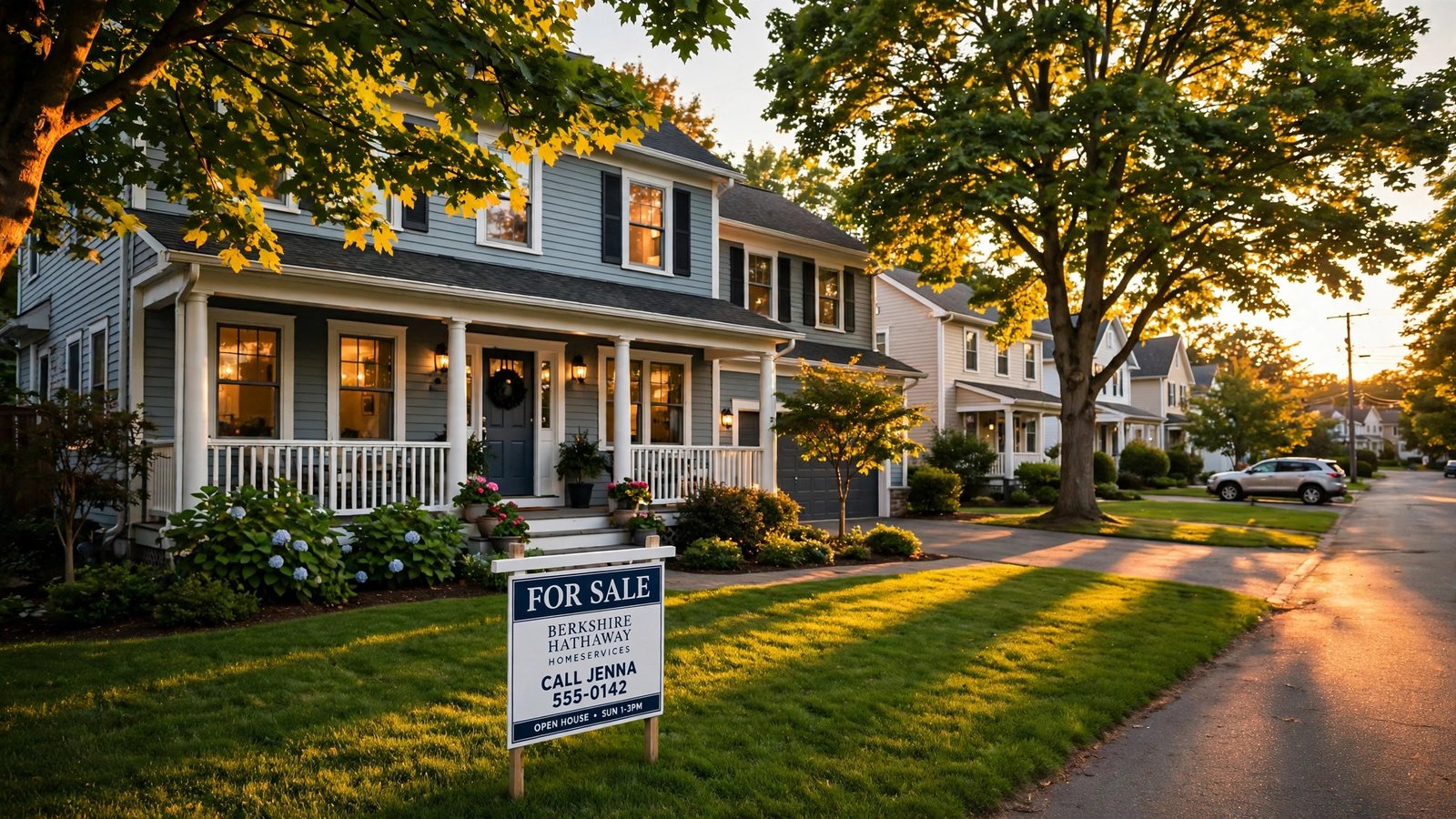
Nothing rattles a homebuyer like the call from their agent: “We’ve got five other offers, and the deadline is tomorrow at noon.” Bidding wars turn a rational purchase into an emotional auction, and the winners aren’t always the ones who bid highest — they’re the ones who bid smartest. Overpaying by $20,000 or $30,000 in the heat of the moment can haunt you for years, especially if the appraisal comes in low and you’re covering the gap out of pocket.
The good news: you can compete aggressively without abandoning judgment. Winners aren’t the deepest pockets — they’re the clearest strategists. Here are the nine moves that matter most.
Set Your Walk-Away Number Before You Tour the House
Every bidding war is lost or won before the first offer is written. Decide — in writing, with your partner or your agent — the absolute maximum you’ll pay for a home like this one. Base it on comparable sales from the last 90 days, not on the listing price, which in hot markets is often set deliberately low to attract a crowd.
A practical method: pull the three most similar sold homes within a half mile, average their price per square foot, multiply by the home’s square footage, then adjust for condition. That’s your ceiling. When you’re standing in a sunlit kitchen picturing Thanksgiving dinner, that number on paper is the only thing standing between you and a $25,000 overpay. Buyers who skip this step routinely bid 5–8% over their own comfort zone, according to agent surveys.
Choosing wisely matters as much as bidding wisely — spending time choosing the right neighborhood before you fall in love with a house keeps your ceiling grounded in real local value, not auction fever.
Get Fully Underwritten, Not Just Pre-Qualified
In a bidding war, the strength of your financing often beats the size of your offer. A pre-qualification letter is a lender’s rough guess; a full underwriting approval (sometimes called a “TBD approval”) means the lender has verified your income, assets, and credit and will fund the loan as long as the property appraises. Sellers and listing agents know the difference.
When a seller compares your $410,000 offer with rock-solid underwriting against a $425,000 offer with a flimsy pre-qual, many choose certainty. That lets you win at a lower number — the literal definition of not overpaying. Ask your lender about a fully underwritten approval before you start touring; it typically takes a few extra days but pays for itself in negotiating power.
The CFPB’s home-buying guides walk through the difference between pre-qualification, pre-approval, and underwritten approvals so you know exactly what to ask your lender for.
Make Your Offer Clean, Not Just High
Sellers fear hassle as much as they love money. A “clean” offer removes the friction points that make sellers nervous:
- Fewer contingencies: Keep the ones that protect you (more on inspections below), but drop the oddball requests — the seller’s leaseback, the custom closing date, the demand for the patio furniture.
- Flexible closing timeline: Ask what timing the seller wants and match it. A seller who needs 45 days to find their next home will favor your offer over a higher one demanding 21 days.
- Large earnest money deposit: Putting down 2–3% instead of the typical 1% signals you’re serious and financially solid. It’s still your money, credited at closing.
- Personal letter (where legal): Some states restrict buyer letters; where allowed, a brief, genuine note about why the home fits your family can tip a close call — though never include photos, which raise fair-housing concerns.
Each clean term is worth real dollars. Agents estimate that a flexible closing date and strong earnest money can be worth $5,000–$10,000 in effective offer strength without raising your price a cent.
Use an Escalation Clause Strategically
An escalation clause automatically raises your bid in set increments above competing offers, up to your ceiling. Example: you offer $400,000, escalating in $2,500 increments to a max of $420,000. If the next-best offer is $410,000, you win at $412,500 — not $420,000.
The key word is strategically. Set your cap at your walk-away number, not a dollar more, and require the seller to provide proof of the competing bona fide offer that triggered the escalation. In some states escalation clauses are uncommon or discouraged, so check with your agent about local norms. Used correctly, this is the single best tool for winning without overpaying: you pay only what the competition forces, never your maximum by default.
Handle the Appraisal Gap With Eyes Open
In bidding wars, offers often exceed the appraised value, and lenders won’t loan more than the appraisal. The difference — the “appraisal gap” — comes from your pocket. Covering a small gap ($5,000–$10,000) can make your offer dramatically stronger. Covering a $40,000 gap because you got swept up is how buyers overpay.
Smart approach: cap your gap coverage explicitly in the offer (“buyer will cover up to $10,000 above appraised value”) rather than waiving the appraisal contingency entirely. You stay competitive while keeping a defined, affordable limit. Before agreeing to any gap, ask your agent for the appraiser’s likely comps — if the home is already priced at the top of the neighborhood, a big gap is a real risk. National Association of Realtors market data can help you sanity-check whether local prices support your bid.
Decode the Seller’s Real Motivation
Price isn’t the seller’s only concern. A seller going through a divorce may prize a fast, certain close. An elderly seller may care that the home goes to a family who’ll love it. A seller who already bought their next house is terrified of a deal falling through.
Your agent should be calling the listing agent to learn what matters. Then tailor non-price terms: offer a free rent-back so the seller isn’t homeless between closings, or a flexible possession date. These cost you almost nothing and can beat a higher offer from a buyer who didn’t bother to ask. This is also where technology helps — how AI is helping agents find better listings and analyze seller behavior is giving prepared buyers an edge in reading the situation.
Don’t Waive the Inspection Blindly
Waiving the inspection is the most dangerous way buyers “win” bidding wars. A cracked foundation or failing roof can cost $20,000–$50,000 — dwarfing whatever you saved by beating the competition. If you must compete on inspections, use middle-ground options:
- Inspection for information only: You keep the right to inspect and walk away, but agree not to ask for repairs. Sellers love this; you keep your safety net.
- Pre-inspection before offering: Pay $400–$600 for your own inspection before the offer deadline. It’s a sunk cost if you lose, but it lets you waive confidently if you win.
- Targeted inspection: Waive the general inspection but keep the right to inspect one specific concern, like the roof or sewer line.
Knowing what to look for in an older home before you get to this stage means fewer surprises when the inspector’s report lands.
Know When to Walk Away
The final skill is the hardest: losing on purpose. If the bidding passes your walk-away number, walk — there will be another house. Buyers who overpay by $30,000 to “win” often stay underwater on equity for years. Set the number, trust the number, and let someone else be the cautionary tale.
Frequently Asked Questions
How much over asking should I bid in a bidding war?
There’s no universal percentage — it depends on pricing strategy. If the list price reflects market value, 2–4% over may win; if it was priced low to spark a war, you may need 8–12% over asking to reach fair value. Anchor to comparable sold prices.
Do escalation clauses actually work?
Yes, when the seller accepts them. They ensure you pay only enough to beat the competition rather than your maximum. Some sellers and listing agents dislike them, so your agent should feel out the listing side first.
Should I waive the appraisal contingency?
Only if you have the cash to cover a potential gap and you’ve capped your exposure. A full waiver is risky; a capped appraisal-gap guarantee (e.g., up to $10,000 over appraised value) gives you most of the competitive benefit with defined risk.
Can a lower offer beat a higher offer in a bidding war?
Absolutely. Sellers routinely accept lower offers with stronger financing, fewer contingencies, flexible timing, and larger earnest money — certainty and convenience have real dollar value to a seller.
The Bottom Line
Handling bidding wars without overpaying comes down to preparation beating emotion: a walk-away number set in calm moments, underwritten financing, a clean offer, a capped escalation clause, and the discipline to walk away. The buyers who follow this playbook win more often — and sleep better afterward — than the ones who simply bid the most. Your dream home shouldn’t come with buyer’s remorse attached.