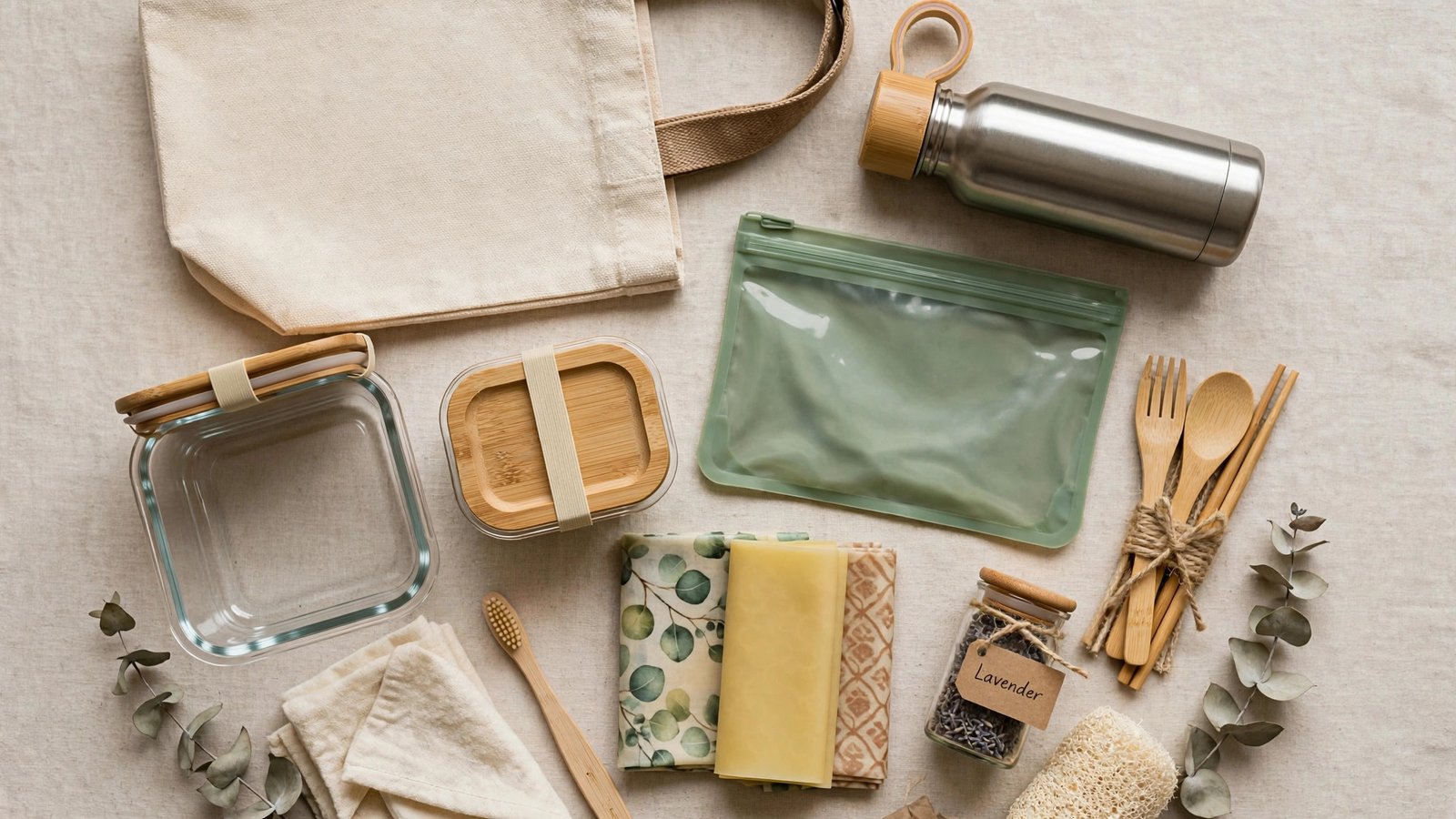
A reusable product only earns its place if it replaces a disposable one you actually use, again and again. Most so-called eco swaps fail that simple test. The honest way to judge any reusable is to ask what disposable habit it ends, how often that habit happens, and whether the replacement fits the way you already live. A well made object used daily for years can replace a long stream of throwaway versions. The same object bought on impulse and left in a drawer replaces nothing at all.
An insulated bottle you will actually carry
An insulated bottle replaces bottled water and throwaway drinks cups for people who already buy drinks while they are out. Filled at home, carried to work or on a walk, and refilled as the day goes on, it removes the need to buy a drink in a disposable container each time thirst strikes. It also works as the first step in a wider pattern, the kind of change people mean when they look for ways to be more environmentally friendly at home and then carry the same thinking outside the front door. Choose a size you will genuinely carry, a lid you can open easily, and a shape that fits your bag, because small friction is what sends bottles back into cupboards. Skip this pick if you never buy bottled water and rarely buy drinks out, because then there is no disposable habit to replace. Skip it too if you already own a sound bottle you use, since a second bottle adds nothing except storage problems.
A shopping bag that lives by the door
A sturdy shopping bag replaces the thin carrier handed out at the till, and it only works when it is where the shopping happens. Placement matters more than the bag itself. A bag kept by the front door, another in the car, and a small folding one in a coat pocket or work bag cover planned trips and unplanned stops alike. Strong handles, a shape that stands open while you pack, and fabric that can be washed when it picks up leaks from food shopping are the practical points to check. Skip the endless accumulation of free and flimsy bags offered at promotions. A pile of weak bags that tear under a heavy load trains you to accept a new disposable at the till anyway. A small number of strong bags, kept in fixed places and replaced only when worn out, does the whole job.
A coffee cup for a daily habit
A reusable coffee cup replaces the disposable cup that comes with a bought coffee, and its whole case rests on frequency. For someone who buys a coffee on the way to work most days, the cup is used over and over in exactly the same routine, and each use is one disposable cup not taken. A lid that seals properly, insulation that keeps the drink pleasant on a commute, and a size that matches the drink you normally order make it a daily tool rather than an occasional gesture. Skip this pick if bought coffee is a rare treat rather than a habit, because a cup used a few times a year replaces very little. Skip it also if you mostly make coffee at home and drink it at home, because a normal mug already does that job perfectly well.
Food containers in glass or steel
Strong food containers in glass or steel replace disposable tubs, flimsy takeaway boxes and endless covering used for leftovers and packed lunches. They seal properly, stack in the fridge, go from cold storage to reheating without collapsing, and wash clean for the next use. This is reuse in its plainest form, one object doing the same job serving after serving, week after week. A modest set in a few useful sizes covers most kitchens, with smaller ones for sauces and half used ingredients and larger ones for cooked meals, soups and salads prepared ahead. Lids that actually match their bases matter more than a large count of mismatched pieces. Skip the giant matching set if your cooking rarely produces leftovers and your lunches are not packed at home, because containers earn their place through rotation. Glass suits reheating and easy cleaning, while steel suits carrying food where breakage is a worry.
Wraps and lids that replace film
Wraps and reusable lids replace cling film for covering bowls, wrapping half a lemon or a block of cheese, and keeping prepared food fresh in the fridge. Waxed cloth wraps mould around food and dishes with the warmth of your hands, and stretch lids in a few sizes cover bowls and cut fruit without a sheet of film being torn off a roll each time. Used daily in a kitchen that cooks and stores food often, they quietly remove one of the most automatic disposable habits in the home. These picks come with honest limits. Wraps need gentle washing in cool water and air drying, and they have a working life rather than lasting forever. Once a wrap no longer clings or has worn thin, it needs refreshing or replacing, so it suits someone willing to give it that small care. Skip them if your kitchen rarely stores open food, or if the care routine will not happen, because a washable rigid container may serve you better.
Cloth instead of paper in the kitchen
Cloth replaces paper towels and disposable wipes for most ordinary kitchen work: wiping surfaces, drying hands, mopping small spills, cleaning windows and polishing taps. A stack of washable cloths kept within reach of the sink handles job after job, goes into the wash with other laundry, and returns to the drawer ready again. Different cloths for different jobs keeps things sensible, with rougher ones for scrubbing, soft ones for glass, and older ones set aside for greasy work that would spoil a good cloth. Skip the claim that cloth must replace every sheet of paper in every situation. There will still be unpleasant jobs where a disposable wipe feels like the right choice, and occasional use like that does not undo the gain from removing paper from the daily routine. What matters is the default. If cloth is the first thing reached for when water spills, the roll of paper slows to a crawl. Buy cloths sturdy enough to survive repeated washing, because thin ones that fall apart quickly are disposables in disguise.
Rechargeable batteries
Rechargeable batteries replace single use batteries in the devices most homes run constantly: remote controls, clocks, torches, wireless mice, game controllers and toys. A small set kept charged and ready, with a simple charger in a fixed place, ends the familiar hunt through drawers for a spare battery that may already be flat. When a remote fades, you swap in a charged cell and put the flat one on charge the same day, so the set stays complete. The catch deserves stating plainly. Rechargeables slowly lose charge while they sit unused, so they suit devices in regular use far better than a rarely opened emergency torch that must work after long neglect. They also ask for a small routine, and a household that will not keep track of charged and flat cells will end up mixing them and losing the benefit. Skip this pick if your home uses very few battery devices at all. Where batteries are a constant purchase, though, this is one of the most straightforward swaps here.
A safety razor
A safety razor replaces disposable razors and cartridge handles for people who shave regularly. A solid metal handle is bought once and kept, and only the thin blade is changed, so the stream of plastic handles and bulky cartridge heads stops. For a frequent shaver, that change in pattern is the whole point: the durable part is durable, and the disposable part is kept as small as possible. The catches should be stated plainly. A safety razor asks for a short learning curve. The angle is held by your hand rather than by a pivoting head, the pressure must stay light, and rushing invites nicks while you learn. Used blades are sharp waste and still need disposing of carefully, ideally collected in a safe container rather than loose in a bin. Skip this pick if you shave rarely, because the replacement pattern barely exists, and skip it if you will always shave in a hurry.
A filter jug, if taste is the obstacle
A filter jug replaces bottled water for the specific household where tap water is safe but its taste puts people off drinking it. If the taste of chlorine or a local mineral note is the reason bottles are bought, filtering water at home removes that reason and the bottles that came with it. The jug lives in the fridge, filled from the tap, and gives you cold water that tastes neutral enough to drink without thought. Skip this pick if you already drink tap water happily, because then there is no obstacle to remove and the jug, along with its replacement filters, becomes an unnecessary product with its own ongoing waste. The filters do need changing on the maker’s schedule, and a jug left with an old filter is worse than none. This pick is deliberately conditional, because a reusable only makes sense when it solves the actual problem that kept the disposable habit alive. Where taste is genuinely that problem, a jug solves it at the source.
Before buying anything at all, apply the drawer test. Open the drawers and cupboards, look honestly at what you use every week, and name the disposable version each new purchase would replace. If you cannot name one, do not buy it, because an unused reusable is worse than none at all: it took materials and making, and it replaced nothing. The standard order of thinking helps here too, since recycling sits below reuse in the usual waste hierarchy, and reuse sits above recycling for a good reason. Using one good object many times comes before sorting throwaway material well. Start with the habit you repeat most often, fix that one swap properly, and let the rest wait until the pattern of your own home says they are needed.