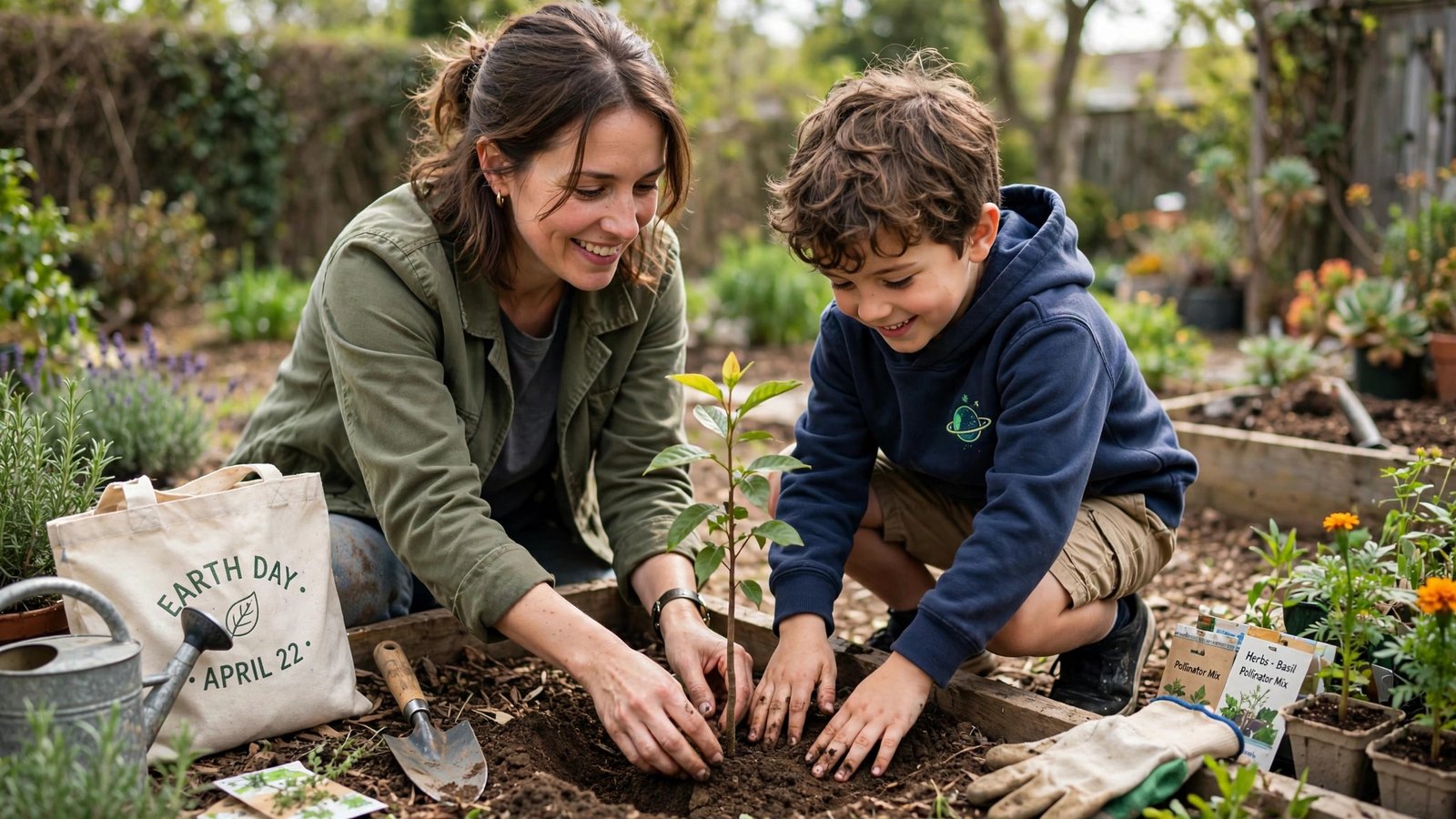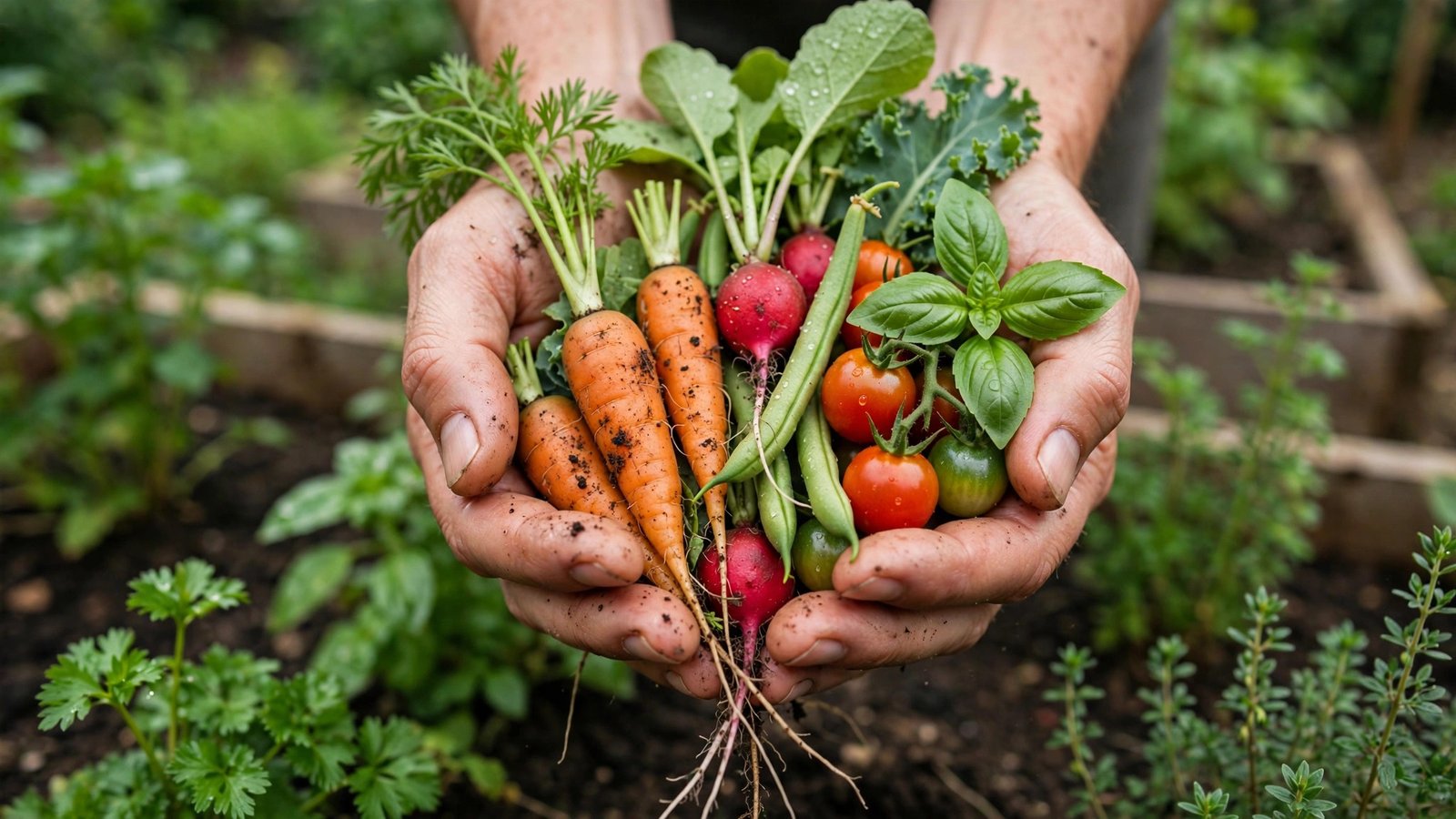
A tomato grown a few steps from the kitchen carries none of the baggage of one that crossed a continent to reach the shelf. There is no long lorry journey behind it, no cold store humming through the night, no plastic tray and film sealed around it days before it was eaten. It was picked when it was ready, carried a short distance in a hand or a bowl, and eaten while its flavour was still fully itself.
Food miles only scratch the surface of why home growing helps the planet. A meal involves far more than transport. It involves soil that is either cared for or worn out, water that is either used thoughtfully or wasted, packaging that either never exists or must be thrown away, and food that either gets eaten or ends up as waste. Growing at home shortens all of those chains at once.
Check One: start exactly where you are, because the plot you have matters more than the plot you wish you had. A balcony with pots counts. A single sunny windowsill counts. A narrow strip beside a path counts. Begin by auditing your sun in words rather than numbers. Notice which corner catches the morning light, which wall holds warmth into the evening, and which patch sits in shade for most of the day. Leafy crops tolerate shade better than fruiting crops, while herbs and tomatoes crave warmth, so the audit tells you what to attempt first.
Check Two: grow what you actually eat, weighted towards the foods that travel heaviest and disappoint most often when they have travelled. Herbs are a classic example. A bunch bought from a shop often wilts before it is finished, while a pot of parsley, mint or chives on the step can be snipped a little at a time for weeks. Soft fruit rewards the home grower too, because raspberries and strawberries are fragile, are often flown or trucked long distances, and taste incomparably better within minutes of picking. Let your own kitchen habits lead the list. If nobody in the house eats kale, a thriving kale patch helps no one.
Check Three: build soil with compost before anything else, because almost every later success sits on that foundation. Kitchen scraps, garden trimmings, shredded cardboard and fallen leaves are not rubbish waiting for a lorry. They are next season’s fertility waiting to be assembled. If space is tight, it is worth learning how to start composting in an apartment, since a small sealed system can work on a balcony or in a cupboard without smells or flies when it is managed with care. The no-buy framing matters. Compost asks for patience and a container, not a shopping list.
Check Four: capture and aim water, rather than simply turning on a tap and hoping for the best. Where rain barrels are allowed, a barrel under a downpipe turns a heavy shower into a stored resource for the dry week that follows. Aim matters as much as capture. Water at the roots, not over the leaves, so that moisture goes where the plant can use it and foliage stays drier and healthier. Water early or late in the day, when less is lost to sun and wind. Drip lines and soaker hoses suit beds and rows for the same reason. They deliver slowly, at ground level, with very little wasted on paths and air.
Check Five: plan for the glut, because abundance has a way of arriving all at once and then punishing anyone who was not ready for it. Succession sowing is the gentle answer. Sow a short row of lettuce or radishes, then another a little later, and another after that, so the harvest spreads itself across weeks instead of landing in a single overwhelming heap. Planning also means deciding in advance what you will do with a surplus. Freezers, jars and drying racks turn a glut into stored food. A glut that is shared or preserved is a success. A glut that rots on the plant or in the fridge quietly undoes much of the good the growing achieved.
Feed the soil, not just the plants
Feeding soil rather than plants sounds like a slogan, but it describes a real shift in habit. A plant-first approach asks what a crop needs this week and reaches for a quick answer. A soil-first approach asks what the ground needs across the year so that crops can largely look after themselves. Compost sits at the centre of that approach, and understanding how composting turns scraps into soil helps explain why. Microbes do the work, breaking organic matter down into a dark, crumbly material that holds moisture like a sponge while still letting excess water drain away.
There are several ways to make compost, and the best one is simply the one that fits your space and temperament. A simple heap suits a garden corner. Layers of green material such as grass clippings and vegetable peelings are balanced with brown material such as dry leaves, straw and torn cardboard, kept damp rather than wet, and turned now and then to let air in. A worm bin suits smaller spaces and produces a rich casting that plants thrive on, with the worms doing the mixing quietly under a lid. Bokashi suits kitchens with very little outdoor room. Scraps are fermented in a sealed bucket with a bran inoculant, then buried or added to a heap to finish.
No-till framing completes the picture. Digging has its place when a bed is first made, but repeatedly turning soil breaks up the fungal networks and worm channels that took months to form, and it brings buried weed seeds to the surface where they can sprout. Leaving the soil largely undisturbed, adding compost on top and letting worms pull it down, protects that underground community. Over seasons, the ground becomes easier to work, holds water longer after rain, and drains better after a downpour, which is a combination no bagged product can deliver on its own.
The beginner crops that earn their space
Some crops forgive beginners almost everything, and those are the ones that earn their space first. There is a long the kitchen garden tradition of growing food by the door, and it was built on exactly this principle. The beds nearest the kitchen held the crops picked daily and the ones that suffered most from travelling, while slower and bulkier crops lived further away.
Salad leaves are the most encouraging place to start. They grow quickly, they can be sown in a pot or a shallow tray, and the cut-and-come-again habit means a small sowing keeps giving. Herbs follow close behind. Parsley, chives, mint in its own pot so it cannot spread, basil in a warm summer spot and rosemary as a long-lived shrub all give repeated harvests from a single planting. Radishes are famously quick and teach the rhythm of sowing and thinning better than almost anything else. Courgettes reward a warm, well-fed spot with a generous crop, provided the glut plan from earlier is ready. Climbing beans use vertical space, fix nitrogen in the soil as they grow, and are picked a handful at a time over a long season.
Succession is what turns those forgiving crops into a steady supply rather than a brief event. The rule in words is little and often. Sow small amounts regularly through the growing season instead of one large sowing in spring. As one row finishes, another is coming ready behind it. Gaps left by an early crop can be filled straight away with a later one, so the soil is rarely bare and the kitchen is rarely without something to pick. Keeping a simple note of what was sown and when, even a few lines on a calendar, prevents the classic tangle of too much of one crop and none of another.
Keeping the harvest from going to waste
A harvest wasted is effort, water and soil spent for nothing, so the final skill is preservation in its many modest forms. Freezing is the easiest entry point. Beans and peas freeze well after a brief blanch in boiling water, soft fruit freezes on a tray before being bagged so the pieces stay separate, and chopped herbs freeze happily in oil or water in small portions ready to drop into cooking. Nothing about freezing needs special equipment beyond bags, boxes and a little organisation, and labelling with the crop and the month saves later guesswork.
Pickling suits gluts of firmer vegetables. Cucumbers, beetroot, onions, carrots and beans all take well to vinegar-based preserving, and a simple pickle turns a surplus that would have softened within days into jars that keep for months and brighten winter meals. Dehydrating goes further still. A low oven or a sunny, airy spot can dry apple rings, tomato halves, herbs and chillies until they are light, concentrated and easy to store. Dried herbs in particular put shop-bought jars to shame for fragrance.
Seed saving closes the circle. Let a few of the best plants of an open-pollinated variety run to seed, collect the seed when it is ripe and dry, and store it in a labelled paper envelope somewhere cool and dark. Beans, peas, lettuce and tomatoes are among the easiest to begin with. Saved seed costs nothing, adapts gradually to your own soil and conditions, and turns one season’s success into the next season’s starting point.
The year then settles into a rhythm. Spring is for sowing, pricking out and feeding beds with compost as growth begins. Summer is for watering carefully, picking little and often, and sowing the next small batch before the current one runs out. Autumn is for preserving, saving seed, sowing hardy leaves where the climate allows, and covering bare soil so winter rain does not wash its goodness away. Winter is for planning, ordering little, mending tools and letting the compost heap work slowly. Honesty belongs in that rhythm too. Home growing supplements the shops rather than replacing them, and that is enough. Every pot of herbs, every bowl of leaves and every jar put by is food with a shorter journey, living soil underneath it, and a little less waste behind it, and those gains add up quietly, season after season.