
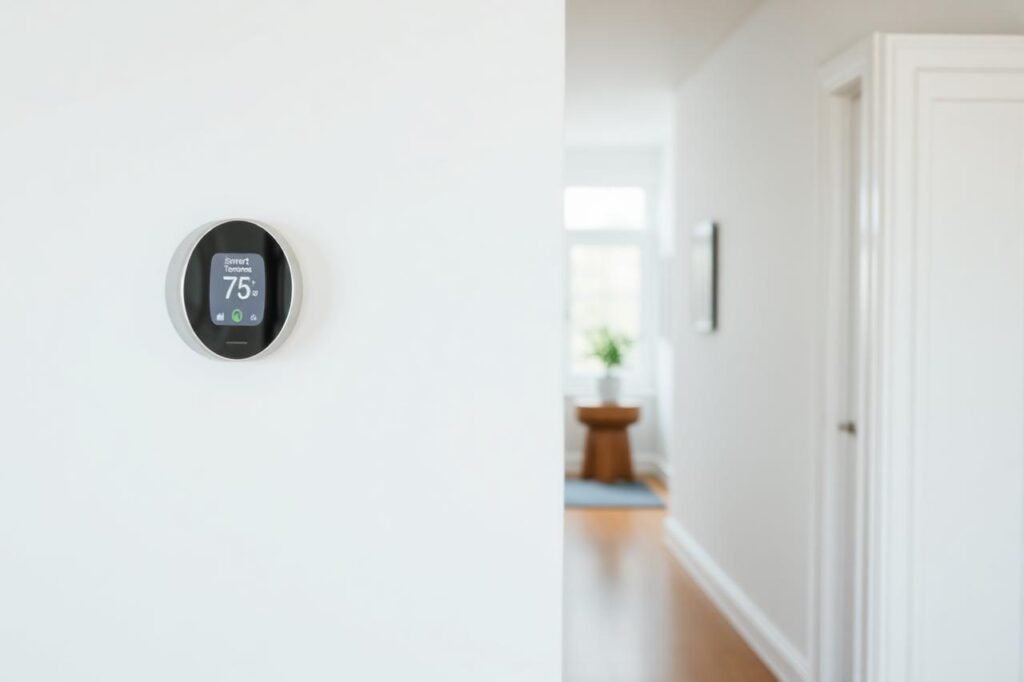
Smart thermostats promise 10 to 15 percent savings on heating and cooling, which sounds great until you do the math on a $250 device. Do they actually pay for themselves, or is it just a cool gadget that tells you the temperature from your phone?
I’ve run the numbers, lived with three different models, and talked to HVAC pros. Here’s the honest answer — including who should skip it.
Is It Worth Installing a Smart Thermostat to Save Money? The Math
Start with your baseline: the average US household spends roughly $900 a year on heating and cooling (about half the typical energy bill). A 10 percent saving is $90 a year; 15 percent is $135. On a $170 thermostat (after the utility rebates I’ll mention below), that’s a payback of 1.3 to 1.9 years. After that, it’s pure savings for the device’s 8-10 year life.
But that 10-15 percent figure assumes you’re currently wasteful — heating an empty house all day, cooling to 68°F all summer. If you already program a basic thermostat diligently, your incremental savings shrink to maybe 3-5 percent, and the payback stretches to 4+ years. The smart thermostat saves the most money for people with erratic schedules who never bothered programming the old one.
The real-world studies back this up. Independent evaluations of Nest’s learning thermostat found average savings around 10-12 percent on heating and 15 percent on cooling — but with wide variation. Some households saved 20 percent; some saved almost nothing. Your house, climate, and habits determine everything.
Where the Savings Actually Come From
Auto-away detection is the biggest saver. The thermostat notices nobody’s home and dials back heating/cooling automatically — no programming, no remembering. For households with irregular schedules, this alone captures most of the savings. It’s the feature that earns the device’s keep.
Learning and scheduling come second. Smart thermostats learn your patterns over a week or two and build schedules you’d never program manually — pre-cooling before peak rate hours, easing off overnight, adjusting for weather forecasts. The geofencing feature (adjusting based on your phone’s location) is genuinely useful for unpredictable routines.
Energy reports are the sleeper feature. Seeing exactly when and how much energy you use changes behavior — most people cut usage 5 percent just from awareness. It’s the same psychology as fitness trackers: measurement drives improvement. Pair this with other energy-efficient upgrades and the savings stack.
Costs, Rebates, and Installation
The devices run $130 to $250: Google Nest and Ecobee dominate, with Amazon’s Smart Thermostat as the budget pick around $80. But check your utility company first — many offer $50 to $100+ rebates, and some run programs giving them away nearly free. I paid $29 for a $170 thermostat after my utility rebate. At that price, the payback is months, not years.
Installation is a 30-minute DIY for most systems: breaker off, label wires, swap the base, connect. The critical check is the C-wire (common wire) — most smart thermostats need one for constant power. No C-wire? Many models include adapters, or an HVAC tech can add one for $100-$150. Check compatibility on the manufacturer’s site before buying; it takes two minutes.
One caveat: heat pumps and multi-stage systems need the right model and settings. A misconfigured smart thermostat on a heat pump can actually increase costs by triggering backup electric heat unnecessarily. If you have a heat pump, get the model designed for it and verify the settings — or have your HVAC tech handle the install. The ENERGY STAR thermostat page lists certified models and current rebate finders.
- Typical savings: 10-15% of heating/cooling = $90-$135/year
- Payback: 1-2 years at full price, months with utility rebates
- Biggest savers: irregular schedules, currently unprogrammed
- Check for C-wire; verify heat pump compatibility
- Utility rebates of $50-$100+ are common — check first
- Budget pick (~$80) vs premium ($170-$250): features, same savings
Who Should Skip It
If you already program a basic thermostat well and have a consistent schedule, a smart thermostat is a convenience upgrade, not a money-saver. You’ll enjoy the remote control and reports, but don’t buy it expecting big savings — the math won’t support it.
Renters should think twice. If you can’t be sure you’ll stay long enough for payback, or your landlord restricts thermostat changes, it’s a questionable purchase. (Though they’re easy to swap back — keep the old one.)
And if your HVAC system is ancient and inefficient, the thermostat isn’t your problem. A 25-year-old furnace wastes money no thermostat can recover. Put the $200 toward the attic insulation or system upgrade that actually moves the needle, then add the smart thermostat to the new system.
Smart Thermostat Features Worth Paying For (and Skipping)
Not all smart thermostat features are equally valuable. Worth it: geofencing (automatic away/home based on your phone — the true ‘set and forget’), learning algorithms (builds schedules from your actual behavior), energy reports (the awareness effect is real), and remote control (adjust from bed, from work, from vacation). These four deliver the savings and convenience that justify the purchase.
Skippable: voice control (novelty that wears off — the thermostat learns your schedule better than you can voice-command it), fancy color displays (you’ll look at it twice), and complex multi-zone integrations unless you actually have zoned HVAC. Don’t pay $80 extra for features that demo well and get used never. The $130-$170 models from the major brands include everything that matters.
Compatibility check before buying: use the manufacturer’s online compatibility checker (takes 2 minutes, needs a photo of your current wiring or wire labels). The C-wire question is the big one — no C-wire means you need the included adapter or a pro install. Also verify your system type: most smart thermostats handle forced air, heat pumps (with proper configuration), and boilers, but check your specific setup. And if you’re renting, keep the old thermostat in a drawer — swapping back takes 15 minutes when you move out.
The Verdict
For most homeowners — especially those with irregular schedules and unprogrammed thermostats — yes, it’s worth it. Expect $90-$135 a year in savings, payback in under two years (or months with rebates), and genuinely useful convenience on top. Just check the C-wire, claim your utility rebate, and configure it properly for heat pumps. It’s one of the rare smart-home gadgets that pays rent.