
Chemical drain cleaners are nasty stuff — they can burn skin, damage pipes (especially older metal and PVC), kill septic systems, and they’re terrible for the environment. The good news: they’re also unnecessary. Mechanical methods clear clogs better, faster, and cheaper.
Here’s the progression I use, from simplest to most serious. Start at the top; most clogs surrender by step three.
How Do I Unclog a Drain Without Harsh Chemicals? Start With the Plunger
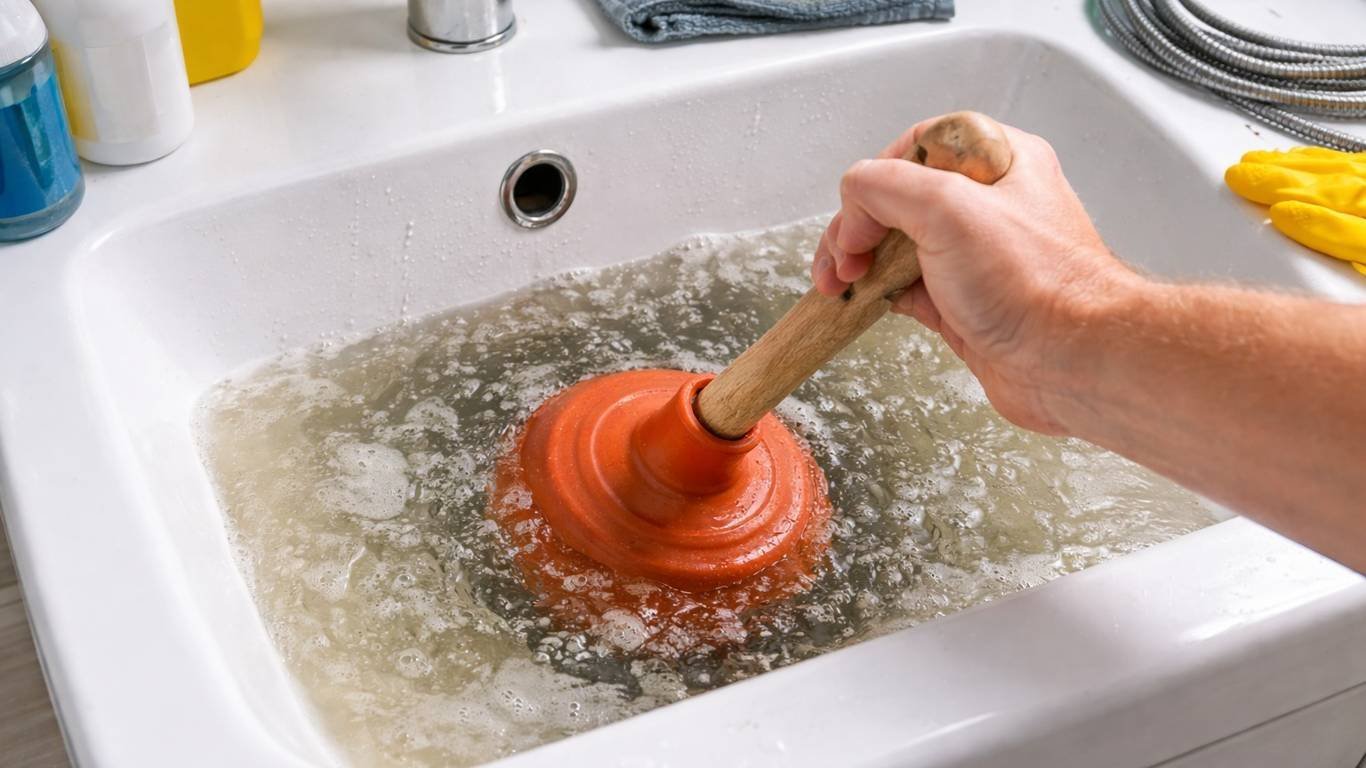
Yes, really — the humble plunger clears most clogs, and most people use it wrong. For sinks and tubs, use a cup plunger (the simple dome shape), not a flange plunger (that’s for toilets). Seal the overflow drain with a wet rag — otherwise you’re just pushing air out the overflow instead of pressure into the clog.
Fill the basin with enough water to cover the plunger cup, then plunge vigorously: 15-20 hard thrusts, maintaining the seal. The technique is sharp up-and-down strokes, not slow pushes — you want pressure pulses to dislodge the clog. It feels ridiculous. It works astonishingly often. I’ve cleared ‘hopeless’ clogs in 60 seconds with proper plunging.
If plunging fails, the clog is likely hair and soap scum (bathroom) or grease (kitchen) packed too tightly for pressure alone. Time to go mechanical — which sounds intimidating and takes five minutes.
The Drain Snake: Your $25 Secret Weapon
A 25-foot hand-crank drain auger costs $20-$30 and handles 90 percent of household clogs. Feed the cable into the drain, crank clockwise while pushing gently, and when you feel resistance, keep cranking — the auger either breaks through the clog or hooks it for extraction. Pull back slowly, clean the gunk off (gloves on), and repeat.
For bathroom sinks and tubs, try removing the pop-up stopper first — half the time the clog is a hairball wrapped right around it, removable by hand in seconds. A $3 plastic hair-removal tool (a long barbed strip) fishes these out without even removing the stopper. Every bathroom should own one; they’re absurdly effective for the price.
Kitchen sink clogs are usually grease. The snake handles them, but prevention matters more: never pour cooking grease down the drain — ever. Wipe pans with paper towels before washing, use a sink strainer, and run hot water with dish soap after greasy dishwashing. Grease clogs are the slow-motion disaster of kitchen plumbing.
Baking Soda, Vinegar, and Hot Water: What Actually Works
The famous baking soda + vinegar volcano is satisfying theater with modest real effect. It can help with minor slow drains and deodorizing, but it won’t dissolve a real clog — the fizzing action just doesn’t have the mechanical force. That said, here’s the version with the best shot: half cup baking soda down the drain, half cup vinegar, cover for 15 minutes, then flush with a full kettle of boiling water.
Boiling water alone deserves more credit — for grease clogs, a kettle of boiling water (not on PVC pipes with glued joints; use very hot tap water there) can melt through surprisingly well. Follow with dish soap and more hot water. It’s the simplest intervention and the one people try last, inexplicably.
Enzyme drain cleaners are the legitimate chemical-free option for maintenance. These bacterial/enzyme products eat organic buildup slowly — they’re not emergency clog-busters, but used monthly they prevent the buildup that becomes clogs. They’re septic-safe, pipe-safe, and actually work as prevention. Think of them as drain vitamins, not drain surgery. For the full picture on keeping pipes happy, see our guide to common plumbing problems homeowners face.
- Plunger first: cup style, seal the overflow, 15-20 hard thrusts
- Pop-up stopper out: half of bathroom clogs are right there
- $3 barbed hair tool: absurdly effective for tubs and showers
- 25-ft hand snake ($25): handles 90% of real clogs
- Boiling water + dish soap for grease (not on PVC)
- Enzyme cleaner monthly = prevention, not emergency fix
When to Call a Professional
Call a plumber when: multiple drains back up simultaneously (that’s a main-line issue, not a fixture clog), sewage smells come from drains, water backs up in one fixture when another drains, or your snake hits something immovable 10+ feet in. Main-line clogs need professional augers or hydro-jetting — this is not a DIY situation.
Also call if you’ve tried everything above properly and the drain is still slow. Chronic slow drains can indicate venting problems, pipe bellies, or root intrusion — all beyond DIY scope. A plumber’s camera inspection ($150-$300) diagnoses exactly what’s wrong instead of guessing.
Cost reality check: a professional drain cleaning runs $150-$400 for a fixture line, $300-$600+ for main lines. Compare that to the $25 snake that handles most clogs — the DIY attempt is always worth it first. The EPA’s Safer Choice program lists drain products that are genuinely safer if you ever do buy a cleaner.
Keeping Every Drain in the House Happy
Prevention beats plunging. In bathrooms: install mesh drain catchers ($5 for a pack — the highest-ROI plumbing purchase in existence), brush hair before showering (less goes down the drain), and wipe the sink with a tissue after shaving instead of rinsing stubble down. These three habits eliminate 90 percent of bathroom clogs. Clean the catchers weekly — 30 seconds that prevents the 30-minute snake session.
In kitchens: the grease rule is absolute — no cooking grease down the drain, ever, including ‘just a little’ and including with hot water (it cools and solidifies downstream where you can’t reach it). Wipe pans with paper towels, use sink strainers, and run the disposal with cold water and plenty of flow. Coffee grounds go in the trash or compost, not the disposal — they pack into dense clogs.
Monthly maintenance for all drains: flush with very hot water + dish soap (cuts grease buildup), or use an enzyme cleaner overnight. And know your cleanouts — the capped pipes giving access to your main lines. Locate them now (usually in the basement, crawlspace, or outside); in an emergency, knowing where they are saves the plumber’s diagnostic time and your money. For the full household picture, our guide to fixing leaky faucets covers the other most-common DIY plumbing win. Small habits, clear drains, no chemicals needed.
The No-Chemical Playbook
Plunger, hair tool, hand snake — in that order — clear virtually every household clog without a drop of harsh chemicals. They’re cheaper, safer for your pipes and septic, and honestly more effective than the corrosive stuff. Buy the $25 snake before you need it, keep grease out of the kitchen sink, and you’ll rarely think about your drains at all.