
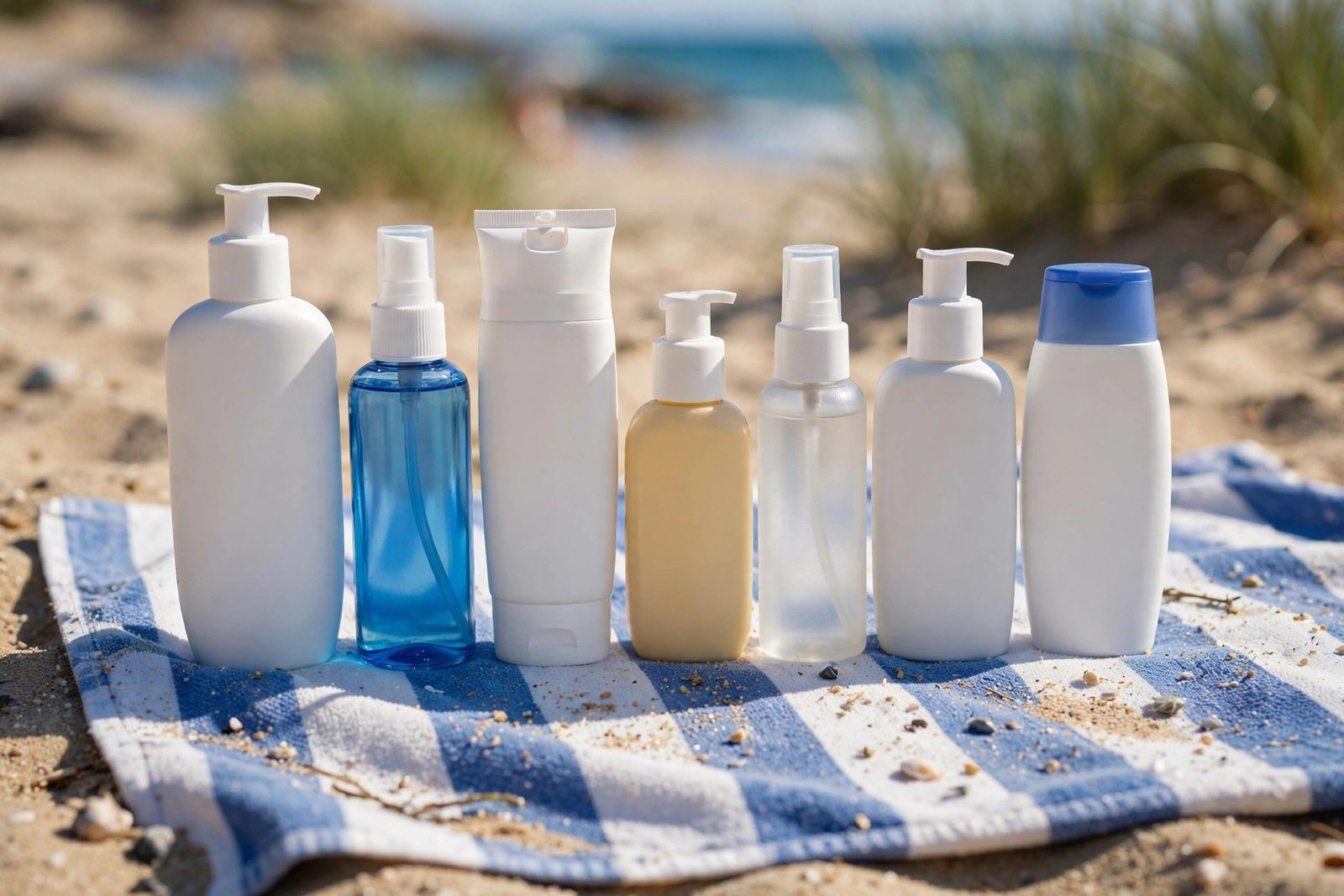
Walking down the sunscreen aisle is overwhelming: SPF 30, 50, 100? Mineral or chemical? Lotion, spray, or stick? “Sport” versus “daily”? And the prices range from $8 to $40 for what looks like the same thing. Choosing the wrong sunscreen means inadequate protection, white cast, breakouts, or a formula so unpleasant you avoid using it — which defeats the entire purpose. Cleveland Clinic’s skin care tips from a dermatologist include sun protection essentials.
This guide simplifies sunscreen selection: what actually matters, what is marketing, and how to find the right formula for your skin and lifestyle.
SPF: What the Numbers Mean
SPF (Sun Protection Factor) measures protection against UVB rays (the burning rays). SPF 30 blocks about 97% of UVB, SPF 50 blocks about 98%, and SPF 100 blocks about 99%. The difference between 30 and 100 is marginal — but only if you apply enough. Most people apply 1/4 to 1/2 the recommended amount, which means SPF 30 applied thinly performs like SPF 10.
Dermatologists recommend SPF 30 minimum for daily use, SPF 50 for extended outdoor activity. Higher than 50 offers negligible additional protection and can create a false sense of security leading to less frequent reapplication. More important than the number: broad-spectrum coverage (protects against UVA aging rays too), water resistance (if you swim or sweat), and a formula you will actually wear daily. The best sunscreen is the one you use. For overall skin health, the best foods for healthy skin from the inside complement topical protection.
Mineral vs. Chemical: The Real Differences
Mineral sunscreens (zinc oxide, titanium dioxide) sit on top of skin and physically block UV rays. They work immediately, are less likely to irritate sensitive skin, and are reef-safe. The downside: they can leave a white cast (especially on deeper skin tones) and feel thicker. Modern tinted mineral formulas and micronized particles have improved this significantly.
Chemical sunscreens (avobenzone, octinoxate, etc.) absorb UV rays and convert them to heat. They tend to be lighter, more cosmetically elegant, and easier to apply generously. They need 15-20 minutes to activate, and some people find them irritating, especially around eyes. There are ongoing questions about systemic absorption of chemical filters, though major health organizations maintain that the proven risks of sun exposure far outweigh theoretical concerns about sunscreen ingredients.
The verdict: mineral is better for sensitive skin, children, and those concerned about ingredients. Chemical is better for daily wearability and sports. Either is vastly better than no sunscreen. Choose based on your skin’s tolerance and which one you will actually apply generously and reapply. For help choosing other products, choosing the right multivitamin follows the same match-to-your-needs logic.
Formulas for Different Needs
Oily/acne-prone skin: look for “oil-free,” “non-comedogenic,” gel or fluid textures. Dry skin: cream or lotion formulas with hydrating ingredients. Sensitive skin: mineral-only, fragrance-free. Dark skin tones: tinted mineral or chemical formulas to avoid white cast — the myth that dark skin does not need sunscreen is dangerous; skin cancer in darker skin is often diagnosed later and has worse outcomes. For sports: water-resistant (40 or 80 minutes), sweat-resistant, and in a convenient reapplication format.
Application: Where Most People Fail
You need a full ounce (a shot glass) for full body coverage, and a nickel-sized amount for face alone. Most people use far less, drastically reducing protection. Apply 15-20 minutes before sun exposure (for chemical sunscreens), and reapply every 2 hours — or immediately after swimming, sweating heavily, or toweling off. “Water-resistant” does not mean waterproof; it means the SPF holds for 40 or 80 minutes in water.
Do not forget: ears, back of neck, tops of feet, lips (use SPF lip balm), and scalp part lines. For reapplication over makeup, use SPF powders, mists, or cushion compacts — they are less ideal than lotion but far better than nothing. Set a phone reminder; “I forgot to reapply” is the number one cause of burns in sunscreen users. The American Academy of Dermatology’s sun protection guidelines are the gold standard reference.
Sunscreen for Specific Situations
Different activities call for different sunscreens. For swimming or water sports: water-resistant (80 minutes), sport formulas that stay put, and reapply immediately after toweling off. For running or intense exercise: sweat-resistant, non-greasy formulas that will not run into eyes. Stick sunscreens work well for face reapplication during activities.
For children: mineral-only formulas (less irritating), high SPF, and protective clothing as the primary defense. Sunscreen is not recommended for babies under 6 months — keep them in shade. For the face: non-comedogenic, fragrance-free options that work under makeup. Tinted sunscreens double as light coverage. For lips: SPF 30+ lip balm, reapplied frequently — lip skin is thin and vulnerable, and lip cancers are often diagnosed late.
For high altitudes or tropical locations: UV intensity increases 4-5% per 1,000 feet of elevation, and equatorial sun is intense. Use SPF 50+, reapply more frequently, and take shade breaks. The sun near the equator can burn in 15 minutes — what works at home may be insufficient on vacation.
Common Sunscreen Mistakes
The most common mistake is using too little. You need a full ounce for your body — most people use a quarter of that. The second mistake is not reapplying. Sunscreen breaks down with UV exposure and rubs off; reapply every 2 hours outdoors. The third is missing spots: ears, back of neck, tops of feet, and lips are frequently burned.
Other errors: relying on makeup SPF alone (insufficient), using expired sunscreen (loses efficacy), and thinking “waterproof” means you do not need to reapply after swimming (you do). Also, do not forget that UV penetrates car windows — daily drivers should wear sunscreen or use UV-blocking film. These mistakes are easy to fix once you know about them.
Choosing sunscreen is personal. Try different formulas until you find one you will use daily. Buy travel sizes to test. The best sunscreen is not the “perfect” one, but the one that becomes part of your routine.
For more detailed guidance, see American Academy of Dermatology.
Frequently Asked Questions
Do I need sunscreen on cloudy days?
Yes. Up to 80% of UV rays penetrate clouds. Many people get their worst burns on overcast days because they do not feel hot and skip protection. Daily sunscreen is a year-round habit, not a beach-day exception.
Is SPF in makeup enough?
No. You would need to apply 7 times the normal amount of foundation to achieve the labeled SPF. Makeup with SPF is a nice bonus over proper sunscreen, not a replacement.
Does sunscreen expire?
Yes — typically 3 years from manufacture, less if stored in heat (like a car). Expired sunscreen loses efficacy. If it smells off, has separated, or is past the date, replace it. An unopened bottle from last summer is usually fine; a half-used bottle baked in a beach bag is not.
Are spray sunscreens effective?
They can be, but most people under-apply sprays. If you use a spray, hold it close, apply generously until skin glistens, then rub it in with your hands. Do not spray in windy conditions, and never spray directly on the face (spray into hands first). Lotions make adequate application easier to ensure.
Do I need different sunscreen for face and body?
Not necessarily, but facial sunscreens are often formulated to be non-comedogenic and less irritating for sensitive facial skin. If your body sunscreen works on your face without breakouts or irritation, it is fine. Many people prefer a dedicated facial sunscreen for the cosmetic elegance.