
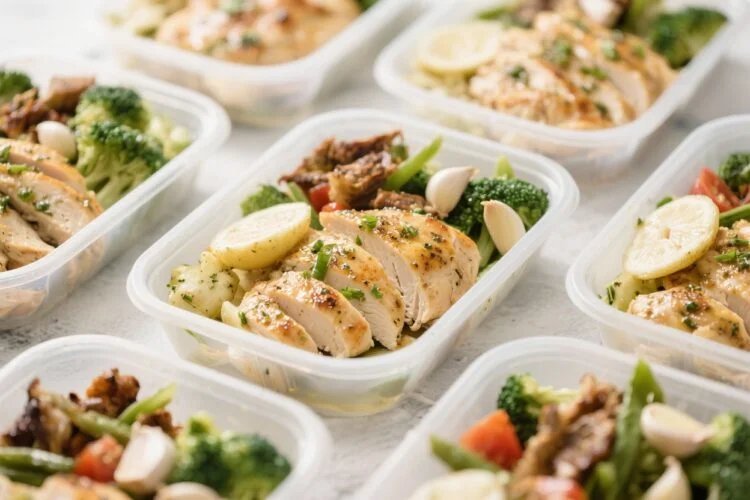
Meal-prepped chicken has a tragic reputation: dry, rubbery, microwaved sadness by Wednesday. But the problem isn’t meal prepping — it’s technique. Chicken dries out from overcooking and bad storage, both totally fixable.
Here’s the complete system for juicy meal-prep chicken all week: the right cuts, the brine shortcut, cook temps that matter, and storage that preserves moisture.
How Can I Meal Prep Chicken So It Does Not Taste Dry? Stop Overcooking It
The number one cause of dry chicken is overcooking — most people cook breasts to 180°F+ when they’re safe and juicy at 150-155°F (with rest). USDA says 165°F, but carryover cooking means pulling at 150-155°F and resting 5 minutes gets you to 165°F while staying juicy. A $15 instant-read thermometer is the single most important tool here — guessing doneness is how chicken dies.
Brine it — even briefly. A 30-minute soak in salted water (1/4 cup salt per quart) makes chicken dramatically more forgiving; the salt dissolves proteins so they hold moisture through cooking and reheating. For weeknight speed, even 15 minutes helps. Dry-brining (salting 1-24 hours ahead, uncovered in the fridge) works too and adds zero water weight.
Choose forgiving cuts: thighs over breasts for meal prep, every time. Thighs have more fat and connective tissue — they stay juicy through cooking, refrigerating, AND microwaving, where breasts punish every mistake. If you must do breasts, pound them to even thickness first; uneven breasts mean the thin end is jerky before the thick end is done.
Cooking Methods Ranked for Meal Prep
Poaching/shredding: simmer chicken in seasoned broth until just done, then shred — shredded chicken reheats beautifully because the increased surface area absorbs added moisture. Toss with a little broth or sauce before storing. This is the most foolproof meal-prep method and the most versatile (tacos, salads, bowls, wraps).
Sous vide (or the poor-man’s version): cooking at precise low temps (150°F for breasts) produces the juiciest possible chicken — it’s nearly impossible to overcook. No sous vide setup? The cooler method works: seal seasoned chicken in zip bags, submerge in 150°F water in a cooler for 1-2 hours. Sear quickly after for color.
Sheet-pan roasting at high heat: 425°F for 18-22 minutes (thighs) gives great flavor through browning, but watch temps closely — high heat punishes inattention. Whatever method you choose, rest the meat 5-10 minutes before cutting or storing; cutting early lets juices escape instead of redistributing. Our moist chicken breast guide dives deeper into oven technique.
Storage and Reheating: Where Juiciness Survives or Dies
Cool quickly, store smart: get chicken into shallow containers within 2 hours of cooking (food safety), and refrigerate in airtight containers. Add moisture before storing — a spoonful of broth, a drizzle of olive oil, or storing in sauce. Chicken stored dry reheats dry; chicken stored with moisture reheats juicy. This step matters more than the cooking method.
Portion before storing: divide into individual meal containers immediately. Every time you open a big container, reheat, and re-store, you lose moisture and flirt with food safety limits. Individual portions mean one reheat per serving — maximum juiciness, minimum risk. Proper storage is also a food-safety issue; our leftover storage guide covers the rules.
Reheat gently or don’t reheat at all: microwave at 50-70% power with a damp paper towel over the chicken, or add a splash of water/broth before microwaving. Better yet: eat it cold/room-temp in salads and wraps (properly cooked chicken is delicious cold), or reheat in a skillet with a lid and a splash of broth. The microwave on full power is where meal-prep chicken goes to die — low and slow with moisture is the resurrection.
- Pull at 150-155°F + rest 5 min (thermometer = essential)
- Brine 30 min (or dry-brine overnight) for forgiveness
- Thighs > breasts for meal prep — juicier through reheating
- Shredded/poached chicken reheats best of all methods
- Store with broth/sauce; portion into individual containers
- Reheat at 50-70% power with damp towel, or eat cold in salads
The Weekly System
Sunday cook (60-90 minutes): brine while preheating, cook two preparations (e.g., shredded poached thighs for tacos/bowls + sliced roasted breasts for salads), portion into 8-10 containers with varied bases (rice, greens, wraps). Variety in assembly prevents the ‘chicken again?’ fatigue — the chicken is the constant, the meals differ.
Season boldly: bland chicken is the other half of meal-prep sadness. Marinate or spice aggressively — the flavors mellow by day 3-4, so overseason slightly on day one. Keep 2-3 sauce options (salsa, peanut sauce, vinaigrette) to transform the same chicken across the week. Sauce is the difference between meal prep and punishment.
Food safety timeline: cooked chicken keeps 3-4 days refrigerated — plan Sunday cooks through Wednesday, then a quick Wednesday refresh (or freeze half on Sunday for Thursday-Friday). When in doubt, freeze: properly stored frozen cooked chicken keeps 2-3 months and thaws overnight in the fridge. The USDA Food Safety site has the definitive charts on storage times.
Flavor Variations: Five Weeks Without Boredom
The meal-prep killer isn’t dryness — it’s boredom. Week 1: Mexican (chili-lime chicken, rice, black beans, corn, salsa). Week 2: Mediterranean (lemon-oregano chicken, couscous, cucumber, tomatoes, tzatziki). Week 3: Asian (soy-ginger chicken, rice, edamame, shredded carrots, peanut sauce). Week 4: BBQ (smoked paprika chicken, roasted sweet potatoes, slaw, BBQ sauce). Week 5: Indian-inspired (curry-spiced chicken, basmati, peas, raita). Same technique, completely different meals.
The sauce rotation is the real variety engine: keep 3-4 sauces in the fridge (salsa, peanut sauce, tzatziki, BBQ, vinaigrette — most keep 1-2 weeks) and the same chicken becomes five different lunches. Change the base too: rice one week, quinoa the next, greens, wraps, grain bowls. The combinations multiply faster than the effort.
Seasonal rotation keeps it fresh year-round: summer’s grilled citrus-herb chicken in salads, fall’s apple-cider glazed thighs with roasted roots, winter’s hearty curry preparations, spring’s bright lemon-herb versions. And involve the family in choosing next week’s theme — people eat what they picked with more enthusiasm. Meal prep is a system; variety is what makes the system livable. Boredom is a planning failure, not a chicken failure.
- Rotate cuisines weekly: Mexican, Mediterranean, Asian, BBQ, Indian
- 3-4 fridge sauces = same chicken, five different lunches
- Vary the base: rice, quinoa, greens, wraps, grain bowls
- Seasonal flavors keep the system fresh year-round
- Let the family pick next week's theme — buy-in beats boredom
Juicy All Week Is a System
Brine it, thermometer it (150-155°F pull temp), favor thighs and shredded preparations, store with moisture in individual portions, and reheat gently. Do that and your Friday chicken is nearly as good as Sunday’s — which is the whole point of meal prep. Dry chicken is a technique problem, and technique is fixable.