
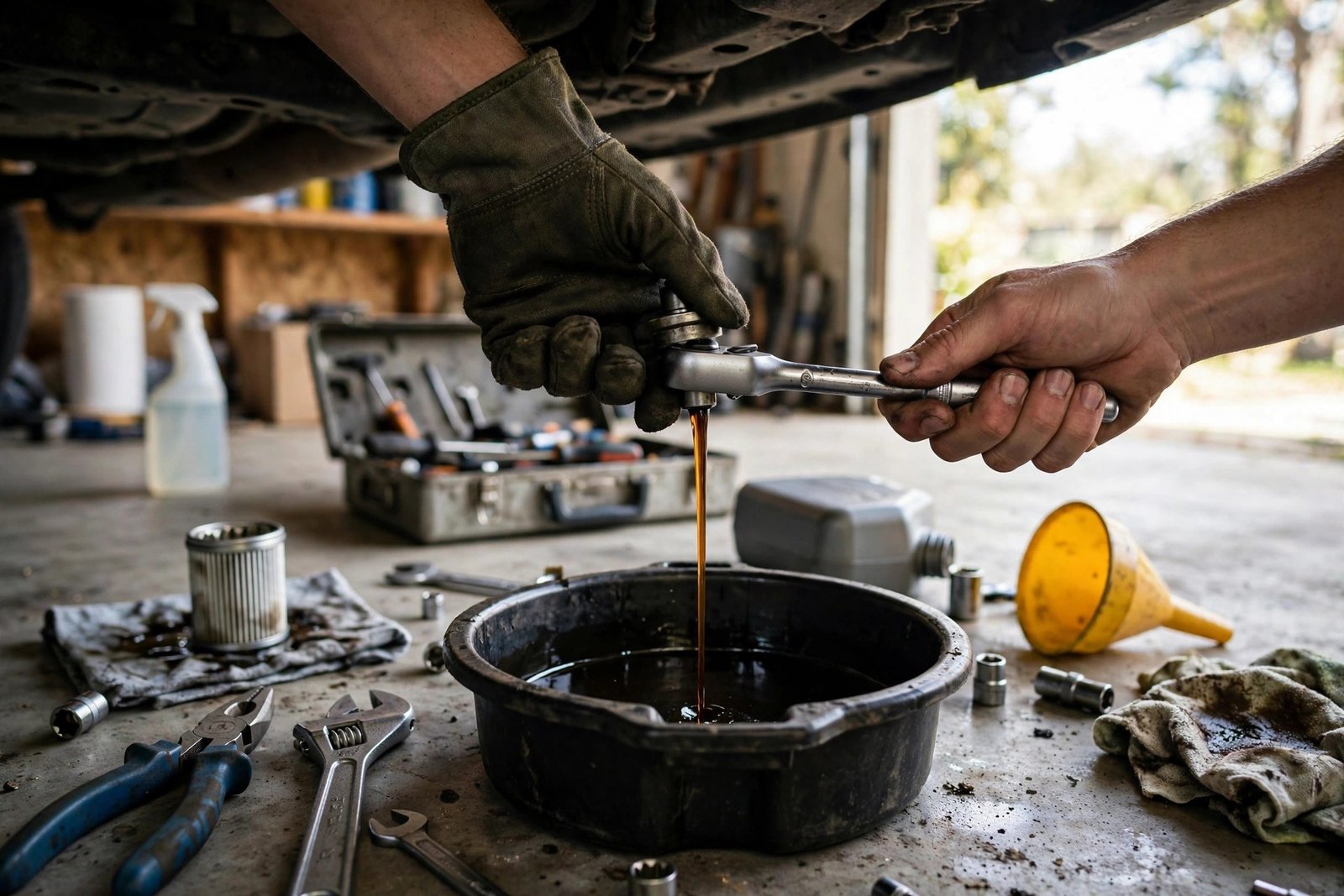
Basic car maintenance is not as intimidating as it looks. A handful of simple tasks — the kind that take 15 to 30 minutes with basic tools — can save you hundreds of dollars a year in shop labor and keep your car running reliably for years. You do not need a lift, air tools, or mechanical training. You need a driveway, a Saturday morning, and the willingness to follow instructions.
This guide covers the best DIY maintenance tasks for regular car owners: what to do, how often, what tools you need, and which jobs to leave to the professionals. Start with one or two, build confidence, and watch your maintenance bills shrink.
Why DIY Maintenance Pays Off
Shop labor rates now run $120 to $200 per hour in many areas, which means even simple jobs carry hefty bills. An oil change that costs $35 in parts becomes a $90 shop visit. A $15 engine air filter becomes a $60 line item. Doing these yourself does not just save money — it also teaches you how your car works, so you can spot problems early and talk to mechanics knowledgeably when you do need one. To keep track of every interval, fueleconomy.gov’s car maintenance checklist is a handy reference worth bookmarking.
There is also a satisfaction factor that is hard to overstate. The first time you change your own oil or replace your own brakes, car ownership feels different — less like a subscription to repair bills and more like something you actually control. The DIY mindset transfers well to home projects too; see the easiest DIY project to increase home value for the same principle applied to your house.
Engine Air Filter: The 5-Minute Win
Start here. The engine air filter keeps dirt out of your engine, and replacing it takes about five minutes with no tools on most cars. Pop the hood, find the black plastic airbox (your owner’s manual shows where), unclip it, swap the old filter for a new one, and clip it shut. A new filter costs $15 to $25; shops charge $50 to $70 for the same job.
Replace it every 15,000 to 30,000 miles, or yearly if you drive on dusty roads. A clogged filter hurts fuel economy and performance, so this tiny job actually pays you back at the gas pump. When you buy the filter, have the parts store confirm the fitment for your exact year and model — filters are not universal.
Cabin Air Filter: Breathe Easier
The cabin filter cleans the air coming through your vents. When it gets clogged, airflow drops, windows fog more easily, and the cabin can develop a musty smell. On most cars it lives behind the glove box and swaps out in under 10 minutes — squeeze the glove box sides to drop it down, slide out the old filter, slide in the new one.
Dealerships charge $60 to $100 for this; the filter itself costs $15 to $30. Replace it every 15,000 to 20,000 miles, or sooner if you notice weak airflow or odors. If your car has allergy symptoms tied to driving, a fresh cabin filter with activated carbon can make a noticeable difference. This is genuinely one of the highest return-on-effort jobs in car ownership.
Oil Changes: The Core Skill
Oil changes are the most valuable DIY skill because you need them so often — typically every 5,000 to 7,500 miles with modern synthetic oil. You will need a wrench, an oil filter wrench, a drain pan, a funnel, jack stands (never work under a car supported only by a jack), and the correct oil and filter for your car.
The process: warm the engine briefly, lift and secure the car, remove the drain plug, drain the old oil, replace the drain plug washer, swap the filter, refill with new oil, and check the level. It takes 30 to 45 minutes the first time and 20 minutes once you have done it. Cost: $30 to $45 in parts versus $80 to $120 at a shop. Take the used oil to any auto parts store — they recycle it free. The EPA’s used oil management guidelines explain why proper disposal matters and where to take it.
What About Other Fluids?
Once you are comfortable with oil, coolant, brake fluid, and power steering fluid checks are natural next steps. Topping off fluids is easy; flushing them is more involved. Check levels monthly using the dipsticks and reservoirs under the hood — low fluid is often the first sign of a developing problem. If you spot a leak, place cardboard under the engine overnight to identify the fluid by color: red is transmission, green or orange is coolant, dark brown is oil.
Wipers, Bulbs, and Batteries
These three jobs are almost embarrassingly simple, yet shops charge real money for them. Wiper blades ($20 to $40 a pair) snap on in minutes — if yours streak or chatter, replace them; it is a safety issue, not a cosmetic one. Headlight and taillight bulbs ($5 to $15 each) usually twist out from behind the housing; your owner’s manual shows the procedure. A burnt-out brake light is a ticket waiting to happen.
Battery replacement ($100 to $200 for the battery) takes 15 minutes with a basic wrench: disconnect negative first, then positive, swap the battery, reconnect positive first, then negative. Many auto parts stores will even test your old battery free and help with the swap in the parking lot. Clean any white or green corrosion off the terminals with a wire brush while you are in there — it improves the connection and extends battery life. For the jobs that are genuinely beyond DIY, a good independent mechanic is worth finding; fixing a leaky faucet without calling a plumber shows the same fix-or-call judgment applied to home repairs.
Know Your Limits
DIY has boundaries, and respecting them keeps you safe. Leave anything involving the fuel system, airbags, air conditioning refrigerant, timing belts, or internal transmission work to professionals. Brake pad replacement is DIY-able for the careful and mechanically inclined, but brakes are safety-critical — if you have any doubt about your work, have a shop verify it.
A good rule: if the job requires special tools you will never use again, involves pressurized or explosive systems, or a mistake could cause a crash, pay the professional. Everything else is learnable. YouTube has excellent model-specific tutorials for nearly every common car — watch the full video before you buy parts, and you will know exactly what you are getting into.
For more detailed guidance, see Edmunds car maintenance guides.
Frequently Asked Questions
What basic tools do I need to start DIY car maintenance?
A socket set, combination wrenches, screwdrivers, jack stands, a drain pan, a funnel, and a torque wrench cover 90 percent of beginner jobs. Expect to spend $150 to $250 on a decent starter kit that will pay for itself within two or three jobs.
Will doing my own maintenance void the warranty?
No. Under the Magnuson-Moss Warranty Act, manufacturers cannot void your warranty for doing your own maintenance or using aftermarket parts, as long as the work is done properly. Keep receipts and a log of what you did and when.
How do I know which oil my car needs?
Check the owner’s manual or the oil cap — it specifies the viscosity (like 5W-30) and standard (like API SP or dexos). Using the wrong oil can cause real damage, so do not guess. When in doubt, the parts store can look it up by your VIN.
Is it really cheaper to do it myself?
For routine maintenance, yes — typically 40 to 60 percent cheaper once you own basic tools. The savings compound: an owner who DIYs filters, oil, wipers, bulbs, and batteries can save $500 to $800 a year compared to paying shop rates for the same work.