
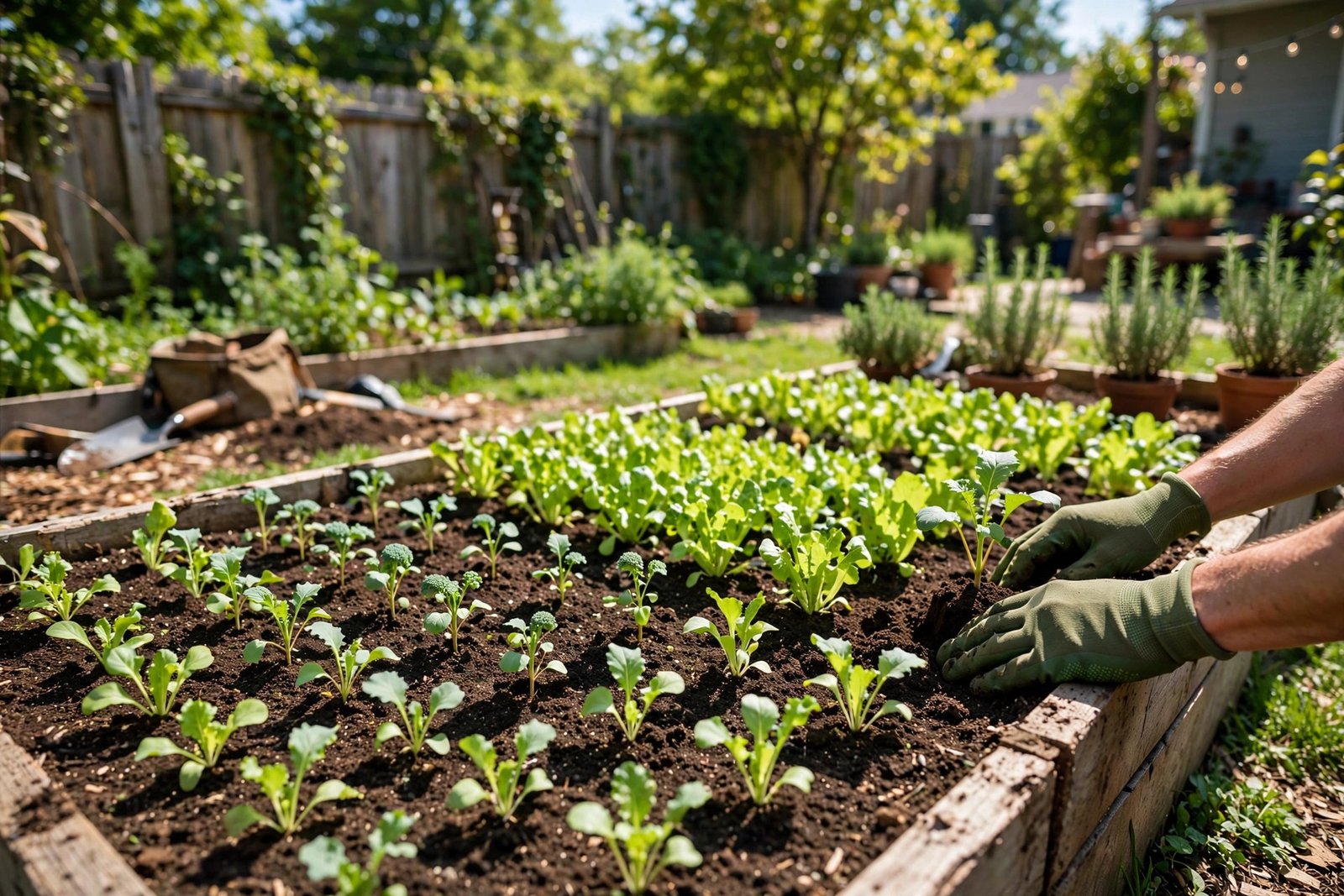
Nothing kills a gardening habit faster than nursing fussy plants that refuse to cooperate. The secret veteran gardeners know: start with vegetables that practically grow themselves, harvest something within weeks, and let early wins build your skills. These eight picks for the easiest vegetables to grow for beginners forgive beginner mistakes — irregular watering, mediocre soil, imperfect sun — and still produce. If you’ve never grown anything edible, start here.
What Makes a Vegetable “Beginner-Friendly”
Three traits: fast germination and harvest (feedback keeps you motivated), tolerance for imperfect conditions (they survive your learning curve), and high yield per effort (one planting feeds you repeatedly). Every vegetable below checks at least two boxes. All need the same basics: 6+ hours of sun daily, decent drainage, and consistent moisture — get those right and the plants handle the rest. If you’re working with limited space, our guide to starting a garden on a small apartment balcony proves you don’t need a yard for most of these.
The Easiest Wins: Ready in 30 Days
Radishes are the ultimate beginner vegetable: sow seeds directly, harvest in 25-30 days, and they thrive in shallow containers. They’re nearly foolproof — the main mistake is planting too deep or letting them get too big (they turn woody). Salad greens (lettuce, arugula, spinach): scatter seeds, keep moist, and start snipping outer leaves in 3-4 weeks while the plant keeps producing. The “cut and come again” method gives months of harvests from one sowing. Succession-plant every two weeks for continuous supply.
Green onions: plant the rooted ends of grocery-store scallions and they’ll regrow indefinitely — free vegetables from kitchen scraps. They tolerate partial shade and neglect that would kill fussier plants. These three deliver your first harvest within a month, which is psychologically everything for a new gardener.
The Heavy Producers: Maximum Food, Minimum Fuss
Zucchini and summer squash: famously prolific — two plants can overwhelm a household. Direct-sow after frost danger, give them room (they sprawl), and harvest small (8 inches) for best flavor and to keep production going. Green beans (bush varieties): sow directly, harvest in 50-60 days, and pick every 2-3 days to keep plants producing. They fix their own nitrogen, improving your soil for next year.
Cherry tomatoes: more forgiving than full-size tomatoes — more disease-resistant, faster to ripen, and wildly productive. One plant in a 5-gallon container yields hundreds of fruits. They need sun and consistent watering (mulch helps enormously), plus a simple cage for support. Cucumbers: fast, productive, and happy on a trellis that saves ground space — trellising also keeps fruits straight and clean. Pick often; oversized cukes signal the plant to stop producing.
Herbs: The Beginner’s Secret Weapon
If vegetables feel ambitious, start with herbs — they’re nearly indestructible and transform cooking immediately. Basil, mint, chives, and parsley thrive on windowsills and balconies with minimal care. Mint is so vigorous it needs its own pot (it’ll conquer a garden bed). Fresh herbs cost $3-4 per tiny grocery-store packet; a $3 plant produces for months. The return on investment is absurd — and snipping fresh basil onto dinner never stops feeling like a small triumph. Even better, most herbs are perennials or self-seeding annuals: plant once, harvest for years with barely any intervention beyond occasional watering.
Your First Season: A Simple Planting Plan
Theory is nice; here’s a concrete plan. Early spring (4-6 weeks before last frost): sow radishes, spinach, and lettuce directly outdoors — they germinate in cool soil. Start tomato and pepper seeds indoors if you’re ambitious, or plan to buy transplants later. After last frost: transplant tomatoes and peppers, direct-sow beans, cucumbers, squash, and a second round of lettuce in a shadier spot (it bolts in heat).
Mid-summer: sow fall radishes and spinach; keep everything watered through heat waves (mulch is non-negotiable now). The golden rules for season one: plant only what you’ll eat, label everything (you will forget what’s what), and keep a one-line garden journal — “planted beans May 10, sprouted May 17” teaches you your microclimate faster than any book. Expect roughly a third of things to underperform; that’s not failure, that’s gardening. Year two, planted with your own notes, will feel like a different hobby entirely.
Extend the season: a $20 row-cover fabric draped over hoops buys you 4-6 extra weeks on both ends of the season — spring plantings go in earlier, fall greens survive light frosts. Cold frames (old windows over a wooden box) work even better. Season extension is the highest-ROI skill after basic planting: it can double your annual harvest from the same bed.
Beginner Mistakes That Kill Gardens
Planting too early: most beginners sow warm-season crops before the last frost. Check your Old Farmer’s Almanac planting calendar by ZIP code — it’s the authoritative US source for frost dates. Overcrowding: seed packets’ spacing guidance exists for a reason; cramped plants compete and underperform. Thin seedlings ruthlessly — it feels wrong, it’s essential. Inconsistent watering: the #1 killer. Mulch 2-3 inches deep to retain moisture, water deeply a few times weekly rather than sprinkling daily.
Ignoring soil: you don’t need a chemistry degree, but mixing compost into the top 6 inches transforms results — bagged garden soil plus compost outperforms native dirt dramatically for beginners. Your local cooperative extension service (via USDA’s National Institute of Food and Agriculture) offers free or cheap soil testing and region-specific advice — the most underused resource in American gardening. And for the ornamental side of your new skills, low-maintenance landscaping ideas for beginners extend the same easy-win philosophy to the whole yard.
The Bottom Line
The easiest vegetables for beginners — radishes, salad greens, green onions, zucchini, green beans, cherry tomatoes, cucumbers, and herbs — share forgiving natures and fast payoffs. Start with three or four, give them sun and consistent water, plant at the right time for your zone, and let the first harvest hook you. Gardening skill isn’t talent; it’s just seasons of practice, and these plants make the first season a success.
Frequently Asked Questions
What is the absolute easiest vegetable to grow?
Radishes — sow seeds directly in soil, harvest in 25-30 days, tolerant of shallow containers and imperfect conditions. Green onions regrown from kitchen scraps are even easier, requiring essentially no gardening knowledge.
When should beginners start planting vegetables?
Cool-season crops (lettuce, radishes, spinach) go in 2-4 weeks before your last spring frost; warm-season crops (tomatoes, peppers, squash, beans) after frost danger passes. Check the Old Farmer’s Almanac planting calendar for your ZIP code’s exact dates.
Can I grow vegetables in containers?
Absolutely — cherry tomatoes, peppers, herbs, lettuce, radishes, and green onions all thrive in containers (5-gallon minimum for tomatoes/peppers). Use quality potting mix, ensure drainage holes, and water more frequently than in-ground beds.
How much sun do vegetables need?
Most need 6+ hours of direct sun daily; fruiting vegetables (tomatoes, peppers, squash) want 8+. Leafy greens tolerate partial shade (4-6 hours). Observe your space through a day before planting — morning sun with afternoon shade works well in hot climates.
Why are my seedlings dying?
The usual suspects: planted too early (cold soil), overwatering (damping-off fungus), planted too deep, or insufficient light (leggy, pale seedlings). Most seedling failures trace to timing, water, or light — all fixable next sowing.