
The best real estate deals never hit Zillow. Off-market properties — homes sold without public listings — trade at discounts precisely because there’s no bidding war. Sellers choose privacy or speed; buyers get less competition and more negotiating room. Investors have hunted these deals for decades, but the strategies work for regular homebuyers too. Here’s how to find them, fastest first.
A quick reality check: off-market doesn’t automatically mean cheap. It means uncompeted — the discount comes from negotiation, not magic. Verify every deal against comparable sales regardless of how you found it.
What “Off-Market” Actually Means
Off-market properties fall into three buckets:
- Pocket listings: listed with an agent but not on the MLS — shared privately within agent networks.
- For-sale-by-owner (FSBO), unlisted: owners willing to sell but not actively marketing — the largest opportunity pool.
- Distressed/pre-foreclosure: owners behind on payments, inherited properties, divorces, tired landlords — motivation meets discretion.
Why sellers go off-market: privacy (divorce, financial trouble), avoiding showings and open houses, testing the waters, or speed (investors who close in days). Your job is positioning yourself as the easy, certain buyer these sellers want.
Fastest Methods (Ranked by Speed to Deal)
1. Tell every agent you know (today)
The single fastest path: pocket listings live in agents’ heads and inboxes. Call or email 5–10 local agents — especially high-volume listing agents — with your exact criteria, price range, and proof of funds or pre-approval. Agents love matching off-market sellers with ready buyers: it’s a double commission with no marketing cost. Be specific (“3-bed, 2-bath, under $450k, north side, fixer OK”) — vague buyers get forgotten. Follow up monthly; you’re competing for mindshare. Technology is expanding these networks too — how agents use AI to find listings shows how the pros systematize what used to be pure relationships.
2. Drive for dollars (this weekend)
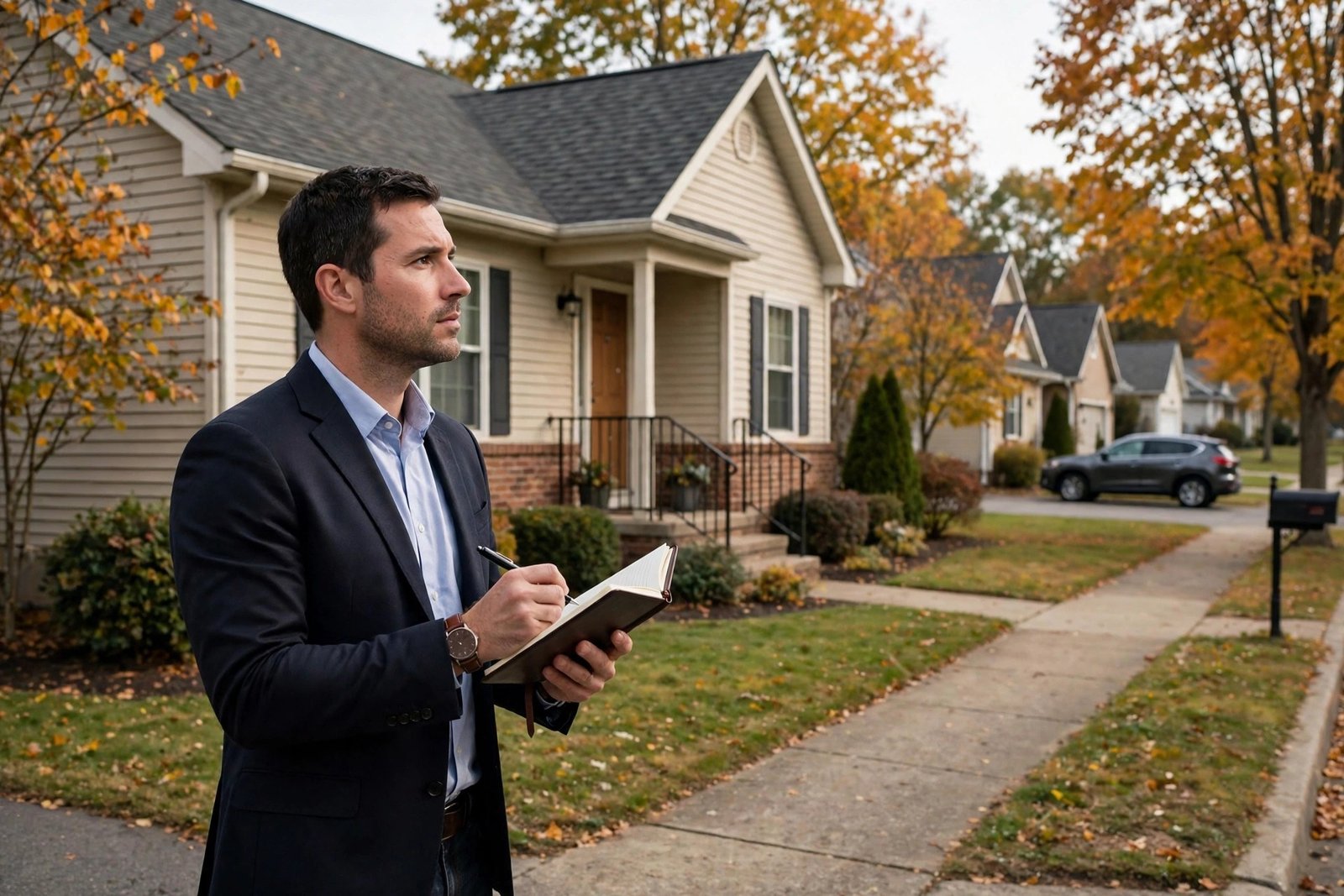
Drive target neighborhoods slowly and note distressed-looking properties: overgrown lawns, boarded windows, piled-up mail, deferred maintenance. Look up owners via county tax assessor records (free online in most counties) and send a personal letter: “I’m looking to buy in your neighborhood — if you’ve ever considered selling, I’d love to talk.” Handwritten-style letters outperform postcards. Expect a 1–3% response rate — which means 100 letters for 1–3 conversations, and it only takes one deal. Investors have bought millions of dollars of property with this exact method.
3. Direct mail to high-motivation lists (1–2 weeks)
List brokers sell targeted owner lists: absentee owners, pre-foreclosures, tax-delinquent properties, owners with 50%+ equity who’ve held 10+ years, probate filings. A mail campaign to 500–1,000 targeted owners costs a few hundred dollars and typically generates a handful of motivated-seller conversations within weeks. The lists are the strategy — “tired landlord” and “pre-probate” lists dramatically outperform blind geographic mailings. Comply with all solicitation regulations in your area.
4. Network where sellers are (ongoing)
Real estate investor meetups, landlord associations, estate attorneys, divorce attorneys, probate attorneys, property managers — these professionals encounter motivated sellers constantly. One relationship with a busy estate attorney can produce multiple deals over the years. Join the local REIA (Real Estate Investors Association) meeting this month; introduce yourself as a buyer with funds ready. Bring business cards with your criteria printed on them.
5. Online digging (immediate)
Search beyond the MLS: Craigslist “for sale by owner,” Facebook Marketplace, local FSBO sites, auction sites, and county foreclosure/tax-sale listings. Set up alerts. These require more sifting — many listings are stale or mispriced — but deals hide in the noise. Also check expired MLS listings: owners who tried and failed to sell are often newly flexible, and their agents’ contact info is right there.
Evaluating Off-Market Deals (Don’t Skip This)
Off-market sellers expect convenience pricing — but “convenience” should mean 5–15% below market, not 40%. Protect yourself:
- Run comps yourself: pull 3–6 comparable sold properties from the last 6 months within a half-mile using Zillow or realtor.com sold data. Never trust the seller’s number alone.
- Inspect everything: off-market doesn’t mean as-is-blind. Get a full inspection — distressed properties hide expensive problems, which is often why they’re distressed.
- Verify title: liens, back taxes, and ownership disputes cluster in off-market deals. Title insurance isn’t optional.
- Know your walk-away number: decide your maximum before negotiating. Motivation is the seller’s; discipline must be yours.
The same diligence applies as with any purchase — checking a home thoroughly before buying matters even more when there’s no listing agent’s disclosure package to lean on.
Approaching Sellers the Right Way
- Lead with empathy, not lowballs: “I buy homes in this area and can close quickly with no inspections hassles” beats “I’ll give you 60% of value.”
- Be the certain buyer: proof of funds or pre-approval letter, flexible closing timeline, willingness to buy as-is (after your own inspection). Certainty is worth real money to motivated sellers.
- Follow up: most deals come from the 3rd–5th contact, not the first. Sellers’ situations evolve; polite persistence wins.
- Everything in writing: handshake deals on real estate end in disputes. Use proper contracts from day one.
The Legal and Ethical Lines
Stay clean: never target vulnerable people exploitatively (elderly owners get special protections in many states), comply with fair housing laws in all marketing, don’t practice law without a license (use attorneys for contracts), and verify you can legally contact owners in your jurisdiction (some areas restrict solicitation). Profitable and ethical aren’t opposites — the best off-market buyers solve sellers’ problems fairly and get repeat referrals for it.
Wholesaling: The Middleman Route
You’ll encounter wholesalers — investors who put distressed properties under contract and sell the contract itself to buyers for a fee. Wholesaling can surface genuine off-market deals you’d never find alone, and the assignment fee ($5,000–$20,000 typically) is disclosed in the paperwork. Vet wholesalers carefully: verify they actually hold an equitable interest in the property (not just a “lead” they’re brokering illegally — some states restrict unlicensed wholesaling), run your own comps on every deal, and never skip inspection because “the wholesaler already checked.” Good wholesalers are deal pipelines; bad ones are fee collectors selling overpriced contracts. The same evaluation discipline applies — the source changes, the math doesn’t.
Conclusion
The fastest way to find off-market properties: activate agent networks today with specific criteria and proof of funds, drive target neighborhoods for distressed properties this weekend, launch targeted direct mail within two weeks, build relationships with attorneys and investor groups ongoing, and mine FSBO and auction sites continuously. Evaluate every deal against real comps, inspect thoroughly, and approach sellers as problem-solvers. Off-market isn’t magic — it’s a system. Run it consistently and the deals come.
Frequently Asked Questions
What does off-market property mean?
A property for sale (or potentially for sale) that isn’t publicly listed on the MLS — including pocket listings shared privately among agents, unlisted for-sale-by-owner homes, and distressed properties like pre-foreclosures.
Are off-market properties cheaper?
Often, but not automatically — the advantage is lack of competition, which enables negotiation. Expect 5–15% below market for genuine motivated-seller deals; verify every price against comparable sales.
How do I find pocket listings?
Build relationships with high-volume local listing agents and give them your exact criteria plus proof of funds. Agents share pocket listings with ready buyers first — be specific, be funded, and follow up regularly.
Is driving for dollars still effective?
Yes — it’s one of the most proven off-market strategies. Identify visibly distressed properties, look up owners in county records, and send personal letters. A 1–3% response rate is normal; it only takes one deal.